 Orcas Island Siding
 Why Window Installation Works Differently on Orcas Island
Orcas Island sits out in the Salish Sea, and that location shapes everything about how a window performs here. Salt-laden air moves through year-round and is hard on exposed hardware, fasteners, and unprotected metal. Winter storms bring driving rain that comes in sideways off the water, testing flashing and seals in ways a sheltered inland home never sees. Add San Juan County's long, damp shoulder seasons — the stretch of gray, wet months where moss and lichen take hold on anything that stays cool and moist — and you have a climate that punishes a poorly installed window fast, sometimes within a single winter.
This isn't a reason to over-engineer every job. It's a reason to get the basics right every time: correct flashing sequence, the right materials for a marine environment, and hardware that won't seize up or corrode after a few seasons of salt exposure. Most window failures we see on the island aren't caused by a bad window unit — they're caused by water getting behind a window that was never properly flashed or sealed to begin with.
Many homes on Orcas are second homes or seasonal rentals, sitting empty for stretches at a time. A slow leak around a window frame can go unnoticed for months when no one's checking on the place regularly, which is exactly the kind of small problem that turns into rotted framing and an expensive repair by the time someone spots it. That's another reason we'd rather catch a marginal window during a routine visit than have an owner find out about it after a wet winter.
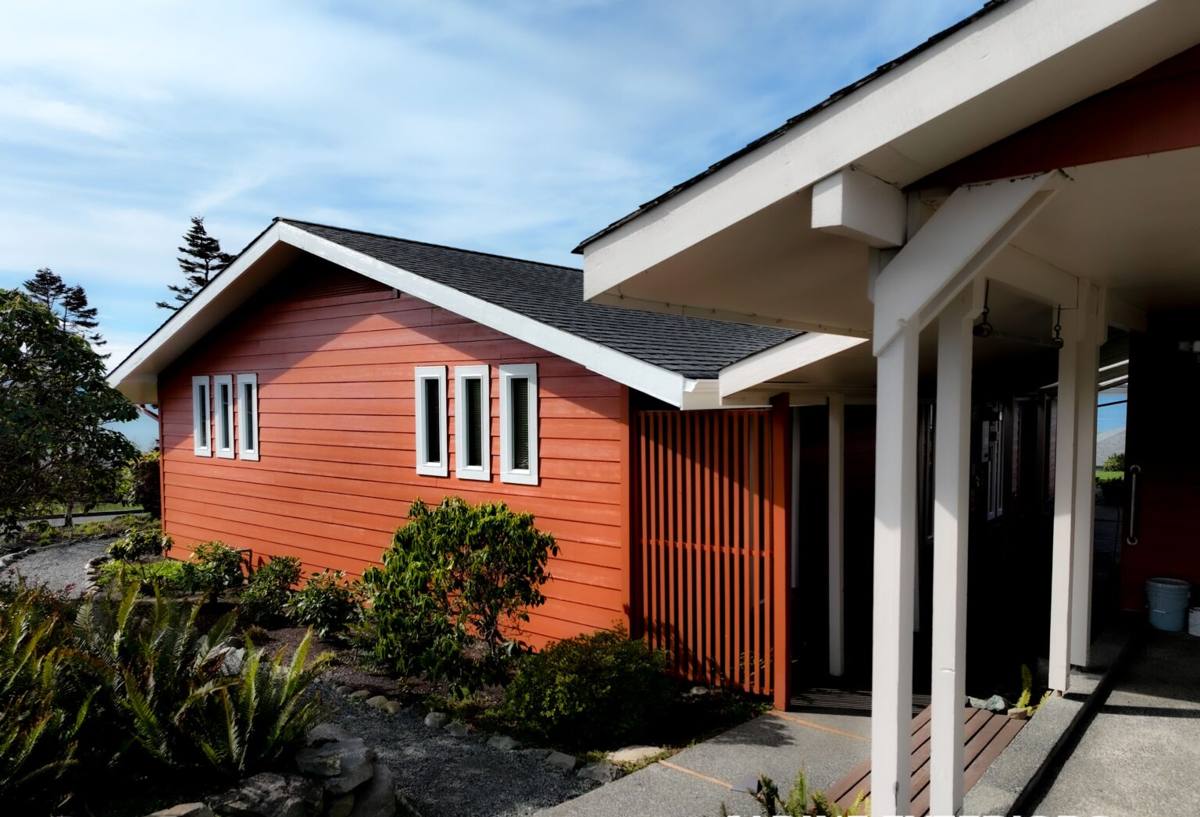
Signs an Orcas Home Needs New Windows
Older homes and cabins on the island often still have their original single-pane wood windows, sometimes with storm windows added later as a stopgap. Newer homes can have failures too, usually tied to installation rather than the window itself. Common signs worth a look:
- Fogging or a milky haze between panes on double-pane units — the seal has failed and the gas fill is gone
- Wood sashes or sills that feel soft, spongy, or show dark staining
- Windows that are difficult to open, close, or lock, especially after damp weather
- Visible daylight or a noticeable draft around the frame
- Moss, algae, or persistent black staining on the sill or the siding just below the window
- Condensation forming on the inside of the glass regularly through fall and winter
Any one of these can be a minor fix. Several together, especially on a home more than 20-25 years old, usually points to replacement being the more cost-effective path than continuing to patch.
What a Correct Installation Actually Involves
Flashing and Water Management
The window unit itself is only part of the system. What keeps water out over the long run is the flashing — the layered sequence of sill pan, side flashing, and head flashing that directs any water that gets past the window back out, not into the wall cavity. On a driving-rain coast like this one, a sill pan that slopes correctly and side flashing that laps in the right order matter more than almost any other detail in the job.
Air Sealing and Insulation
Gaps around the rough opening need to be sealed with the right material — typically a low-expansion foam or backer rod and sealant, not packed fiberglass, which does nothing to stop air movement and can hold moisture against the frame. Done right, this also cuts down on drafts and the cold-spot feeling near windows that a lot of older island homes have in winter.
Code and Egress Requirements
Bedroom windows generally need to meet minimum egress sizing for emergency exit, and any replacement has to meet current energy code requirements even in an older home that was grandfathered in under older rules. We factor code compliance into the plan before ordering, so you're not stuck with a window that looks right but doesn't pass inspection or meet San Juan County's building requirements.
Integrating with Existing Siding
Because we work as a siding contractor first, we pay close attention to how the window trim, flashing, and adjacent siding tie together. A window installed correctly but re-sided poorly around the edges — or the reverse — is one of the most common sources of leaks we get called out to fix. Whether we're replacing a few windows or doing a full siding job, the transition between window and wall gets treated as one continuous water-management system, not two separate trades that happen to meet at the same seam.
Choosing Materials for a Marine Climate
There's no single "best" window material — the right choice depends on the home, the budget, and how exposed the specific wall is to weather. Here's how the common options hold up in a salt-air, high-rainfall environment like Orcas Island:
| Material | Salt Air / Corrosion Resistance | Maintenance | Typical Fit |
|---|---|---|---|
| Vinyl | Good — frame won't corrode or rust | Low; occasional cleaning | Budget-conscious replacements, rentals, secondary homes |
| Fiberglass | Very good — stable and doesn't pit or corrode | Low | Homes wanting durability with a paintable finish |
| Wood-clad (exterior clad) | Good on the exterior clad face; interior wood needs protection from moisture | Moderate — clad exterior is low-upkeep, interior wood trim still needs occasional attention | Homes prioritizing interior wood aesthetics |
| Aluminum | Weaker — prone to pitting and corrosion in salt air unless heavily coated | Higher over time near the water | We generally steer clients away from bare aluminum on exposed, waterfront walls |
We're not tied to one brand or product line, and we're upfront when a material isn't a good match for a given wall's sun and salt exposure. On homes closer to the water or on more exposed bluffs, we lean toward vinyl or fiberglass for the frame and pay extra attention to stainless or coated fasteners and hardware, since standard-grade hardware is often the first thing to show corrosion out here.
Our Window Installation Process
- On-site assessment. We look at the existing windows, the wall assembly behind them, and any signs of past water intrusion before recommending replacement versus repair.
- Measure and order. Windows are measured to the actual rough opening, not assumed sizes, and we build lead time into the schedule for materials coming over on the ferry.
- Removal and opening inspection. Once the old window comes out, we check the sheathing and framing underneath for hidden rot or moisture damage before anything new goes in.
- Flashing and installation. Sill pan, side flashing, the window unit, and head flashing go in as one sequenced system, shimmed and leveled to spec.
- Air sealing and interior/exterior trim. Gaps are sealed properly, and trim is fitted and finished to match the surrounding siding.
- Final walkthrough. We test operation, check the seal, and walk the job with the homeowner before calling it done.
Working Around Island Logistics
Anyone who's had a delivery van miss a ferry sailing knows that building materials on Orcas Island run on the island's schedule, not the mainland's. We build ferry lead times into our ordering and scheduling from the start, so a project doesn't stall out waiting on a window unit that missed a morning sailing. We're already working on the island regularly, which means we're not pricing in a special mobilization trip just to get a crew and equipment over for your job — that cost, and the scheduling uncertainty that comes with it, isn't something you're paying for.
Being based here also means we've seen how different microclimates around the island — a wall facing open water versus one tucked in the trees — treat the same window differently. That informs which flashing details and materials we call for on a given wall, rather than applying one generic spec everywhere.
What Affects Window Installation Cost on Orcas Island
Costs vary by project, but the main factors that move the number up or down are consistent from job to job. Two homes with the same number of windows can land at very different price points once these factors are accounted for, which is why we walk the specific job before giving a number rather than quoting off a flat per-window rate.
| Factor | Why It Matters |
|---|---|
| Retrofit vs. full-frame replacement | A retrofit (new window into the existing frame) is faster and less invasive; full-frame replacement costs more but is often necessary when the existing frame or sill shows rot or water damage |
| Number of windows | Doing several windows in one visit spreads out mobilization and setup cost per window |
| Glass and performance upgrades | Higher-performance low-E glass or upgraded gas fills add cost but pay back in comfort and reduced condensation |
| Hidden repair work | Rotted sheathing, framing, or siding found once the old window is out adds labor and material beyond the original scope |
| Access and site conditions | Second-story openings, tight setbacks, or limited equipment access can add setup time |
| Trim and siding matching | Blending new trim into existing siding, especially on an older or discontinued siding profile, can add finish work |
We give a written estimate that spells out what's included so there's no guessing about what "window installation" covers on your specific job.
Moisture, Condensation, and Energy Performance
A lot of the condensation and cold-window complaints we hear on the island trace back to single-pane glass or failed double-pane seals, not the heating system. Modern double-pane units with a good low-E coating cut down on both heat loss and the interior condensation that shows up on cold, humid mornings — a common complaint in homes that are heated with wood stoves or propane and don't have much mechanical ventilation. Getting the air-sealing right during installation matters just as much as the glass itself; a well-sealed opening keeps the humid interior air from finding its way to the coldest surface in the room, which is usually the glass or the frame.
Keeping New Windows Performing
New windows installed correctly need very little upkeep, but a few habits go a long way in this climate:
- Rinse salt residue off exterior frames and hardware a couple of times a year, especially on waterfront-facing walls
- Keep weep holes on the exterior sill clear of dirt, moss, and debris so water can drain out
- Check and re-lubricate hardware annually if it starts to feel stiff
- Look at exterior caulking and sealant once a year and touch up any spots that have cracked or pulled away
- Clear moss or organic buildup off nearby siding and trim promptly, since it holds moisture against the wall
- Watch for condensation between panes — it means a seal has failed and the unit needs attention, not just wiping down
If you're weighing whether your windows need repair or replacement, or you're ready to move forward, we're happy to take a look and give you a straightforward, no-pressure estimate. Use the form below to get started.