 Orcas Island Siding
 Decks Around Cascade Lake Face a Different Kind of Wear
Cascade Lake sits inland from Orcas Island's shoreline, but "inland" on this island still means damp air, heavy tree cover, and a long stretch of the year where surfaces rarely get a chance to fully dry out. Homes near the lake deal with a mix of conditions that don't show up the same way on a typical mainland deck: moisture holding in shaded areas under mature trees, driving rain coming off the water during winter storms, and a moss and algae season that can run from fall through spring. A deck built without those specifics in mind will show problems within a few years — soft spots, slick surfaces, fasteners that back out, and finishes that fail early.
We build and repair decks for homeowners around Cascade Lake and elsewhere on Orcas Island, and the approach we use here is different from what we'd spec for a dry-climate build. That starts with material selection and continues through fastening, drainage, and the maintenance plan we hand off when the work is done.
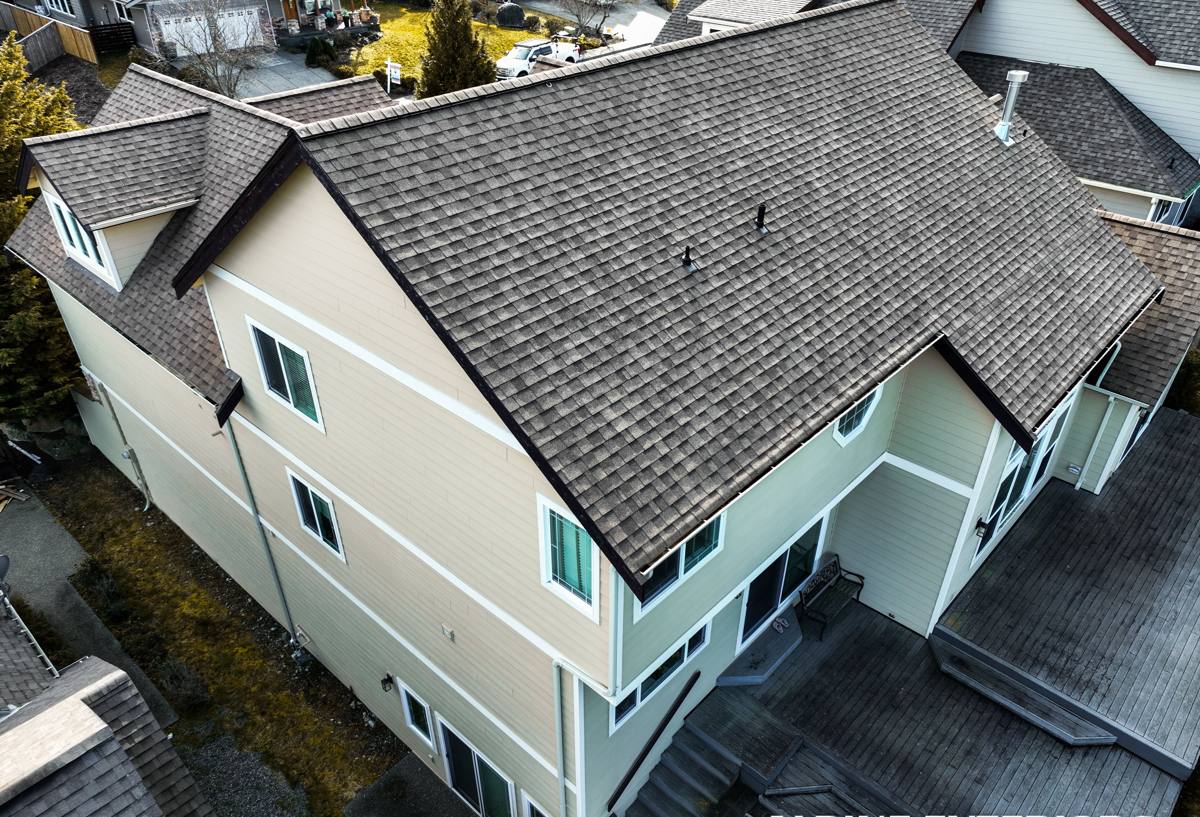
What San Juan County Climate Does to an Improperly Built Deck
Moisture That Doesn't Leave
Cascade Lake's tree canopy and lake-adjacent humidity mean many deck surfaces stay damp longer than they would in open, sunny yards. Wood that isn't rated for ground or moisture contact, or that's installed tight against a ledger board without a drainage gap, will trap water. Over time that means rot in framing members, especially at the ledger connection to the house and anywhere boards butt against each other without room to shed water.
Moss and Algae Buildup
Shaded, damp decking is exactly what moss and algae need to establish. Beyond looking bad, a mossy deck surface gets dangerously slick, especially on stairs. Some decking materials resist this far better than others, and board spacing and airflow underneath the deck make a real difference in how fast moss returns after cleaning.
Salt Air and Metal Fasteners
Orcas Island's marine air reaches inland properties too, and it accelerates corrosion in fasteners, brackets, and hardware that aren't rated for coastal exposure. A deck that looks fine on the surface can have compromised structural connections if the wrong hardware was used underneath.
Freeze-Thaw and Driving Rain
Winter storms bring rain at an angle, which pushes water into joints and end grain that would stay dry in a calmer climate. Occasional freezes then work that trapped moisture, opening up small cracks that get worse every season.
What a Correctly Built Deck Requires Here
- Framing and ledger connections properly flashed and sealed where the deck meets the house, with a drainage gap rather than a sealed-tight joint
- Structural hardware rated for coastal/marine exposure — not standard interior-grade fasteners
- Decking material chosen for moisture and moss resistance, matched to how much shade and lake-adjacent dampness the site actually gets
- Board spacing and substructure airflow that lets the deck dry out between rain events instead of staying wet
- Footings and posts set to handle the Pacific Northwest's saturated soil conditions through the wet season
- Stair and railing hardware that won't loosen as moisture cycles through the wood over time
Skipping any one of these doesn't necessarily cause an immediate problem — it causes a problem in year three or four, which is when we get most of our repair calls.
Choosing the Right Decking Material for a Cascade Lake Property
There's no single "best" decking material for every lot around Cascade Lake — it depends on how much shade the site gets, how close it is to the lake, and how much upkeep the homeowner wants to do. Here's how the common options actually perform under these conditions.
| Material | Moisture & Moss Behavior | Maintenance | Trade-offs |
|---|---|---|---|
| Pressure-treated wood | Moisture-resistant when properly installed and sealed, but end grain and fastener points need attention | Needs periodic sealing/staining, roughly every 2-3 years in this climate | Lower upfront cost; shortest lifespan if maintenance is skipped |
| Cedar | Naturally rot-resistant, ages well in damp climates, but still needs care in constant shade | Needs staining/sealing to hold color and resist moss; more frequent in shaded spots | Attractive natural look; higher material cost than treated pine |
| Composite decking | Very good moisture resistance; some boards resist algae/moss growth better than others | Occasional washing; no staining or sealing required | Higher upfront cost; quality varies significantly between product lines |
| PVC/synthetic decking | Excellent moisture resistance; won't rot or absorb water | Lowest maintenance of the group | Highest upfront cost; can look less natural to some homeowners |
For heavily shaded lots close to the lake, we lean homeowners toward composite or synthetic decking because the maintenance burden of a natural wood deck in constant dampness is significant — it's not that wood is a bad material, it's that keeping it sealed and moss-free in full shade takes real ongoing effort. For sites with more sun exposure, cedar or well-maintained pressure-treated wood can perform well and gives a more traditional look at a lower material cost.
Our Process for a Cascade Lake Deck Build
1. Site Assessment
We look at sun exposure, tree cover, proximity to the lake, existing drainage patterns, and soil conditions before recommending a material or design. A deck on a shaded, low-lying lot needs a different spec than one on an open, sloped site.
2. Design and Material Selection
We walk homeowners through the material trade-offs honestly — including cost, maintenance, and how each option is likely to hold up given that specific site's shade and moisture exposure. We're not going to push the most expensive option if a well-maintained wood deck genuinely fits the property and the budget.
3. Permitting
Deck projects on Orcas Island typically require permitting through San Juan County, particularly for elevated structures, structures near setbacks, or anything attached to the main structure's framing. We handle that process as part of the job.
4. Construction
Framing, flashing, and fastening are done to standards suited for this climate — not generic minimums. Ledger flashing, joist protection, coastal-rated hardware, and proper drainage gaps are non-negotiable parts of the build, not upgrades.
5. Final Walkthrough and Care Guidance
We show homeowners what a properly built deck looks like underneath and on the surface, and we explain what upkeep to expect given their specific site — how often to expect cleaning, when to reseal (if wood), and what early warning signs of trouble look like.
Repair, Rebuild, or Full Replacement?
Not every deck around Cascade Lake needs to be torn out. We assess existing decks for three things: whether the framing and ledger connection are structurally sound, whether the fasteners and hardware have corroded, and whether the surface material has reached the end of its useful life. A deck with solid framing but failing surface boards is often a resurfacing job. A deck with a compromised ledger connection or rotted framing usually isn't worth patching — rebuilding the structure properly is the more honest recommendation, even though it costs more upfront.
Before You Hire a Deck Builder for a Cascade Lake Property
- Ask whether they've worked on decks specifically in shaded, lake-adjacent, or waterfront conditions on Orcas Island — general deck experience from a drier climate doesn't always transfer
- Ask what fastener and hardware grade they use, and whether it's rated for marine/coastal exposure
- Ask how they handle the ledger-to-house connection and flashing — this is the single most common failure point in decks built without local conditions in mind
- Ask about San Juan County permitting experience for deck projects
- Get a clear explanation of the maintenance the material you choose will actually require in your specific yard's shade and moisture conditions
- Be wary of any bid that doesn't distinguish between a resurfacing job and a full structural rebuild — those are very different scopes of work
Why a Crew That Already Works This Area Matters
Building a deck that lasts on Orcas Island isn't about using more material or spending more money — it's about knowing which decisions actually matter for this specific climate. A crew that primarily builds decks in drier inland climates may not think twice about ledger flashing gaps, coastal-rated hardware, or how much shade a lake-adjacent lot really gets through the year. Those are exactly the details that separate a deck that looks good for one season from one that holds up for twenty. We work on homes around Cascade Lake and throughout Orcas Island regularly, so these aren't judgment calls we're making for the first time on your project.
If you're planning a new deck or need an honest assessment of one that's showing its age, we're happy to take a look. Fill out the form below for a free, no-pressure estimate — we'll tell you what your property actually needs, not just what's easiest to sell.