 Orcas Island Siding
 Roof Repair Built for Eastsound's Weather, Not a Mainland Climate
Eastsound roofs work harder than most people realize. Between the salt-laden air coming off the water, long stretches of driving rain, and a moss season that can run half the year in the shade of the island's fir and cedar cover, a roof here ages differently than the same roof would forty miles inland. Fasteners corrode faster. Moss and lichen hold moisture against shingles and shakes long after a storm has passed. Wind-driven rain finds the smallest gap in flashing and pushes water sideways, uphill, into places a roof was never designed to shed water from that angle.
That's the backdrop for every roof repair we do in Eastsound. We're not patching a roof in the abstract — we're patching a roof that has to survive another San Juan County winter, and probably several more after that. This page is about what that actually takes.
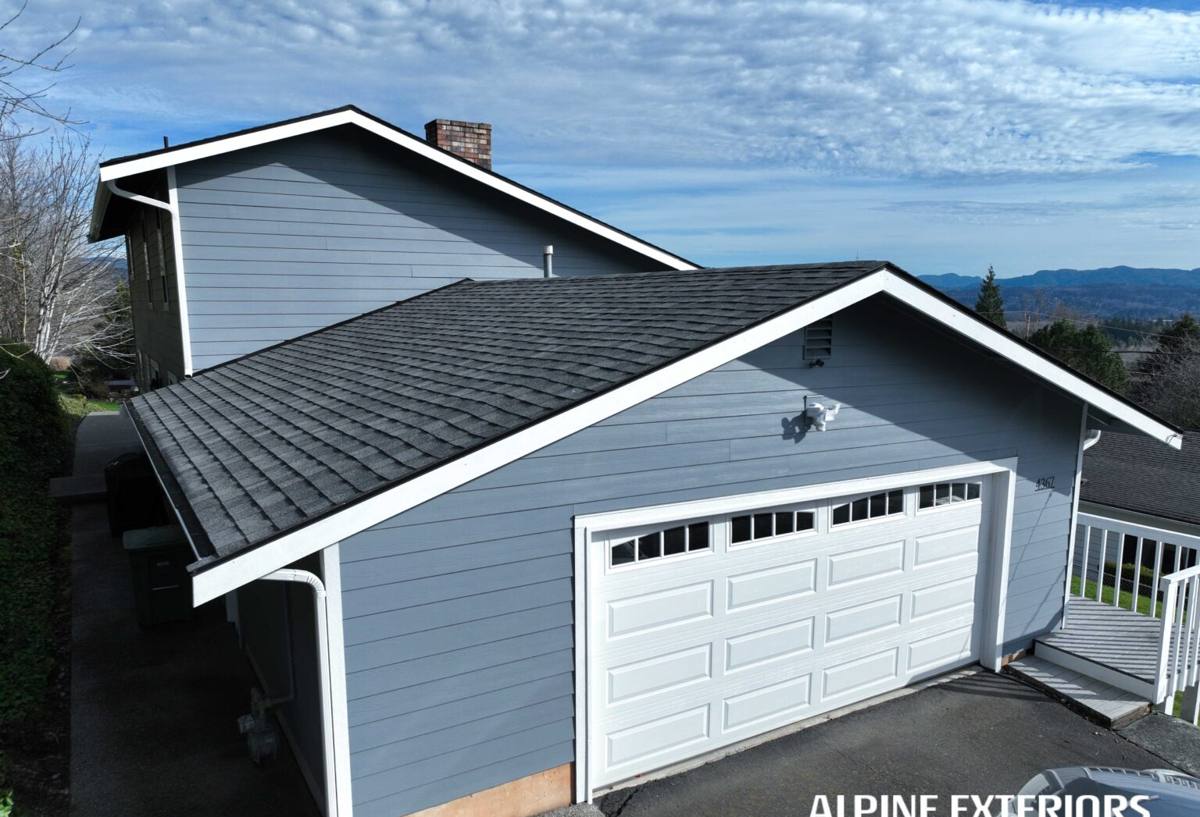
Signs Your Eastsound Roof Needs Repair Now, Not Later
Roof problems on Orcas Island rarely announce themselves with a dramatic leak on day one. They start small and get worse every time it rains hard. Here's what we tell homeowners to watch for between our visits:
- Dark streaking or thick moss growth concentrated on north-facing or shaded slopes
- Granules collecting in gutters or at the base of downspouts (a sign asphalt shingles are wearing thin)
- Curling, cracked, or lifted shingle edges, especially on slopes that catch the most wind
- Rust staining or visible gaps around chimney flashing, roof vents, or skylights
- Water stains on interior ceilings, especially after a stretch of driving rain rather than a light shower
- Soft or spongy spots when walking the roof, which usually mean the decking underneath has absorbed water
- Daylight visible through the roof deck from inside an attic or crawlspace
Any one of these on its own might just need a targeted repair. Several at once, especially combined with a roof over 15–20 years old, usually means it's worth having someone assess whether repair is still the right call.
Why Small Leaks Turn Into Big Repairs Faster Here
In a drier climate, a small flashing gap might sit unnoticed for a season or two. In Eastsound, with rain events that can dump a lot of water in a short window and salt air accelerating corrosion on any exposed metal, that same gap tends to turn into rotted decking or damaged framing much faster. Catching it early is the difference between a repair measured in hours and one measured in days.
Common Roof Repair Problems We See Around Eastsound
Moss and Organic Growth
Moss doesn't just look bad — it holds water against the roofing material, works its way under shingle tabs and shake butts, and keeps the surface damp long after the rest of the neighborhood has dried out. On shaded lots or roofs with a lot of tree cover, moss removal and treatment is often part of the repair itself, not a separate cosmetic step.
Flashing Failure
Flashing around chimneys, skylights, dormers, and roof-to-wall transitions is the single most common source of leaks we find. Metal flashing corrodes faster in salt air, and sealant-only "repairs" from a previous owner or a rushed job tend to fail within a year or two once the sealant dries out and cracks.
Wind-Driven Rain Intrusion
Storms that bring rain sideways instead of straight down expose weaknesses a calm-weather roof would never reveal — nail pops, under-lapped shingle courses, or gaps at ridge caps. Repairs in these areas have to account for water moving uphill under wind pressure, not just gravity.
Fastener and Metal Corrosion
Standard fasteners and unprotected metal components corrode noticeably faster this close to salt water. Rust streaks below nail heads or metal flashing are usually the first visible sign, and left alone, corroded fasteners eventually lose their grip on the roofing material entirely.
What a Correct Roof Repair Actually Involves
A proper repair isn't just sealing the spot where water is currently showing up inside the house. Water travels — it can enter the roof several feet away from where it appears on a ceiling. A correct repair process looks like this:
- Inspect the full roof plane, not just the area over the reported leak, to find every failure point
- Check the roof deck for soft spots, rot, or delamination once the roofing material is pulled back
- Replace damaged decking before any new roofing material goes down over it
- Address the root cause — failed flashing, worn underlayment, or wind-lifted shingles — not just the visible symptom
- Match materials as closely as possible so the repair blends with the surrounding roof and doesn't create a new weak seam
- Clear moss and debris from the surrounding area so the repair isn't immediately re-exposed to the same moisture conditions
Skipping any of these steps is how a "repaired" roof ends up leaking again in the next big storm, usually a few feet from where the last patch went in.
Repair or Replace? What Actually Tips the Decision
Not every roof problem in Eastsound needs a full replacement, and we don't push one when a repair will hold up. The honest factors that matter:
| Factor | Favors Repair | Favors Replacement |
|---|---|---|
| Roof age | Under two-thirds of expected material lifespan | Near or past expected lifespan |
| Extent of damage | Isolated to one slope, flashing point, or penetration | Spread across multiple slopes or widespread granule loss |
| Decking condition | Sound, dry decking beneath the damaged area | Rot or soft decking found in multiple spots |
| Moss/organic growth | Surface growth, treatable and removable | Growth has caused material breakdown, not just staining |
| History of repairs | First or second repair on this roof | Repeated patches in different spots over recent years |
When we inspect a roof, we'll tell you honestly which column your roof falls into — including if that means a repair is all you need right now.
Our Repair Process, Start to Finish
We keep the process straightforward because Eastsound homeowners have enough to manage with island logistics already — ferry schedules, contractor availability, and weather windows that don't always cooperate.
- Free on-site inspection and honest assessment of what's actually wrong
- Clear explanation of the cause, not just the symptom, before any work begins
- Written scope covering materials, affected areas, and what the repair will and won't address
- Work scheduled around weather windows so materials are installed dry, not rushed ahead of a storm
- Cleanup of debris and old materials before we leave the site
- A final walk-through so you know exactly what was done and what to watch for going forward
Materials and Fasteners: Why We Choose What We Choose Here
In a marine climate, material choice matters more than it does elsewhere. Our standard for Eastsound repair work leans toward corrosion-resistant fasteners and flashing, self-adhering underlayment at vulnerable transitions like valleys and eaves, and sealants rated for sustained moisture exposure rather than general-purpose products. This isn't about any one brand being inferior — it's about matching materials to conditions. A fastener or sealant that performs fine in a dry, low-salinity climate can underperform here within a few seasons, and a repair is only as good as the weakest component in it. When a specific material or approach isn't the right fit for a given repair, we'll explain the trade-off — maintenance burden, moisture behavior, or long-term durability — rather than just talking you into whatever's on the truck.
Why It Matters to Hire a Crew That Already Works Eastsound
Roofing on Orcas Island isn't the same job as roofing on the mainland, even for a contractor who's technically qualified. Material and equipment deliveries run on ferry schedules, which means poor planning costs real days. Weather windows for a dry, proper repair are narrower here than in a drier climate, so timing the work matters. And a crew that's already dealt with Eastsound's moss patterns, prevailing wind direction, and typical flashing failure points knows what to check for before it becomes a bigger problem — instead of learning it for the first time on your roof.
We work across Orcas Island and San Juan County regularly, which means we're not guessing at how local conditions affect a repair — we're accounting for it from the first inspection.
After the Repair: Keeping It From Happening Again
A good repair should buy you years, not months. A few habits make a real difference in this climate: keep gutters and valleys clear of needles and debris so water has a clear path off the roof, have moss treated before it re-establishes rather than after it's thick, and get a roof looked at after any unusually severe storm even if nothing is visibly wrong from the ground. Small issues caught early stay small.
If you're seeing signs of a problem, or just want an honest read on your roof's condition, we're happy to take a look. Fill out the form below for a free, no-pressure estimate.