 Orcas Island Siding
 Metal Roofing Built for the Cascade Lake Microclimate
Cascade Lake sits in one of the shadiest, wettest corners of Orcas Island — a forested basin ringed by Douglas fir and madrone, with Moran State Park rising right behind it. That combination of dense tree cover, standing moisture, and San Juan County's marine air creates roofing conditions that are noticeably tougher than what you'd see on an open, sun-exposed lot elsewhere on the island. Asphalt shingles in this pocket tend to green up with moss faster, hold moisture longer under the canopy, and shed granules sooner than the manufacturer's own numbers would suggest. Metal roofing was built for exactly this kind of punishment, which is why we install more of it here than almost anywhere else on our routes.
This page is about one thing: metal roofing done right for Cascade Lake homes specifically — not a general pitch for metal roofing everywhere. If you're weighing a re-roof in this neighborhood, the details below are what actually matter for your house.
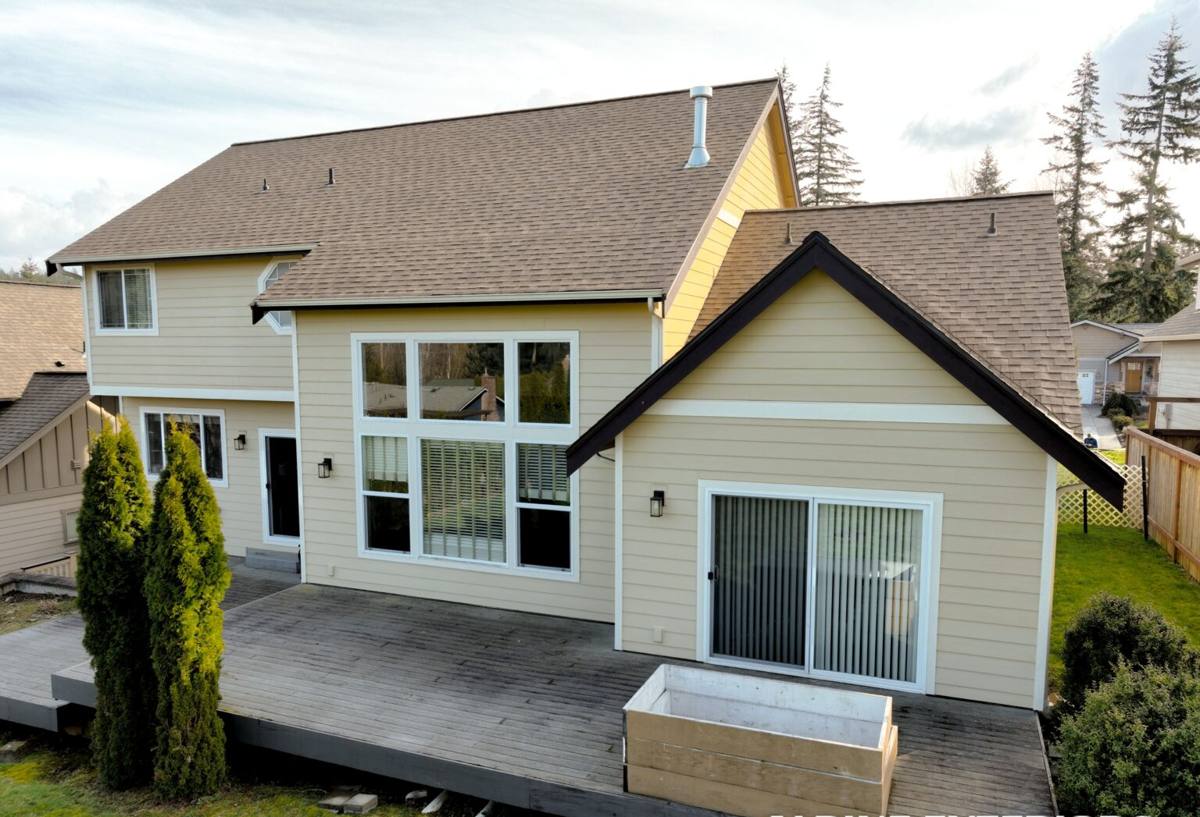
Why Metal Makes Sense for This Neighborhood
Three conditions define roofing life around Cascade Lake, and they compound each other:
- Persistent shade — the tree canopy keeps roof surfaces damp longer after rain than a shingle roof in full sun, which is the single biggest driver of moss and algae growth.
- Salt-laden air — like the rest of San Juan County, Cascade Lake gets marine air moving through the islands, which accelerates corrosion on unprotected fasteners and lower-grade metals over time.
- A long, wet moss season — driving rain off the lake and surrounding hills, combined with shade, means moss isn't a once-a-year nuisance here — it's closer to a year-round condition that needs to be designed against, not just cleaned off.
A correctly specified metal roof addresses all three: a smooth, hard, non-porous surface gives moss and algae far less to grip than the granular texture of asphalt shingles, and marine-rated coatings and fasteners are chosen specifically to resist salt-air corrosion. The result isn't a maintenance-free roof — nothing under these trees is — but it's a roof where moisture sheds fast instead of sitting.
What "Correct" Means in Practice
Metal roofing fails early almost every time because of installation shortcuts, not because the metal itself is inadequate. The panel is only one part of the system. Underlayment, fastener spacing, flashing detail, and ventilation all have to be matched to the specific conditions of a shaded, high-moisture site like this one — and that's where we spend most of our attention.
What a Correct Metal Roof Installation Involves
Panel Profile
For homes in this area we lean toward standing seam panels with concealed fasteners over exposed-fastener panel systems. Concealed fasteners mean there are no exposed screw penetrations for water to work into over years of freeze-thaw and wind-driven rain, which matters more here than in drier parts of the island. Exposed-fastener panels cost less up front and have their place on outbuildings or budget-conscious projects, but the washers on those screws are a wear item that needs periodic inspection and replacement — a maintenance obligation we're upfront about before you choose that route.
Underlayment and Moisture Control
Under heavy tree cover, we treat the underlayment layer as just as important as the panel itself. A synthetic, high-temp underlayment with self-adhered membrane at eaves, valleys, and any low-slope transitions gives the roof deck a second line of defense if wind-driven rain ever gets past the panel seams — which, under a dense canopy dropping debris and holding moisture, is worth planning for rather than assuming won't happen.
Fasteners and Flashing
Every fastener, clip, and piece of flashing on a Cascade Lake roof gets specified for marine exposure — stainless or coated steel components, not the mill-standard hardware that's fine sixty miles inland but corrodes visibly within a few seasons out here. Flashing at chimneys, skylights, and roof-to-wall transitions is where most roof leaks actually originate, metal or otherwise, so we treat that detailing as the part of the job that determines whether the roof performs for twenty years or five.
Ventilation
A shaded roof deck that can't breathe traps moisture underneath the panels even when the surface stays dry. We check ridge and soffit ventilation on every re-roof and correct it where it's inadequate — an old, under-ventilated attic is a common reason a roof looks fine from the ground but is quietly rotting the deck underneath.
| Roofing Option | Moss/Algae Resistance | Salt-Air Durability | Typical Lifespan | Relative Cost |
|---|---|---|---|---|
| Standing seam metal | Excellent — smooth surface sheds moisture fast | Excellent with marine-rated coatings and fasteners | 40–60+ years | Highest upfront |
| Exposed-fastener metal | Good | Good, but fastener washers need periodic checks | 30–45 years | Mid-range |
| Stone-coated steel | Good, textured surface holds slightly more debris | Good | 40–50 years | Mid-to-high |
| Asphalt shingles (for comparison) | Poor under shade — moss establishes quickly | Fair — granule loss accelerates in marine air | 15–25 years under canopy | Lowest upfront |
The Forest Canopy Challenge Around Cascade Lake
Roofing under a mature conifer canopy is its own discipline. Needle litter and fir cone debris collect in valleys and behind chimneys far faster than on an open roof, and that debris holds moisture against the surface exactly where you don't want it. A few things we build into every Cascade Lake project because of this:
- Wider, more accessible valley flashing so debris sheds instead of packing in.
- Gutter and downspout sizing that accounts for higher debris load, not just rain volume.
- Panel seam and clip spacing that holds up under occasional falling limb impact, which is a real consideration this close to mature timber.
- A frank conversation about any overhanging branches that are feeding debris directly onto the roof — sometimes the most cost-effective "roofing" work is a round of tree trimming before we ever set a panel.
Our Process for a Cascade Lake Metal Roofing Project
- On-site inspection. We walk the roof and attic, note existing moss growth, deck condition, ventilation, and any shade or debris patterns specific to your lot.
- System recommendation. Based on your roof's pitch, existing structure, and budget, we recommend a panel type and detail package — not a one-size-fits-all quote.
- Tear-off and deck check. Old roofing comes off down to the deck so we can actually see and address any rot or soft spots before covering them up — a step that gets skipped on cheap re-roofs and causes problems years later.
- Underlayment and flashing first. Every eave, valley, and penetration gets sealed and flashed before a single panel goes on.
- Panel installation. Panels are run, seamed, and fastened to manufacturer spec with marine-rated hardware throughout.
- Final walk-through. We review the finished roof, gutters, and any debris-management points with you directly before we consider the job done.
Maintenance Checklist for Metal Roofs Under Tree Cover
Metal roofing is low-maintenance compared to shingles, but "low" isn't "none" — especially in a shaded, forested setting like this. A simple annual routine keeps a metal roof performing for decades:
- Clear needle litter and debris from valleys and behind chimneys once or twice a year, more often if overhanging limbs are heavy.
- Check and clean gutters before the fall rains start, since clogged gutters back water up under eave flashing.
- Look for any dulling or discoloration on fastener heads (exposed-fastener systems) as an early sign a washer needs replacing.
- Trim back branches that are dropping debris directly onto the roof surface.
- After any significant windstorm, a quick visual check for displaced flashing or fallen debris is worth the ten minutes it takes.
What Drives the Cost of a Cascade Lake Metal Roof
Every quote is specific to the house, but the main variables we walk through with homeowners here are roof complexity (valleys, dormers, and chimneys all add labor), panel profile and gauge, the condition of the existing deck once we open it up, and access — some lots around the lake have limited staging space or a steep driveway, which affects crew and material logistics. We'll walk your roof and give you a written, itemized number before any work starts — no vague ranges, no surprises added mid-job.
Why Hire a Crew That Already Works Cascade Lake
Roofing logistics on Orcas Island aren't the same as on the mainland. Material deliveries have to be scheduled around ferry timing, dump runs for tear-off debris take real planning, and San Juan County permitting has its own timeline and requirements that catch mainland-based crews off guard. A contractor who already works this specific corner of the island knows the access points around Cascade Lake, has a working relationship with local suppliers, and isn't learning the ferry schedule on your project's dime. That familiarity shows up as fewer delays and fewer surprises — not as a marketing line, but as the practical difference between a job that runs on schedule and one that doesn't.
We're not the cheapest bid you'll get, and we won't pretend a metal roof is maintenance-free under a fir canopy. What we will do is spec the system correctly for this exact microclimate, detail the flashing and fasteners so salt air and moss don't get an early foothold, and stand behind the installation once it's done.
If you're considering a metal roof for your Cascade Lake home, we're happy to come take a look and give you a straightforward, no-pressure estimate — just fill out the form below.