 Orcas Island Siding
 Deck Building on Lopez Island: Built for the Water, Not Just Near It
A deck on Lopez Island lives a different life than a deck fifty miles inland. It sits close to salt water, takes wind and driving rain off the Sound, and spends a good chunk of the year damp under a canopy of firs and cedars that never quite let the moss season end. A deck built to a generic mainland spec — the kind of deck that would be fine in a dry inland subdivision — tends to show its age fast out here: soft spots at the ledger, corroded fasteners, decking that cups and splinters, railings that loosen a season or two before they should.
We build and repair decks across San Juan County, including regular work on Lopez Island, and this page is about what actually matters when you're putting a deck on an island where the air carries salt, the rain comes sideways, and moss will colonize any surface that stays shaded and damp long enough. This isn't a generic deck-building page — it's what we've learned building specifically for this kind of exposure.
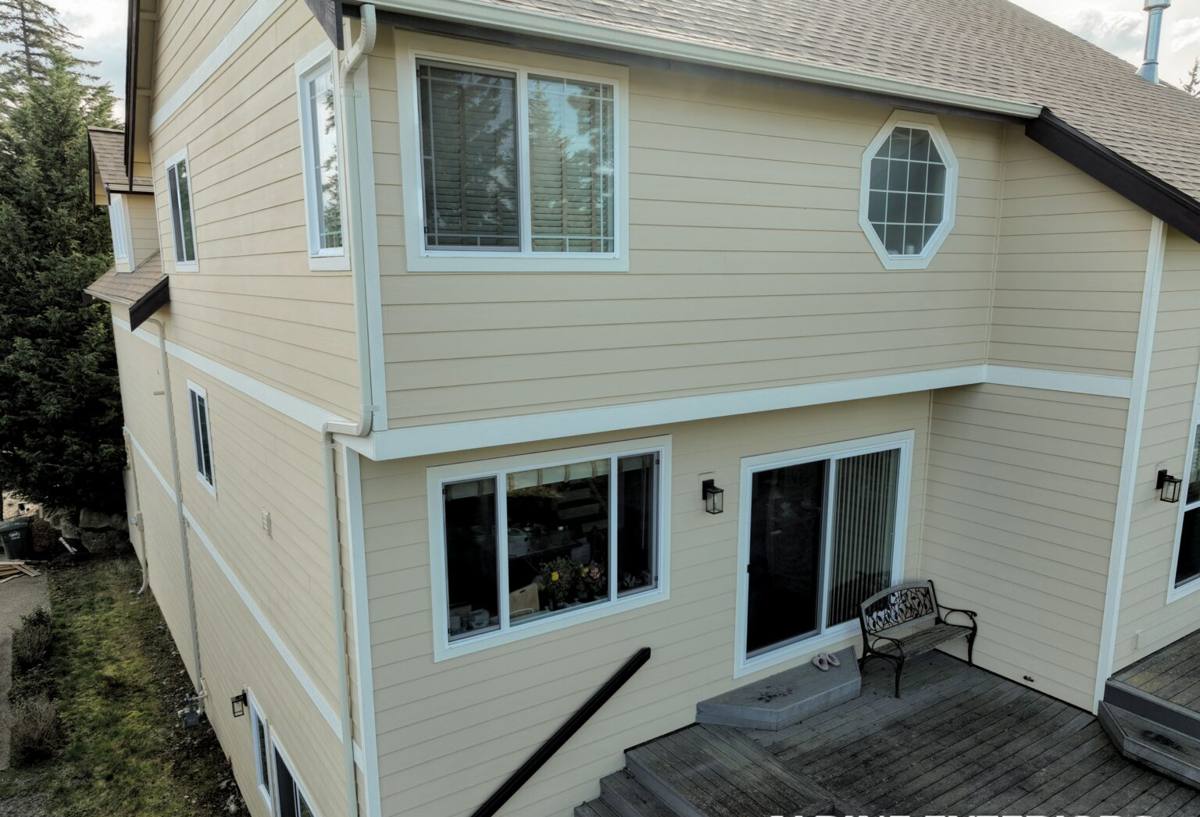
What Salt Air, Driving Rain, and Moss Season Actually Do to a Deck
Three things work against a deck out here, and they work together, not separately.
Salt Air
Even a deck that isn't waterfront gets salt-laden air moving across it. Salt accelerates corrosion on any exposed metal — fasteners, brackets, railing hardware — and standard zinc-coated screws or nails can start rusting and staining the wood around them well before the deck itself is due for replacement. Once a fastener corrodes, it loses grip strength, and that's a structural issue, not a cosmetic one.
Driving Rain
Wind-driven rain doesn't just fall on a deck, it gets pushed under railings, into end-grain cuts, and behind ledger boards where the deck attaches to the house. Water that gets trapped instead of shedding is what rots framing from the inside — often invisibly, until a board flexes underfoot or a railing post wiggles.
Moss Season
San Juan County's long wet season means extended stretches where deck surfaces, especially shaded ones under tree cover, stay damp for days at a time. Moss and algae take hold on any surface with texture and consistent moisture, and once established they hold water against the wood or composite surface, which speeds up wear and makes the deck genuinely slippery — a real safety issue on stairs and transitions, not just an appearance problem.
None of this means a deck can't hold up well on Lopez Island. It means the material choices, the framing details, and the fastener spec all have to account for it from the start, rather than being an afterthought.
Decking Material: What Actually Performs Out Here
There's no single right answer for every homeowner — budget, maintenance appetite, and how much sun or shade the deck sits in all matter. Here's how the common options actually compare under these conditions.
| Material | How It Handles Salt Air & Rain | Moss/Algae Resistance | Maintenance |
|---|---|---|---|
| Pressure-treated wood | Good structurally if properly fastened and sealed; needs re-sealing | Low — porous surface holds moisture, moss-prone in shade | Annual cleaning and re-sealing recommended |
| Cedar | Naturally rot-resistant, ages gracefully, but softer surface | Moderate — still needs cleaning in shaded, damp areas | Periodic cleaning and finish maintenance |
| Composite decking | Excellent — doesn't absorb water or rot | Moderate to good depending on surface texture; still needs periodic cleaning | Low — occasional washing, no sealing |
| PVC decking | Excellent — fully water-resistant | Good — smoother surfaces resist moss better than wood-grain composites | Low — washing only |
We won't tell you composite or PVC is the only acceptable choice — plenty of homeowners want the look and feel of real wood and are willing to keep up with the maintenance. What we will do is walk you through the honest trade-offs for your specific deck's sun exposure, tree cover, and how it's oriented to weather, so the choice fits how you'll actually use and maintain it.
Framing and Substructure: Where Lopez Island Decks Actually Fail
Most deck failures we see out here aren't decking failures — they're substructure failures. The surface boards are the part you see, but the ledger board, joists, posts, and footings are what hold the whole thing up, and they're also the parts most exposed to trapped moisture.
- Ledger flashing: Where the deck attaches to the house is the single most common point of hidden rot. Proper flashing that sheds water away from the house sheathing is non-negotiable, not optional.
- Joist protection: Joist tape or a comparable moisture barrier on top of framing members keeps water from wicking into end grain and fastener holes — cheap insurance against a very expensive repair later.
- Post and footing depth: Footings need to be sized and set to local frost and soil conditions, with posts properly isolated from standing water at grade.
- Airflow underneath: A deck built too close to grade, or without adequate ventilation underneath, traps humidity and accelerates rot and moss growth on the underside of the structure — the part nobody looks at until there's a problem.
Get the substructure right and the visible decking lasts as long as it's rated to. Get it wrong, and even premium decking sitting on rotting joists is a deck that needs to be torn apart within a few years.
Fasteners and Hardware: The Detail That Gets Skipped
This is where a lot of corners get cut, and it's the detail that matters most in a salt-air environment. Standard exterior screws and joist hangers are rated for general outdoor use, not specifically for coastal or marine-adjacent exposure. On Lopez Island, we spec stainless steel or marine-grade coated fasteners and hardware for connections that matter structurally — ledger bolts, joist hangers, post bases — because the cost difference over the life of the deck is small compared to the cost of a corroded connection failing quietly under the surface.
Railings and stair hardware get the same treatment. A railing post base that rusts and loosens isn't just an eyesore — it's a safety issue, especially on stairs that see moss and moisture for months at a time.
Permitting and Scheduling for Island Work
Deck construction on Lopez Island generally requires a permit through San Juan County, and depending on the deck's height, size, and proximity to shoreline or setback lines, that can mean additional review. We handle that process as part of the job rather than leaving it to the homeowner to sort out.
Island logistics also matter in ways they wouldn't on the mainland. Material deliveries, crew scheduling, and equipment access all have to account for ferry timing and limited crossings. We plan deck projects around that reality up front — batching material orders, scheduling crew days efficiently — rather than discovering mid-project that a delivery missed the boat and the job sits idle for a day.
Our Deck Building Process
Every deck starts with an honest look at the site, not a generic quote.
- On-site assessment: We look at sun and shade exposure, prevailing wind and rain direction, existing structure (if it's a rebuild or replacement), and how the deck ties into the house.
- Material and design discussion: We walk through decking, railing, and hardware options with the real trade-offs for your site — not a one-size answer.
- Permitting: We handle the San Juan County permit process where required.
- Demolition (if replacing): Old decking and, where needed, framing is removed and inspected so nothing questionable gets built over.
- Framing and flashing: Ledger, joists, posts, and footings go in with proper flashing and moisture protection before decking ever gets installed.
- Decking, railings, and finish work: Surface materials and railings are installed with fastener specs suited to the site's exposure.
- Final walkthrough: We go over the finished deck and, for wood decks, what a realistic maintenance schedule looks like.
Deck Maintenance Checklist for Lopez Island Homes
Whatever material you choose, a few habits go a long way toward getting the full lifespan out of a deck in this climate:
- Clean moss and algae off the surface at the start and end of the wet season, especially on shaded sections and stairs
- Check railing posts and stair connections annually for looseness — an early sign of fastener corrosion
- Keep gutters and downspouts near the deck clear so runoff isn't dumping extra water onto or under the structure
- Re-seal wood decking on the schedule the product calls for — don't wait for visible graying or cracking
- Trim back overhanging branches to reduce shade and debris buildup that feeds moss growth
- Have the substructure checked every few years, particularly the ledger connection to the house
Why Hire a Crew That Already Works Lopez Island
A deck built to a mainland-standard spec, by a crew that doesn't build regularly in marine, moss-heavy conditions, is more likely to need early repairs — corroded hardware, a rotted ledger, decking that never quite dries out between rains. We build and repair decks throughout San Juan County, including Lopez Island, so the fastener grade, flashing details, and framing choices on your deck aren't guesswork — they're what we've seen actually hold up out here versus what fails early.
We also already account for the logistics of island work — permitting through San Juan County, material delivery timing, and scheduling around ferry access — so those don't become surprises partway through your project.
If you're planning a new deck, replacing one that's showing its age, or just want an honest read on whether yours needs attention before another wet season, we're happy to take a look. Reach out for a free, no-pressure estimate using the form below.