 Orcas Island Siding
 Windows Built for Orcas Island's Weather, Not Just Its Views
Orcas homes get chosen for the view first and the weather second — and the weather doesn't care. On this side of San Juan County, windows take a beating from three directions at once: salt-laden air off the water, wind-driven rain that finds every gap in a poor install, and a long wet season that keeps moss and mildew active on north- and west-facing walls for months at a time. A window that looks fine going in can start failing within a few years if the frame material, flashing, and glazing weren't chosen and installed for this exact combination.
Custom windows means more than picking a size off a shelf. It means matching the frame material to your exposure, detailing the flashing so water has nowhere to go but out, and setting the glass package correctly for how that room is used — morning sun, cold-side bedroom, or a great room that needs to hold heat through a long gray winter. We build that thinking into every window job we do on Orcas, whether it's one replacement window or a full custom package for a new build or major remodel.
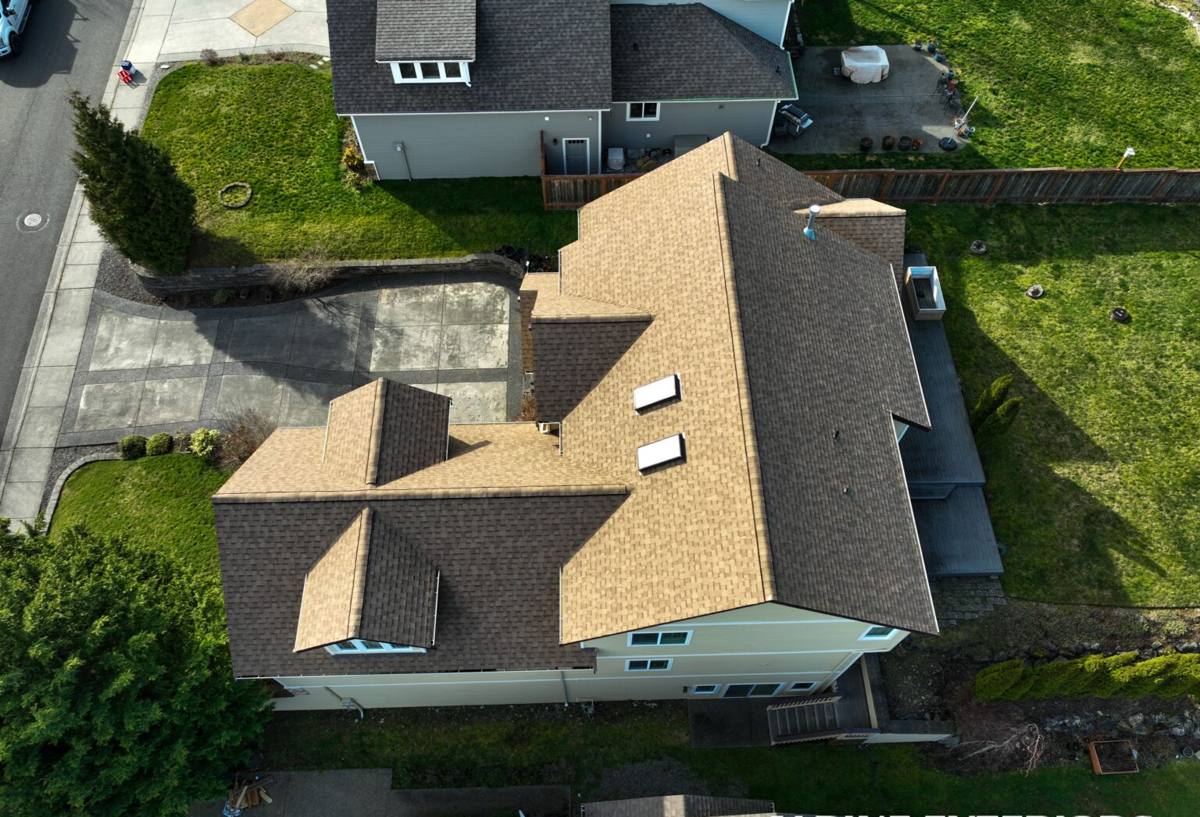
What Orcas Island's Climate Actually Does to Windows
Salt Air
Airborne salt from the surrounding waters settles on glass, frames, and especially hardware. Over time it corrodes cheap fasteners, pits unprotected aluminum, and dulls finishes faster than the same window would age twenty miles inland. It's not dramatic — it's slow, and it's exactly the kind of wear that gets ignored until a lock or a crank mechanism seizes up.
Driving Rain
Storms here don't just fall straight down — wind pushes rain sideways into wall assemblies, and windows are the weakest point in that wall if they're not flashed correctly. A window can be a great product and still leak if the sill pan, house wrap integration, and sealant details weren't done right. Most window leaks we get called out for on Orcas trace back to installation, not the window itself.
Moss Season
Shaded exposures and slow-drying corners on Orcas can stay damp for weeks, and moss and algae will colonize any surface that holds moisture — including window sills, trim, and the joint where frame meets siding. Left alone, that moisture cycle degrades wood trim, breaks down caulk lines, and eventually finds its way behind the frame.
None of these are reasons to avoid quality windows. They're reasons to be deliberate about material choice, flashing detail, and long-term maintenance — which is what a genuinely custom job accounts for.
What "Correct" Looks Like in a Window Install Here
- Sill pan flashing under every window, sloped to shed water outward — not just caulk and hope
- Frame material matched to exposure — different choices for a sheltered courtyard window than for one facing open water and prevailing wind
- Corrosion-resistant hardware and fasteners rated for coastal/marine-adjacent conditions
- Proper integration with the existing water-resistive barrier and siding, not just trim screwed over a gap
- Glazing package selected for the room's orientation and use, not a one-size default across the whole house
- Sealant and backer rod details that allow for material movement without cracking open
Any one of these done wrong shortens the life of an otherwise good window. Done right, they're the difference between a window that's still tight in fifteen years and one that's leaking or fogging in five.
Frame Material: What We Recommend and Why
| Material | Coastal Performance | Maintenance | Where It Fits |
|---|---|---|---|
| Vinyl (quality-grade) | Good — won't corrode, holds up to salt air well | Low — occasional wash-down | Most residential replacements, budget-conscious custom jobs |
| Fiberglass | Excellent — very stable, resists warping and corrosion | Low | High-exposure walls, larger custom openings, long-term hold |
| Wood-clad | Fair to good if detailing and finish are maintained | Higher — finish needs upkeep, especially in shaded/damp spots | Historic or architecturally matched homes where wood interior is wanted |
| Aluminum (uncoated/basic) | Poor near salt air unless specifically coastal-rated | Higher — prone to pitting and corrosion over time | Generally not our first recommendation for this exposure |
We don't push one material for every house. A sheltered inland-facing wall on a property tucked away from open water can support a wider range of choices than a window facing directly into weather off the strait. Part of a proper custom-window estimate is walking your specific exposures with you before recommending a material, not applying the same answer to every house on Orcas.
Glazing and Performance Choices That Matter Locally
Double-pane, low-E glass is the practical baseline for this climate — it helps hold heat through the wet, gray months without turning a sunny afternoon room into a greenhouse. For rooms with more direct exposure or larger glass areas, we'll talk through options like tinted or higher-performance low-E coatings and gas-fill packages, and weigh the added cost against the actual comfort and energy benefit for that specific room. We won't upsell glazing you don't need, and we won't undersell it where it genuinely pays off — for example, a west-facing room that gets hard afternoon sun benefits more from solar control glass than a shaded north bedroom does.
Condensation is another local reality worth planning for. Cooler, humid air common to the islands can show up as interior condensation on underperforming glass or poorly sealed frames, especially in bathrooms and bedrooms that don't get much airflow. A correctly specified glazing package and tight install cuts that down significantly.
Our Process for a Custom Window Job on Orcas
- On-site assessment. We look at each window opening individually — orientation, exposure, existing flashing condition, and how water currently moves around that wall.
- Material and glazing recommendation. Based on that walk-through, not a generic package, matched to your budget and priorities.
- Precise measurement and ordering. Custom means built to your actual openings, not adjusted-to-fit stock sizes.
- Removal and inspection. When we pull the old window, we check the framing and sheathing behind it for rot or moisture damage before anything new goes in — this is often where hidden problems from years of driving rain surface.
- Correct flashing and installation. Sill pan, water-resistive barrier integration, and sealant details done in the right order, every time.
- Final check and cleanup. Operation, seal, and finish work confirmed before we consider the job done.
Repair, Replace, or Full Custom — Knowing the Difference
Not every window problem on Orcas needs a full replacement. A window that's drafty but structurally sound might just need re-sealing, hardware service, or weatherstripping. A window with fogged glass but a solid frame may only need the insulated glass unit replaced. But if you're seeing soft trim, staining on interior sills, or a frame that's swollen or spongy to the touch, that's usually water intrusion that's already reached the framing — and at that point, patching the symptom without addressing the install is a short-term fix at best.
Part of an honest estimate is telling you which category your situation falls into before recommending the most expensive option.
Cost Factors for Custom Windows
| Factor | Why It Matters |
|---|---|
| Frame material | Vinyl, fiberglass, and wood-clad carry different material and labor costs |
| Window size and configuration | Large picture windows, custom shapes, and multi-unit combinations cost more than standard operable units |
| Exposure and access | Upper-story or hard-to-access openings add labor time |
| Condition behind the old window | Rot or moisture damage found during removal adds repair scope |
| Glazing package | Standard low-E versus upgraded performance glass shifts price per unit |
| Number of openings | Whole-house packages typically bring a better per-window cost than one-off replacements |
We'll give you real numbers for your specific windows during the estimate — broad ranges without seeing the openings aren't useful to you, and we'd rather be accurate than fast with a guess.
Why Hire a Crew That Already Works Orcas
Window installation done wrong doesn't usually fail on day one — it fails two or three winters later, after the driving rain and moss season have had time to find the mistake. A crew that installs in this exact environment regularly knows which exposures need extra flashing attention, which materials hold up and which don't, and what a marine-adjacent climate does to hardware and sealant over time that a mainland-only crew might not think to plan for. That local knowledge is baked into how we spec and install every window, not an afterthought.
If you're planning a window replacement or a custom window package for your Orcas home, we're happy to walk the property, look at your specific exposures, and give you a straightforward, no-pressure estimate — just fill out the form below.