 Orcas Island Siding
 Crow Valley's Roofs Work Harder Than Most
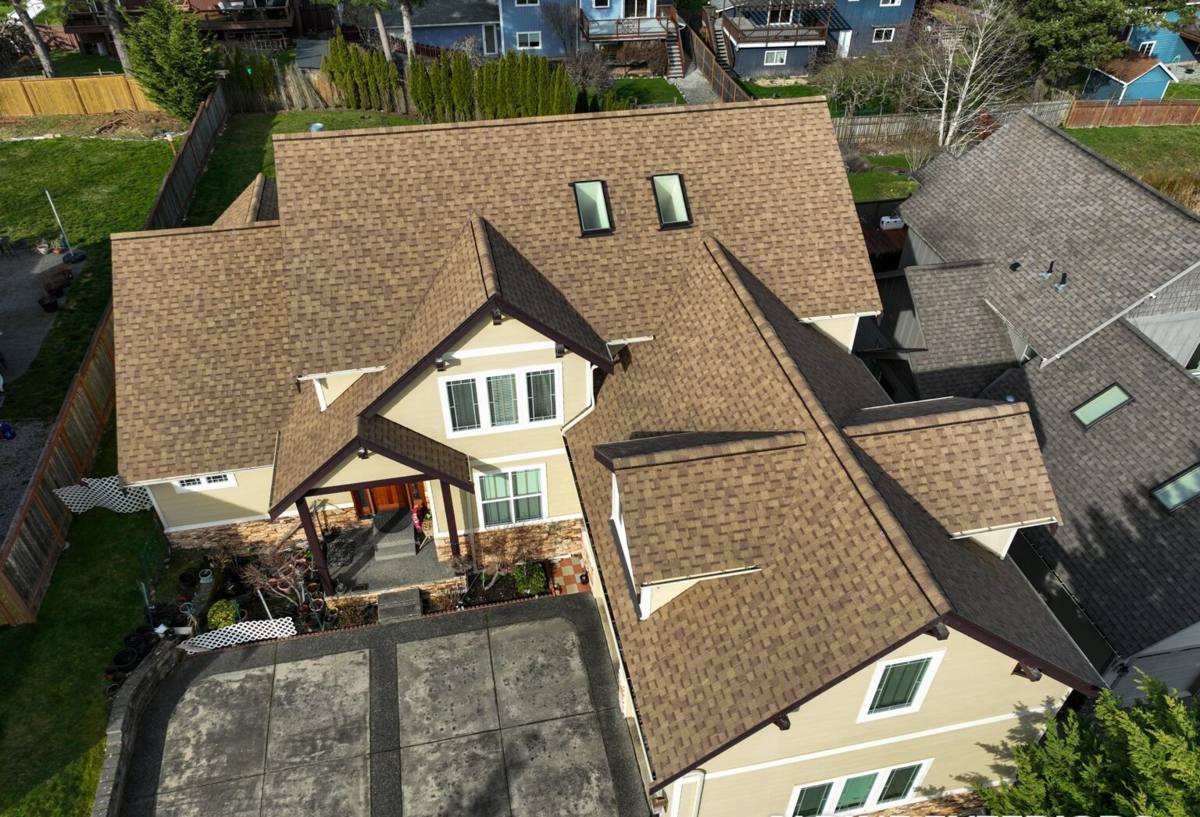
Crow Valley sits inland enough from the ferry landing to feel a little different from the rest of Orcas Island, but the roofing challenges are the same San Juan County package: salt-laden air drifting up from the water, long stretches of driving rain in the fall and winter, and a moss season that can run from October clear through May in the shadier, tree-covered lots the valley is known for. An asphalt shingle roof here isn't just shedding water — it's fighting slow corrosion on every exposed metal fastener, resisting wind-driven rain that finds its way sideways under poorly lapped shingles, and carrying the weight of moss and debris that most mainland roofs never deal with.
None of that means asphalt shingles are a bad choice for a Crow Valley home. They're still one of the most practical, cost-effective roofing systems available, and a properly installed and maintained shingle roof holds up well out here. But "properly installed" is doing a lot of work in that sentence, and it's where a lot of roofs in this area start to go wrong years before they should.
What the Local Climate Actually Does to a Shingle Roof
Salt Air and Metal Fatigue
Being part of San Juan County, Orcas Island sits in a marine environment, and Crow Valley is no exception even set back from the shoreline. Salt in the air accelerates corrosion on any unprotected steel — nail heads, flashing seams, vent stacks, and gutter hardware. Standard electro-galvanized fasteners can start showing rust streaks on a shingle roof well before the shingles themselves are due for replacement. That streaking isn't just cosmetic; it usually means the fastener is losing holding strength.
Driving Rain and Wind-Driven Moisture
Winter storms in this part of Washington rarely fall straight down. Wind pushes rain sideways and up under shingle tabs, especially at ridges, valleys, and anywhere the roof plane changes. A shingle roof that was installed with standard nail placement and minimal underlayment overlap can handle a normal rain event fine and still leak during a real Pacific storm. This is a case where following the shingle manufacturer's minimum installation spec isn't the same as building a roof that's actually right for this island.
Moss, Shade, and Organic Buildup
Crow Valley's tree cover is part of what makes it a beautiful place to live, and it's also why moss and algae get such a strong foothold on north-facing and shaded roof slopes. Moss holds moisture against the shingle surface far longer than the shingle was designed to tolerate, and its root structure works its way under tab edges and granule surfaces over time. Left unchecked for a few seasons, moss growth shortens the practical life of an asphalt shingle roof more than almost any other single factor in this region.
What a Correct Asphalt Shingle Roof Looks Like Out Here
A roof built for Crow Valley's conditions isn't a different product than a roof built anywhere else — it's the same asphalt shingle system, installed with attention to the details that matter most in this climate.
- Corrosion-resistant fasteners and flashing rated for coastal/marine exposure, not the cheapest fastener that meets code minimum
- Ice-and-water shield or equivalent self-adhered membrane at eaves, valleys, and roof penetrations, not just at the code-required minimum zones
- Synthetic underlayment with proper overlap for wind-driven rain, not builder's felt laid to the bare minimum
- Balanced intake and exhaust ventilation so moisture doesn't condense inside the attic and attack the deck from underneath
- Metal flashing at every roof-to-wall transition, chimney, and skylight, correctly stepped and counter-flashed rather than relying on caulk or roof cement
- Shingle nailing pattern matched to the local wind exposure, not just the manufacturer's baseline
Skipping any one of these doesn't usually cause an obvious problem in year one. It shows up in year six or seven as a leak, a soft spot in the decking, or moss that keeps coming back no matter how often it's cleaned off.
Signs Your Crow Valley Roof Needs a Closer Look
- Dark streaking or green-black growth concentrated on shaded or north-facing slopes
- Granules collecting in gutters or at the base of downspouts
- Shingle tabs that are curling, cupping, or lifting at the edges
- Rust streaks below nail heads, vent stacks, or flashing seams
- Daylight visible around chimney or skylight flashing from inside the attic
- Soft or spongy feeling decking noticed during a walk on the roof
- Interior ceiling stains, especially after a heavy wind-driven rain event
Any one of these on its own isn't necessarily an emergency. A few of them together, especially moss combined with granule loss, usually means the roof has moved past routine maintenance and into repair-or-replace territory.
Our Asphalt Shingle Roofing Process
Assessment First
We start with an actual walk of the roof, not just a look from the ground. We check the deck condition, existing ventilation, flashing details, and how the current roof has held up to this specific property's exposure — sun, shade, tree cover, and wind direction all vary lot to lot in Crow Valley, and the roof plan should reflect that.
Tear-Off and Deck Prep
We remove the old roofing down to the deck rather than layering over it. That lets us actually inspect the sheathing for rot or soft spots — common where moss has been sitting against the deck for years — and replace only what needs replacing, not the whole deck if it doesn't need it.
Underlayment and Flashing
This is where a roof built for this climate earns its keep. We install self-adhered membrane at eaves, valleys, and penetrations, synthetic underlayment across the field with proper overlap, and new metal flashing at every transition point rather than reusing old flashing or patching with sealant.
Shingle Installation
Shingles go down with a nailing pattern appropriate for local wind exposure, correct starter courses at eaves and rakes, and attention to exposure and alignment so the roof lays flat and sheds water the way it's designed to.
Ventilation and Cleanup
We confirm intake and exhaust venting are balanced before we call the job done — an unventilated or poorly ventilated attic will shorten shingle life regardless of how well the roof itself was installed. We clean the site thoroughly, including magnet-sweeping for stray nails.
Shingle Options and What Drives Cost
| Factor | What It Affects | Local Consideration |
|---|---|---|
| Shingle grade (3-tab vs. architectural/laminate) | Upfront cost, wind rating, appearance | Architectural shingles generally hold up better to Orcas Island wind and rain exposure |
| Roof pitch and complexity | Labor time, waste factor | Steeper or more cut-up rooflines take longer and generate more waste |
| Existing layers to remove | Tear-off labor and disposal cost | Older Crow Valley homes sometimes have a layer or two to remove |
| Underlayment and ice-and-water shield extent | Material cost, long-term leak resistance | Worth extending beyond code minimum given local wind-driven rain |
| Deck repair needed | Added material and labor | More likely where moss has held moisture against the deck for years |
| Ventilation upgrades | Added material and labor | Common on older homes with inadequate original venting |
| Access and staging | Labor time | Tree cover and tighter lots in parts of Crow Valley can affect setup |
We won't quote a number here without seeing the roof — pitch, size, deck condition, and material choice all move the price too much for a broad figure to be honest. What we can tell you upfront is that we price the job to include the underlayment and flashing detail this climate actually needs, not a stripped-down version that looks cheaper on paper and costs more in five years.
Living With Moss and Salt Air After the New Roof Is On
A correctly installed roof still needs some seasonal attention out here. Keeping gutters clear so water isn't backing up under the shingle edge, keeping overhanging branches trimmed back so shaded areas dry out between rain events, and having moss growth addressed before it takes hold rather than after all go a long way toward getting full life out of the roof. We're happy to talk through a simple maintenance rhythm that fits your property when we're out for the estimate — it's a lot cheaper than a premature re-roof.
Why a Crew That Already Works Crow Valley Matters
Roofing here isn't quite the same job as roofing on the mainland, and it's not only about the weather. Getting materials to Orcas Island means planning around ferry schedules, and a crew that already does this regularly builds that into the job timeline instead of letting it cause delays mid-project. Knowing which slopes in a given part of Crow Valley tend to hold moss, which properties see the worst wind-driven rain, and how San Juan County permitting and inspection actually works locally all come from doing this work here repeatedly — not from a general roofing background applied to an island job for the first time. We live and work in this county, and a roof we install here has to hold up to the same weather our own homes do.
Standards We Hold To
We stand behind our installation workmanship, and we install shingle products with manufacturer warranties that stay valid because the installation followed spec — including the enhanced details this climate calls for, like corrosion-resistant fasteners and full flashing at every transition. We'll walk you through exactly what's covered, for how long, and what routine maintenance (like keeping moss in check) you need to keep up on your end to keep that coverage intact.
If your Crow Valley roof is showing its age, growing moss it shouldn't, or you're just planning ahead for a replacement, we're glad to come take an honest look. The estimate is free, there's no pressure attached to it, and you can use the form below to get on our schedule.