 Orcas Island Siding
 Crow Valley Decks Face a Different Kind of Wear
Crow Valley sits back from the open water that defines so much of Orcas Island, and that changes how a deck ages here. Homes tucked into the valley get less of the direct salt spray that hammers waterfront decks, but they trade that for something almost as tough on wood and fasteners: heavy tree cover, deep shade for large parts of the day, and slow-drying air pooled in a low-lying valley. Add in San Juan County's long wet season and a moss season that can stretch from fall through spring, and you get decks that hold moisture longer than their counterparts closer to the shoreline.
That combination is exactly why we don't treat every Orcas Island deck the same. A deck built for an open, sunny lot on the west side of the island will not perform the same way in Crow Valley's dappled shade. Framing choices, decking material, and even the direction the boards run all matter more when a deck spends half the year damp.
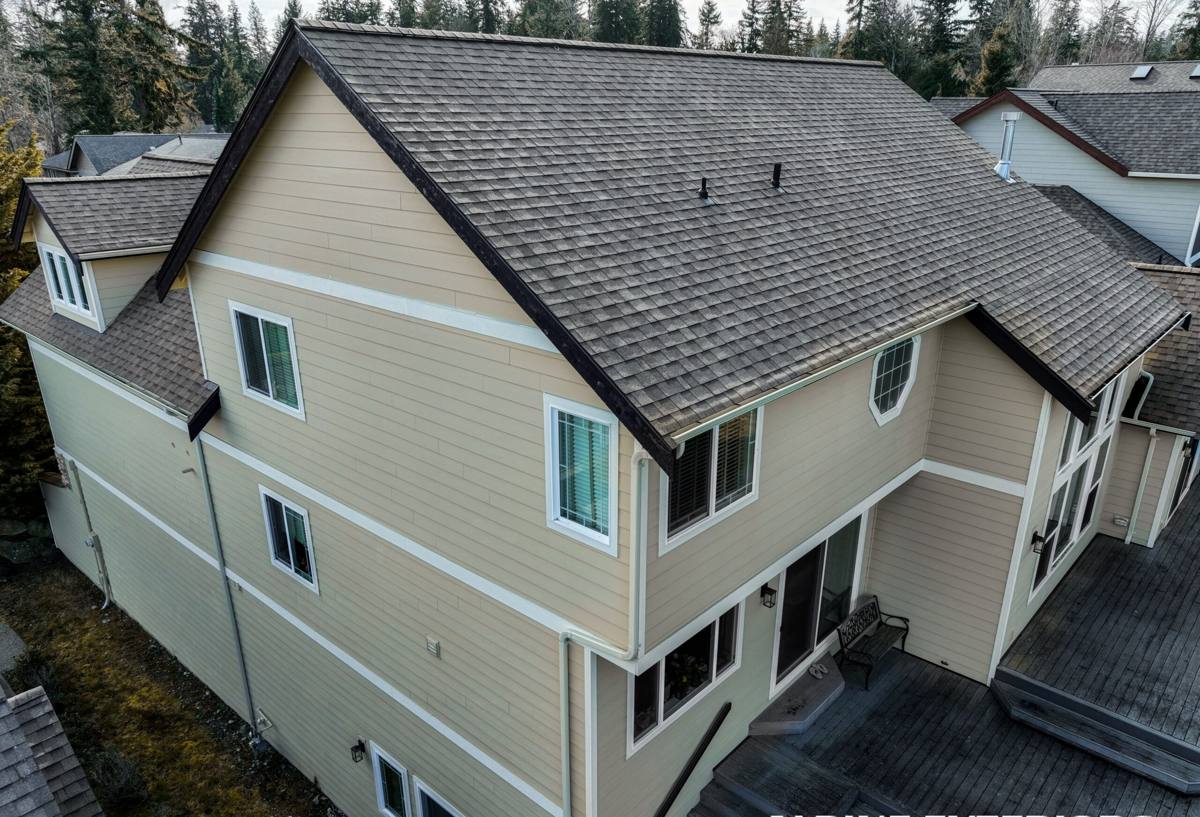
Signs a Crow Valley Deck Needs Replacement, Not Just Repair
Not every problem deck needs to come out. But in a shaded, moisture-heavy setting like Crow Valley, certain warning signs mean repair is a short-term patch at best.
- Soft or spongy decking, especially near the house or in shaded corners where moss and debris collect
- Ledger board or rim joist showing dark staining, swelling, or soft wood where the deck meets the house
- Support posts or footings that have shifted, settled, or show rot at the base
- Persistent moss or black-green growth that returns within weeks of cleaning
- Fasteners that are rusted, backing out, or leaving dark streaks down the boards
- A deck older than 15-20 years that has never had its structural framing inspected
If what you're seeing is limited to a few boards or a railing, repair may make sense. If it's the framing, the ledger connection, or the footings, replacement is usually the honest answer — patching structural rot just moves the problem a year or two down the road.
Why Shaded Decks Fail Faster Than People Expect
Sun does a lot of quiet maintenance work on a deck by drying it out between rain events. In a shaded Crow Valley yard, that drying window shrinks. Boards, joists, and hardware can stay damp for days after a storm, which is exactly the environment wood rot and corrosion need. It's a slower failure than storm damage, but it's steady, and it's often furthest along in the spots you can't see from the surface — the underside of the decking and the top of the joists.
What a Correct Deck Replacement Actually Involves
A deck replacement is more than pulling up old boards and screwing down new ones. Done right, it's a structural project with a weatherproofing job built into it.
Framing and Structure
We inspect and, where needed, replace ledger boards, joists, beams, and posts. In a damp, shaded lot, we pay close attention to any wood-to-wood or wood-to-concrete contact point, since that's where moisture gets trapped longest.
Ledger Flashing
The connection between the deck and your house is the single most common source of hidden rot on any Pacific Northwest deck. Proper flashing — installed so water sheds away from the house rather than behind the ledger — is not optional in our process, regardless of what the old deck had.
Footings
Footings need to sit below frost depth and bear on stable, undisturbed soil. Valley lots with more organic topsoil and less direct sun can shift more than you'd expect over a decade or two, so we check footing condition and depth before building on top of them.
Joist Protection
We tape or cap joist tops before decking goes down. It's a small material cost that keeps water from soaking straight into end grain and cut edges — the fastest way for a joist to start rotting from the top down, out of sight under the boards.
Decking and Fasteners
Board selection and fastener type both need to match the site conditions, not just the homeowner's budget. We'll walk through the real trade-offs rather than pushing one product for every yard.
Choosing Decking Material for a Shaded, Moist Site
There's no single "best" decking material — there's the right one for your specific lot, budget, and how much maintenance you want to take on. Crow Valley's shade and moisture change the math compared to an open, sunny site.
| Material | How It Handles Shade & Moisture | Maintenance | Typical Lifespan |
|---|---|---|---|
| Pressure-treated wood | Good if properly sealed and kept clear of standing debris; more prone to moss and mildew in shade | Annual cleaning, periodic sealing/staining | 15-25 years with upkeep |
| Cedar | Naturally rot-resistant but still needs airflow underneath; can gray and hold moisture in deep shade | Regular cleaning, refinishing every few years | 20-25 years with upkeep |
| Composite decking | Doesn't rot, but shaded composite can stay damp longer, which shows as slower drying and more visible mildew if not rinsed periodically | Occasional washing, no sealing/staining | 25-30+ years, manufacturer-dependent |
| PVC/capped polymer decking | Fully moisture-resistant surface; best option where shade and organic debris are constant | Low — occasional rinsing | 25-30+ years, manufacturer-dependent |
For most Crow Valley properties we lean homeowners toward composite or capped polymer decking specifically because it removes rot risk from the equation entirely — the shade and moss season simply don't get a foothold the way they do with raw wood. That said, plenty of homeowners want the look and feel of real wood, and that's a legitimate choice too, as long as you go in knowing the maintenance commitment is higher in a low-sun setting.
Our Deck Replacement Process
- On-site evaluation. We look at the existing structure, ledger connection, footings, and the site's sun/shade pattern before recommending anything.
- Honest scope and estimate. You get a clear breakdown of what needs to be replaced structurally versus cosmetically, and what materials fit your budget and the site.
- Demolition and disposal. Old decking, framing, and debris are removed and hauled off — including any material caught underneath that's been quietly rotting out of view.
- Structural rebuild. Framing, ledger flashing, footings, and joist protection are installed or corrected before a single deck board goes down.
- Decking installation. Boards, fasteners, and any railing or stair work are completed to code and to the manufacturer's spec if you've chosen a composite or PVC product.
- Final walkthrough. We go over the finished deck with you, including what maintenance (if any) it needs going forward.
What Affects the Cost of a Crow Valley Deck Replacement
Every deck is different, so we don't quote sight unseen — but these are the factors that move the price up or down on most projects in this area.
| Factor | Why It Matters |
|---|---|
| Deck size and shape | Square footage and the number of angles, steps, or level changes drive labor and material |
| Decking material | Pressure-treated wood costs less upfront; composite and PVC cost more but need far less upkeep |
| Framing condition | If joists, beams, or footings need replacement, that's structural work beyond surface decking |
| Height and railing requirements | Taller decks and code-required railings add labor and material |
| Site access | Valley lots with limited equipment access can add time for material staging and debris removal |
| Ferry and delivery scheduling | Material lead times for San Juan County projects need to be planned into the timeline, not discovered mid-project |
Broadly, a straightforward pressure-treated deck replacement costs less than a comparable composite or PVC rebuild, but the gap narrows over time once you factor in staining, sealing, and repair labor on a wood deck. We'll lay out real numbers for your specific project during the estimate, not a generic range that doesn't reflect your site.
Permits and Building Code in San Juan County
Most deck replacements in San Juan County require a building permit, particularly when structural framing, footings, or railings are involved — even if you're keeping the deck's existing footprint. Requirements can depend on deck height, size, and proximity to property lines or critical areas. We handle the permit process as part of the job so you're not left figuring out county requirements on your own, and so the finished deck is actually inspected and code-compliant, not just built to look right.
Keeping a New Deck Healthy in Crow Valley's Climate
Whatever material you choose, a little seasonal attention goes a long way in a shaded, moisture-prone yard.
- Sweep leaves, needles, and moss off the deck surface regularly, especially in fall
- Keep gutters and downspouts clear so runoff doesn't drain directly onto the deck
- Rinse composite or PVC decking a few times a year to prevent mildew buildup in shaded areas
- Re-seal or re-stain wood decking on the schedule the product actually requires, not "when it looks bad"
- Check under the deck once a year for standing moisture, debris buildup, or signs of pest activity
- Trim back overhanging branches and vegetation to improve airflow and sun exposure where possible
Why a Crew That Already Works Crow Valley Matters
A deck built to a generic spec sheet doesn't always hold up the same way in every yard. We work across Orcas Island and San Juan County regularly, which means we've seen firsthand how differently a valley lot ages compared to an open, sun-exposed waterfront property — and we build accordingly, from footing depth to fastener choice to which decking products actually make sense in the shade. We also know the local permitting process, the realities of getting materials to the island on schedule, and how to sequence a project around ferry logistics without surprising you mid-build.
That local knowledge isn't a marketing line — it's the difference between a deck that needs attention again in five years and one that holds up for the two or three decades it's supposed to.
If your Crow Valley deck is showing its age, or you just want an honest opinion on whether it needs repair or full replacement, we're glad to take a look. Reach out for a free, no-pressure estimate using the form below.