 Orcas Island Siding
 Siding Built for Doe Bay's Weather, Not Against It
Doe Bay sits on the exposed eastern side of Orcas Island, where homes take a steady diet of salt-laden wind off the water, long stretches of driving rain, and the kind of shaded, damp microclimate that keeps moss and algae growing nearly year-round. A siding product that works fine in a dry inland neighborhood can struggle here. We install James Hardie fiber cement siding specifically because it holds up to this combination of conditions, and we've done enough work around San Juan County to know which details matter most in a marine environment like this one.
This page covers what Doe Bay homes specifically need from a siding job, what correct installation looks like in this setting, and how our process works from first look to final walk-through.
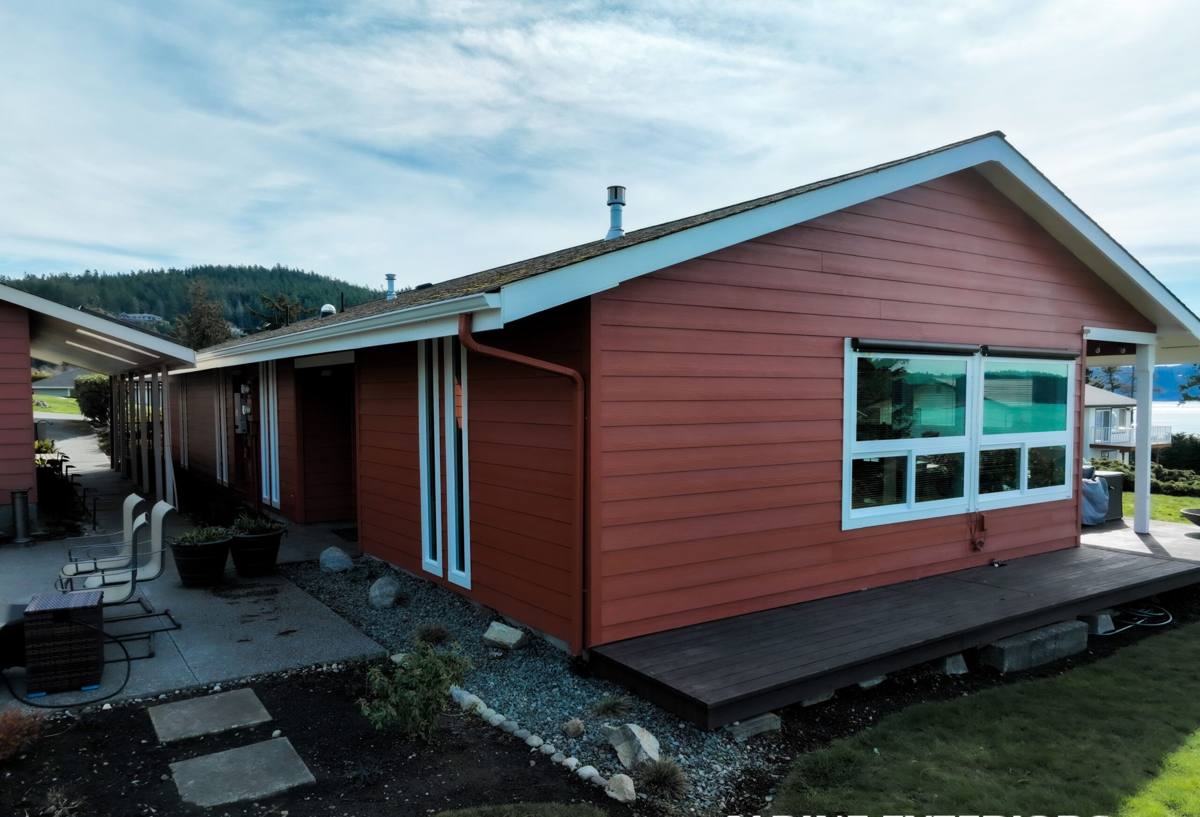
What Doe Bay's Climate Actually Does to Siding
Salt Air and Corrosion
Airborne salt from the surrounding waters doesn't just affect metal fasteners and flashing — it accelerates the breakdown of paint films and lower-grade siding materials over time. Anything installed here needs fasteners and trim details rated for a coastal environment, and a finish that isn't going to chalk or fade prematurely under salt exposure.
Driving Rain and Wind-Driven Moisture
San Juan County gets weather that comes in sideways more often than most people expect, especially on exposed or elevated Doe Bay lots. Wind-driven rain pushes water into laps, seams, and penetrations that would stay dry in a calmer climate. That means water-resistive barrier detailing, proper lap coverage, and correctly flashed windows and trim aren't optional extras — they're the difference between a siding job that lasts decades and one that starts showing rot behind the boards in five or six years.
Moss and Shade
Between tree cover and the region's long, wet fall-through-spring stretch, many Doe Bay homes sit in near-constant dampness for months at a time. Moss and algae growth on north-facing walls and shaded elevations is common. Siding that absorbs moisture readily gives moss something to root into and hold onto; siding that resists moisture uptake sheds it far more easily.
Why We Install Only James Hardie
We standardized on James Hardie fiber cement for every siding job we do, including here in Doe Bay, for reasons that come directly from what this climate demands:
- Non-combustible core: fiber cement doesn't feed a fire the way wood-based products can, which matters on a rural island where fire response times are longer than in a dense town.
- Engineered for moisture, not just painted against it: Hardie's fiber cement formulation is dimensionally stable and doesn't swell, cup, or rot the way wood, primed spruce, or some engineered wood products can when they take on repeated moisture.
- ColorPlus factory finish: a baked-on finish applied under controlled conditions holds color and resists fading, chalking, and salt-air wear better than field-applied paint, and it comes backed by its own finish warranty.
- HZ5 product engineering: Hardie's HZ5 line is specifically engineered for colder, wetter climate zones like the Pacific Northwest, which includes the San Juan Islands.
- Long, transferable warranty: a warranty that holds up over decades and transfers to a future buyer, which matters for resale on an island where buyers are increasingly asking about exterior condition and maintenance history.
We don't install vinyl, LP SmartSide, Cemplank, Allura, or bare cedar or primed spruce siding. Each of those has a legitimate place in the market, but none of them match Hardie's combination of moisture performance, fire resistance, and finish durability for a coastal Orcas Island property, and we'd rather install one product correctly and stand behind it than offer several we're less confident in long-term.
What a Correct Installation Involves Here
Fiber cement siding is only as good as the assembly behind it. In a high-moisture, wind-exposed setting like Doe Bay, the details below aren't optional — they're what separates a siding job that performs for 30-plus years from one that fails early despite using the right product.
Weather-Resistive Barrier and Drainage Plane
Every wall gets a continuous, properly lapped weather-resistive barrier before siding goes on. In a driving-rain climate, any gap or shortcut here becomes the entry point for moisture that gets trapped behind the cladding.
Flashing at Every Penetration
Windows, doors, vents, hose bibs, and any other wall penetration get properly integrated flashing, not just caulk. Caulk fails; correctly lapped flashing sheds water by design and keeps working even after the sealant ages.
Rainscreen or Proper Clearance
Where the wall assembly and budget allow, a rainscreen gap behind the siding gives any moisture that does get past the cladding a path to drain and dry out, rather than sitting against the sheathing. At minimum, correct clearances between siding and grade, decks, and roof lines keep water from wicking up into the material.
Fastening and Joint Treatment
Corrosion-resistant fasteners, correct nailing patterns per Hardie's installation specifications, and properly treated butt joints all matter more in salt air than they would inland. A missed detail here shows up as a rust streak or a failed joint well before the siding itself would ever wear out.
Cost Factors for a Doe Bay Hardie Siding Job
| Factor | Why It Matters Here |
|---|---|
| Wall exposure and orientation | Elevations facing prevailing wind and rain typically need more careful flashing and joint detailing, which affects labor time. |
| Existing wall condition | Moisture-damaged sheathing found during tear-off needs repair before new siding goes on — this is common on older, shaded structures. |
| Access and site logistics | Island delivery timing and site access (driveways, staging area, water access on some lots) can affect scheduling and cost. |
| Trim and detail complexity | Homes with more corners, dormers, or architectural detail require more precise flashing and cut work. |
| Product line and profile | HardiePlank lap siding, HardiePanel, and shingle-style profiles carry different material and labor costs. |
| Color and finish | Factory ColorPlus finishes vary by cost tier; special-order colors can affect lead time on island deliveries. |
We give a firm, itemized quote after seeing the actual house — broad ranges without a site visit aren't useful on a property-by-property basis, especially with the variation in wall exposure and existing condition we see across Doe Bay lots.
Our Process on Your Doe Bay Property
- Walkthrough and assessment: we look at existing siding condition, wall assembly, moisture history, and exposure on each elevation.
- Written estimate: a clear, itemized quote covering tear-off, any sheathing repair, weather barrier, flashing, and the Hardie product and finish you choose.
- Material scheduling: we account for island delivery lead times so your project isn't held up waiting on materials mid-job.
- Tear-off and inspection: old siding comes off and we inspect sheathing for hidden moisture damage before covering anything back up.
- Barrier, flashing, and rainscreen installation: the assembly behind the siding gets built correctly, since this is what determines long-term performance.
- Hardie siding installation: installed to manufacturer specification for fastening, clearances, and joint treatment.
- Final walk-through: we go over the finished job with you before calling it complete.
Why Hiring a Crew That Already Works Doe Bay Matters
Island work isn't the same as mainland work. Material and dumpster logistics, ferry-dependent scheduling, and knowing which wall assemblies actually hold up on exposed San Juan County lots versus sheltered ones all come from doing the work here repeatedly, not from a one-off job. A crew unfamiliar with island logistics can blow a schedule waiting on a delivery, or miss that a shaded, moss-prone wall needs different drainage detailing than a sun-exposed one on the same house.
We also know this isn't a market where a homeowner can easily get a contractor back out for a warranty callback on short notice. That's part of why we install to spec the first time and stand behind a single product line we know cold, rather than offering a menu of siding options and hoping each installation crew gets the moisture details right.
Signs Your Doe Bay Home May Need Siding Attention
- Persistent moss or algae growth on north-facing or shaded walls that keeps coming back after cleaning
- Soft or spongy spots when you press on siding, especially near the bottom courses or around windows
- Paint that's peeling, bubbling, or chalking heavily on wind-exposed elevations
- Visible gaps, warping, or cupping in existing boards
- Rust streaking below fasteners or trim
- Rising heating bills that may point to a compromised building envelope behind the siding
If you're seeing any of these, it's worth having someone look at the wall assembly, not just the surface — surface damage is often the last sign of a problem that's been developing behind the siding for a while.
Get a Free, No-Pressure Estimate
If you're weighing siding options for a Doe Bay property, we're happy to walk the exterior with you, explain what we're seeing, and put together a straightforward written estimate — no pressure, no obligation. Use the form below to get started.