 Orcas Island Siding
 Doe Bay's Climate Puts Real Demands on Exterior Siding
Doe Bay sits along the quieter, more exposed side of Orcas Island, where homes deal with a mix of conditions that older or lower-grade siding simply isn't built to handle long-term. Salt-laden air off the water works into seams, fasteners, and paint film. Driving rain off San Juan County's marine weather pattern drives moisture sideways into wall systems, not just down. And the tree cover that makes so many Doe Bay properties beautiful also means shade, damp air, and a moss season that can run most of the year in the right spot.
None of that is unusual for this part of Washington. But it does mean siding replacement here isn't a cosmetic project — it's a building-envelope decision. The right material and the right installation details matter more in Doe Bay than they would on a dry, sun-exposed lot inland, and the wrong choices show up faster: peeling paint, soft trim, streaked moss growth, and siding that cups or swells within a few short years.
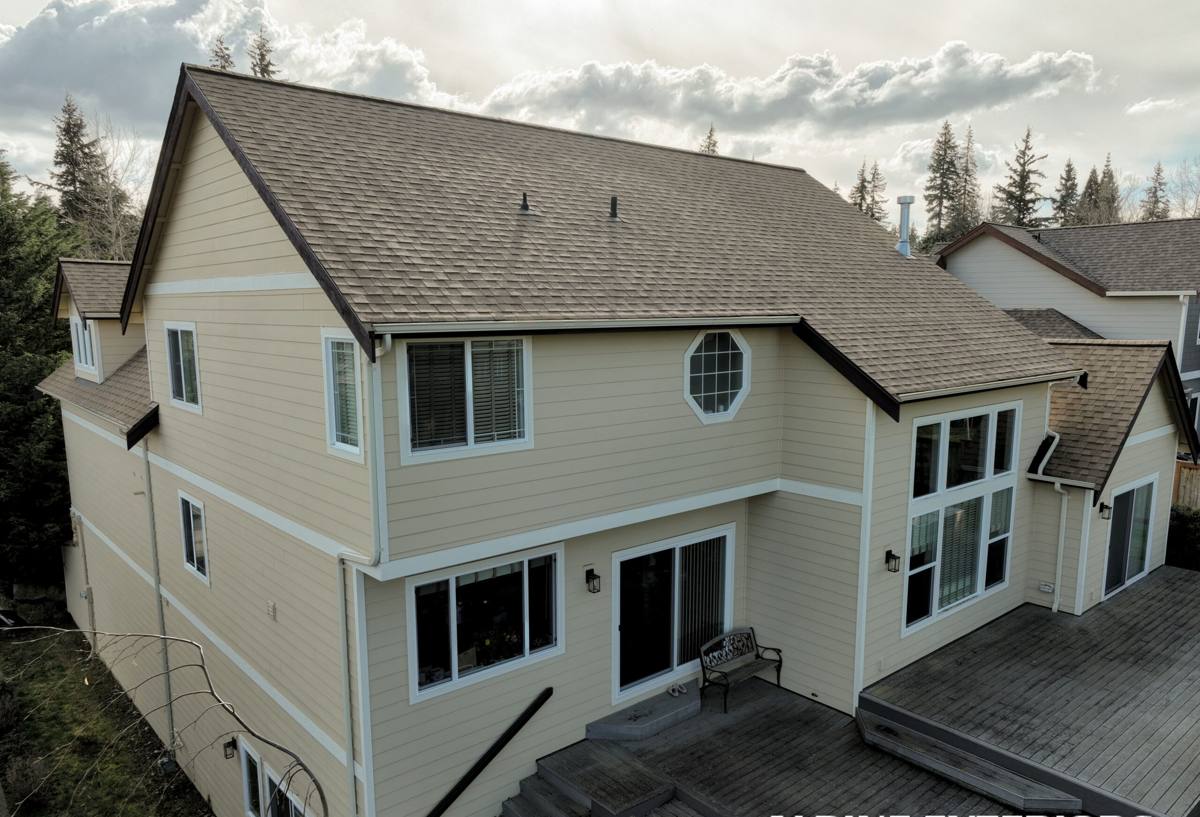
How to Tell Your Home Needs Replacement, Not Just Repair
A lot of Doe Bay homeowners call us after patching the same spot two or three times. That's usually a sign the underlying material or the original installation is the real problem, not the individual board. Some patterns we see regularly:
- Persistent moss or black streaking that comes back within a season of cleaning, especially on north-facing or shaded walls
- Paint that's chalking, bubbling, or peeling in sheets rather than just fading
- Boards that feel soft, spongy, or visibly cupped when you press on them
- Visible gaps opening up at seams, corners, or trim as boards swell and shrink with moisture cycles
- Rust streaks around fasteners, which usually means water is already behind the siding
- Rot at the bottom courses, near grade, or anywhere siding sits too close to soil, decking, or roof lines
One or two of these can sometimes be repaired locally. Several at once, especially combined with visible warping, usually means the moisture problem is systemic and a full replacement is the more honest recommendation — not because it's the bigger job, but because patching a system that's already failing wastes money on labor you'll pay for again in a year or two.
What a Correct Siding Replacement Job Actually Involves
It starts underneath the siding, not with it
Full siding replacement should mean a full inspection of what's behind the old boards, not just a swap of one material for another. That includes checking the sheathing for soft or delaminated spots, confirming the weather-resistive barrier is intact and properly lapped, and correcting any flashing at windows, doors, and roof intersections before a single new board goes up. In a damp, shaded environment like Doe Bay, skipping this step is how a new siding job ends up hiding the same rot problem it was supposed to fix.
Fastening and clearances matter more here than most places
Fiber cement siding has a specific fastening schedule, nailing pattern, and minimum ground clearance for a reason — get any of those wrong and you create the exact entry points for moisture that this climate is looking for. Correct starter strips, weep paths, and clearance from decks, soil, and roof lines are non-negotiable details, not upgrades.
Why We Install Only James Hardie Fiber Cement Siding
We don't install vinyl, LP SmartSide, Cemplank, Allura, primed spruce, or bare cedar. That's a deliberate standard, not a sales pitch, and it's worth explaining honestly rather than just asserting it.
Vinyl is affordable and low-maintenance in mild climates, but it can warp in temperature swings, fade over time, and it doesn't hold up well against the kind of driving, wind-blown rain a waterfront-adjacent property like those around Doe Bay can see. Wood products — primed spruce, cedar — look great new, but they're the most exposed to exactly the conditions Doe Bay has in abundance: moisture absorption, rot, and moss growth that requires real ongoing maintenance to control. Other fiber cement brands aren't bad products in the abstract, but we've standardized on one system so our crew installs it correctly every time, backed by one manufacturer's engineering and one warranty structure, rather than juggling installation specs across several product lines.
James Hardie fiber cement is non-combustible, holds a factory-applied ColorPlus finish that resists fading and chipping far better than field-applied paint, and its HZ product lines are engineered for specific climate zones rather than built as one generic product. For a wet, salt-air, moss-prone site, that climate-specific engineering is the difference that matters most.
| Factor | Vinyl / Wood / Other Fiber Cement | James Hardie Fiber Cement |
|---|---|---|
| Moisture resistance | Variable — wood absorbs, vinyl can trap moisture behind panels | Engineered to resist moisture and swelling |
| Finish durability | Field-applied paint or factory finish varies by brand | Factory ColorPlus finish with long fade/chip warranty coverage |
| Fire resistance | Wood is combustible; vinyl can melt/deform | Non-combustible fiber cement |
| Climate matching | Often one generic product for all regions | HZ product lines engineered per climate zone |
| Maintenance burden | Regular repainting, moss/rot monitoring, sealing | Occasional washing; no repainting for years when properly installed |
Matching the Product to a Marine, Tree-Covered Site
Not every Doe Bay lot has the same exposure. A waterfront property catching wind and salt spray directly needs different detailing attention than a heavily wooded lot set back from the shore, where the bigger enemy is shade, damp air, and moss rather than wind-driven rain. Part of doing this job right is reading the specific site — which walls take the worst weather, where tree cover keeps siding wet longer after a rain, and where ground moisture or poor drainage puts the bottom courses at risk. That assessment shapes decisions like starter detail, ventilation gaps, and where extra flashing attention goes, before the material choice even comes into play.
Our Process, Start to Finish
Assessment and estimate
We walk the property, check the condition of the existing siding and the wall assembly behind it where accessible, and talk through what we're seeing in plain terms. You get an honest read on whether you need a repair, partial replacement, or full tear-off.
Scheduling around island logistics
Working Orcas Island means working around ferry schedules and material delivery windows, not around a mainland job site's assumptions. We plan material orders and crew scheduling with that reality built in from the start, so a delivery delay doesn't turn into a half-finished house sitting exposed to the weather.
Tear-off, inspection, and correction
Old siding comes off, sheathing and the weather barrier get inspected, and any rot, soft spots, or flashing problems get corrected before new material goes up — not covered over.
Installation to spec
James Hardie siding gets installed following the manufacturer's fastening schedule, clearances, and flashing details, with attention to the specific exposure of each wall on your property.
Final walkthrough and cleanup
We walk the finished job with you, and the site gets cleaned of old material and debris before we leave.
What Siding Replacement Costs Depend On
We don't publish blanket prices because the honest answer is "it depends," and homeowners deserve to know what it depends on rather than a number that doesn't fit their house.
| Cost Factor | Why It Matters |
|---|---|
| Extent of tear-off | Full removal down to sheathing costs more than replacing over sound structure, but is often necessary when there's hidden moisture damage |
| Condition of sheathing and framing | Rot repair adds cost but is far cheaper to address now than after new siding is installed over it |
| Home size and wall complexity | More corners, dormers, and trim detail mean more labor and material cuts |
| Siding profile chosen | Lap siding, panel systems, and shingle-style Hardie products differ in material and install time |
| Site access | Steep, wooded, or waterfront lots can affect equipment access and staging |
| Ferry and delivery logistics | Material timing on island projects factors into overall scheduling and cost |
After the Install: Keeping Doe Bay Siding Looking Right
Correctly installed James Hardie siding is genuinely low-maintenance compared to wood or repainted vinyl, but "low-maintenance" isn't "no-maintenance" in a shaded, damp environment. A few habits keep it performing the way it's designed to:
- Rinse siding down once or twice a year to clear salt residue, pollen, and organic buildup before moss gets a foothold
- Keep tree branches and shrubs trimmed back from walls so siding can dry out between rain events
- Check that gutters and downspouts are directing water away from the foundation and not sheeting down walls
- Keep an eye on caulking at trim and penetrations, and have any cracked sealant addressed before winter rain season
- Confirm mulch, soil, or landscaping hasn't crept up to reduce the siding's ground clearance over time
- Address any impact damage or chipped paint promptly rather than letting exposed edges take on moisture
Why a Crew That Already Works Doe Bay Matters
Siding installation itself is the same trade skill anywhere. What's different about doing it well in Doe Bay is everything around the install: knowing which walls on this side of the island typically take the worst weather, planning around ferry-dependent material delivery so a job doesn't stall half-finished, and understanding San Juan County's permitting expectations for exterior work before you start rather than after an inspection stops you. A crew that already works this area isn't guessing at any of that — it's routine.
If your Doe Bay home is showing signs of siding failure, or you're simply planning ahead before the next wet season, we're happy to take a look and give you a straightforward assessment. Reach out for a free, no-pressure estimate using the form below.