 Orcas Island Siding
 Why Eastsound Roofs Face a Different Set of Problems
Eastsound sits close enough to the water that salt-laden air is part of daily life for every roof in the village and the surrounding shoreline neighborhoods. Add in the long wet season that defines western San Juan County weather, plus the shade and moisture that let moss take hold on any roof that isn't shedding water fast, and you have a climate that is genuinely harder on roofing than most inland parts of Washington. A roof that performs fine in Spokane or even Bellingham can struggle here if it wasn't specified and installed with this environment in mind.
Metal roofing has become a popular answer for Eastsound homeowners precisely because a correctly installed metal roof handles all three of these stressors better than most alternatives — but "correctly installed" is doing a lot of work in that sentence. The material itself is only part of the equation. Fastener choice, underlayment, flashing detail, and finish all matter as much as the panel you pick.
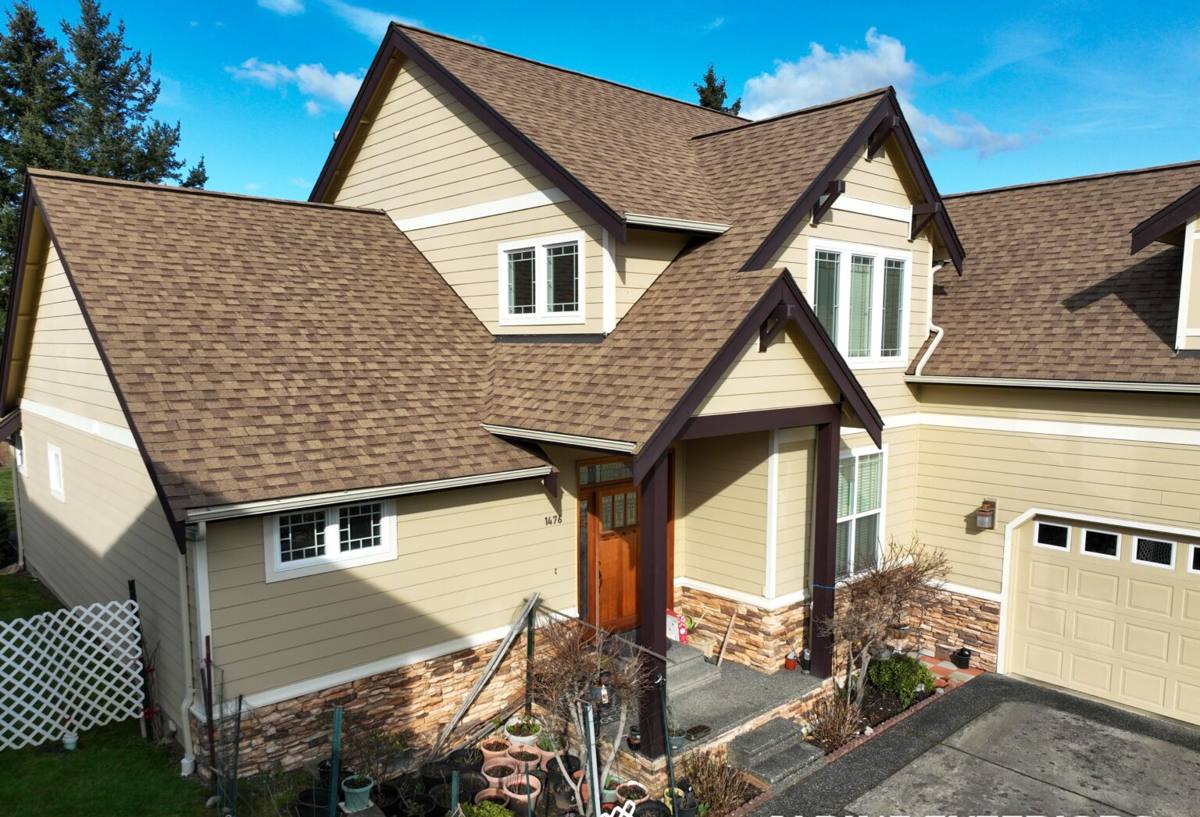
What Salt Air, Rain, and Moss Actually Do to a Roof
Salt Air and Corrosion
Airborne salt accelerates corrosion on any exposed metal, especially at cut edges, fastener heads, and dissimilar-metal contact points where galvanic reaction can start. It's not usually the roof panel itself that fails first — it's the small hardware and trim details that get overlooked. This is why fastener spec and flashing metal compatibility matter more on Orcas Island than they would on a roof fifty miles inland.
Driving Rain and Wind-Driven Water
Storms coming off the water don't just fall straight down — wind pushes rain sideways and up under laps, ridges, and penetrations that would stay dry in a calmer climate. A roof detailed for average rainfall, rather than wind-driven rain, will eventually leak at the weak points: valleys, chimney flashing, skylight curbs, and low-slope transitions.
Moss and Prolonged Moisture
San Juan County's moss season is long, and shaded, north-facing, or low-slope roof areas stay damp far longer than sun-exposed slopes. Moss holds moisture against roofing material, works into laps and seams, and on some roofing types can lift edges over time. Metal doesn't feed moss the way wood or some composite products can, but moss and debris still need to be kept off the surface and out of valleys or it will still trap water against flashing and fasteners.
What a Correct Metal Roofing Job Involves
A metal roof is only as good as what's underneath it and how it's fastened down. On Eastsound homes, we treat the following as non-negotiable, not upgrades:
- A high-quality synthetic or self-adhered underlayment as the true waterproof layer beneath the metal, not an afterthought
- Ice-and-water or peel-and-stick membrane at valleys, eaves, and any low-slope section where wind-driven rain is likely to back up
- Fasteners and flashing metal chosen to be compatible with the panel material, to avoid galvanic corrosion in a salt-air environment
- Proper attic or roof-deck ventilation, so trapped moisture from inside the home doesn't condense against the underside of the metal
- Correctly lapped and sealed penetrations — vents, skylights, chimneys — since these are where most roof leaks actually start
- Panel layout and seam type matched to the roof's pitch and exposure, not a one-size-fits-all approach
Skipping any one of these doesn't necessarily show up right away. It shows up in year three or four, as a slow leak at a valley or a rust streak below a fastener line — problems that are far more expensive to fix after the fact than to prevent during installation.
Standing Seam vs. Exposed-Fastener Metal Roofing
Not every metal roof is built the same way, and the two most common systems perform differently in a marine climate like Eastsound's.
| Factor | Standing Seam | Exposed-Fastener Panel |
|---|---|---|
| Fastener exposure | Concealed clips, no exposed screws through the panel face | Screws penetrate the panel face directly |
| Long-term seal risk in salt air | Lower — no exposed gaskets to degrade over time | Higher — exposed screw gaskets are the first thing to fail near the water |
| Upfront cost | Higher material and labor cost | More budget-friendly |
| Best fit | Primary homes, waterfront exposure, longer ownership horizon | Outbuildings, shops, budget-driven projects with regular maintenance planned |
| Expected maintenance | Minimal beyond debris and moss control | Periodic gasket and fastener inspection recommended |
We install both, and the right choice depends on the home, the budget, and how exposed the roof is to wind and salt. What we won't do is install an exposed-fastener system on a heavily exposed waterfront roof and call it a permanent solution — that's a maintenance decision, and homeowners deserve to make it with the trade-offs in front of them, not discovered later.
Panel Material, Gauge, and Finish
Beyond the seam style, three more choices shape how a metal roof holds up here:
Material: Steel and aluminum are both common. Aluminum has a natural resistance to salt-air corrosion that makes it a strong choice for close-to-shore properties. Steel, with a quality protective coating properly maintained, performs well too and is often more budget-friendly — the coating and finish matter as much as the base metal.
Gauge: Thicker panels resist denting from wind-blown debris and hail, and hold their shape better over long spans. We spec gauge based on panel width, roof pitch, and local wind exposure rather than defaulting to the thinnest option available.
Finish: A quality factory-applied paint or coating system protects against UV and salt exposure and holds color longer than field-applied coatings. Cheaper mill or unfinished finishes may cost less upfront but weather unevenly in a marine climate and are not something we recommend for Eastsound's exposure.
How Our Process Works
1. On-Site Assessment
We walk the roof and the attic or roof deck, note pitch, exposure to prevailing weather, existing moss or moisture damage, ventilation, and any tricky penetrations or valleys. This is where the real scope of the job gets defined, not guessed at from the ground.
2. Written Estimate and System Selection
You get a clear estimate covering panel system, underlayment, flashing, and any deck repair needed, with the trade-offs between options explained honestly — including where a lower-cost system means more maintenance down the road.
3. Tear-Off and Deck Prep
Old roofing comes off, the deck is inspected for rot or soft spots (common on older Eastsound homes that have taken decades of moisture), and any damaged sheathing is replaced before anything new goes down.
4. Underlayment and Flashing
This is the step that determines whether the roof stays dry, and we don't rush it. Valleys, eaves, and penetrations get the membrane and flashing detail this climate actually requires.
5. Panel Installation
Panels are installed to manufacturer spec with fasteners and clips matched to the material, correct lap and seam technique, and attention to expansion and contraction, which matters more on longer runs and larger temperature swings than people expect.
6. Final Walkthrough and Cleanup
We walk the finished roof with you, confirm ventilation and drainage are working as intended, and clean the site — including magnetic sweeps for stray fasteners on the ground and driveway.
Living With a Metal Roof in the San Juans
A well-installed metal roof is genuinely low-maintenance compared to most alternatives, but "low-maintenance" isn't "no-maintenance" in this climate. A short annual routine keeps a metal roof performing the way it's supposed to for decades:
- Clear needles, leaves, and debris from valleys and gutters, especially after fall storms
- Check for moss or algae buildup in shaded areas and remove it gently — pressure washing metal roofing is not recommended and can damage finishes or force water under laps
- Look for any rust streaking near fasteners or flashing after the first few winters, which can flag an early hardware issue while it's still a cheap fix
- Confirm gutters and downspouts are directing water away from the foundation, not just off the roof edge
- Have penetrations (vents, skylights, chimney flashing) visually checked every couple of years, since these are the most common leak points regardless of roofing material
What Drives the Cost of a Metal Roof Here
| Factor | Why It Matters in Eastsound |
|---|---|
| Panel system (standing seam vs. exposed-fastener) | Concealed-fastener systems cost more but reduce long-term maintenance in salt air |
| Roof complexity | Valleys, dormers, and multiple pitches mean more flashing labor, which is where leaks are prevented |
| Deck condition | Older homes with moisture history sometimes need sheathing repair before install |
| Material and gauge | Aluminum and heavier gauges cost more upfront but resist corrosion and denting longer |
| Access and logistics | Island delivery timing and site access can affect scheduling and, in some cases, cost |
We don't quote a roof over the phone. Every estimate is based on an actual look at your roof, your deck, and your exposure — broad averages don't mean much when one house sits in a wind corridor and the next is tucked in the trees.
Permits, Logistics, and Working on Orcas Island
Roofing work on Orcas Island comes with practical realities that mainland contractors often don't plan for: material has to be barged or ferried in on a schedule, weather windows for tear-off need to be planned around actual island forecasts rather than a generic regional one, and San Juan County permitting and inspection timelines can differ from what a Whatcom or Skagit County crew is used to. A crew that works Eastsound regularly builds all of this into the schedule from day one, instead of discovering it mid-project.
Why Local Experience on This Roof, in This Town, Matters
Metal roofing done right isn't complicated in theory, but the details that make it last in a marine climate are easy to skip if you don't work in that climate every week. A crew that regularly works Eastsound and the rest of Orcas Island already knows which roof orientations hold moss longest, which older homes tend to have deck issues under the existing roofing, and how to sequence a tear-off around island weather and delivery schedules. That familiarity shows up in fewer surprises during the job and a roof that's actually built for the conditions it has to survive, not just the conditions in a manufacturer's install manual.
If you're weighing a metal roof for your Eastsound home, we're happy to take a look and walk you through what your specific roof needs — no pressure, no generic quote. Use the form below to request a free estimate.