 Orcas Island Siding
 Windows on Obstruction Pass Face a Different Kind of Wear
Obstruction Pass sits close enough to the water that homes there deal with a steady mix of salt-laden air, wind-driven rain, and long stretches of damp, shaded weather that keeps moss and algae active for most of the year. That combination is harder on windows than most homeowners realize. Salt air accelerates corrosion on hardware and metal components. Driving rain — the kind that comes in sideways off the water rather than falling straight down — finds its way into any gap in flashing or sealant that a calmer climate would never expose. And the long moss season on Orcas Island keeps surfaces damp longer, which matters more for window performance than people expect, since prolonged moisture exposure around frames and sills is what eventually leads to rot, seal failure, and fogged glass.
None of this means windows fail quickly here. It means the margin for error is smaller. A window and installation method that would perform fine in a drier inland climate can underperform on Orcas Island within a decade if it wasn't specified and installed with this environment in mind.
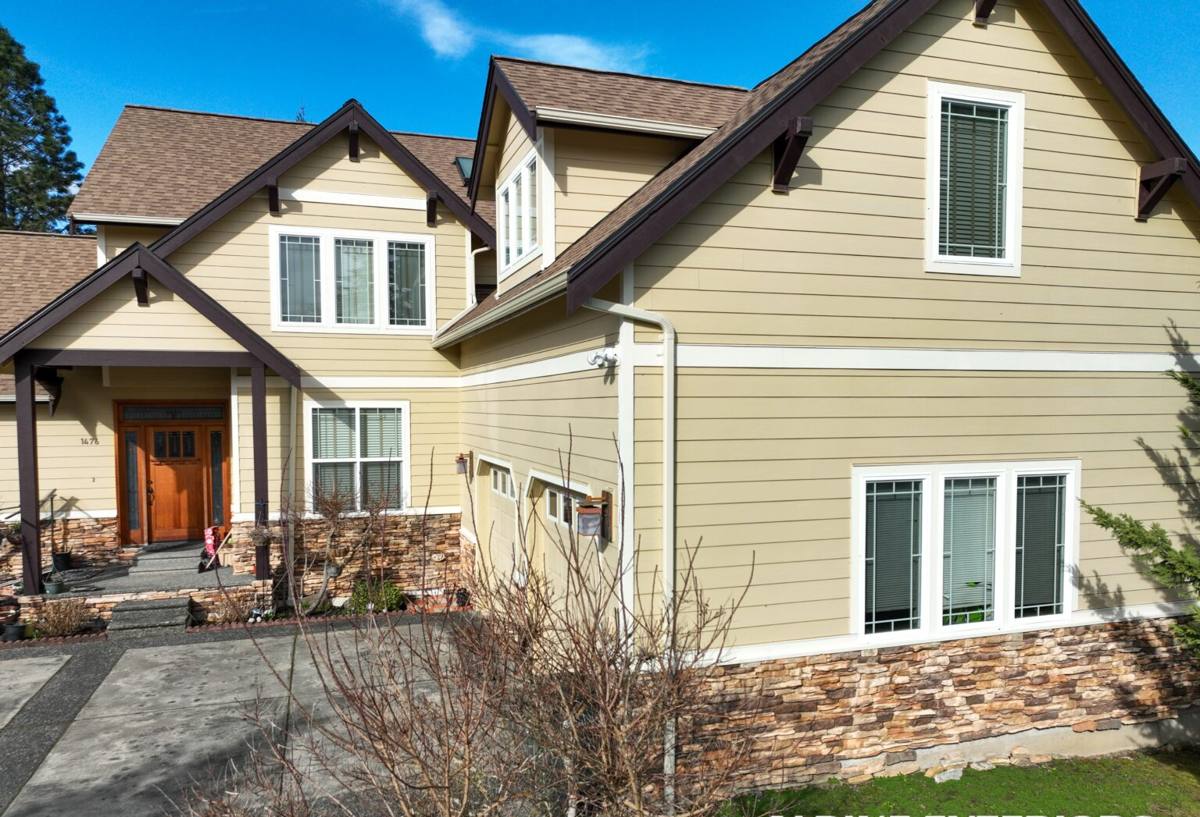
What "Energy-Efficient" Actually Means for This Climate
Energy efficiency in a window comes down to a handful of measurable properties, and in San Juan County the ones that matter most are slightly different from what you'd prioritize in a hot, dry climate.
U-Factor Matters More Than Solar Heat Gain Here
U-factor measures how well a window resists heat loss — the lower the number, the better it keeps conditioned air inside. In the Pacific Northwest's marine climate, where the bigger cost is heating through cool, wet months rather than blocking summer sun, U-factor deserves more attention than solar heat gain coefficient (SHGC). That's a different priority than a window website written for the Southwest or Southeast might lead you to believe.
Low-E Coatings and Gas Fills
A low-emissivity (Low-E) coating is a microscopically thin layer that reflects heat back into the room while still letting light through. Combined with an argon or krypton gas fill between panes, it meaningfully cuts heat loss without changing how the glass looks. This is standard on any quality energy-efficient window today and isn't an upgrade worth skipping.
Frame Material Changes the Equation
The glass package only tells half the story. Frame material affects both energy performance and how well the window holds up to salt air and constant moisture — which is why we spend as much time talking about frames as glass with Obstruction Pass homeowners.
Frame Material Comparison for Marine-Exposed Homes
| Frame Material | Energy Performance | Salt Air / Moisture Behavior | Maintenance |
|---|---|---|---|
| Vinyl | Good, consistent | Does not corrode; UV can affect very cheap vinyl over decades | Low |
| Fiberglass | Very good, low expansion/contraction | Excellent — dimensionally stable in wet, salty conditions | Low |
| Aluminum | Weaker unless thermally broken | Prone to corrosion pitting near salt air over time | Moderate |
| Wood / Wood-Clad | Good with proper glazing | Needs consistent maintenance to prevent rot at joints and sills | Higher |
We're not going to tell you one material is the only right answer — budget, architectural style, and how much upkeep you want to take on all factor in. But for a home exposed to Obstruction Pass conditions, we do steer people away from bare aluminum frames and unclad wood on the most weather-exposed elevations, simply because the maintenance burden to keep them performing is higher than most owners want to sign up for. That's a professional judgment call on trade-offs, not a knock on any manufacturer.
Signs Your Current Windows Are Losing You Money
- Visible condensation or fogging between panes — the seal has failed and the gas fill is gone
- Cold drafts near the frame even when the window is fully latched
- Difficulty opening or closing, which often means the frame has swollen or warped from moisture
- Soft or discolored wood at the sill or corners of the frame
- Visible moss, algae, or persistent black streaking on the exterior frame or trim
- Noticeably higher heating bills compared to similarly sized rooms in the home
- Rattling in wind — a sign the seal or hardware has loosened over time
If you're seeing two or more of these on a window, it's usually past the point where a repair or re-caulk will fix it for good.
What a Correct Installation Actually Involves
The window unit itself is only part of the job. Most premature window failures we see on this side of the county trace back to installation shortcuts, not the product. In a climate with driving rain, the flashing and sealing details around the window opening matter as much as the window's energy rating.
Proper Flashing and Weather Barrier Integration
Every opening needs flashing tape and a weather-resistant barrier integrated in the correct shingle-lap order — sill, sides, then head — so that any water that does get behind the siding is directed back out, not trapped against the framing. Skipping or rushing this step is invisible on installation day and expensive to fix years later.
Sealant Selection and Placement
Not every gap should be sealed solid. Weep holes and drainage paths need to stay open so incidental moisture can escape, while the structural gaps need the right sealant for the substrate. Sealing everything shut traps water instead of managing it.
Insulation Around the Frame
Gaps between the window frame and rough opening need to be insulated without over-packing, which can bow the frame and affect how the window operates. Low-expansion foam or backer rod is typically the right call here, not standard high-expansion foam.
Our Process for Obstruction Pass Homes
- On-site assessment — we look at existing window condition, framing, siding type, and exposure on each elevation of the home, since a south-facing wall exposed to the water often needs different attention than a sheltered side.
- Product and frame recommendation — based on your budget, the home's exposure, and how much long-term maintenance you want to take on.
- Accurate measurement and ordering — because scheduling delivery to the islands takes lead time, we confirm measurements carefully before ordering to avoid costly reorders.
- Removal and opening prep — old windows come out, and we inspect the framing underneath for any hidden rot or moisture damage before anything new goes in.
- Correct flashing, sealing, and insulation — done to the standard described above, not shortcut for speed.
- Final adjustment and walkthrough — every window is checked for smooth operation and a tight seal before we consider the job finished.
What Drives the Cost
| Factor | Why It Matters |
|---|---|
| Frame material | Fiberglass and quality vinyl typically cost more upfront than basic aluminum, but hold up better long-term in this climate |
| Number and size of openings | Larger or custom-sized windows cost more to source and install than standard sizes |
| Condition of existing framing | Hidden rot or water damage found during removal adds repair work before the new window goes in |
| Access and site logistics | Upper-story or hard-to-access openings take more time and equipment |
| Full-frame vs. insert replacement | Full-frame replacement costs more but is often the right call when the existing frame has moisture damage |
Costs vary widely based on these factors, so we'd rather walk your home and give you real numbers than quote a number that doesn't apply to your situation.
Why Local Experience on Orcas Island Matters
A window contractor who mostly works inland doesn't necessarily think about salt exposure, moss growth patterns, or how driving rain off the water behaves against a specific elevation of a house. Working regularly on Orcas Island and throughout San Juan County means we've seen how these conditions play out over years, not just at installation. It also means we understand the practical side of island work — coordinating material delivery on ferry schedules, planning around weather windows for exterior work, and knowing which details on a home are worth extra attention because of where the house sits relative to the water and wind.
That local familiarity is part of what separates a window installation that looks fine on day one from one that's still performing well ten or twenty years in.
Getting Started
If your windows are drafty, fogged, or just old enough that you're wondering whether it's time, we're happy to take a look and give you an honest read on what's going on — no pressure, no obligation. Fill out the form below to request a free estimate for your Obstruction Pass home.