 Orcas Island Siding
 Windows Built for a Marine Island Climate
Friday Harbor sits in one of the more demanding climates a window will ever face. It isn't extreme cold or blistering heat that wears windows out here — it's the steady, year-round combination of salt-laden marine air, wind-driven rain coming off the water, and the long damp season that lets moss and algae take hold on anything that stays wet too long. A window that would last decades in a dry inland climate can start failing in half that time out here if it wasn't built or installed with this environment in mind.
We work on homes throughout the San Juan Islands, including Friday Harbor, and we've seen what this climate does to windows that weren't up to the job: hardware that corrodes years before it should, seals that fog with trapped moisture, and sills that soften and rot from the inside out. Energy-efficient window work here isn't just about lower heating bills — it's about choosing materials and installation details that can actually stand up to salt, rain, and moss season after season.
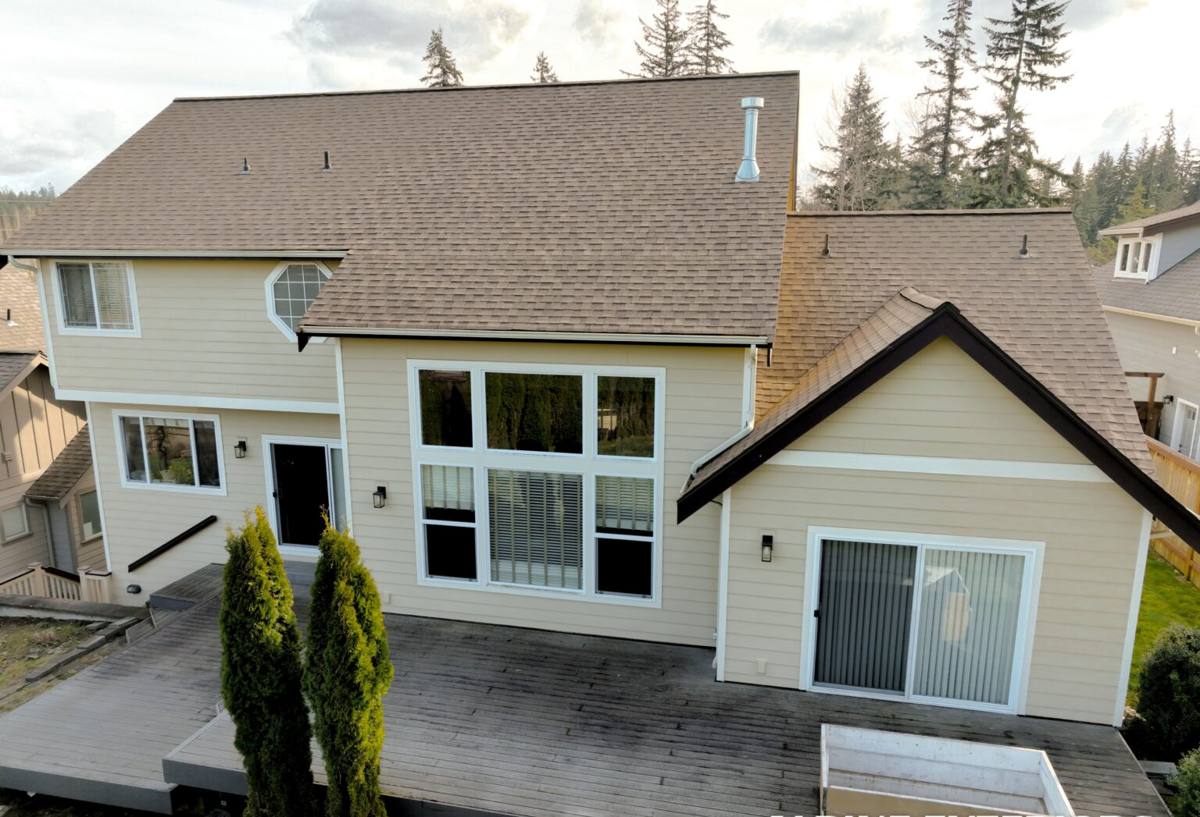
What Salt Air, Driving Rain, and Moss Actually Do to a Window
Every one of these factors attacks a window differently, and understanding the damage pattern helps explain why the fix isn't always "just replace the glass."
Salt Air
Airborne salt is corrosive to metal. Window hardware — hinges, locks, balance mechanisms, and screws — is especially vulnerable, and aluminum frames without a proper marine-grade finish can pit and discolor over time. Once hardware starts to corrode, windows get harder to open and close smoothly, and eventually they stop sealing properly.
Driving Rain
Wind-driven rain doesn't just fall on a window, it pushes against it. If flashing, sealant, or the drainage path behind the frame isn't detailed correctly, water finds its way behind the trim and into the wall cavity. This kind of leak is often invisible for months or years before it shows up as soft trim, peeling paint, or a musty smell inside.
Moss and Persistent Moisture
The long damp season on the islands is exactly what moss and algae need to establish themselves. Around windows, moss tends to collect in corners, on sills, and in any spot where water sits instead of draining. That trapped moisture keeps wood and even some composite materials wet for extended periods, which is where rot and seal breakdown usually start.
What "Energy-Efficient" Actually Means for a House on the Islands
Energy-efficient windows are rated on a handful of specific performance numbers, and understanding them helps you compare products honestly instead of relying on a sales pitch.
U-Factor
U-factor measures how well a window resists heat loss — lower is better. In a marine climate with mild but persistent cold and dampness, a low U-factor keeps interior surfaces warmer, which also helps reduce condensation on the glass.
Solar Heat Gain Coefficient (SHGC)
SHGC measures how much solar heat passes through the glass. On the islands, where overcast and rain are common for long stretches of the year, some solar gain on south-facing windows is often welcome rather than a liability — but it should still be a deliberate choice based on the room and its exposure, not an accident of whatever glass package was cheapest.
Air Leakage and Low-E Coatings
Air leakage ratings reflect how much outside air can pass through the window assembly itself. Low-emissivity (Low-E) coatings reflect radiant heat while still letting visible light through, improving comfort without darkening the room. Together, a tight air-leakage rating and the right Low-E coating do more for year-round comfort than glass thickness alone.
Choosing a Frame Material That Holds Up Out Here
Frame material has as much to do with how a window performs in this climate as the glass package does. Every option below can work well — the right choice depends on your home, your budget, and how much upkeep you want to take on.
| Frame Material | Moisture & Salt Resistance | Maintenance | Notes for This Climate |
|---|---|---|---|
| Vinyl | Good | Low | Won't rot or corrode; a solid, budget-friendly option for most rooms |
| Fiberglass | Very Good | Low | Dimensionally stable in temperature swings; handles damp exposure well |
| Wood-Clad | Fair to Good | Moderate to High | Attractive interior wood look, but the exterior cladding and seals need to be well installed and checked periodically |
| Aluminum | Fair | Moderate | Strong but conducts heat and cold; needs a marine-grade finish and careful hardware selection to resist salt corrosion |
We generally steer homeowners on the islands toward vinyl or fiberglass for most applications because they resist moisture and salt without demanding much upkeep. Wood-clad windows can still be the right call for a specific look or a historic-style home, but we're upfront that they come with more long-term maintenance in this environment.
Signs Your Current Windows Are Costing You Money
Windows rarely fail all at once — they degrade gradually, and a lot of homeowners don't notice until the discomfort or the utility bill becomes hard to ignore. Watch for:
- Noticeable drafts near the frame, even with the window fully closed and locked
- Fog or moisture trapped between panes of double-pane glass — a sign the seal has failed
- Windows that are difficult to open, close, or lock, or that don't stay open on their own
- Visible discoloration, soft spots, or paint failure on the frame or sill
- Cold drafts or noticeably cold surfaces near windows on wind-driven rain days
- Moss or dark staining building up in the corners or along the bottom of the frame
- Rooms that are noticeably harder to heat than the rest of the house
- Single-pane glass or original aluminum-frame windows that have never been upgraded
Any one of these on its own might not mean full replacement is needed — sometimes it's a hardware fix or a resealing job. But several of them together usually mean the window assembly has reached the end of what repair can fix.
Our Installation Process
Because so much of window failure in this climate traces back to how the window was installed rather than the product itself, we put extra attention into the details that keep water out.
- Assessment — We look at each window opening individually, checking for existing rot, drainage issues, or flashing problems before we ever talk about product selection.
- Product Selection — We walk through frame material, glass package, and hardware options suited to the specific exposure of that wall — a window on the weather side facing driving rain gets different consideration than one tucked under an eave.
- Precise Measurement — Old openings are rarely perfectly square, so we measure for an exact fit rather than forcing a standard size into place.
- Removal and Opening Prep — We check the sheathing and framing behind the old window for hidden moisture damage before installing anything new, and address any rot we find.
- Flashing and Drainage — This is the step that matters most for driving rain. Proper flashing tape, house wrap integration, and a clear drainage path behind the frame are what actually keep wind-driven rain from reaching your wall cavity.
- Installation and Sealing — The window is set, shimmed level and square, fastened per the manufacturer's specifications, and sealed with materials rated for exterior marine exposure.
- Interior and Exterior Finish — Trim is finished cleanly on both sides, and exterior caulking is inspected to make sure there are no gaps for wind-driven rain to exploit.
- Final Walkthrough — We test every window's operation and go over care recommendations specific to your home's exposure before we consider the job done.
Why Local, Island-Based Experience Matters
Working on the islands comes with logistics that a mainland crew unfamiliar with the area won't have planned for. Materials and specialty products often need to be ordered ahead of a ferry schedule rather than picked up same-day. Weather windows for exterior work can close quickly, and a crew that knows the local patterns plans installation days around them rather than getting caught mid-project when a system rolls in off the water.
There's also a practical warranty and service angle. A window installed by a crew with no ongoing presence on the islands can mean a long wait — and a ferry trip on their end — if a hardware issue or a seal problem shows up later. Working with a contractor already established in Friday Harbor and the surrounding San Juan County communities means service calls and warranty follow-up don't depend on someone making a special trip out.
What Affects the Cost of a Window Project
Every home is different, and we'd rather walk your specific windows with you than quote a number sight unseen. In general, these are the factors that move the price up or down:
| Factor | Why It Matters |
|---|---|
| Number of windows | More openings means more material and labor, though per-window cost often improves with volume |
| Frame material | Vinyl is typically the most budget-friendly; fiberglass and wood-clad cost more upfront |
| Glass package | Upgraded Low-E coatings, gas fills, or triple-pane glass add cost but improve performance |
| Existing damage | Rot repair to the framing or sheathing behind an old window adds time and material before the new window can go in |
| Access and height | Second-story or hard-to-access windows take longer and require additional safety setup |
| Custom sizing | Non-standard openings or historic-style profiles typically cost more than stock sizes |
Caring for New Windows in a Salt-Air Climate
Even the best window benefits from a little seasonal attention out here. Rinse frames and glass periodically to clear salt residue, especially on walls that face open water. Keep weep holes at the bottom of the frame clear of debris and moss so water can drain as designed. Check caulking and exterior sealant once a year for cracking or gaps, particularly after a hard winter of driving rain. And when cleaning, use gentle, non-abrasive methods — harsh chemicals or abrasive pads can damage Low-E coatings and void some manufacturer warranties.
If you're weighing whether it's time to repair or replace the windows on your Friday Harbor home, we're happy to take a look and give you a straightforward, no-pressure assessment of where things stand. Fill out the form below to request a free estimate, and we'll walk through your options together.