 Orcas Island Siding
 West Sound sits along the water on Orcas Island's western side, and that position comes with a specific set of demands on a home's exterior. Salt-laden air moves off the water and onto walls daily, storms drive rain sideways into west- and south-facing elevations, and the tree cover common around West Sound properties keeps shaded walls damp long after a storm has passed — exactly the condition moss needs to take hold and spread. This company installs James Hardie fiber cement siding exclusively, and this page is about what that product needs to do right, specifically, on a West Sound home.
What West Sound's Exposure Actually Demands
Every property on Orcas Island deals with San Juan County's marine climate, but West Sound's waterside orientation and mixed sun/shade exposure make a few things more pronounced. Walls facing open water take the brunt of wind-driven rain during winter storms, while walls tucked under fir and madrona canopy — common on the more wooded lots around West Sound — stay damp longer between storms and see far less direct sun to dry them out. That combination means a siding product on a West Sound home is rarely dealing with just one kind of stress. It's handling salt exposure on one elevation and a persistent moss environment on another, sometimes on the same house.
None of that is unique to any one product — it's just what the site is. What it does is raise the stakes on getting the finish, the joints, and the drainage details right, because a mistake that might take years to show up on a drier, more open inland lot can show up much faster here.
Why Moss Season Runs Long Here
On shaded, north- or east-facing walls around West Sound, moss and mildew growth isn't really seasonal in the way it might be inland — it's closer to a year-round low hum that flares in the wet months and never fully goes dormant. Moss holds moisture against whatever surface it's growing on, and on an organic substrate that moisture has somewhere to go. On an inorganic one, it mostly just sits on the surface until it's washed or treated off, which is a meaningful difference for a wall that stays damp for weeks at a stretch.
Why James Hardie Fits This Specific Exposure
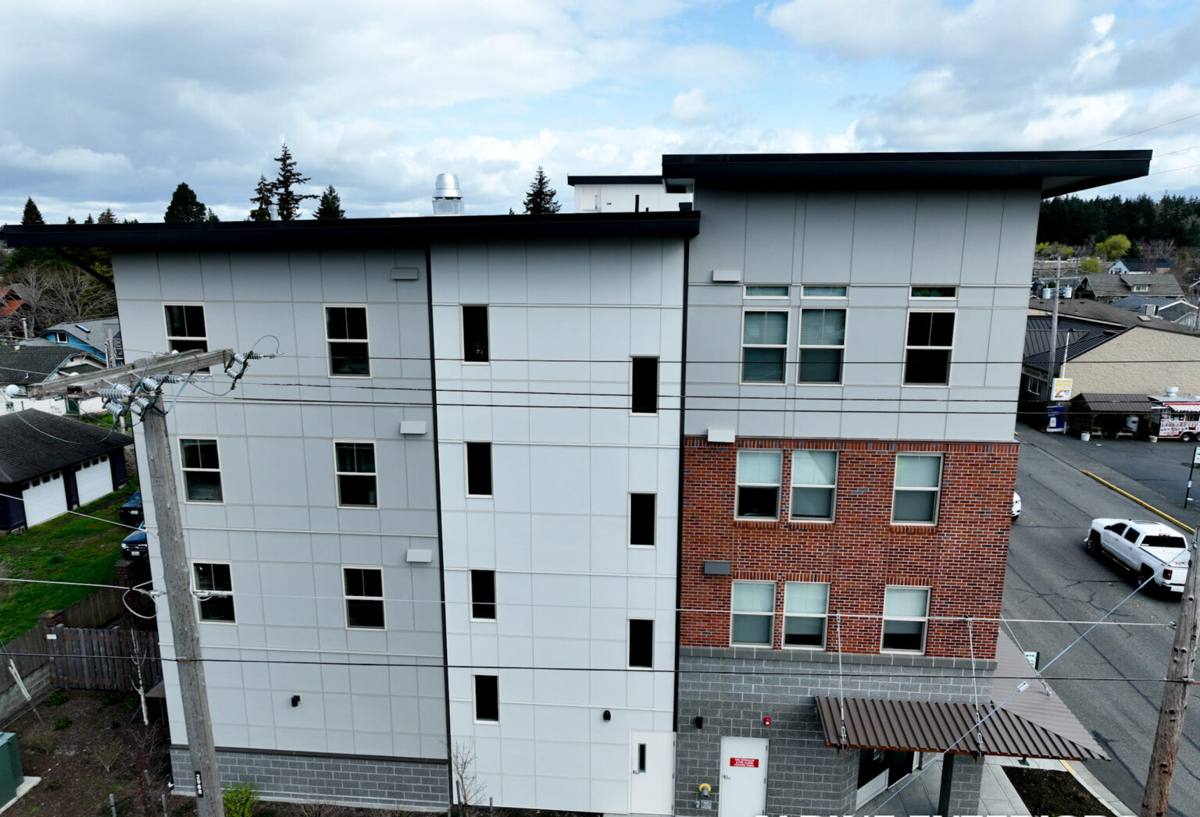
James Hardie fiber cement is made from cement, sand, and cellulose fiber — there's no organic core for salt air, driving rain, or a long moss season to work into over time the way there is with wood-based siding. That matters everywhere on Orcas, but it matters more on a mixed-exposure property like a typical West Sound lot, where one wall is taking salt spray and another is sitting under canopy collecting moisture. Hardie's HZ product lines are engineered for regions dealing with sustained moisture and coastal exposure specifically, rather than being a single generic formulation, and the factory-applied ColorPlus finish is baked on under controlled conditions rather than field-applied — which means the finish protecting the board isn't riding on how well a field coat cured on a damp West Sound afternoon.
It's also non-combustible, which is worth noting on a wooded island where wildfire risk is a real seasonal concern alongside the wet-season moisture concerns. And it carries a strong transferable warranty, which matters to owners thinking about resale on Orcas, where buyers increasingly ask what's actually on the exterior of a house they're considering.
What a Correct James Hardie Installation Involves
Fiber cement performs the way it's supposed to only when it's installed to spec. The board itself is durable, but nearly every long-term siding failure we see traces back to an installation detail, not a defect in the product. On a West Sound home specifically, a few of these details carry extra weight given the exposure:
- Correct clearance between the siding bottom edge and grade, decks, and roof lines — closing that gap is one of the more common shortcuts, and it's a fast track to trapped moisture on a shaded wall
- Flashing at every window, door, and roof-to-wall intersection, sized and lapped to shed wind-driven rain rather than just block it
- Fasteners rated for marine, salt-air exposure and placed to Hardie's spacing spec, so they don't corrode and streak the finish over time
- Properly caulked and sealed joints at butt seams and trim, since a cracked or missed joint is one of the few places water can still get behind the board
- Correct panel and plank orientation and overlap on shaded elevations, where standing moisture has the most time to find a weak point
Skip any one of those and you've built in a weak spot that may not show up for a year or two — long after the crew has left the island. Given how much less forgiving a shaded, water-adjacent lot is of a shortcut like that, we treat these as non-negotiable on every West Sound job, not just a best-effort target.
Our Process for a West Sound Job
The work itself doesn't change dramatically from house to house, but a few things about how we run a West Sound project specifically account for the site conditions:
- Walk the property and read the exposure. We look at which elevations take direct water exposure, which sit under canopy, and where the existing siding or trim shows the earliest signs of moisture or moss — that tells us where to pay the closest attention during install.
- Check the water-management layer, not just the siding. House wrap, flashing, and drainage behind the cladding matter as much as the boards themselves, especially on walls that see sustained dampness. We address what's underneath before anything goes back up.
- Install to Hardie's fastening and clearance spec on every elevation, adjusting fastener choice and joint treatment for the salt-exposed sides specifically.
- Detail every penetration and joint — windows, doors, vents, and trim — as the actual weak points they are, not as an afterthought once the field is covered.
- Walk the finished job with you and go over what maintenance, if any, the installation will actually need going forward, so there are no surprises once the siding's up.
We plan material and crew logistics around Orcas Island access up front, rather than discovering mid-job that a delivery or a return trip needs to work around a ferry schedule. That planning is part of the job on this island, not an exception to it.
Cost Factors on a West Sound Project
Every West Sound siding job prices out a little differently depending on the property, but a few factors consistently move the number more than homeowners expect:
| Factor | Why it matters here |
|---|---|
| Number and exposure of elevations | Water-facing walls often need more attention to flashing and fastener choice than sheltered ones, which affects labor time |
| Existing wall condition | Moisture or moss damage found once old siding comes off can require repair before new siding goes on |
| Access and staging | Waterside and wooded lots can be tighter to stage material and equipment on than an open inland site |
| Material and delivery logistics | Getting product and crew to the island reliably is a real planning factor, not just a mainland line item |
| Trim and detail work | Corner boards, window and door casing, and soffit detail add labor beyond the flat wall area |
| Color and finish selection | Factory ColorPlus finishes reduce future field-painting costs compared to field-applied finishes on other products |
We won't quote a number without seeing the property — anyone who does is guessing — but these are the factors that actually move a West Sound estimate, and we'll walk through each one specifically for your house.
Why a Crew That Already Works West Sound Matters
A siding crew that's only worked drier, more sheltered inland sites can still do competent work, but they're learning West Sound's specific exposure on your house instead of already knowing it. A crew that's already worked this stretch of the island knows which elevations on a typical West Sound lot need the closest attention to flashing and clearance, has already solved the logistics of getting material and equipment to and around the island reliably, and isn't guessing at how long moss stays active on a shaded wall here. That familiarity shows up in the details that actually determine whether a siding job holds up through repeated wet seasons — not in anything dramatic, just in getting the small things right the first time.
What to Ask Before You Hire
Whoever you have look at your West Sound property, a few questions will tell you a lot about how seriously they take the local exposure:
- Are they certified to install James Hardie, and can they back that with a real manufacturer warranty?
- Will they walk your property's specific elevations and explain what each one needs, rather than quoting a flat number sight-unseen?
- What's their plan for flashing and fastener choice on your water-facing walls specifically?
- How do they handle a return trip for a repair or a warranty item, given island access?
- Can they show you a straight answer on what maintenance the finished job will actually require?
If you're weighing a siding project for a home in West Sound or anywhere else on Orcas Island, we're glad to take a look at your property, talk through your exposure and your current siding's condition, and give you a straight answer about what we'd recommend. Reach out for a free, no-pressure estimate.