 Orcas Island Siding
 Why Roof Replacement Looks Different on Lopez Island
A roof on Lopez Island works harder than a roof almost anywhere inland. It sits in a marine climate where salt-laden air off the water settles on every exposed surface, where wind-driven rain comes in sideways off the Salish Sea during winter storms, and where shaded, tree-covered lots can grow a moss mat on a north-facing slope almost year-round. None of those conditions are dramatic on their own, but stacked together over a few decades they wear down roofing materials and details that would otherwise last much longer on a dry, inland lot.
That's the main reason a "standard" roof replacement plan doesn't always hold up out here. Fasteners that would be fine in a dry climate corrode faster near saltwater. Underlayment that's adequate for light rain lets water in under wind-driven rain. And moss that's a cosmetic nuisance elsewhere can hold moisture against shingles and decking long enough to cause real rot. A roof replacement done right for San Juan County accounts for all three from the start, not as an afterthought.
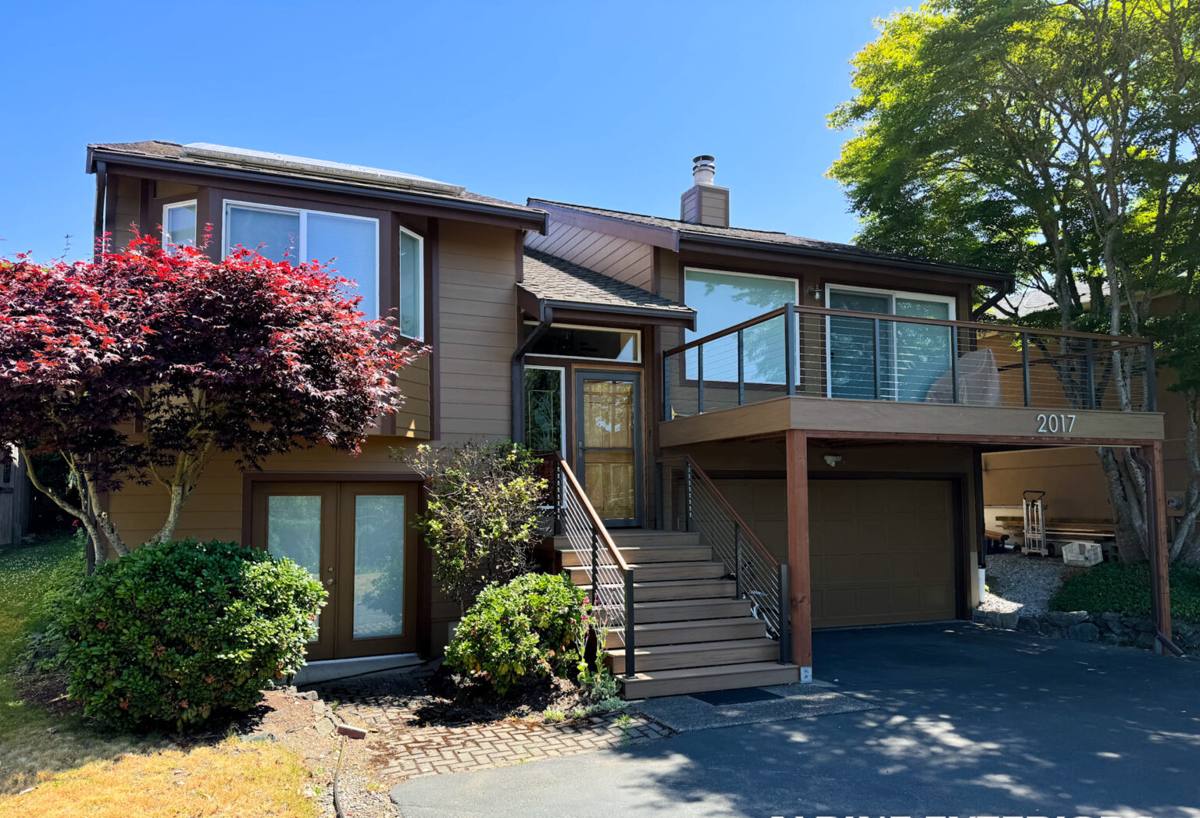
Signs a Lopez Island Roof Needs Replacing, Not Just Patching
Not every roof problem calls for a full replacement, and we'll tell you honestly when a repair is the right call. But there are signs on island homes that usually point to replacement being the smarter long-term move rather than chasing leaks one at a time:
- Granule loss heavy enough that you can see bare, shiny patches on asphalt shingles, especially on south- and west-facing slopes that take the brunt of storms
- Shingles that are curling, cupping, or cracking rather than lying flat
- Soft or spongy spots underfoot on the roof deck, which usually means the sheathing underneath has started to rot
- Moss mats thick enough that you can't see the shingle surface underneath, particularly in shaded valleys and along north slopes
- Rust staining or visible corrosion at flashing, valleys, or fasteners from long-term salt exposure
- Ceiling stains or attic moisture that show up after wind-driven rain events specifically, rather than steady rain
- A roof that's already at or past the manufacturer's expected service life for its material and exposure
One or two of these on their own might just need attention. Several at once, especially combined with a roof's age, usually means the underlying materials and details are wearing out together — and that's when replacement becomes the more honest recommendation than another round of patches.
Roofing Materials That Actually Hold Up Out Here
There's no single "best" roofing material for every home — budget, roof pitch, tree cover, and how long you plan to own the home all matter. But some materials are a better match than others for salt air, driving rain, and heavy moss pressure. Here's how the main options we install compare for San Juan County conditions specifically:
| Material | Moss & Algae Resistance | Wind & Salt Performance | Typical Lifespan Here | Maintenance Notes |
|---|---|---|---|---|
| Architectural asphalt shingle (algae-resistant) | Good with algae-resistant granules; still needs periodic moss removal on shaded slopes | Solid when installed with proper wind-rated fastening and sealed valleys | 20-25 years | Moderate — plan on moss checks and gutter clearing at least twice a year |
| Standing seam metal | Excellent; steep, slick panel surface sheds moss and debris better than any shingle product | Very strong against wind uplift and salt when specified with coated fasteners and marine-grade finishes | 40-60 years | Low — occasional rinse and fastener check |
| Synthetic/composite shingle | Good; resists moisture absorption better than wood-based products | Strong wind ratings; performs well in coastal exposure | 30-50 years | Low to moderate |
We're often asked about cedar shake or shingle roofing, since it has a long history on the islands and fits the look a lot of homeowners want. Our professional standard is to steer most clients away from it as a primary roofing material in this climate — not because it's a bad product, but because it needs consistent upkeep (cleaning, treating, and prompt repair of any damaged shakes) to avoid trapping moisture in a place that already sees a lot of rain and shade-driven moss. If you want that look, we'll talk through what real maintenance it takes before you commit, rather than let you find out the hard way.
What a Correct Roof Replacement Actually Involves
Full Tear-Off, Not an Overlay
We don't recommend installing new shingles over old ones on Lopez Island homes, even though it's cheaper up front. Overlays trap whatever moisture and moss have already worked their way into the old roofing, and in a climate this wet, that trapped moisture keeps doing damage under the new layer where you can't see it. A full tear-off lets us actually see the deck, catch soft or rotten sheathing before it spreads, and start the new roof on a clean, dry surface.
Underlayment Built for Wind-Driven Rain
Standard felt underlayment is fine in a lot of the country. It's marginal here. We use self-adhering, waterproof underlayment at eaves, valleys, and around every penetration — the spots where wind-driven rain is most likely to find a way under the shingles — and a synthetic underlayment across the rest of the field for a tighter, more durable water barrier.
Flashing and Fasteners Chosen for Salt Exposure
Flashing and fasteners are usually the first things to fail on an island roof, not the shingles themselves. We spec corrosion-resistant materials — stainless steel or heavy hot-dip galvanized rather than standard electro-galvanized — at valleys, chimneys, and wall intersections, and we pay close attention to step and kickout flashing where the roof meets your siding. A poorly flashed roof-to-wall intersection is one of the most common ways water ends up inside a wall, not just under the roof.
Ventilation and Moss-Resistant Details
Balanced attic ventilation matters more here than in a dry climate, because trapped moisture inside the attic feeds the same conditions that grow moss on the roof surface. We check intake and exhaust ventilation as part of every replacement, and on shaded roofs we'll often recommend zinc or copper strips near the ridge, which release trace metals with every rain and measurably slow moss regrowth on the slopes below.
How Our Process Works on Lopez Island Specifically
Working on the islands isn't the same as working a mainland subdivision, and treating it that way is how projects run into trouble. A few things we plan around on every Lopez Island job:
Material and crew logistics. Everything — crew, equipment, and roofing material — moves by ferry. We stage and order materials so a job doesn't stall out waiting on a second or third ferry trip mid-project, and we schedule crew time in blocks that make sense for the ferry schedule rather than day-tripping back and forth.
Weather-window scheduling. A tear-off leaves a home exposed until the new roof is dried in, so we watch the marine forecast closely and sequence tear-off and dry-in to avoid leaving a deck open when a wind-driven rain system is due in. If weather turns faster than expected, the deck gets covered and sealed before we leave a site, no exceptions.
Permitting and disposal. Roof replacements typically require a permit through San Juan County, and we handle that as part of the job rather than leaving it to the homeowner. Debris removal also takes real planning out here — old roofing material has to be hauled off-island, which we build into the project timeline instead of treating as an afterthought.
Questions Worth Asking Before You Hire a Roofer for an Island Home
A lot of roofing problems on island homes trace back to a contractor that didn't fully account for island logistics or climate, not bad materials. Before you hire anyone for a Lopez Island roof replacement, it's worth asking:
- Are you currently licensed and bonded to do roofing work in Washington State, and can you show proof?
- Do you regularly work on Lopez Island and the San Juans, or would this be a one-off trip for your crew?
- What's your plan if weather turns mid-project and the roof deck is exposed?
- Will you do a full tear-off, and what will you do if you find soft or rotten decking underneath?
- What flashing and fastener materials do you use, and are they rated for salt-air exposure?
- How do you handle debris removal and disposal from an island job site?
- Who handles the San Juan County permit — you or me?
- What's covered under your workmanship warranty, separate from the manufacturer's material warranty?
Any honest, experienced contractor should be able to answer every one of these without hesitating.
Why Local Experience on the San Juans Actually Matters
A roof replacement is only as good as the details nobody sees once it's done — the flashing under the shingles, the fasteners inside the ridge cap, the ventilation balance in the attic. A crew that works Lopez Island regularly has already made and corrected the mistakes that come from underestimating salt exposure or wind-driven rain; a crew visiting for a single job is making those calls for the first time on your house. Local experience also means we're not gone the day the job wraps — if a detail needs a second look after the first real storm of the season, we're already working in the area, not scheduling a special ferry trip to come back.
Keeping a New Roof Performing After Installation
A correctly installed roof still benefits from a little seasonal attention in this climate. A few habits go a long way toward getting the full lifespan out of a new roof:
- Clear gutters and downspouts at least twice a year — needle and leaf buildup holds moisture against the roof edge and feeds moss growth
- Have shaded, north-facing slopes checked for early moss regrowth before it builds into a thick mat
- Walk the attic after the first hard wind-driven storm of the season and look for any new staining
- Keep overhanging branches trimmed back where practical — less shade means less moss pressure over time
None of this requires a professional visit every time, but it's worth knowing what to look for so small issues don't turn into bigger ones.
If your roof is showing its age, or you just want an honest read on whether repair or replacement makes more sense for your Lopez Island home, we're glad to take a look. Estimates are free, there's no pressure to move forward, and you'll get a straight answer about what your roof actually needs — use the form below to get started.