 Orcas Island Siding
 Metal Roofing Built for the Obstruction Pass Waterfront
Obstruction Pass sits close enough to the water that salt air, wind-driven rain, and heavy tree cover are part of daily life for any roof up here. Homes tucked along this stretch of Orcas Island take a different kind of beating than a roof twenty miles inland in Eastsound or Friday Harbor — more moisture sitting on the surface, more shade holding that moisture in, and more salt in the air working on any exposed metal or fastener. A roof that isn't specified and installed with that environment in mind will show it early, usually in the form of streaking, corrosion at the edges, or moss creeping up from the north-facing slopes.
We're a local Orcas Island siding and exterior crew, and metal roofing is one of the systems we install and repair most often on this side of the island. This page covers what actually matters for a metal roof in the Obstruction Pass area — not a generic rundown of metal roofing in general, but what changes when the job is here.
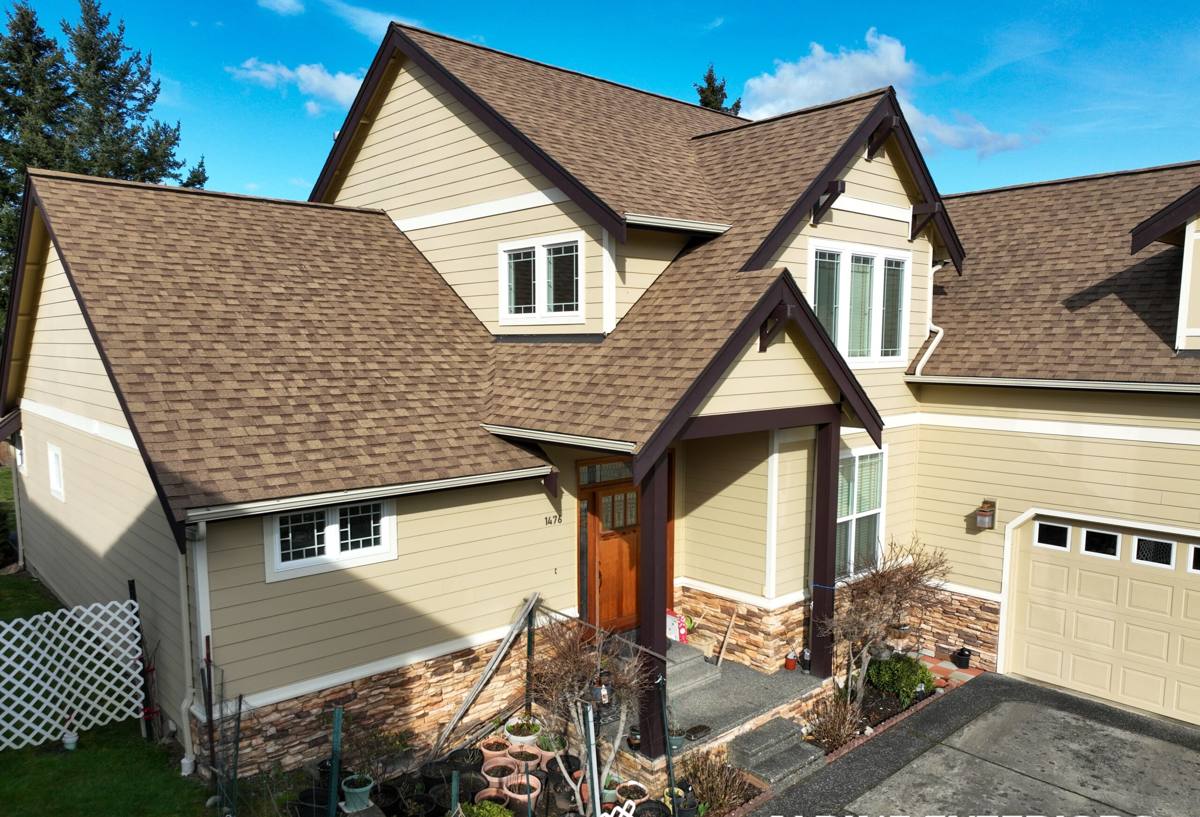
What San Juan County Weather Actually Does to a Roof
San Juan County's marine climate is milder than most of the mainland, but "mild" doesn't mean easy on a roof. A few specific conditions drive most of the wear we see on Obstruction Pass homes:
- Salt-laden air off the water accelerates corrosion on any metal that isn't properly coated or isn't rated for a marine environment, including fasteners, flashing, and cut edges.
- Driving rain during winter storms pushes water sideways under poorly lapped panels or undersized flashing, which is where most metal roof leaks actually start — not through the panel field itself.
- Long moss season on shaded, north-facing, or tree-covered slopes keeps surfaces damp for extended stretches, which is hard on organic roofing materials and can trap debris against metal seams and fasteners if the roof isn't detailed to shed it.
- Heavy tree cover common to Obstruction Pass properties means more needle and leaf litter collecting in valleys and against roof-to-wall transitions, which holds moisture right where you don't want it.
None of this makes metal roofing a bad choice here — it's often the best one. But it does mean the coating system, the fastener spec, and the detailing around penetrations and valleys all need to match the environment, not just the budget.
Why Metal Roofing Fits This Area
For waterfront and tree-shaded properties around Obstruction Pass, metal roofing solves several problems at once. It sheds moss and debris better than asphalt shingles because it has fewer places for organic material to catch and hold. It handles wind-driven rain well when the panels and flashing are installed correctly, since a properly lapped metal roof gives water very few entry points. And it holds up to salt air far longer than untreated or poorly coated materials, provided the metal, coating, and fasteners are chosen for a marine setting rather than a standard inland spec.
That said, metal roofing is not maintenance-free, and we won't tell a homeowner it is. Panels can still develop issues at fastener penetrations, at flashing laps, and at any point where a different material — a chimney, a skylight, a dormer — meets the roof plane. The material buys you a longer service life and less moss trouble, not zero attention.
Panel Types We Work With
Standing seam and exposed-fastener panel systems are both used on Orcas Island homes, and each has real tradeoffs worth understanding before you pick one.
| Factor | Standing Seam | Exposed Fastener |
|---|---|---|
| Fastener exposure | Concealed clips, no roof-surface penetrations | Screws penetrate the panel face directly |
| Salt air durability | Higher — fewer failure points for corrosion to start | Lower — exposed screws and washers are the first thing to age |
| Upfront cost | Higher material and labor cost | More budget-friendly |
| Maintenance | Minimal once installed correctly | Washers and screws typically need checking every several years |
| Best fit | Waterfront or heavily shaded roofs, long-term ownership | Secondary structures, budget-driven projects, drier exposures |
On close-to-water lots in Obstruction Pass, we lean toward recommending standing seam more often than not — the lack of surface penetrations matters more here than it would on a drier, more sheltered lot elsewhere on the island. But there are legitimate budget and building situations where an exposed-fastener system is the right call, and we'll say so plainly if that's the case.
What a Correct Metal Roof Install Actually Involves
A metal roof is only as good as the parts of it you don't see once it's finished. The panels themselves are the easy part; the detailing is where roofs earn their reputation.
Underlayment and Deck Prep
We start with the roof deck, not the panels. Any soft, rotted, or water-stained decking gets addressed before anything goes down — installing new panels over a compromised deck just hides the problem for a while. From there, a high-temperature synthetic or self-adhered underlayment goes down as the roof's real waterproofing layer, especially in valleys and along eaves, since the metal panels above it are the weather barrier, not the last line of defense.
Flashing and Penetrations
Every place the roof plane changes — valleys, chimneys, skylights, sidewalls, vent stacks — needs flashing detailed for the specific panel profile being used, not a generic piece bent to roughly fit. Given how much wind-driven rain this area sees, we pay particular attention to step flashing at wall intersections and to how valleys are formed, since those are the two spots most likely to leak on a poorly installed metal roof.
Fastening and Panel Layout
Fastener spacing, panel overlap, and the direction panels run relative to prevailing wind and rain all affect how well the roof performs in a real storm, not just on a calm day. We also spec fasteners and clips rated for coastal exposure rather than standard-grade hardware, since generic fasteners are one of the first things to corrode in salt air.
Ventilation
Proper ridge and soffit ventilation keeps moisture from condensing on the underside of the metal panels, which matters even more under the heavy tree cover and persistent dampness common to this part of the island. A roof that looks great from the ground can still be trapping moisture in the attic if ventilation was an afterthought.
Repair, Restoration, or Full Replacement
Not every metal roof on Obstruction Pass needs to be torn off and replaced. We evaluate each roof on its own condition:
- Spot repair — isolated leaks at a single flashing point, a failed fastener washer, or minor storm damage to a small section of panels.
- Flashing and fastener rework — the panels themselves are still sound, but the details around penetrations or laps have failed and are letting water in.
- Coating or panel refresh — the metal is structurally fine but showing chalking, fading, or early surface corrosion from years of salt exposure.
- Full replacement — widespread corrosion, structural deck issues, or a roof that's simply reached the end of its service life.
We'll tell you honestly which category your roof falls into. A roof that only needs flashing work doesn't need a full tear-off, and we're not going to sell one just because it's a bigger job.
Our Process on Obstruction Pass Jobs
Working on this part of the island comes with real logistics — ferry schedules, tighter driveways, tree-covered access, and weather windows that can close fast. Here's how we approach it:
- On-site assessment. We walk the roof, check the deck condition where accessible, and look closely at existing flashing, valleys, and any moss or moisture buildup.
- Honest scope and options. You get a clear picture of what's actually needed — repair versus replacement — along with panel and coating options suited to a salt-air, high-moss environment.
- Material and logistics planning. Because everything coming to Orcas Island crosses on the ferry, we plan material delivery and crew scheduling around that reality rather than treating it as an afterthought.
- Installation with weather awareness. We work around the area's rain patterns to keep the deck and underlayment protected during the job, not just the finished roof.
- Final walkthrough. We go over the completed work, the flashing details, and basic maintenance expectations so you know what to watch for going forward.
Signs Your Obstruction Pass Roof Needs Attention
- Streaking or rust-colored staining running down from fasteners or seams
- Moss or dark algae buildup on north-facing or shaded slopes
- Visible gaps, lifted panels, or loose fasteners after a windstorm
- Water stains on interior ceilings near valleys, chimneys, or skylights
- Chalky or faded coating on panels that are more than a decade old
- Debris buildup in valleys or against roof-to-wall transitions
Why Local Experience on This Roof Matters
A metal roofing crew that hasn't worked the Obstruction Pass area before is guessing at things a local crew already knows firsthand: how far wind-driven rain actually travels under a poorly lapped panel in a winter storm here, how fast moss returns on a shaded slope this close to the water, and how ferry-dependent scheduling changes what "next week" actually means for material delivery. Those aren't things you learn from a spec sheet — they're things you learn by doing this work on this island, on roofs exposed to this exact combination of salt, rain, and tree cover.
We also stand behind the work with a straightforward warranty on our installation, separate from the manufacturer's material warranty on the panels and coating themselves. If something we installed fails, we come back and fix it — that's not a marketing line, it's just how the job gets finished.
What Affects the Cost of a Metal Roof Here
| Factor | Why It Matters on Obstruction Pass |
|---|---|
| Panel system chosen | Standing seam costs more upfront but handles salt air and moisture better than exposed-fastener panels |
| Roof complexity | Valleys, dormers, and multiple roof planes increase flashing work and labor time |
| Deck condition | Rot or water damage found during tear-off adds repair scope before panels go on |
| Access and site logistics | Tree cover, driveway access, and ferry-dependent material delivery affect scheduling and labor |
| Coating and warranty level | Higher-grade coatings resist salt-air corrosion longer but come at a higher material cost |
We don't publish flat pricing because every roof here is different, but we'll give you a clear, itemized estimate after seeing the actual roof — not a phone-quote guess.
Get a Free Estimate
If you're dealing with an aging metal roof, ongoing moss trouble, or a leak that's been hard to pin down, we're happy to take a look and give you a straight answer on what it needs. Reach out through the form below for a free, no-pressure estimate on your Obstruction Pass property.