 Orcas Island Siding
 Roofing for a Shaded, Wet Corner of Orcas Island
Mountain Lake sits up in the timber, tucked into the forested interior of Orcas Island near Moran State Park, and that setting changes what a roof has to deal with compared to a place sitting wide open on the water. Homes here get less direct wind-driven salt spray than waterfront properties elsewhere on the island, but they trade that for something just as hard on a roof: shade. Tall fir and cedar canopy means slower drying times after rain, more standing needle and leaf debris on the roof plane, and a moss season that runs longer than it does on sites with open sun exposure.
We've worked enough roofs in this part of San Juan County to know that a shingle roof installed with generic assumptions — built for a sunny, open lot — tends to disappoint a Mountain Lake homeowner within a few years. Moss gets a foothold in the shaded valleys and north-facing slopes first, granule loss follows, and the manufacturer's rated lifespan starts slipping. A roof built with this specific microclimate in mind holds up very differently.
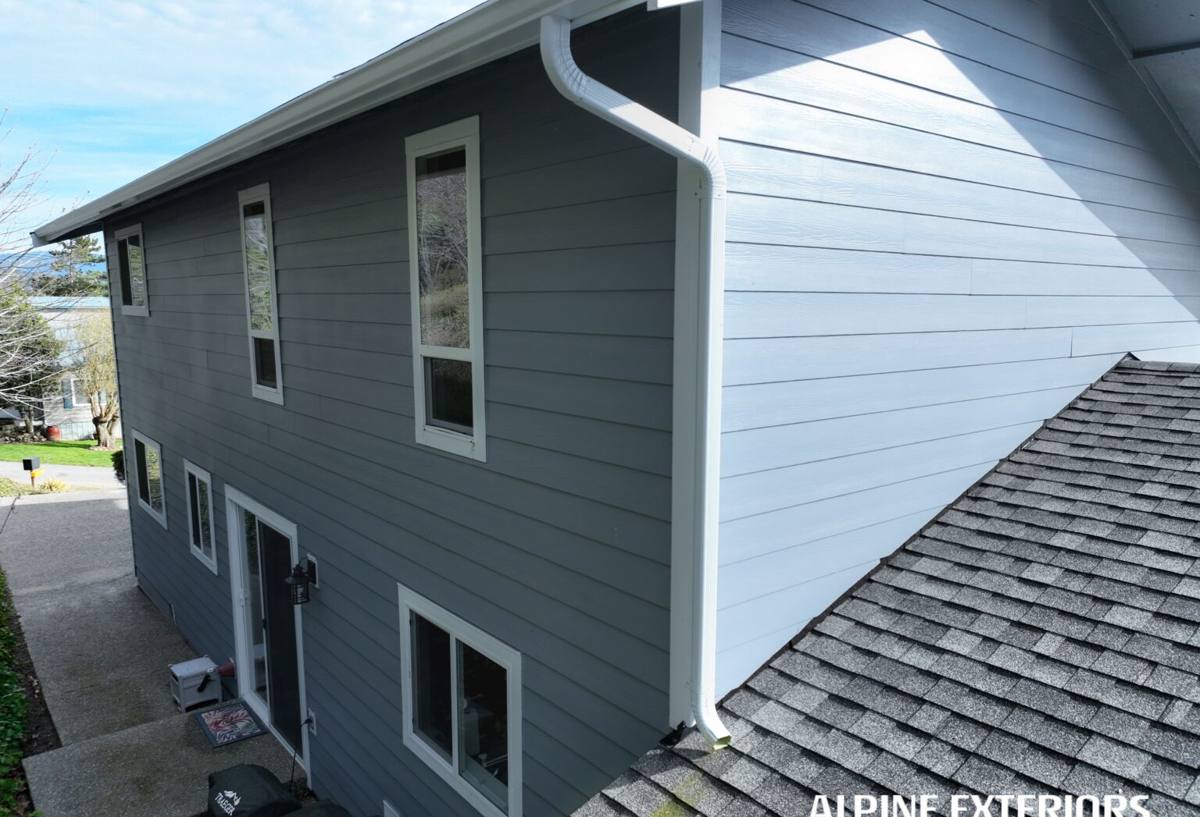
What San Juan County's Climate Actually Does to a Shingle Roof
Three things drive most of the shingle roofing problems we see across Orcas Island, and they show up at Mountain Lake in their own particular way:
- Moss and organic growth: Shade plus consistent moisture is the exact recipe moss needs. Once established, moss holds water against the shingle surface, lifts tabs at the edges, and accelerates granule loss — the granules are what protect the asphalt mat from UV and physical wear.
- Driving rain: Pacific storms don't always fall straight down. Wind-driven rain pushes water sideways and upward under shingle laps, valleys, and around penetrations like vents and chimneys. A roof that's fine in a light rain can still leak in a sideways gale if the underlayment and flashing details weren't built for it.
- Salt-laden air: Even set back from the shoreline, Orcas Island homes sit in a marine climate. Metal flashing, nail heads, and vent components corrode faster here than they would inland on the mainland, and that corrosion is usually what fails first — long before the shingles themselves wear out.
None of these are dramatic, one-time events. They're slow, cumulative pressure — which is exactly why they get overlooked until a homeowner has a stain on a ceiling or a soft spot on the deck.
Why Shade Changes the Timeline
A shingle roof on an open, sunny lot gets a natural assist: UV exposure and airflow dry the surface out between storms and keep organic growth in check. Under the tree canopy around Mountain Lake, that drying window is shorter, and some roof faces may barely see direct sun at all for months at a time. That doesn't mean asphalt shingles are the wrong choice — they're still a solid, cost-effective option here — but it does mean the product selection, ventilation, and maintenance schedule all need to account for a wetter, shadier reality than the shingle's data sheet assumes.
What a Correctly Installed Roof Looks Like Here
A shingle roof is a system, not just a layer of shingles nailed to plywood. For a Mountain Lake home, the details below are where we put extra attention:
Underlayment and Water Barrier
We use a synthetic underlayment rated for extended exposure, and we pay close attention to eave and valley protection — the spots where wind-driven rain and debris-clogged flow are most likely to force water back under the shingle edge. Valleys collect needle litter fast under tree cover, so a properly lined and sized valley matters more here than on an open roof.
Flashing That Won't Corrode Early
Given the marine air, we use flashing and fasteners suited to a coastal-adjacent climate rather than builder-grade materials that corrode within a decade. Chimneys, skylights, and wall-to-roof transitions are the places where a cut corner shows up first as a leak.
Ventilation for a Shaded Roof
Balanced intake and exhaust ventilation keeps the underside of the roof deck dry and helps offset the slower surface drying that shade causes. Poor ventilation traps moisture in the attic, which can lead to deck rot and interior condensation issues that have nothing to do with the shingles themselves but get blamed on them anyway.
Nailing Pattern and Wind Rating
Orcas Island gets real wind events, and a shingle roof is only as good as its fastening. We nail to the pattern the manufacturer specifies for the wind zone, not a shortcut pattern — that's the difference between shingles that stay put in a storm and ones that start lifting at the tabs.
Comparing Shingle Options for a Wooded, Wet Site
Not every asphalt shingle product is a good match for a shaded, moss-prone lot. Here's how the common options stack up for a site like Mountain Lake:
| Shingle Type | Typical Lifespan | Moss/Algae Resistance | Best Fit For |
|---|---|---|---|
| Standard 3-tab | 15–20 years | Low unless algae-resistant granules specified | Budget-conscious re-roofs on sunnier faces |
| Architectural (laminate) | 25–30 years | Moderate to high with algae-resistant granules | Most Mountain Lake homes — heavier profile sheds water better under canopy |
| Impact-resistant architectural | 25–30+ years | Moderate to high with algae-resistant granules | Roofs with heavy overhanging branches or falling debris risk |
For most shaded, tree-covered properties in this area, we steer homeowners toward algae-resistant architectural shingles. They're a heavier, more rigid product that handles wind-driven rain and debris load better than 3-tab, and the copper- or zinc-infused granule treatments available from most major manufacturers slow moss and algae growth meaningfully — not permanently, but enough to change the maintenance math over the life of the roof.
Our Process on a Mountain Lake Job
We keep the process straightforward because a roof replacement is already disruptive enough without added surprises:
- On-site inspection: We walk the roof, check the deck condition where accessible, look at existing ventilation, and assess how much tree cover and moss history is affecting the specific roof faces.
- Written scope and estimate: You get a clear breakdown of tear-off, materials, flashing work, and ventilation changes — no vague allowances.
- Tear-off and deck check: Old roofing comes off and we inspect the deck for rot or soft spots before anything new goes down. Any deck repair is flagged and priced before we proceed, not discovered after the fact.
- System installation: Underlayment, flashing, ventilation components, and shingles go in per manufacturer specification and the wind-rated nailing pattern.
- Cleanup and walkthrough: Magnetic sweep for stray fasteners, full debris removal, and a walkthrough so you know what maintenance to expect.
Maintenance That Actually Matters Under Tree Cover
A shaded roof needs a different maintenance rhythm than an open one. This is the short list we give Mountain Lake homeowners:
- Clear needles, leaves, and debris from valleys and gutters at least twice a year — more often if the canopy is heavy.
- Have moss growth treated or removed before it spreads across a full roof face, not after.
- Keep gutters and downspouts flowing freely; clogged gutters back water up under the shingle edge.
- Trim overhanging branches back where practical to improve airflow and sun exposure on the roof.
- Get flashing and penetrations checked every few years, since corrosion in marine air tends to outpace shingle wear.
- Address any interior ceiling stains or attic moisture signs right away — they're almost always cheaper to fix early.
What Drives the Cost
Every roof is different, but the same handful of factors move the price up or down on most Mountain Lake jobs:
| Factor | Why It Matters |
|---|---|
| Roof size and number of planes | More cuts, ridges, and valleys mean more labor and material waste |
| Deck condition | Rot or soft sheathing found during tear-off adds repair cost before shingles go on |
| Access and tree cover | Limited access or heavy overhead branches slow tear-off and material staging |
| Shingle grade chosen | 3-tab, standard architectural, and impact-resistant products carry different material costs |
| Ventilation and flashing upgrades | Bringing older ventilation or flashing up to current standards adds scope but pays off in roof life |
We'll walk through these with you during the estimate so you know exactly what's driving the number, not just a lump-sum figure.
Why a Crew That Already Works This Area Matters
A shaded, forested property like the ones around Mountain Lake behaves differently than an open coastal lot even a few miles away on the same island. A crew that hasn't worked this kind of site before will often under-spec ventilation, skip the moss-resistant granule option, or use flashing that's fine inland but corrodes fast in San Juan County's marine air. We've built roofs across the range of conditions Orcas Island throws at a house — waterfront wind exposure, open sun, and shaded interior lots like Mountain Lake — and we bring that site-specific judgment to the estimate, not just a standard package.
Getting materials and crews to the island also isn't as simple as it is on the mainland. Ferry scheduling affects delivery timing and job sequencing, and a contractor who works Orcas Island regularly plans around that instead of leaving you waiting on a delayed shipment mid-tear-off.
Get a Straight Answer on Your Roof
If you're dealing with moss buildup, a roof that's past its expected life, or you just want an honest read on what your Mountain Lake home's roof actually needs, we're happy to take a look. Fill out the form below for a free, no-pressure estimate — we'll walk the roof, tell you what we see, and give you a clear scope and price with no obligation.