 Orcas Island Siding
 Why a Deck at Mountain Lake Needs a Different Plan Than a Waterfront Deck
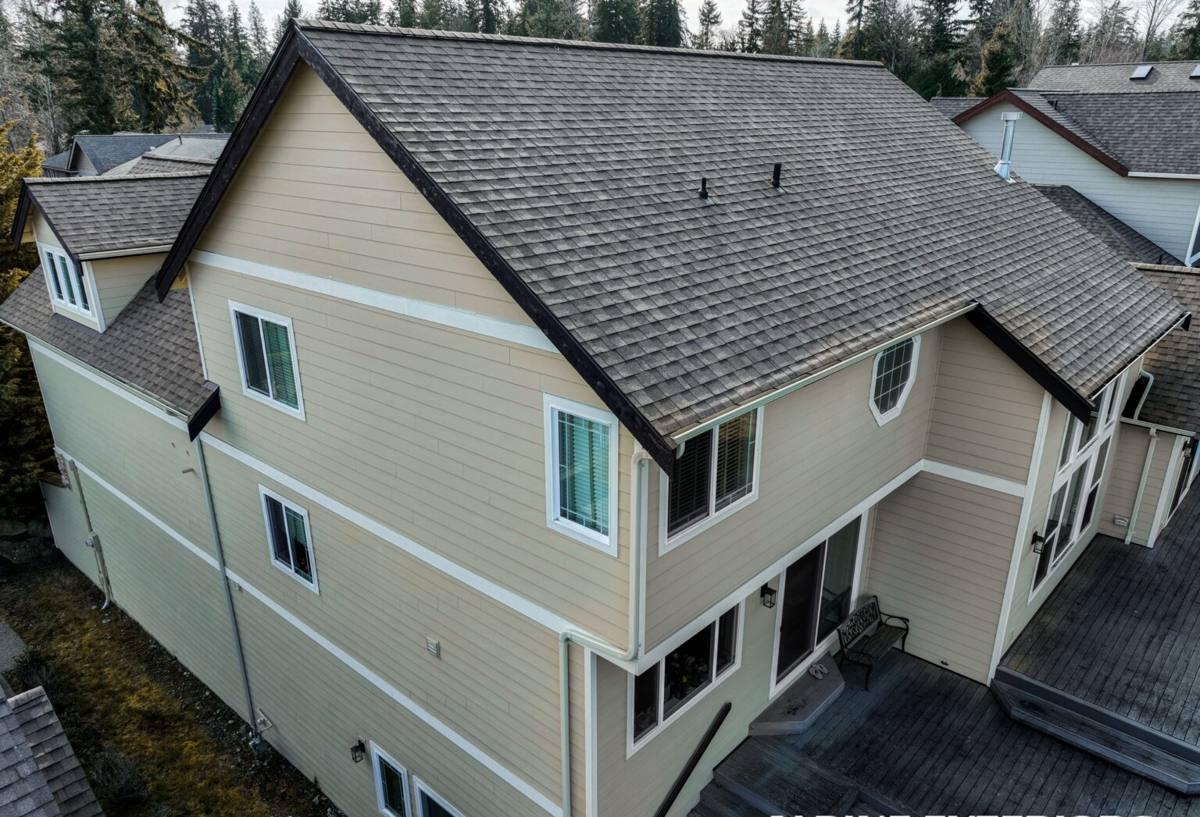
Homes around Mountain Lake sit in a different pocket of Orcas Island than the open shoreline properties most people picture when they think about San Juan County weather. Set back among trees and closer to fresh water than salt water, a deck out here deals with a mix of conditions that a straight waterfront deck doesn't: heavier shade, slower drying time after rain, and the kind of persistent dampness that keeps moss growing for most of the year. It's still an island deck, though — salt air off the surrounding waters reaches all of Orcas Island, driving rain off winter storms doesn't stop at the tree line, and any decking material out here still has to hold up to both.
That combination is why a deck built for Mountain Lake shouldn't be specced the same way as one built for an open bluff a few miles away, and shouldn't be treated as a generic composite install either. This page covers what the Mountain Lake environment actually does to a deck, what a correct composite installation involves here, and why it matters that the crew doing the work already knows this part of the island.
What the Mountain Lake Environment Actually Does to a Deck
Tree Canopy Means the Deck Rarely Fully Dries
A deck in open sun on a clear afternoon dries out within a few hours of a rain. A deck shaded by fir and cedar canopy around Mountain Lake can stay damp for days, especially through the fall and winter when the sun sits low and the days are short. That extended dampness is exactly what moss, algae, and mildew need to take hold, and it's the single biggest difference between decking here and decking on an open, sun-exposed lot elsewhere on the island.
Moss and Algae on the Deck Surface, Not Just the Roof
Most homeowners think about moss as a roofing problem, but a shaded deck surface deals with the same growth for the same reason — shade plus moisture plus organic debris from overhanging trees. Moss and algae don't just look bad on a deck; they hold moisture against the board surface and make it genuinely slick underfoot, which matters more on stairs and landings than most people realize until it becomes a problem.
Salt Air Still Reaches an Inland Property
Mountain Lake sits back from the shoreline, but Orcas Island is small enough that salt-laden marine air moves across the whole of it, not just the waterfront. It's a lower dose than a home sitting directly on the water, but it isn't zero, and over years it still contributes to corrosion in exposed fasteners and hardware — one more reason not to treat an inland deck build as if salt exposure simply doesn't apply.
Driving Rain and Winter Storm Systems
San Juan County's winter storm systems bring sustained wind-driven rain, and tree cover doesn't stop rain from being pushed sideways into a structure the way it can block direct sun. That wind-driven moisture gets forced under railings, into ledger connections, and around fastener heads, which is why flashing and fastener choices matter on a Mountain Lake deck just as much as they do on an open waterfront one.
What "Composite Decking" Actually Means
Capped vs. Uncapped
Composite decking is generally a blend of wood fiber and plastic, and the two broad categories behave very differently in a shaded, damp setting like Mountain Lake. Capped composite has a protective plastic shell wrapped around the core, which keeps moisture from soaking into the board and resists staining from tannins, moss, and organic debris. Uncapped composite is the older style of the product — the wood-plastic blend is exposed on all sides, and it absorbs moisture and stains more readily. In a spot that stays damp longer than most of the island, that difference shows up faster than it would on a sunnier lot, which is why we standardize on capped composite for these builds.
Board Texture and Traction Matter More in the Shade
Surface texture is a bigger consideration for a shaded, lake-adjacent deck than for an open sunny one, because a slicker board texture combined with moss or algae growth becomes a real footing hazard on stairs and landings. We factor grip and texture into the product recommendation for a Mountain Lake deck, not just color and price, because the surface has to perform in conditions that stay damp for longer stretches than the island average.
What a Correct Composite Deck Build Involves Here
The decking boards get most of the attention, but around Mountain Lake the substructure, fastening, and drainage details are what actually determine whether a deck holds up. A build done right for this setting includes:
- Framing material suited to consistently damp, shaded ground conditions, not just a standard treated-lumber spec written for a drier lot
- Stainless steel or coated fasteners throughout, since salt air still reaches Mountain Lake even though it's set back from open water
- Hidden fastener systems where the product allows, which keep the surface cleaner and reduce spots where moss and debris can collect around exposed screw heads
- Board gapping sized for both material expansion and drainage, since a shaded deck relies on gap spacing to shed water rather than sun to dry it out
- Ledger board flashing built for sustained wind-driven rain, not just vertical rainfall
- Joist spacing matched to the specific composite product's span rating
- Railing and post attachment sized to current wind load requirements
- Ventilation and clearance beneath the deck sized generously, since airflow does more of the drying work here than direct sun does
Skipping any one of these doesn't usually cause a visible problem on day one. It shows up a few years in, as persistent moss that keeps coming back no matter how often you scrub it, a railing post that's started to loosen, or fasteners that have corroded enough to stain the boards around them.
How Our Process Works
We start with a site visit to see what's actually there — how much canopy cover the deck area gets through the day, drainage and grade around the site, existing framing condition if it's a replacement, and how close the lot sits to the lake versus open air. From there we walk through composite product options with that specific shade and moisture load in mind, not a generic recommendation, and talk through how the space will actually be used.
Permitting in San Juan County generally follows standard building code requirements for deck framing, guardrails, and structural connections, and properties closer to the shoreline can carry additional review. We handle that process as part of the job. Material logistics on Orcas Island also mean working around ferry schedules, so we plan deliveries ahead rather than treating it as an afterthought. Once permitted, the build follows the sequence above — substructure and drainage first, then the composite surface, railing, and any trim work — finishing with a walkthrough covering what upkeep the specific product you chose actually needs in a shaded setting like this one.
Composite Decking Compared to the Alternatives
| Material | How It Handles Shade, Moisture & Moss | Maintenance | Typical Lifespan Here |
|---|---|---|---|
| Capped composite | Strong — cap layer resists moisture absorption and staining from moss and tannins | Periodic washing to keep moss and algae from taking hold; no sealing or staining | Long-term, backed by manufacturer warranty |
| Cellular PVC | Excellent — no wood fiber to absorb moisture, holds up well in persistent shade | Periodic washing; no sealing or staining | Long-term, generally at a higher upfront cost |
| Uncapped composite | Moderate — absorbs moisture, more prone to staining and mold in shaded spots | More frequent cleaning needed to manage moss and mildew | Shorter than capped products in a damp, shaded setting |
| Pressure-treated wood | Weak against sustained dampness — prone to rot, splinter, and fastener corrosion over time | Regular sealing or staining, more often than in a sunnier spot | Shortest, with the most ongoing upkeep |
| Cedar decking | Naturally rot-resistant but still grays and softens faster without light and airflow to dry it | Periodic oiling or staining to manage moss growth and graying | Moderate if maintained closely; shorter if neglected in shade |
What Composite Decking Still Needs From You Here
Composite decking is low-maintenance compared to wood, not maintenance-free, and a shaded, lake-adjacent deck needs a little more attention than one sitting in open sun. A few habits go a long way:
- Wash the surface periodically to remove moss, algae, and organic buildup before it takes hold, especially through the wetter fall-to-spring stretch
- Keep gaps between boards clear of needles, leaves, and debris so water and air can actually move through them
- Trim back overhanging branches where practical to let more light and airflow reach the deck surface
- Check railing posts and hardware annually for early signs of corrosion or loosening
- Address any substructure moisture concerns — soft framing, standing water underneath — right away, since that's structural, not cosmetic
Why It Matters That We Already Work Mountain Lake
A crew that mostly builds decks on open, sunny lots can still install composite decking competently, but a shaded, lake-adjacent property has variables that don't come up nearly as often elsewhere on Orcas Island — extended drying times, moss and algae pressure that never fully lets up, drainage that has to work harder without sun to help it along, and site access that often has to be planned around ferry schedules for material delivery. Working this part of the island regularly means we're not guessing at any of that or learning it on your project. We know which composite products actually resist moss in a shaded setting over years, not just months, what fastener grade holds up given both the dampness and the residual salt exposure, and how to size drainage and ventilation for a deck that won't get much help from the sun.
That familiarity also shows up in smaller ways — being straightforward with you about what a deck in this specific environment realistically needs versus what's just an upsell, and building the substructure to match the actual site conditions instead of a generic spec.
Get a Straight Answer About Your Deck
Whether you're replacing a deck that can't seem to stay ahead of the moss, building new around Mountain Lake, or just want an honest read on what composite decking would take on your property, we're happy to walk the site with you and lay out the options plainly. Reach out below for a free, no-pressure estimate.