 Orcas Island Siding
 Why Mountain Lake Calls for a Different Deck Building Approach
Mountain Lake sits up in the forested hills near Moran State Park, a different setting from the open, wind-scoured shorelines found elsewhere on Orcas Island. The trade-off is less direct salt exposure but a lot more shade, standing moisture, and organic debris — fir needles, big-leaf maple leaves, and moss spores — settling into every gap and joint on a deck. Homes in this part of San Juan County deal with driving rain funneling off dense tree canopy, slower drying times because sunlight rarely reaches the whole deck surface at once, and a moss season that can run most of the year in the shadiest corners of a lot.
A deck built with the same assumptions as a waterfront Orcas Island deck often struggles here — not because the wood or hardware is wrong, but because the airflow, drainage, and clearance details weren't planned around shade and canopy cover. Building correctly for Mountain Lake means designing for a slower-drying, moss-prone microclimate from the ground up, not just picking a decking material and hoping for the best.
The Forest Canopy Factor
Tree cover does a lot of good — it blocks wind and softens the driving rain that hits more exposed parts of the island — but it also traps humidity close to the deck surface and drops a steady supply of organic matter into board gaps and along fascia boards. That debris holds moisture against wood and framing long after a storm passes, which is exactly the environment moss, algae, and rot organisms need to take hold.
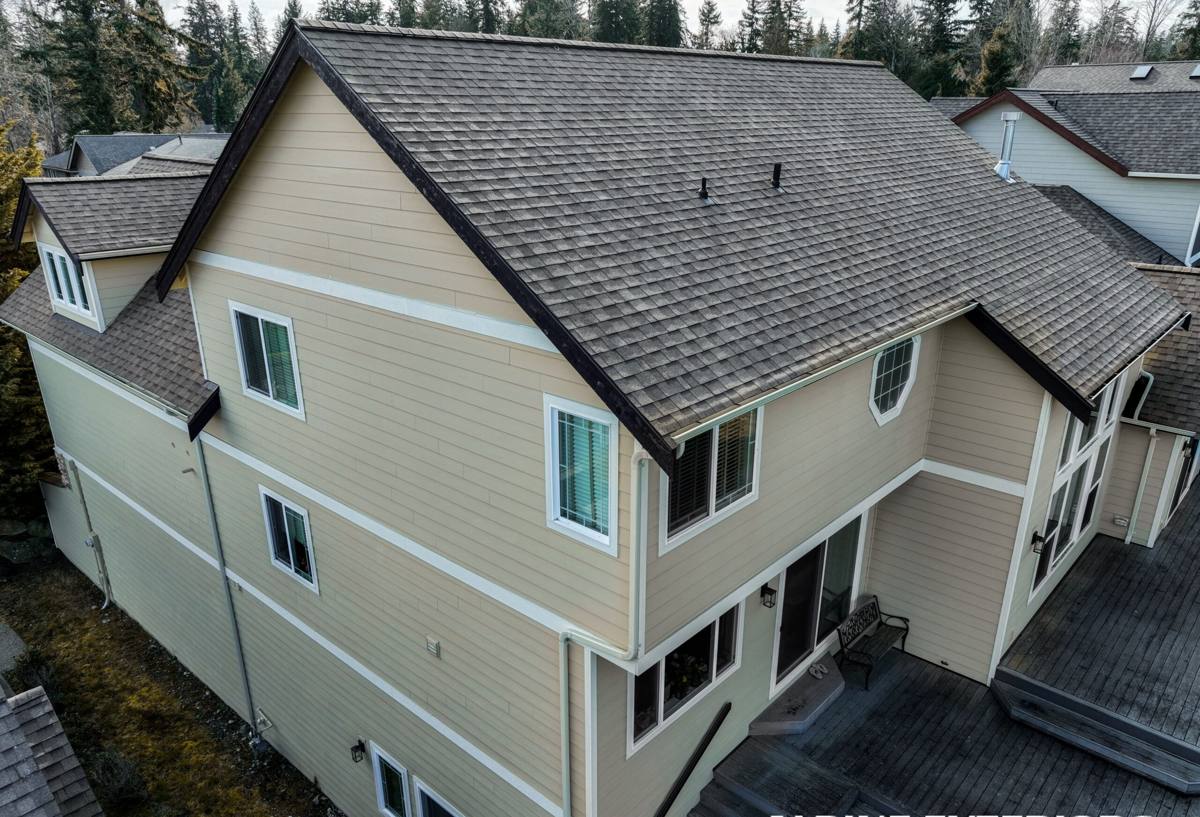
What a Deck Near Mountain Lake Actually Needs
Ground Clearance and Drainage
Low decks built tight to the ground are one of the most common problems we find on shaded, forested lots. Without enough clearance underneath, air can't move, needles and leaves pile up unseen, and the underside of the decking and joists stay damp for weeks at a stretch. We build in adequate ground clearance and grade the soil underneath to shed water away from the structure, not toward it.
Fasteners and Hardware
Even away from the immediate waterfront, Orcas Island's marine air reaches inland and accelerates corrosion on cheap or mismatched hardware. We use stainless or hot-dip galvanized fasteners and connectors rated for coastal exposure throughout — ledger bolts, joist hangers, post bases — because a deck is only as durable as its least-protected fastener, and a rusted hanger fails long before the wood around it does.
Board Spacing and Airflow
Gap width between deck boards matters more here than in a sunny, open lot. Tighter spacing looks clean on day one but slows drying and gives debris and moss more surface to cling to. We set gaps to balance appearance with the airflow a shaded deck needs to actually dry out between rain events.
Decking Material Options for a Shaded, Moisture-Heavy Lot
There's no single "right" decking material for every Mountain Lake property — it depends on how much sun the specific site gets, your maintenance appetite, and budget. Here's how the common options actually perform in this kind of environment.
| Material | Moisture & Moss Behavior | Maintenance | Typical Lifespan |
|---|---|---|---|
| Pressure-treated fir/pine | Absorbs moisture readily; moss and mildew take hold quickly in full shade without upkeep | Annual cleaning, periodic sealing | 15-20 years with upkeep |
| Western red cedar | Naturally rot- and insect-resistant; still needs airflow to shed surface moisture and prevent graying/moss | Cleaning and re-sealing every 1-2 years for best appearance | 20-25+ years with upkeep |
| Capped composite | Doesn't absorb water or rot, but moss and algae can still grow on the surface film if it stays damp and shaded | Periodic washing; no sealing or staining required | 25-30 year manufacturer warranties, common |
| Uncapped composite (older style) | More prone to surface mold and moisture wicking at cut ends than capped composite | More frequent cleaning than capped composite | Generally shorter service life than capped composite |
Whichever material you choose, we treat cut ends, seal exposed edges where the manufacturer calls for it, and avoid trapping wood-to-wood contact points where water and needles can sit undisturbed.
Framing and Structural Details That Matter Here
Ledger Flashing
Where a deck attaches to the house, proper flashing is what keeps driving rain from working its way behind the ledger board and into the wall assembly over time. This is one of the most common failure points we find on older decks throughout San Juan County, and it's not a visible detail once the deck is finished — it has to be done right the first time.
Footings and Sloped Terrain
A lot of Mountain Lake lots aren't flat. Footings need to be sized and set to local frost and load requirements regardless of slope, and on uneven or forested ground that often means engineered post heights and bracing rather than a uniform, off-the-shelf layout. We assess the actual grade and soil conditions on site rather than assuming a standard footprint will work.
Beam and Joist Sizing
Span tables assume dry, well-ventilated wood. In a shaded environment where framing stays damp longer, we lean toward more conservative spacing and, where it makes sense, moisture-resistant or naturally durable framing lumber rather than cutting spans as close to the maximum as a sunnier site might allow.
Permitting and Site Planning in San Juan County
Deck projects on Orcas Island typically go through San Juan County's building permit process, and requirements can shift based on the deck's size, height above grade, and proximity to property lines or environmentally sensitive areas. Forested and lakeside-adjacent parcels sometimes carry additional review depending on setbacks and vegetation rules. We handle the permit submission and coordinate any required inspections as part of the job, so you're not the one deciphering county code on top of everything else.
Our Deck Building Process
- Site walk and assessment — we look at sun exposure, tree cover, slope, existing drainage patterns, and how the deck will tie into the house before we design anything.
- Design and material selection — sized to the site's actual shade and moisture profile, not a generic template.
- Permit handling — we prepare and submit what San Juan County requires and schedule inspections at the right points in the build.
- Framing and structural work — footings, ledger flashing, beams, and joists built to hold up to driving rain and shaded, slow-drying conditions.
- Decking, railing, and finish work — installed with the fastener and spacing details this climate calls for.
- Final walkthrough — we go over care and maintenance specific to your site's sun and shade pattern before we call the job done.
Living With Moss and Shade: Deck Maintenance That Actually Works
Even a well-built deck near Mountain Lake needs some seasonal attention — the goal of good construction is to reduce how much maintenance is required, not eliminate it entirely. A short seasonal routine goes a long way:
- Sweep needles, leaves, and debris off the deck surface and out of board gaps regularly, especially in fall
- Clear debris from underneath the deck where it collects unseen against joists and framing
- Rinse off surface moss and algae before it builds a foothold, using a deck-safe cleaner rather than a pressure washer set too aggressively
- Check and re-seal wood decking on the manufacturer's or installer's recommended schedule, not just when it looks weathered
- Inspect fasteners, hangers, and ledger flashing annually for early signs of corrosion or water intrusion
- Trim back overhanging branches where practical to let more light and air reach the deck surface
Why Hiring a Crew That Already Works Mountain Lake Matters
Building codes and material specs are the same on paper anywhere in San Juan County, but the practical decisions — how much ground clearance is actually enough under a fir canopy, which corners of a given lot never see direct sun, how San Juan County treats a permit application near a forested or lake-adjacent parcel — come from having built decks in this specific setting before. A crew that mostly works sunny, open sites can still build a structurally sound deck here, but the details that determine whether it's fighting moss and rot within a few years, or aging gracefully for decades, are the ones that come from local experience.
If you're planning a new deck or replacing one that's struggling with moisture and moss near Mountain Lake, we're happy to take a look and talk through what your specific site actually needs. Reach out for a free, no-pressure estimate using the form below.