 Orcas Island Siding
 Building Decks That Actually Hold Up on North Beach
North Beach sits close enough to the water that every deck built here is fighting a slower, quieter battle than decks inland. It's not one dramatic storm that wears a deck out — it's the daily combination of salt-laden air, driving rain that comes in sideways off the water, and the long stretch of damp, low-light months each year when moss and algae get a foothold on anything that stays wet. A deck built to a generic spec sheet will often look fine for a season or two, then start showing problems that are expensive to fix later: spongy boards, corroding fasteners, and railings that loosen at the posts. A deck built for this specific stretch of Orcas Island shoreline is a different project from the start.
We build and rebuild custom decks for homes in this area, and the North Beach jobs get planned differently than a deck we'd frame on a drier, more sheltered lot elsewhere in San Juan County. That starts with material selection and goes all the way through fastener choice, drainage detailing, and how we sequence the build around the weather.
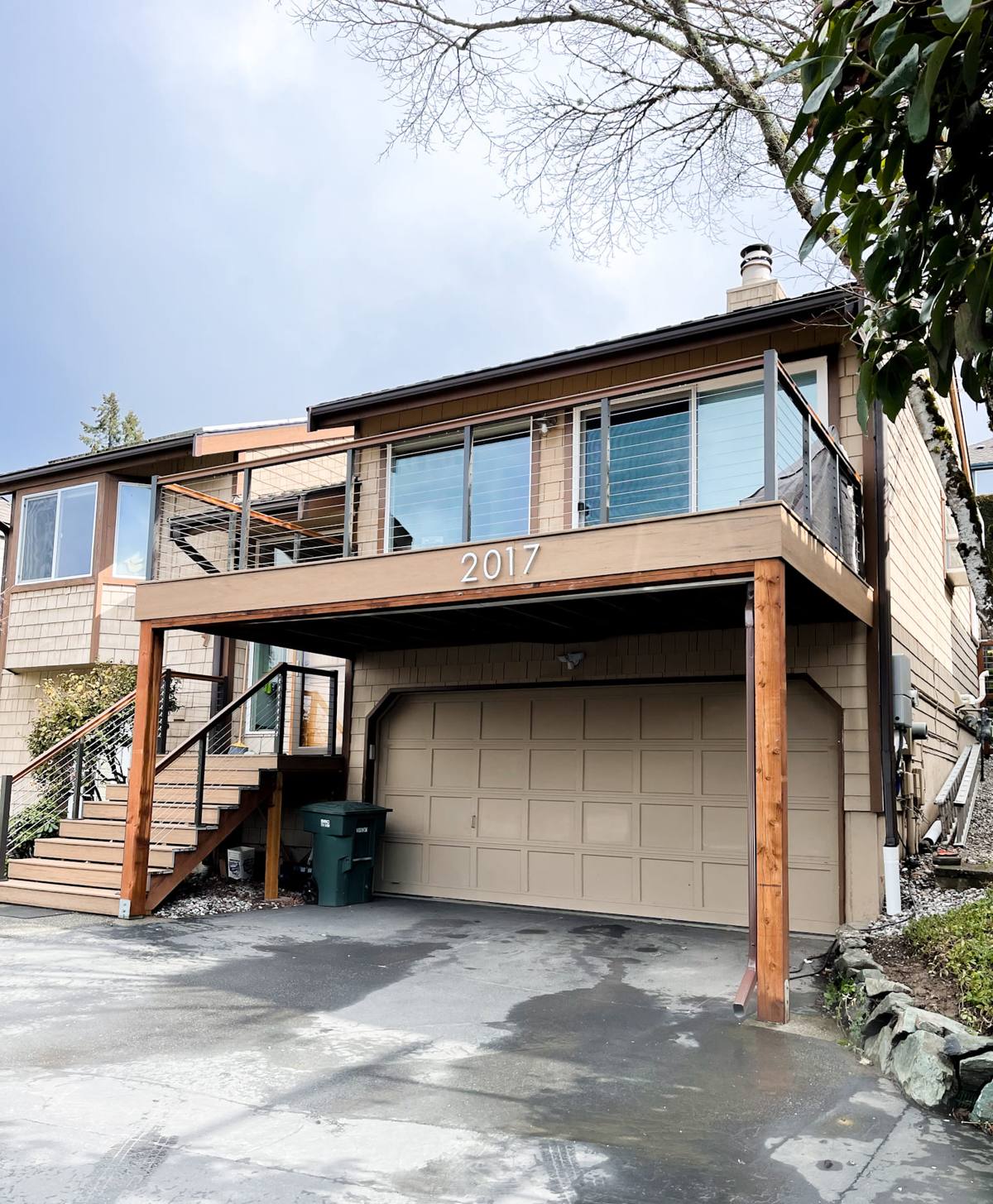
What North Beach Homes Are Actually Up Against
Three conditions shape almost every decision we make on a North Beach deck project:
Salt Air
Airborne salt accelerates corrosion on anything metal — fasteners, joist hangers, railing brackets, post bases. Hardware that's rated for general outdoor use inland can start rusting within a couple of seasons this close to the water. It's not cosmetic; corroding fasteners lose holding strength, and a deck's structural integrity depends on every one of them doing its job.
Driving Rain
Wind-driven rain doesn't just fall on a deck — it gets pushed into seams, under ledger boards, and behind fascia if those areas aren't flashed and sealed correctly. On an exposed North Beach lot, water finds every gap a deck wasn't built to shed.
Long Moss Season
Western Washington's wet season runs long, and a shaded or low-airflow deck can stay damp for weeks at a stretch. That moisture is exactly what moss, algae, and mildew need to take hold on decking boards, especially on the north-facing or tree-shaded sections of a lot. Beyond looking bad, a mossy deck surface gets slick and can become a slip hazard.
Choosing the Right Decking Material for This Site
There's no single "best" decking material for every home — the right choice depends on how exposed the lot is, how much shade the deck gets, and how much upkeep the homeowner actually wants to do. Here's how the common options compare for a North Beach setting specifically:
| Material | How It Handles Salt Air & Moisture | Moss/Algae Resistance | Upkeep Required |
|---|---|---|---|
| Pressure-treated fir/pine | Needs sealing and re-staining on a regular schedule to keep water out of the grain | Low — porous surface holds moisture, needs regular cleaning | High |
| Cedar | Naturally resists rot better than treated softwood, but still needs periodic sealing near salt air | Moderate — still benefits from cleaning in shaded areas | Moderate |
| Composite decking | Doesn't absorb moisture the way wood does; handles salt exposure well over time | Better than wood, though surface film can still grow in deep shade without cleaning | Low |
| PVC/capped composite | Fully sealed surface, strong resistance to moisture intrusion | Good, but any decking will still need occasional washing in a shaded, damp spot | Low |
We'll walk a homeowner through this trade-off honestly rather than push a single product. A composite or capped board often makes sense on an exposed, low-maintenance North Beach lot, while a homeowner who wants a specific wood look and is willing to keep up a cleaning and sealing schedule can get good years out of cedar. What we won't do is install a material on a bad footing detail just because it's the cheapest option up front — the framing and drainage underneath matter more than the surface material.
Fasteners and Hardware
This is where salt-air jobs get treated differently than a standard build. We spec stainless steel fasteners and connectors, or at minimum a heavy hot-dip galvanized coating rated for coastal exposure, on every North Beach deck. Standard electro-galvanized screws and joist hangers are not built for this environment and are one of the most common causes of early deck failure we see in coastal homes — not because the wood or decking failed, but because the hardware holding it together did.
What a Correct Deck Build Involves
A deck is a structure first and a surface second. The parts that don't show are what determine whether it's still solid in fifteen years:
- Footings sized and set below frost depth, on soil that's been properly evaluated for this lot
- A ledger board (if the deck attaches to the house) flashed correctly so water is directed away from the house's wall assembly, not trapped behind it
- Joists spaced to the actual load and span requirements for the decking material chosen, not just "standard" spacing
- Corrosion-resistant hardware throughout — hangers, screws, post bases, and structural connectors
- Proper slope built into the frame so water sheds off the surface instead of pooling
- Railings and post connections engineered to hold under real lateral load, not just visually attached
Skipping any one of these doesn't usually show up right away. It shows up two, five, or ten years later as a soft spot, a leaning rail, or a rot pocket behind the house wall — problems that are far more expensive to fix than they would have been to build correctly the first time.
Drainage and Airflow: The Difference Between a Deck That Lasts and One That Doesn't
Given how long the wet season runs here, how a deck manages water and air is arguably more important than which board you pick. We build in gapping between boards sized for drainage and expansion, and we pay close attention to airflow underneath the deck — a low, enclosed underside traps moisture and is exactly where we see the worst moss, mildew, and rot in older North Beach decks. Where a deck sits low to the ground or in a shaded corner of the lot, we'll talk through options like additional venting or grading adjustments so the space underneath can actually dry out between rain events instead of staying damp for weeks.
Our Process for North Beach Deck Projects
- Site visit and assessment — We look at sun exposure, wind exposure, existing structure (if this is a rebuild), and any signs of past water damage before we talk materials.
- Design and material selection — We walk through the trade-offs above based on how exposed the lot is and how much maintenance the homeowner wants to take on.
- Permitting — Most new or attached decks require sign-off through San Juan County; we handle the paperwork side of this so it doesn't fall on the homeowner.
- Build — Framing, flashing, decking, and railings, sequenced to keep exposed structural wood covered as quickly as possible given the rain patterns here.
- Final walkthrough — We go over the finished deck and what maintenance (if any) it needs going forward.
Maintenance Checklist for a North Beach Deck
Even a well-built deck needs some seasonal attention in this climate. A simple yearly routine goes a long way:
- Sweep debris out of board gaps so water and moss-forming organic matter don't sit trapped between boards
- Rinse or gently clean shaded and north-facing sections more often than sun-exposed areas, since that's where moss takes hold first
- Check railing posts and stair connections annually for any looseness
- Inspect fasteners near the waterline of the property for early signs of corrosion
- Re-seal or re-stain wood decking on the schedule appropriate to that product — don't wait until it's visibly worn
- Keep gutters and downspouts near the deck clear so runoff isn't dumping extra water onto or under the structure
Why Local Build Experience on North Beach Matters
A deck built to a spec sheet written for a dry inland climate is a different product than one built for a marine environment with a long wet season. Crews who haven't worked this specific stretch of Orcas Island tend to under-spec hardware, skip the airflow details, or pick a decking material without walking a homeowner through what it actually takes to maintain near salt air. We've built and repaired decks in this kind of exposure long enough to know which shortcuts show up as problems in year two versus which details actually matter for year fifteen.
That local knowledge also shows up in smaller, practical decisions — how to orient a deck relative to prevailing wind and rain direction, where extra ventilation under the structure is worth the cost, and which corners of a given lot need more attention to moss and moisture than others. Those are judgment calls that come from working this coastline repeatedly, not from a manufacturer's install guide.
Get an Honest Look at Your North Beach Deck Project
Whether you're planning a new deck, replacing an aging one, or just want a second opinion on a deck that's showing early signs of trouble, we're happy to take a look and walk through your options honestly — no pressure, no hard sell. Fill out the form below and we'll set up a time to see your property and talk through what makes sense for your home.