 Orcas Island Siding
 Roofing for a Shoreline Microclimate
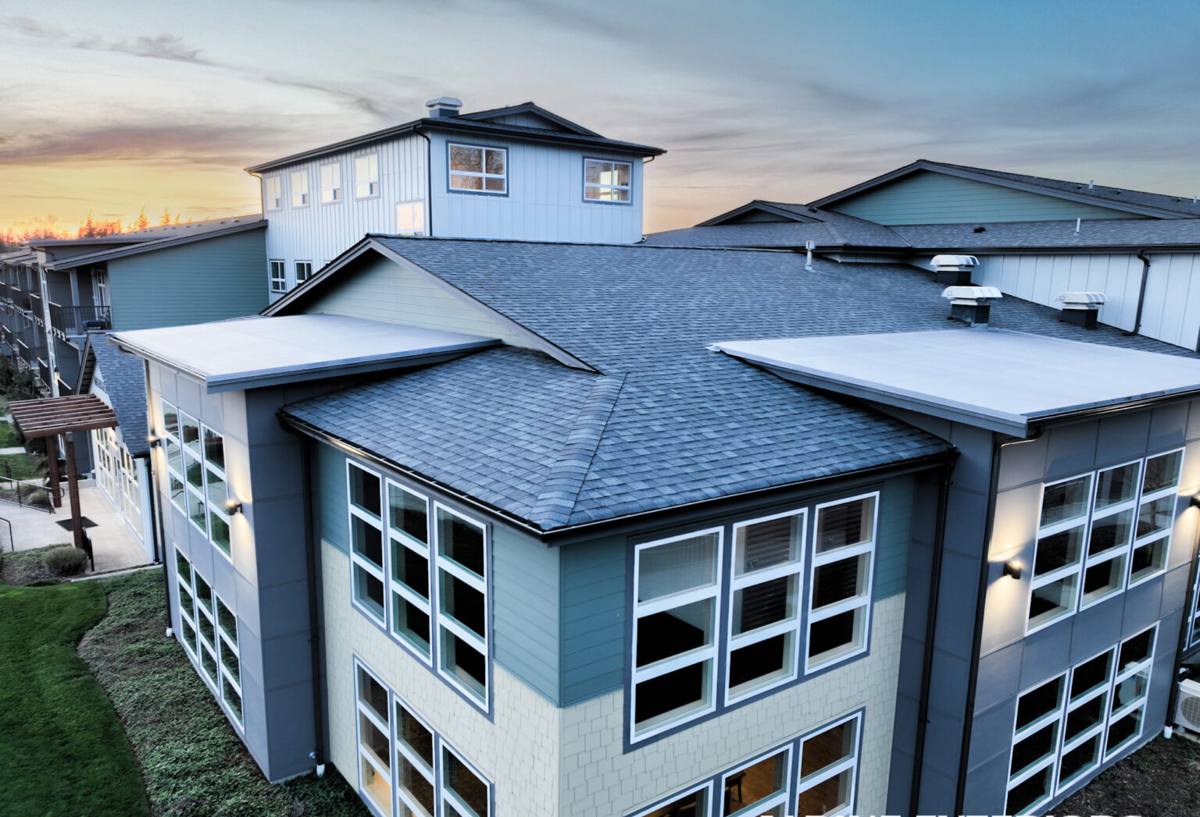
Obstruction Pass sits at the water's edge on the southeast side of Orcas Island, and that location shapes what a roof has to survive here. Salt-laden air moves off the pass and settles on every exposed surface, including shingles, flashing, and fasteners. Add San Juan County's long wet season, driving rain that comes in sideways during winter storms, and deep shade from fir and cedar canopy on many lots, and you get a set of conditions that push asphalt shingle roofs harder than they'd be pushed a few miles inland.
None of this means asphalt shingles are the wrong choice for Obstruction Pass. They remain one of the more practical, cost-effective roofing systems available, and they perform well here when the installation accounts for the local climate instead of following a generic spec sheet. The problems we see on older roofs in this area almost always trace back to shortcuts in ventilation, flashing, or underlayment — not the shingles themselves.
What Salt Air, Rain, and Moss Actually Do to a Roof
Salt Air and Metal Components
Salt accelerates corrosion on any exposed metal — nail heads, drip edge, valley flashing, and vent stacks. Once corrosion starts on a fastener or flashing seam, water finds a path underneath the shingle mat long before the shingles themselves show visible wear. This is why the metal details on a roof matter as much as the shingle brand.
Driving Rain
Wind-driven rain off the water doesn't just fall on a roof, it gets pushed sideways and upward into laps, valleys, and edges. A roof that would shed a straight-down rain just fine can still leak during a southeast storm if the underlayment, valley work, and edge details weren't built for wind-driven moisture.
Moss and Shade
Orcas Island's tree cover means many Obstruction Pass roofs get long stretches of shade, especially on north-facing slopes. Shade plus moisture equals moss, and moss holds water against the shingle surface far longer than open sun-exposed roofs experience. Over years, that trapped moisture degrades the granule surface and can lift shingle edges, giving wind and rain a place to start working.
What a Correctly Built Shingle Roof Needs Here
A roof built for this climate isn't a different shingle — it's a different set of underlying decisions. The parts that matter most in a moss-and-salt environment are usually the parts you never see once the job is done.
- A synthetic or self-adhering underlayment rated for extended UV and moisture exposure, not just the minimum builder-grade felt
- Ice-and-water shield style membrane at eaves, valleys, and around penetrations, even though Orcas Island doesn't see heavy ice, because the same membrane blocks wind-driven rain
- Stainless or hot-dip galvanized fasteners and flashing where salt exposure is highest, rather than standard mill-finish metal
- Balanced intake and exhaust ventilation so moist air doesn't condense inside the attic and add to what the roof deck already deals with from outside
- Proper valley metal or woven/closed-cut valley construction sized for real water volume, not just code minimums
- Algae-resistant shingle granules on any roof with shade exposure, to slow the staining and moss anchoring that shaded slopes invite
Choosing the Right Shingle for This Site
Not every asphalt shingle product is built the same way, and the differences matter more in a coastal, shaded environment than they would in a dry inland climate.
| Factor | 3-Tab Shingles | Architectural (Laminate) Shingles |
|---|---|---|
| Wind rating | Typically lower, more prone to lifting in gusty pass winds | Higher rated, dual-layer construction resists uplift better |
| Algae/moss resistance | Available with treated granules but thinner mat overall | Usually available with stronger algae-resistant granule treatments |
| Expected lifespan | Shorter, generally in the 15-20 year range | Longer, generally in the 25-30+ year range depending on product line |
| Upfront cost | Lower material cost | Higher material cost, better long-run value in this climate |
| Best fit for Obstruction Pass | Budget-driven, less shaded, low-exposure roofs | Shoreline exposure, shaded lots, longer-term ownership |
Our standard recommendation for most Obstruction Pass homes is an architectural shingle with algae-resistant granules and a wind rating suited to open shoreline exposure. We'll walk through the actual manufacturer specs and warranty terms for the products we install so you're choosing based on real numbers, not marketing language.
Why We're Selective About What We Install
We don't install every shingle line on the market. Our standard is products with documented wind and algae-resistance ratings, straightforward warranty terms, and a track record we can stand behind for coastal Pacific Northwest installations. That sometimes means we'll steer a homeowner away from a cheaper option — not because it's a bad product everywhere, but because its maintenance burden or moisture tolerance isn't the right match for a shaded, salt-exposed roof.
How We Approach a Job in Obstruction Pass
- On-site assessment. We look at slope orientation, shade exposure, existing ventilation, and the condition of flashing, decking, and fascia before quoting anything.
- Tear-off and deck inspection. Old shingles come off completely so we can inspect the deck for soft spots or rot, which is common under roofs that have held moss for years.
- Underlayment and membrane installation. We install underlayment and membrane specified for this climate, not a generic minimum.
- Flashing and metal work. Valleys, step flashing, drip edge, and vent flashing are replaced or upgraded using corrosion-resistant metal, since reusing old flashing is one of the most common causes of early leaks.
- Ventilation check and correction. We verify intake and exhaust balance and correct it where the existing setup is undersized or blocked.
- Shingle installation. Installed to manufacturer spec for nailing pattern and exposure, which directly affects the wind warranty's validity.
- Final walk-through. We review what was done, what to expect over the next several years, and any maintenance recommendations specific to your lot's shade and exposure.
Living With Moss: What Maintenance Actually Looks Like
Even a well-built roof in a shaded Obstruction Pass location will collect some moss over time. The goal of a good installation isn't to eliminate moss entirely — it's to slow its growth and keep it from causing damage while it's there. That's an ongoing maintenance conversation, not a one-time fix.
- Keep gutters and valleys clear of needles and debris, since trapped organic matter holds moisture and feeds moss growth
- Have moss physically removed rather than left to grow thick, since dense moss mats hold water directly against the granule surface
- Avoid pressure washing shingles, which can strip granules and shorten shingle life faster than the moss itself would
- Trim back overhanging branches where practical to reduce shade and debris load on the roof
- Schedule a periodic roof check, especially after major windstorms common to the pass, to catch lifted shingles or damaged flashing early
Signs Your Roof Needs Attention
Homeowners in this area often wait too long to have a roof looked at because asphalt shingle damage isn't always obvious from the ground. A few warning signs worth acting on:
- Granules collecting in gutters or at the base of downspouts
- Shingle edges that look curled, cupped, or lifted, particularly after a windstorm
- Dark streaking or thick moss growth on shaded slopes
- Soft spots noticeable when walking the attic, or daylight visible through the roof deck
- Rust staining around vent stacks, flashing, or fastener heads
- Any interior ceiling staining, even faint, following a heavy rain event
What Drives Cost on a Job Like This
| Cost Factor | Why It Matters Here |
|---|---|
| Roof size and pitch | Steeper pitches and larger footprints require more material and labor time |
| Deck condition | Rot found under old moss-covered shingles adds decking repair to the scope |
| Flashing and metal scope | Full flashing replacement costs more upfront but reduces leak risk substantially |
| Shingle grade chosen | Architectural shingles cost more than 3-tab but last longer in this climate |
| Access and site conditions | Tree cover, slope, and water access on some Obstruction Pass lots affect staging and logistics |
| Ventilation upgrades | Correcting undersized intake/exhaust adds modest cost but protects the new roof's lifespan |
We give a firm, itemized quote after the on-site assessment rather than a rough phone estimate, because the variables above genuinely change the number from one property to the next.
Why Local Experience on Orcas Island Matters
A roofing crew that regularly works Obstruction Pass and the rest of Orcas Island already knows how shoreline exposure, shade patterns, and San Juan County's wet season behave on real roofs here — not in a manual. That translates into better decisions on underlayment selection, flashing details, and ventilation sizing without needing to relearn the local conditions on your project. It also means logistics — material delivery, scheduling around ferry and weather windows, and site access on island lots — are already familiar, which keeps a project moving instead of stalling on avoidable delays.
Workmanship and Warranty
Beyond the manufacturer's material warranty, the installation itself is what determines whether that warranty ever gets tested. Improper nailing, skipped underlayment steps, or reused old flashing can void manufacturer coverage even if the shingles themselves are sound. We'll explain in plain terms what's covered by the manufacturer, what's covered by our workmanship, and what maintenance is expected of you as the homeowner to keep both valid.
If you're weighing a repair against a full replacement, or just want an honest read on how much life is left in your current roof, we're glad to take a look. Reach out for a free, no-pressure estimate using the form below.