 Orcas Island Siding
 Building a Deck That Can Actually Handle San Juan Island
A deck on San Juan Island lives a harder life than a deck almost anywhere inland. It sits under a marine layer that keeps wood damp for days at a time, catches salt-laden air off the water, and spends a good chunk of the year growing moss in every shaded corner. None of that is a reason to avoid building a deck — it's just a reason to build one differently than a generic contractor working from a mainland playbook. The right material choices, the right fasteners, and the right drainage details make the difference between a deck that looks tired in five years and one that's still solid in twenty-five.
This page covers what we've learned building and repairing decks specifically for San Juan County's climate: what actually fails first, what holds up, and what our process looks like from the first estimate to the final walkthrough.
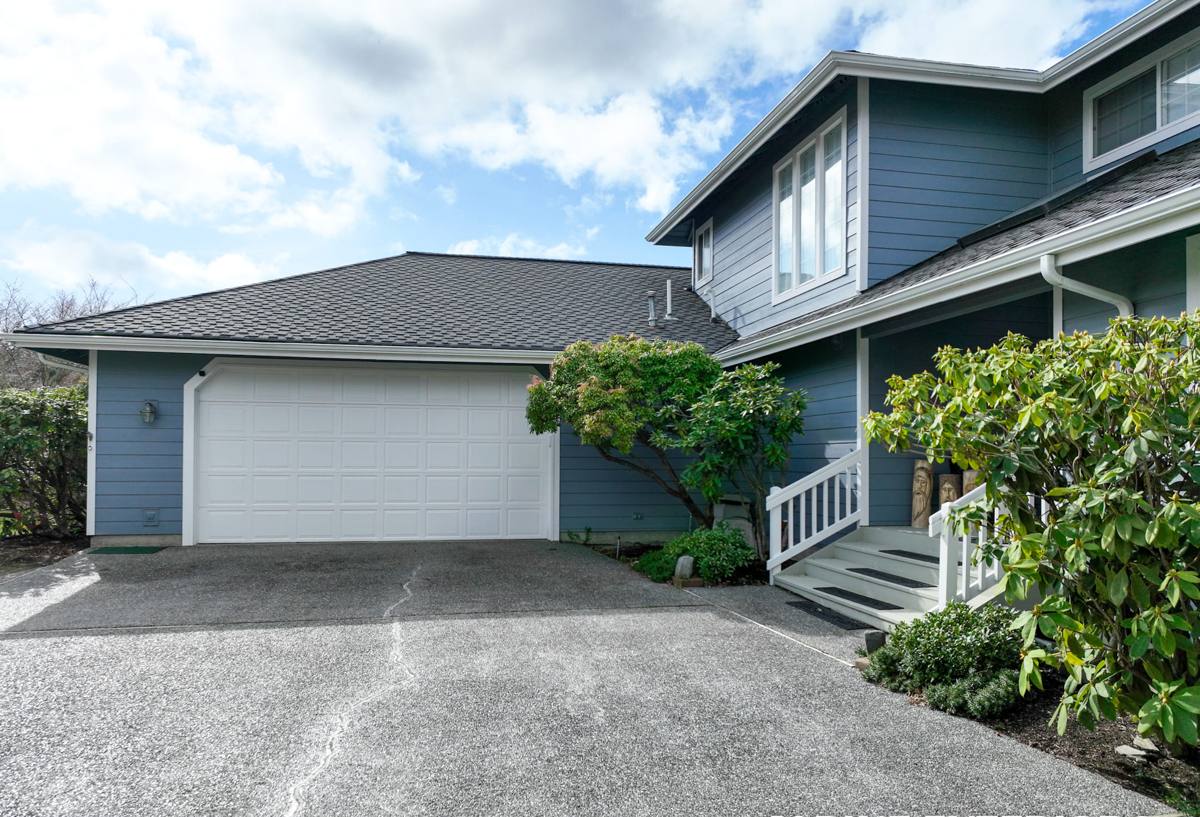
What Salt Air, Rain, and Moss Do to a Deck Over Time
Three things drive almost every deck failure we see out here, and they compound each other:
- Salt air accelerates corrosion in fasteners, brackets, and any exposed metal hardware — even hardware rated for treated lumber can underperform close to shore if it isn't the right grade.
- Driving rain, especially wind-driven rain that hits at an angle, gets up under ledger boards, into end grain, and behind poorly flashed connections where a homeowner never thinks to look.
- Moss and algae hold moisture against the deck surface long after a storm passes, which is what actually causes rot — the moss itself isn't the enemy, the trapped moisture underneath it is.
Individually, any one of these is manageable. Together, on a deck that wasn't built with them in mind, they shorten the useful life of decking boards, railings, and structural framing substantially. A deck built for a dry inland climate and simply installed on Orcas or San Juan Island the same way will show its age faster than the owner expects.
Choosing the Right Decking Material for This Climate
There's no single "best" decking material — there's a best material for a given budget, sun exposure, and how much upkeep the homeowner actually wants to do. Here's how the main options compare for island conditions specifically:
| Material | How it handles salt air & moisture | Moss/algae resistance | Maintenance |
|---|---|---|---|
| Pressure-treated lumber | Good if fasteners and hardware are matched to the chemical treatment; lowest upfront cost | Needs periodic cleaning and sealing to resist growth | Annual cleaning, re-sealing every 2-3 years |
| Cedar | Naturally rot-resistant, ages well in coastal air if finished correctly | Moderate — still needs cleaning in shaded, damp areas | Sealing or staining every 2-3 years to hold color and resist moisture |
| Composite decking | Excellent — doesn't absorb moisture or salt the way wood does | Good, though even composite needs occasional washing in mossy, shaded spots | Periodic washing; no staining or sealing |
| Tropical hardwoods (e.g., ipe) | Very good density and rot resistance, but installation is unforgiving | Good once properly finished | Oiling to maintain color, otherwise low |
For most San Juan Island homes, we steer people toward either a quality composite or a well-detailed cedar deck, depending on the look they want and how much maintenance they're willing to commit to. Tropical hardwoods look excellent but demand precise installation — pre-drilling, correct fastener spacing, and acclimation before install — or they'll cup and check faster than the wood's reputation suggests. We won't shortcut that process just to hit a lower bid; a hardwood deck installed the fast way is a maintenance headache within a few seasons.
A note on treated lumber and hardware compatibility
Modern pressure-treated lumber uses copper-based preservatives that corrode standard galvanized or plain steel hardware faster than older treatments did. Close to salt water, that corrosion happens even faster. We spec stainless steel or hot-dip galvanized hardware rated for ACQ/copper-azole contact on every treated-lumber deck we build here — it costs more than mismatched hardware, but it's the difference between fasteners that last the life of the deck and ones that start staining and weakening within a few years.
The Structural Details That Actually Matter Here
Footings and framing on island lots
San Juan County lots often mean rocky or uneven soil, tree roots, and grades that don't match a standard footing plan. We dig and set footings to reach frost depth and stable bearing regardless of what the terrain throws at us, rather than forcing a cookie-cutter layout onto ground that doesn't cooperate. Joist spacing and beam sizing get calculated for the actual span and load, not just copied from the last job.
Ledger attachment and flashing
The ledger board — where the deck attaches to the house — is the single most common source of hidden rot on decks anywhere, and driving coastal rain makes it worse here. We flash the ledger connection properly, with the flashing lapped correctly over the house's water-resistive barrier, so wind-driven rain can't work its way behind the board and rot the rim joist or sheathing from the inside out. This is invisible once the deck is finished, which is exactly why so many decks skip it.
Fasteners and hardware
Every bracket, hanger, bolt, and screw is chosen to match both the lumber treatment and the coastal environment — stainless in the most exposed, salt-air-heavy locations, and correctly rated galvanized elsewhere. Mixing incompatible metals (a common shortcut) sets up galvanic corrosion that eats hardware from the inside, so we don't do it.
Drainage and airflow underneath
A deck that traps moisture underneath — against a hillside, over a low crawlspace, or tight against a foundation — stays damp long after the rain stops. We grade and gap the structure to let air move underneath and water drain away from the house, which matters as much for moss and mildew control as it does for structural longevity.
Railings, Guardrails, and Working With a View
Many San Juan Island decks are built specifically to take advantage of water or forest views, which usually means glass panels, cable rail, or slim metal balusters instead of solid wood railings that block sightlines. Whatever the style, guardrail height, baluster spacing, and load capacity have to meet code — this isn't optional on any elevated deck, and it's one of the first things we confirm before design work goes further. We'll walk you through railing options that fit the view you're building the deck for in the first place, without compromising on what code requires.
Our Process, Start to Finish
- Site visit and assessment — we look at grade, sun/shade exposure, proximity to salt water, and how the deck ties into the existing structure.
- Material and design conversation — we talk through composite vs. wood vs. hardwood honestly, including what each one will actually cost you in upkeep over time, not just upfront.
- Written estimate — clear scope, materials, and pricing before any work starts.
- Permitting — San Juan County has its own permitting requirements, and shoreline-adjacent lots can involve additional review; we handle what applies to your project.
- Footings and framing — built to span and load requirements for your specific deck, not a generic template.
- Ledger flashing and structural connections — done correctly and, where relevant, documented for your records.
- Decking, railings, and finish work — installed to the material manufacturer's specifications, including fastener spacing and expansion gaps.
- Final walkthrough — we go over care and maintenance specific to the material you chose before we consider the job done.
What Maintenance Actually Looks Like Out Here
No deck on San Juan Island is maintenance-free, even composite. What differs by material is how much and how often:
- Rinse or wash the surface periodically to clear pollen, salt residue, and the buildup that feeds moss — especially in shaded areas that don't get direct sun to dry them out.
- Check and re-seal or re-stain wood decking on the schedule appropriate to the product — skipping a cycle in this climate shows up faster than it would inland.
- Keep an eye on the ledger connection and any spots where the deck meets siding or a hillside; that's where hidden moisture problems start.
- Clear debris from between boards and off the surface before it decomposes into a moisture trap.
We'll give you a maintenance rundown specific to your material at the end of the job, not a generic printout.
Why Hire a Crew That Already Works San Juan Island
Building decks on the mainland and building them here are not the same job. Barge scheduling affects material delivery timelines. Salt air changes what hardware you should trust. Rocky, uneven lots change how footings get set. A crew that hasn't dealt with those realities on San Juan Island specifically will learn on your project — at your expense, in time or in callbacks. We already know the climate, the terrain, and what actually fails first out here, which means fewer surprises and a deck that's built for the conditions it will actually face, not the conditions a standard spec sheet assumes.
If you're planning a new deck or replacing one that's showing its age, we're happy to take a look and put together a straightforward, no-pressure estimate. Use the form below to get started.