 Orcas Island Siding
 Siding Replacement Built for Eastsound's Marine Climate
Eastsound sits close to the water on Orcas Island, which means every home in the village and the surrounding shoreline roads takes a steady beating from salt-laden air, wind-driven rain off the Strait, and a moss season that can run most of the year in shaded, north-facing spots. Siding here doesn't fail because homeowners neglect it. It fails because the wrong product was matched to this specific climate, or because the installation didn't account for how water actually moves across a wall in San Juan County's weather. A siding replacement in Eastsound needs to solve for salt corrosion, sustained moisture exposure, and biological growth all at once — not just look good on install day.
We work on Orcas Island regularly, and Eastsound's mix of older cottages, newer builds, and everything in between gives us a clear picture of what actually holds up out here versus what looks fine for a few seasons and then starts showing problems.
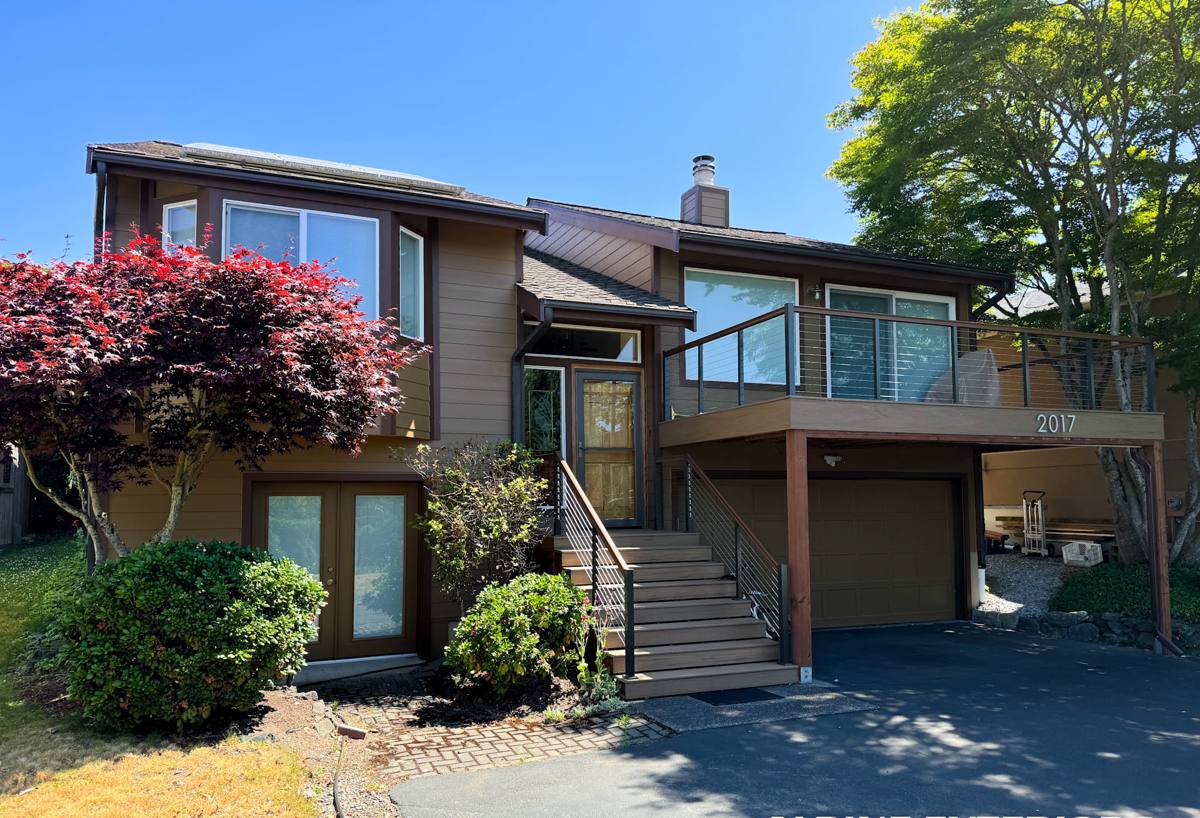
Why Eastsound Homes Are Hard on Siding
Salt Air and Fasteners
Proximity to saltwater accelerates corrosion on anything metal — fasteners, flashing, trim screws. Cheap or mismatched hardware corrodes first, and once a fastener fails, water gets behind the siding at that point and the damage spreads from there. Salt exposure is worse the closer a home sits to the water, but Eastsound's compact village layout means even homes set back from the shoreline get a steady dose of salt in the air, especially during winter storms.
Driving Rain
Storms coming off the Strait of Juan de Fuca and the wider Salish Sea don't just fall straight down here — wind pushes rain sideways into walls, especially on west- and south-facing elevations. That means seams, laps, and butt joints take on water pressure that a calmer climate wouldn't produce. Siding and house wrap details that would be adequate in a drier inland town aren't automatically adequate in Eastsound.
Moss and Shade
Orcas Island's tree cover keeps a lot of homes in partial shade for much of the day, and that shade plus persistent moisture is exactly what moss needs to take hold. Moss on siding isn't just cosmetic — it holds water against the surface, and on products that aren't dimensionally stable or that absorb moisture, that constant dampness is what starts rot, delamination, or paint failure underneath.
What a Correct Siding Replacement Involves
Replacing siding isn't just swapping old boards for new ones. Done right, it's a full envelope job:
- Full tear-off of the old siding so the sheathing underneath can actually be inspected, not just spot-checked
- Repair or replacement of any rotted or water-damaged sheathing and framing found during tear-off
- Installation of a new weather-resistive barrier, lapped and taped correctly so water sheds down and out, not into the wall
- Correct flashing at every window, door, and penetration — this is where most water intrusion actually starts
- Proper fastener selection and spacing for the specific siding product and this climate's exposure
- Rain-screen or drainage gap detailing where the wall assembly calls for it, so moisture that does get behind the cladding can drain and dry
- Correct caulking and sealant only where the manufacturer's install spec calls for it — not as a substitute for proper flashing
Skipping the tear-off and inspection step is the single most common shortcut we see, and it's the one that causes the most expensive problems later, because it hides damage instead of fixing it.
Why We Install Only James Hardie Fiber Cement
We don't install vinyl, LP SmartSide, Cemplank, Allura, primed spruce, or cedar. That's a deliberate standard, not a limitation of what we're capable of installing. In a climate like Eastsound's — salt air, driving rain, long stretches of shade and moisture — the material matters more than almost anywhere else on the island.
Why We Don't Install the Alternatives
Wood siding, whether cedar or primed spruce, looks good initially but needs consistent maintenance — repainting, caulking, and moisture monitoring — to hold up against constant dampness and moss growth. Skip a maintenance cycle in a shaded, damp Eastsound lot and rot can set in before it's visible from the ground. Engineered wood products like LP SmartSide perform reasonably when installed and maintained exactly to spec, but they're more sensitive to sustained moisture exposure than fiber cement, and any lapse in maintenance shortens their service life faster in a marine climate than it would inland. Vinyl siding is low-maintenance and inexpensive, but it can distort in sustained wind exposure, fades over time with no way to refinish it short of replacement, and its seams and butt joints are a weaker point against wind-driven rain than a properly installed fiber cement lap system. Cemplank and Allura are also fiber cement products and share many of fiber cement's core strengths, but we've standardized on James Hardie specifically for its factory ColorPlus finish, its regionally engineered HZ product lines, and its transferable warranty structure — consistency we can stand behind on every job.
What James Hardie Gets Right for This Climate
James Hardie fiber cement is non-combustible, dimensionally stable in wet-dry cycling, and doesn't feed moss and mildew the way wood-based products can. Its ColorPlus factory finish is baked on under controlled conditions, which holds color and resists the fading and chalking that field-applied paint struggles with in a damp coastal climate. Hardie's HZ5 product line is engineered specifically for climates with freeze-thaw cycling and sustained moisture exposure — a good match for what Eastsound sees over a typical winter. And because Hardie backs its siding with a strong, transferable warranty, homeowners aren't left holding all the risk if something does go wrong down the line.
Comparing Siding Options for an Eastsound Home
| Factor | James Hardie Fiber Cement | Wood (Cedar / Primed Spruce) | Vinyl |
|---|---|---|---|
| Moisture resistance | Dimensionally stable, engineered HZ lines for wet climates | Absorbs moisture; needs consistent maintenance to resist rot | Doesn't absorb, but seams are vulnerable to driving rain |
| Salt air performance | Non-combustible fiber cement, holds up well with correct fasteners | Can degrade faster near salt exposure without upkeep | Resists salt corrosion itself, but fasteners and trim still at risk |
| Moss and mildew | Doesn't feed biological growth like wood substrates can | More prone to moss and mildew in shaded, damp spots | Low biological growth, but can trap moisture behind panels |
| Finish longevity | Factory ColorPlus finish resists fading and chalking | Field-applied paint needs recoating on a maintenance cycle | Color is baked in but can fade and chalk over time, no refinishing option |
| Warranty | Strong, transferable manufacturer warranty | Varies; often limited or workmanship-only | Varies by manufacturer, often prorated |
Our Process for an Eastsound Siding Replacement
1. On-Site Assessment
We walk the exterior with you, note which elevations take the most wind-driven rain, check for existing moss or moisture staining, and look at how the current siding has held up given the home's exposure and shade pattern.
2. Tear-Off and Inspection
Old siding comes off and we inspect the sheathing and framing underneath before anything new goes up. Any water damage found gets addressed before we move forward — not covered over.
3. Weather Barrier and Flashing
We install a new weather-resistive barrier and flash every window, door, and penetration correctly. This step matters more in Eastsound's driving-rain conditions than almost anywhere else on the material.
4. James Hardie Installation to Spec
Siding goes up following James Hardie's installation requirements — correct fastener type and spacing, proper clearances, and correct lap and joint treatment for this exposure.
5. Final Walkthrough
We walk the finished job with you, confirm the details, and make sure you understand the maintenance-free reality of what's now on your home.
What to Check Before Hiring a Siding Contractor on Orcas Island
- Do they tear off old siding and inspect sheathing, or just cover over what's there?
- Can they explain their flashing and weather barrier approach specifically for wind-driven rain?
- Do they install to the manufacturer's written specifications, not just "how we've always done it"?
- Are they familiar with San Juan County permitting and island logistics, including material delivery by ferry?
- Do they stand behind a manufacturer warranty that's actually transferable if you sell the home?
- Have they worked on homes in similarly exposed, shaded, or shoreline-adjacent conditions before?
Why Local Experience on Orcas Island Matters
Island logistics change how a siding job gets planned and run. Material has to come over by ferry, which means scheduling has to account for sailing times and weather delays that a mainland job never has to think about. A crew that already works Orcas Island and San Juan County knows how to plan around that instead of discovering it mid-project. Beyond logistics, familiarity with Eastsound specifically — its shade patterns, its exposure to wind off the water, its moss-prone lots — means fewer surprises once tear-off starts and a more accurate estimate from the beginning.
Get an Estimate for Your Eastsound Home
If your siding is showing moss, staining, soft spots, or just isn't keeping up with Orcas Island's weather anymore, we're happy to take a look. We'll give you a straightforward, no-pressure estimate for a James Hardie siding replacement built for what your home actually faces here in Eastsound. Use the form below to get started.