 Orcas Island Siding
 Why Obstruction Pass Roofs Wear Differently
Homes near Obstruction Pass sit close enough to the water that salt-laden air is a constant factor, not an occasional one. Combine that with the long, wet moss season that Orcas Island and the rest of San Juan County see every fall through spring, and you get a roofing environment that's genuinely tougher on materials than what you'd find inland. Fasteners corrode faster. Algae and moss get a head start in shaded, north-facing sections. And driving rain off the water finds every weak point in flashing and underlayment that a drier climate would never expose.
A roof that would last 25-30 years in a dry inland town might show real trouble at 15-18 years out here if it wasn't built with this specific climate in mind. That's not a knock on any particular roof — it's just what salt air, moisture, and moss do over time when the details aren't right from the start.
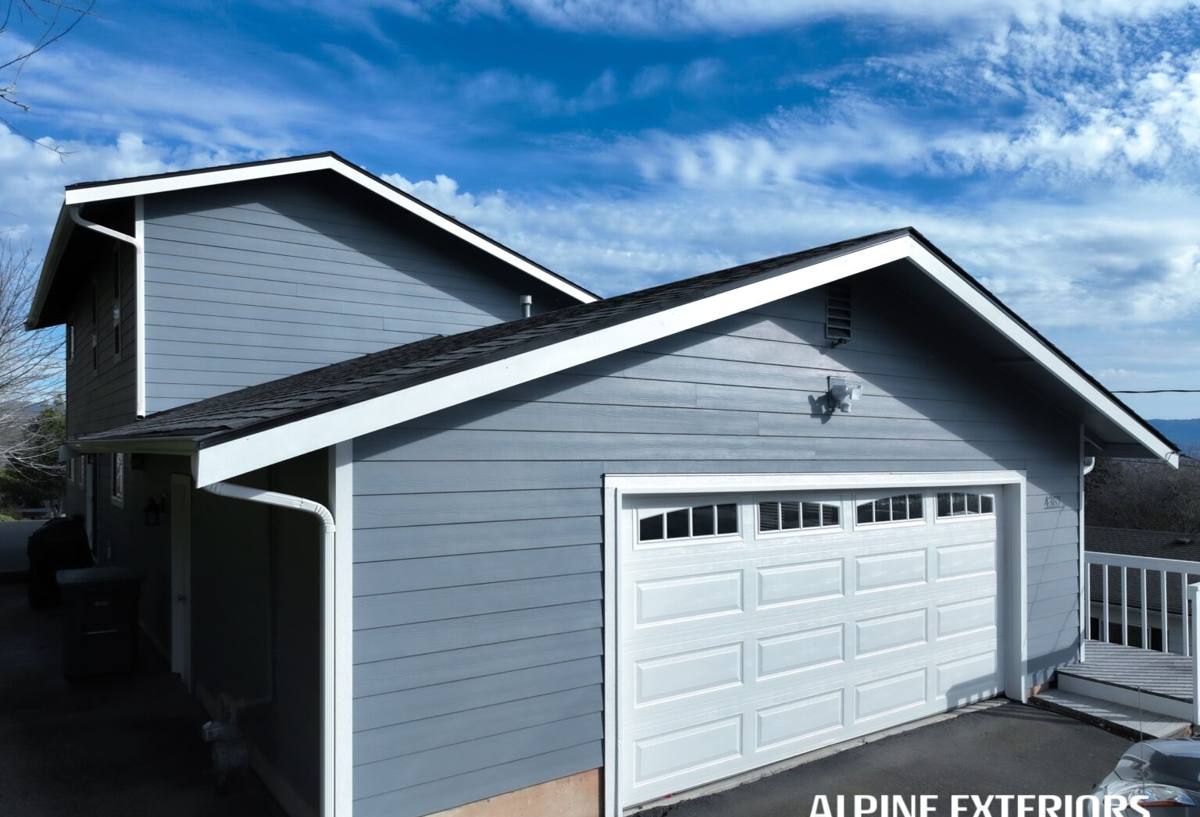
Signs Your Obstruction Pass Roof Needs Replacing, Not Just Patching
Not every roof problem calls for a full tear-off. But there's a point where patching becomes a losing game, and recognizing that point saves money in the long run.
- Granule loss heavy enough that you're finding shingle grit in gutters every season
- Shingles that are cupping, curling, or cracking across multiple slopes — not just one isolated section
- Moss that keeps returning within months of cleaning, especially on north- and west-facing planes
- Soft or spongy decking felt underfoot in the attic, or daylight visible around fasteners
- Repeated leaks around the same flashing points even after repair
- Roof age past 20 years combined with any of the above
If you're only seeing one or two of these on a roof under 15 years old, a targeted repair is often the honest recommendation. We'll tell you that if it's true — a full replacement isn't the right call for every roof that has a problem.
Choosing the Right Roofing System for Salt Air and Moss
Material choice matters more here than in most parts of the state, because the environment is actively working against the roof year-round. There's no single "best" material for every home — it depends on your budget, your roof's exposure, and how much upkeep you're willing to do.
| Material | Salt Air Performance | Moss Resistance | Typical Lifespan | Maintenance Load |
|---|---|---|---|---|
| Architectural asphalt shingle | Good with corrosion-resistant fasteners | Moderate — benefits from zinc/copper strips | 25-30 years | Low to moderate |
| Standing seam metal | Very good with proper coating and fastener spec | High — sheds moss growth medium poorly | 40-50+ years | Low |
| Cedar shake | Fair — needs consistent maintenance near salt exposure | Low without regular treatment | 20-30 years with upkeep | High |
| Synthetic composite shingle | Good | Moderate to good depending on product | 30-50 years | Low |
Standing seam metal has become a popular choice on exposed Orcas Island properties simply because it holds up to wind-driven rain and salt air with the least amount of babysitting. That said, plenty of well-built asphalt and synthetic roofs perform fine here for decades when the fastener spec, underlayment, and ventilation are handled correctly — the material is only part of the equation.
A Note on Cedar Shake
We still install and repair cedar on request. It's a beautiful, traditional look for the Pacific Northwest. Our honest professional standard is to walk homeowners through the real maintenance commitment first — periodic treatment, more frequent moss removal, and closer attention to flashing details — because cedar near salt air rewards upkeep and punishes neglect more than the alternatives above.
What a Correct Roof Replacement Involves Here
A roof replacement done right on an Obstruction Pass home isn't just stripping old shingles and nailing down new ones. The details below are where roofs either hold up for decades or start failing early.
- Full tear-off and decking inspection — we don't roof over existing layers. Every square foot of decking gets checked for soft spots, rot, or delamination before anything new goes down.
- Ice-and-water membrane at eaves, valleys, and penetrations — these are the spots where driving rain and wind-blown moisture find their way in first, and they get the extra layer of protection.
- Corrosion-resistant fasteners — stainless steel or hot-dip galvanized, not standard electro-galvanized, given how much faster salt air degrades ordinary hardware.
- Balanced attic ventilation — proper intake at the soffits and exhaust at the ridge keeps moisture from condensing inside the roof deck, which both extends roof life and slows moss growth from underneath.
- Flashing detail at every penetration — chimneys, skylights, and roof-to-wall transitions are where most leaks actually start, so these get rebuilt, not just re-caulked.
- Moss-resistant strategy built in — zinc or copper strips near the ridge where appropriate, so rainwater carries a natural moss inhibitor down the roof plane over time.
Our Process for Obstruction Pass Homeowners
We keep the process straightforward because a roof replacement is disruptive enough without added confusion.
- On-site inspection. We walk the roof and attic, check decking condition, ventilation, and flashing, and give you a straight assessment of whether you need a replacement or a repair.
- Material and scope discussion. We go over the material options that fit your home, budget, and exposure, with honest trade-offs for each.
- Written estimate. Clear scope, materials, and pricing — no vague allowances.
- Scheduling around weather windows. We plan tear-off days around dry stretches whenever possible, since an open roof deck and driving rain don't mix.
- Tear-off, dry-in, and install. Old roofing comes off, decking gets repaired where needed, and the new system goes down with proper underlayment and flashing before the roof sits open overnight.
- Cleanup and walkthrough. Magnetic sweep for stray fasteners, full site cleanup, and a final walkthrough so you know exactly what was done.
Moss, Algae, and Ongoing Roof Health
Moss isn't just cosmetic out here — left alone, it holds moisture against the roofing material and works its way under shingle edges, which shortens the life of even a well-installed roof. A new roof built with moss control in mind — proper ventilation, zinc or copper strips, and a roofline that isn't fighting heavy tree shade — needs far less intervention than an older roof with none of that.
For homes with mature tree cover near the roofline, trimming back overhanging limbs helps more than any chemical treatment, since it cuts down both the shade and the debris that feed moss growth. We're happy to flag problem areas during the estimate walkthrough even if tree work itself isn't something we handle.
Timing Your Replacement Around Orcas Island Weather
Roofing work can technically happen most of the year on Orcas Island, but the driest stretches — generally mid to late summer into early fall — give the most predictable install conditions and the least risk of a rain delay mid-project. That said, a roof in genuine distress shouldn't wait for the "ideal" season. If decking is compromised or leaks are active, we'll work around weather with proper tarping and staged tear-off rather than leave a roof exposed and hope for the best.
Winter and early spring replacements are still doable when needed — they just require tighter weather-window planning and, occasionally, a few extra days built into the schedule for rain delays.
Why Local Experience on Obstruction Pass Matters
A roofing crew that regularly works this part of San Juan County already knows which fastener spec holds up to the salt air here, which slopes on a given lot tend to hold moss longest, and how to plan material delivery and scheduling around island logistics. That's knowledge you don't get from a mainland crew doing a one-off job.
When you're vetting a contractor for a roof replacement in this area, a few things are worth confirming up front:
- Washington state contractor license and current liability insurance, verifiable directly with the state
- A written workmanship warranty, separate from the manufacturer's material warranty
- Experience with island logistics — material delivery, scheduling, and access aren't the same as on the mainland
- A clear explanation of the fastener, underlayment, and ventilation spec they'll actually use, not just a shingle brand name
- Willingness to give you a straight answer on repair-versus-replace instead of upselling every job to a full tear-off
These aren't formalities — they're the difference between a roof that's built for this specific coastline and one that's built like it's going on a house fifty miles inland.
Get a Straight Answer on Your Roof
If your Obstruction Pass roof is showing its age, dealing with recurring moss, or you just want an honest read on how many years it's got left, we're glad to take a look. The estimate is free, there's no pressure attached to it, and if a repair makes more sense than a full replacement, that's what we'll tell you. Fill out the form below to get started.