 Orcas Island Siding
 Why Olga's Marine Climate Is Hard on Windows
Olga sits on the quieter, water-facing side of Orcas Island, and that location comes with a specific set of window problems that inland San Juan County homes don't deal with in the same way. Windows here aren't just letting light in and keeping heat inside — they're a barrier against salt-laden air, wind-driven rain that comes in sideways off the water, and a wet season that can stretch on for months. A window that's rated fine for a dry climate can fail here in a fraction of the time.
Salt Air and Driving Rain
Salt spray off the water settles on everything, including window frames and hardware. On vinyl and fiberglass frames it's mostly a cleaning issue, but on lower-grade aluminum hardware or unprotected steel fasteners, salt exposure accelerates corrosion and pitting. Combine that with rain that gets pushed horizontally by wind — not just falling straight down — and you get water testing every seam, joint, and sealant line around a window opening far more aggressively than a calm, dry-climate install would ever see.
Long Moss Season and Shade
Olga's tree cover and the island's damp stretches from fall through spring mean moss and algae find a foothold anywhere moisture sits and doesn't dry out quickly — window sills, the tops of trim boards, and shaded frame edges. That's more than a cosmetic issue. Moss and biofilm hold moisture against wood trim and can work into hairline gaps in caulking, which is exactly how slow rot starts behind a window that looks fine from the yard.
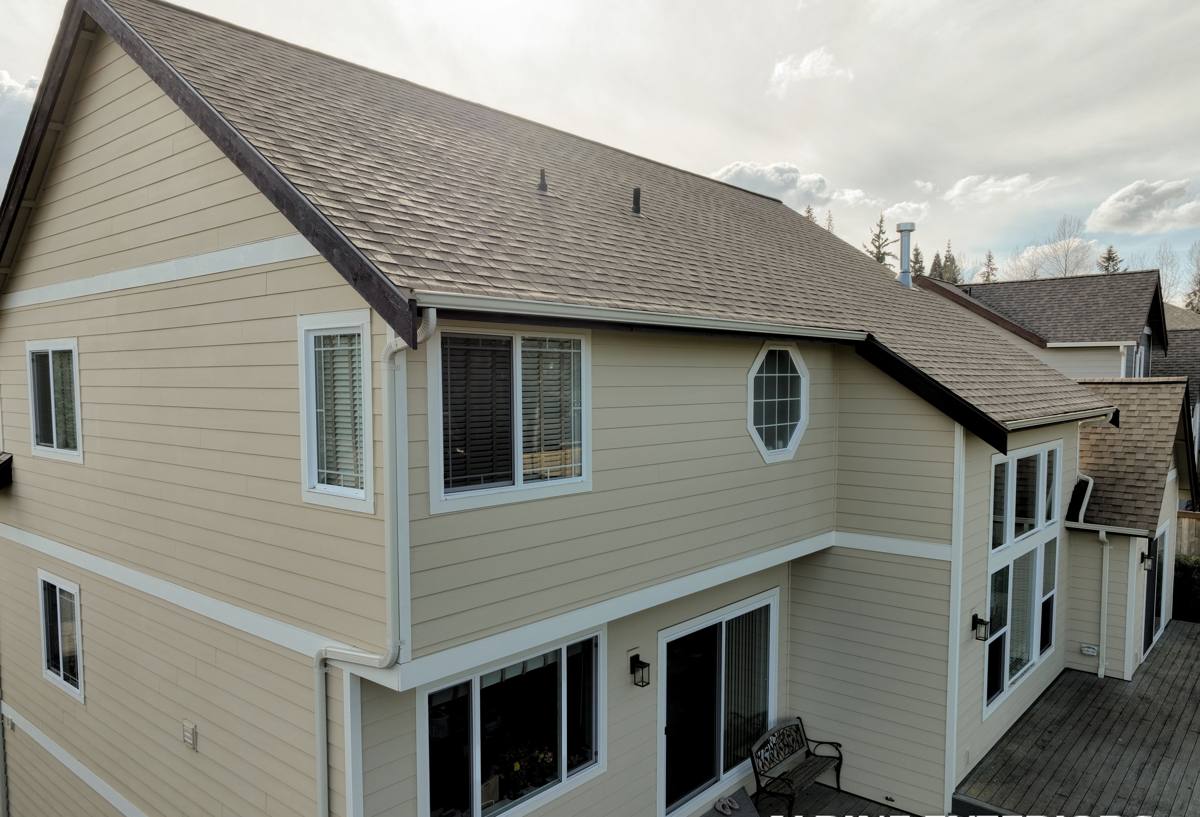
What "Energy-Efficient" Actually Means for a Home Here
On Orcas Island, energy efficiency isn't primarily about blocking summer heat — it's about keeping conditioned air in during a long, damp, and often windy heating season, and keeping moisture out at the same time. Those two jobs are connected: a window that leaks air at the frame is very often the same window that will eventually leak water, because both failures usually trace back to the same worn or improperly installed seals.
For Olga specifically, three performance factors matter most:
- Low U-factor — how well the window resists heat loss through the glass and frame, which drives your heating costs through the wet months.
- Air infiltration rating — how tightly the sash seals against the frame; this matters more here than in sheltered inland locations because of sustained wind off the water.
- Condensation resistance — a window that fogs or sweats on the interior in cold, damp weather is telling you the glass package or seal isn't matched to this climate.
Solar heat gain coefficient (SHGC) matters less on this side of the island than it does in a sun-baked climate, though we still factor it in for south- and west-facing rooms.
Signs Your Windows Are Already Failing
Most window failure on Orcas Island homes is gradual, and by the time it's obvious, moisture has usually been getting into the wall assembly for a while. Homeowners in Olga typically notice one or more of the following before they call us:
- Drafts you can feel with a hand near the frame on a windy day, even with the window latched
- Fogging or moisture between panes of double-glazed units — a sign the seal has failed and the gas fill is gone
- Soft or discolored wood trim at the sill or lower corners
- Difficulty latching or a sash that no longer sits flush, often from frame swelling
- Visible moss or dark staining building up on the sill or bottom rail
- A noticeable jump in heating bills without another obvious cause
Any one of these on its own isn't an emergency. Several together, especially soft trim plus drafts, usually means the window and the flashing behind it both need attention, not just the glass.
Frame Materials and Glass Packages: What Holds Up Here
We install a range of window products, and the right choice depends on the specific exposure of your home — a wall that takes direct weather off the water needs a different answer than a sheltered, tree-covered elevation. Here's how the common options compare for Olga's conditions:
| Frame Material | Salt Air / Moisture Performance | Maintenance | Best Use Case |
|---|---|---|---|
| Vinyl | Very good — won't corrode or rot | Low; occasional cleaning | Most Olga homes, good value on exposed walls |
| Fiberglass | Excellent — very stable in wet, swinging temperatures | Low | High-exposure walls, larger openings, long-term durability priority |
| Wood (clad exterior) | Good on the exterior face, but interior wood needs protection from condensation | Higher; finish upkeep required | Homes where interior wood trim is a design priority |
| Aluminum | Poor without thermal breaks — conducts cold and can corrode near salt air | Moderate | Generally not our first recommendation for this location |
On glass, we default to double-pane with a low-E coating and an insulated (argon-filled) sealed unit for most Olga installs. Triple-pane is worth discussing for north-facing rooms or homes right along the water, where the extra layer earns its keep against both heat loss and sound from wind.
What a Correct Installation Involves
The window unit itself is only part of the job. On Orcas Island, the flashing and sealing details around the opening matter as much as the window's factory rating, because that's what stops driving rain from getting behind the trim.
Flashing and Water Management
Every opening gets a proper flashing sequence — sill pan, side flashing, and head flashing installed in the correct shingled order so water is directed out and down, never trapped. On a wall exposed to wind-driven rain, skipping or shortcutting this step is the single most common reason a "new" window starts leaking within a couple of years.
Sealing and Insulation
We insulate the gap between the window frame and the rough opening with a compatible low-expansion foam or backer rod and sealant — not just caulk smeared around the trim. Exterior sealant beads get tooled properly so they shed water instead of holding it, which matters a lot in a climate where things don't dry out quickly between storms.
Our Process, Start to Finish
- On-site assessment — we look at each opening's exposure, existing flashing condition, and any trim or sheathing damage before quoting anything.
- Product selection — we walk through frame and glass options suited to that specific wall's exposure, not a one-size answer for the whole house.
- Removal and inspection — once the old window is out, we check the sheathing and framing underneath for hidden rot before anything new goes in.
- Installation — new flashing, insulation, and the window unit set plumb, level, and square.
- Sealing and trim — exterior sealant, trim work, and interior finish to match the rest of the house.
- Final walkthrough — we check operation, sealing, and cleanup with you before we call it done.
Why Choose a Crew That Already Works Olga and Orcas Island
Window installation looks the same on paper everywhere, but the details that keep a window performing for twenty-plus years change with the site. A crew that works around San Juan County regularly already knows which elevations on an Olga property tend to take the worst weather, how far moss and shade problems typically extend up a wall, and what flashing details actually hold up against wind-driven rain here versus a drier inland install. That's knowledge you don't get from a manufacturer's install manual alone — it comes from doing the work on this island, in this climate, repeatedly.
There's also a practical side: island logistics matter. Materials, scheduling around ferry availability, and knowing which products are realistic to source and warranty locally all affect how smoothly a project actually goes, not just how it's priced on a quote.
Maintenance Checklist for Olga Homeowners
New or existing, a little seasonal attention keeps windows performing and catches problems while they're still small and cheap to fix.
- Rinse salt residue off frames and glass a few times a year, especially on water-facing walls
- Clear moss and debris from sills and tracks before it holds moisture against the frame
- Check and re-bead exterior sealant where it's cracked, shrunk, or pulled away from the trim
- Test that weep holes on the sill (if your window has them) are clear and draining
- Look at interior sills after heavy storms for any sign of water intrusion
- Operate each sash a couple of times a year so seals and hardware don't seize up from disuse
What This Typically Costs
Pricing depends on frame material, glass package, window size, and how much flashing or trim repair is needed once the old window comes out — that last factor is the one homeowners usually underestimate. As a broad range, straightforward vinyl replacements tend to run at the lower end per opening, fiberglass and larger custom sizes run higher, and any hidden rot repair adds to the job once we're inside the wall. We'll always give you a firm number after seeing the actual openings, not a phone estimate, because guessing on flashing conditions is how surprise costs happen mid-project.
If your Olga home's windows are drafty, fogging, or showing soft trim, it's worth having a look before another wet season adds to the damage. We offer a free, no-pressure estimate — walk us through what you're seeing and we'll tell you honestly what needs doing and what can wait, using the form below.