 Orcas Island Siding
 Building a Deck That Can Actually Handle Rosario's Weather
Building a deck that holds up on Orcas Island is a different job than building one inland. Rosario sits close to the water on an island where salt-laden air, long stretches of driving rain, and deep shade from fir and cedar canopy are just normal weather, not an occasional event. A deck built to a generic spec sheet will show problems within a few seasons: rusting hardware, soft spots at the ledger, boards that never fully dry out and turn green with moss. A deck built for this specific climate does not.
We work on Rosario and the rest of Orcas Island regularly, and most of the repair calls we get trace back to the same handful of decisions made during the original build: the wrong fastener, a ledger flashed poorly or not at all, decking laid tight with no drainage path, or a material chosen for looks rather than for how it behaves wet, in the shade, for months at a time. None of that is complicated to get right the first time. It just has to be treated as a requirement, not an upgrade.
This page covers what a Rosario deck project actually needs in order to hold up, how we approach the build, and what to expect if you bring us in.
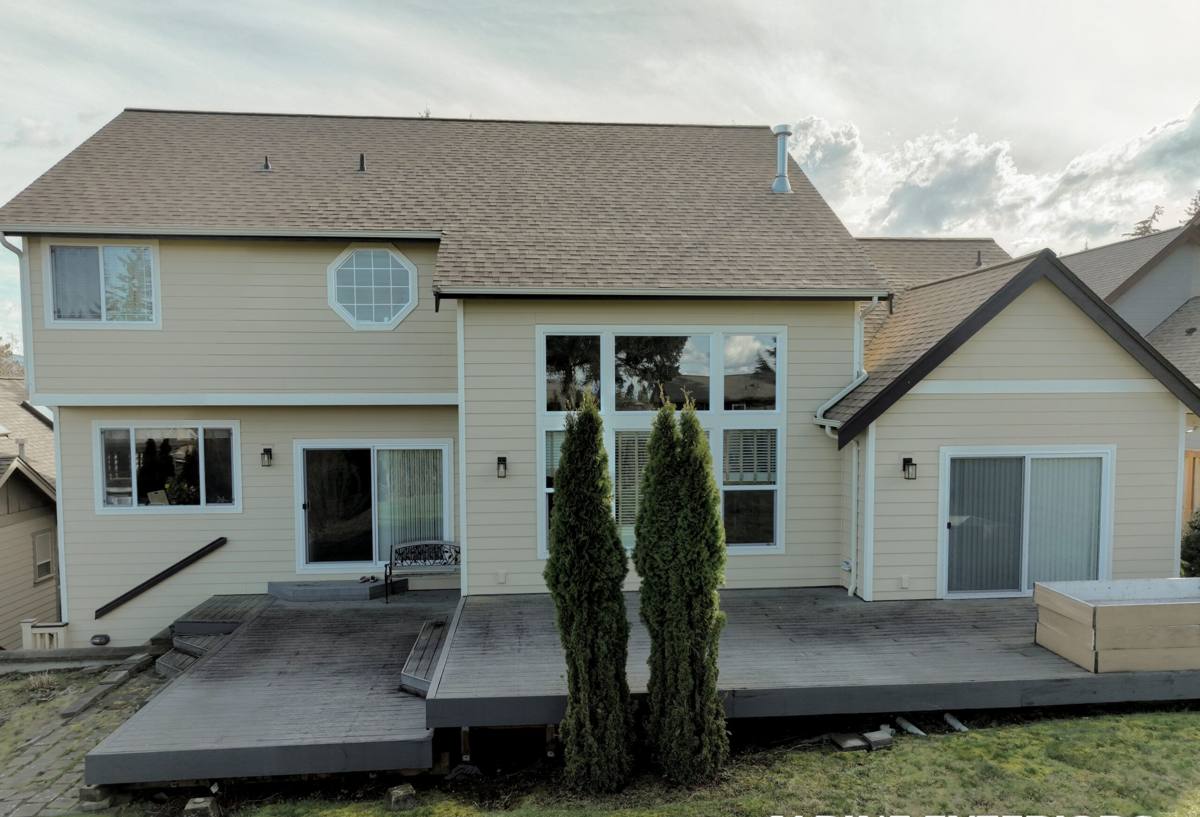
What Salt Air, Rain, and Shade Actually Do to a Deck
Salt Air and Metal Hardware
Salt-laden air moves further inland than most homeowners expect, and on a wooded, waterfront-adjacent lot like the ones common around Rosario, it settles into shaded, low-airflow corners and just sits there. Standard zinc-plated screws, joist hangers, and post bases will start showing rust within a couple of seasons in that environment. A corroding fastener loses holding strength long before it looks obviously bad, which is exactly the kind of problem you don't want in a structural connection.
Driving Rain and the House Connection
Rosario tends to get sustained, driving rain rather than short, hard downpours. That matters because it isn't just the top of a deck that gets wet — it's the ledger board, the framing underneath, and every point where the deck meets the house. A deck that sheds water fine in a light shower can still let water track behind the siding during a multi-day soak if the flashing at the ledger was skipped or treated as an afterthought.
Shade, Moisture, and Moss
The tree canopy that makes Orcas Island lots so pleasant to live on is also what keeps decks damp longer than they'd be out in the open. Shaded decking dries slower after rain, and slower drying means more time for moss, algae, and mildew to establish themselves in wood grain or in a composite board's surface texture. Once moss gets a foothold on a shaded deck, it comes back every wet season unless the surface and the airflow underneath are both addressed.
Getting the Structural Basics Right
Footings on Orcas Island Lots
Footings around here often have to deal with sloped ground, exposed rock, or thin soil over ledge, especially the closer you get to the water. We don't treat footing design as boilerplate. Depth, bearing, and post spacing get worked out for the actual site conditions rather than pulled off a one-size-fits-all span table, because undersized or poorly seated footings are one of the few deck problems that are genuinely expensive to fix after the fact.
Ledger Attachment and Flashing
The connection between the deck and the house is the single most common failure point we see, and it's almost always avoidable. A ledger board needs proper flashing that directs water out and away from the wall assembly, not fasteners driven straight through unflashed lumber against the siding. In a climate with as much sustained rain as Rosario gets, a poorly flashed ledger isn't a matter of if it leaks — it's a matter of when.
Fasteners and Connectors
Every fastener, hanger, post base, and structural screw on a coastal Orcas Island build should be rated for the exposure it will actually see. That generally means stainless steel or a coating rated for corrosive, coastal environments at connection points, not standard exterior-grade hardware. It costs more up front, and it's worth it, because replacing corroded structural hardware later means partially disassembling a finished deck.
Choosing the Right Decking Material for This Climate
Wood species and engineered decking behave very differently once they're wet for days at a stretch and shaded for weeks on end, which is the reality on much of Orcas Island rather than the exception.
| Material | How It Handles Damp Shade | Maintenance | Where It Fits |
|---|---|---|---|
| Cedar | Naturally rot-resistant but still needs to breathe and dry | Periodic cleaning and refinishing to hold its color and resist moss | Homeowners who want a natural look and don't mind upkeep |
| Pressure-treated lumber | Rot-resistant when new, but surface holds moisture in shaded spots | Regular sealing needed to keep performing over time | Structural framing; not our first pick as a primary decking surface here without a maintenance plan |
| Composite decking | Doesn't absorb water the way wood does; resists rot | Occasional washing; no sealing or staining | Homeowners who want a lower-maintenance, long-term surface |
| Capped/PVC composite | Fully sealed surface, most resistant to moisture and staining | Lowest ongoing maintenance of the group | Shaded, high-moisture spots where upkeep needs to stay minimal |
Cedar remains a strong choice for homeowners who want a natural look and are willing to keep up with periodic cleaning and finishing. Composite and capped composite boards trade a bit of that natural look for a real reduction in the moss, splintering, and refinishing cycle that wood demands, which is why we see more homeowners in this climate move toward them for decks meant to last with minimal fuss.
Design Choices That Matter More Here Than Elsewhere
A few details make an outsized difference in a shaded, wet, salt-air environment like Rosario's.
- Board gapping sized to actually shed water and debris, not just for appearance, especially under tree cover where needles and moss spores collect in tight joints
- Board orientation and layout planned around how water will actually run off, not just how a pattern looks on paper
- Railing and post hardware matched to the same corrosion-resistant standard as the framing, since railings take constant exposure and constant stress
- Under-deck ventilation, or a proper drainage system if the space below needs to stay dry and usable, so the structure dries out faster after a multi-day rain event
Cost Factors Specific to a Rosario Deck
| Factor | Why It Affects Scope | Rosario-Specific Consideration |
|---|---|---|
| Site access and slope | Determines footing depth, equipment access, and labor time | Many lots have grade changes or exposed rock close to the surface |
| Decking material | Wood, composite, and capped composite differ in upfront cost and long-term upkeep | Shaded, damp lots favor materials that don't depend on regular sealing to hold up |
| Hardware and fasteners | Corrosion-rated connectors and fasteners cost more than standard exterior grade | Salt air makes this a requirement here, not an optional upgrade |
| Permitting and shoreline review | Adds time to the schedule depending on the property's location relative to the water | San Juan County review timelines can run longer than a comparable mainland job |
| Size and design complexity | Multiple levels, stairs, and built-in railings add framing and labor | No different from anywhere else, but worth planning for early given ferry-dependent scheduling |
Permits and Site Considerations in San Juan County
Depending on where a property sits and how close it is to the water, San Juan County permitting and any shoreline-related setback or environmental review can apply, and that review can take longer to schedule than it would for a comparable mainland job. We handle that process as part of the project rather than leaving it for the homeowner to sort out on their own, and we build the schedule around it instead of promising a timeline that ignores it.
Our Process, From First Call to Final Walkthrough
Our process starts with an on-site visit, because photos and a phone call can't tell us how a slope drains, how much shade a given corner of the lot gets, or what the existing ledger condition actually looks like. From there we put together a design and material plan suited to that specific site, walk the homeowner through the tradeoffs in plain terms, handle permitting where it applies, and build to a sequence that gets the structure, flashing, and fasteners right before a single deck board goes down. We do a final walkthrough with the homeowner before we consider the job finished — not just a final invoice.
Keeping a Deck Healthy in a Marine, Moss-Prone Climate
Even a well-built deck in this climate needs some seasonal attention. A short list of habits goes a long way toward keeping moss and moisture from taking hold.
- Sweep needles, leaves, and debris out of board gaps before they trap moisture
- Rinse or gently wash surfaces at least once or twice a year, more often in heavily shaded spots
- Check railing posts and structural connectors periodically for early rust or loosening
- Keep gutters and downspouts near the deck clear so runoff isn't dumping extra water onto it
- Re-seal or refinish wood decking on the schedule its material actually calls for, not just when it starts to look bad
- Trim back overhanging branches where practical to cut down on shade and debris
Why Hiring a Crew That Already Works Rosario Matters
A crew that works Rosario and the rest of Orcas Island regularly already knows which lots hold water, which corners never get direct sun, and which hardware actually holds up here instead of failing in year three. That's not something a contractor making a single ferry trip from the mainland can match, and getting materials, crews, and follow-up service to and from the island is a real logistical factor that affects both scheduling and cost on any exterior project here. Working with a crew that's already set up to operate on the island, rather than treating it as a one-off trip, means fewer surprises during the build and a faster response if something needs attention afterward.
If you're planning a new deck or want an existing one looked at in Rosario or anywhere else on Orcas Island, we're glad to come take a look, walk the site with you, and put together a straightforward plan. There's no pressure and no obligation — just an honest estimate based on what your property actually needs.