 Orcas Island Siding
 Rosario's Marine Climate Is Harder on Siding Than It Looks
Rosario sits in one of the wetter, shadier pockets of Orcas Island, tucked against forested slopes with water close by on multiple sides. That combination looks beautiful and it is genuinely tough on the outside of a house. Salt-laden air moves through the trees and settles on siding, trim, and fasteners. Driving rain off the water finds every gap in a wall assembly that isn't detailed correctly. And the tree cover that makes the area so scenic also means siding stays damp longer after every storm, because direct sun and wind don't get a chance to dry it out the way they would on an open, exposed lot.
None of that is a reason to avoid living here. It is a reason to be deliberate about what goes on the walls and how it's installed. A siding job that would hold up fine in a dry inland town can fail early in a spot like Rosario — not because the product is bad everywhere, but because it was never engineered for this specific mix of salt, moisture, and shade.
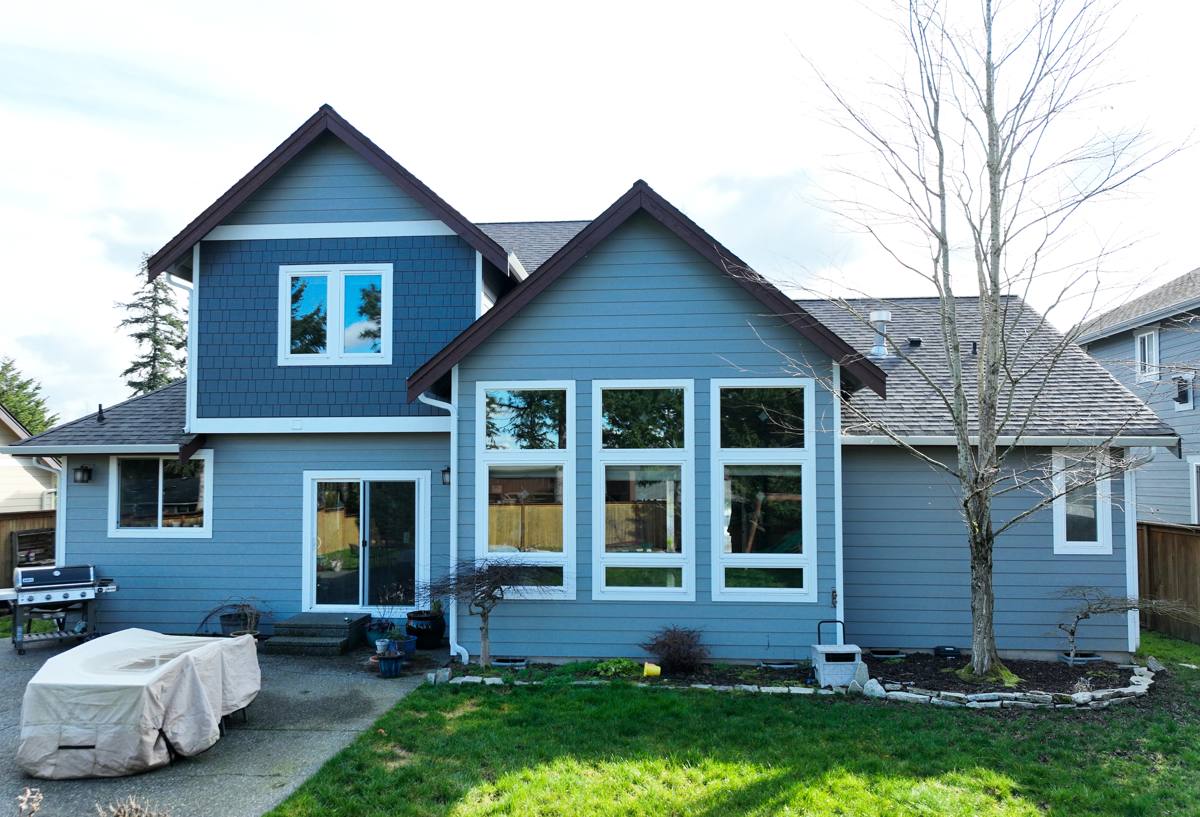
What San Juan County's Damp, Shaded Lots Do to the Wrong Siding
Over time, siding in this kind of environment tends to fail in a handful of predictable ways:
- Constant dampness feeds moss and algae growth, especially on north-facing walls and anywhere tree cover blocks the sun
- Salt air accelerates corrosion on exposed or undersized fasteners, trim screws, and metal flashing
- Wood-based products swell, cup, or delaminate when they can't dry out between rain events
- Paint and factory finishes chalk and fade faster under repeated wet-dry cycling
- Poorly flashed joints and penetrations let wind-driven rain track behind the siding instead of shedding off it
The building material matters, but so does the assembly behind it — the house wrap, the flashing, the gap that lets water drain and air circulate. A siding job that only gets the visible layer right and skips the water-management details underneath is building in a future problem, especially in a climate that doesn't give walls much of a chance to dry.
What a Correct Siding Installation Actually Involves
"Installing siding" sounds simple from the curb, but the work that actually protects a house happens in layers most people never see once the job is done.
Drainage and a Ventilated Rain Screen
Behind the siding panels, there needs to be a code-compliant weather-resistive barrier and, in a climate like this, a drainage gap that lets any moisture that does get behind the cladding run down and out instead of sitting against the sheathing. This is one of the biggest differences between a siding job that lasts and one that quietly rots a wall from the inside over several years.
Flashing and Joint Detailing
Every window, door, deck ledger, and butt joint is a place water wants to get in. Correct installation means properly lapped flashing, sealed or shielded joints, and enough gap and clearance at the bottom of the siding so it isn't sitting in standing water or wicking moisture up from grade, roofs, or decks.
Fastening to Manufacturer Spec
Fiber cement siding has specific nailing patterns, fastener types, and embedment depth requirements. Over- or under-driven fasteners, the wrong nail type, or fastening into the wrong layer of the wall assembly are common causes of early siding failure — and they're invisible from the ground once the job is painted and trimmed out.
Why We Install Only James Hardie Fiber Cement
We made the decision to install James Hardie fiber cement siding exclusively, and we don't install vinyl, LP SmartSide, Cemplank, Allura, primed spruce, or cedar. That's not a marketing position — it's a standard we hold because of what we've seen matter most in a climate like San Juan County's.
Fiber cement is non-combustible, which matters given the region's wildfire seasons and the value of reducing fuel load on exterior walls. It's dimensionally stable, so it doesn't expand, contract, or cup the way wood-based and some engineered wood products can when they cycle between wet and dry. Hardie's ColorPlus factory finish is baked on under controlled conditions, which holds color and resists the chalking and peeling that field-applied paint is more prone to in a wet, low-sun environment. And Hardie backs its products with a strong, transferable warranty — meaningful when a home changes hands, which happens regularly in a place like Orcas Island.
Hardie also builds climate-engineered product lines, including HZ5 formulations designed specifically for wetter, harsher climates like the Pacific Northwest. That's a meaningful distinction from a one-size-fits-all siding product, and it's part of why we consider it the right long-term choice for a Rosario home rather than a compromise.
How the Main Siding Options Compare in This Climate
| Material | Moisture Behavior | Moss/Algae Resistance | Maintenance | Typical Lifespan Here |
|---|---|---|---|---|
| James Hardie fiber cement | Dimensionally stable, doesn't swell or rot | Factory finish resists staining; still needs periodic washing | Low — occasional wash, no repainting for years | 30+ years installed to spec |
| Vinyl | Doesn't rot but can warp, crack, or gap at seams | Moderate; algae shows readily on light colors | Low, but color can't be refreshed once faded | 15-25 years |
| Cedar | Absorbs moisture, prone to swelling and rot without diligent upkeep | Prone to moss and mildew in shade | High — regular sealing, staining, or painting | 15-25 years with consistent maintenance |
| LP SmartSide / engineered wood | Wood-based core sensitive to sustained moisture exposure | Moderate; depends on coating condition | Moderate — finish upkeep matters more over time | 20-30 years, installation-sensitive |
Our Installation Process for Rosario Homes
We approach every Rosario project with the assumption that this is a wetter, shadier site than average, and we plan the work accordingly.
- On-site assessment — we look at sun exposure, tree cover, drainage patterns around the foundation, and the condition of the existing wall assembly before quoting anything
- Removal and inspection — old siding comes off and we check the sheathing underneath for any hidden moisture damage before it gets covered back up
- Water-resistive barrier and flashing — house wrap, flashing at every penetration, and a drainage gap sized for this climate go in before a single piece of siding is hung
- Hardie installation to manufacturer spec — correct fastener type, spacing, and clearances at grade, decks, and rooflines
- Trim, caulking, and touch-up — joints sealed where required, factory-finished panels touched up rather than fully repainted
- Final walkthrough and cleanup — we review the finished work with the homeowner and clear the site of debris and old material
Living With Moss Season Instead of Fighting It
San Juan County's long wet stretch means moss and algae are simply part of exterior maintenance here, not a sign that something went wrong. The goal of a good siding job isn't to eliminate growth entirely — shaded, damp sites will always see some — it's to install a product and a system that doesn't feed that growth or get damaged by it. A properly ventilated rain screen behind Hardie siding keeps the wall assembly drying out between storms, and Hardie's factory finish holds up to periodic gentle washing far better than field-applied paint on wood siding does.
We tell homeowners the same thing every time: budget for an occasional soft wash of the siding, especially on shaded north- and east-facing walls, and skip harsh pressure washing that can force water behind panels or strip finish.
Signs Your Rosario Home May Need New Siding
- Visible cupping, swelling, or soft spots, especially near the ground or under windows
- Persistent moss or dark staining that comes back quickly after cleaning
- Paint that's peeling, bubbling, or chalking heavily rather than just fading evenly
- Gaps opening up at seams, corners, or trim boards
- Soft or discolored sheathing visible at outlets, vents, or siding edges
- Rising energy bills that suggest the wall assembly isn't sealing and insulating the way it should
Any one of these on its own might be minor. Several together, especially on a home with real tree cover or water exposure, usually mean it's worth having someone look at the wall assembly, not just the surface.
Why It Matters to Hire a Crew That Already Works on Orcas Island
Working on Orcas Island comes with logistics that don't exist on the mainland — ferry schedules, material delivery timing, and weather windows that can close faster than they would on a more sheltered site. A crew that regularly works Rosario and the rest of the island already has that figured out: how to sequence a job so materials and labor show up together, how to read the specific microclimate of a shaded, water-adjacent lot, and how to work efficiently within San Juan County's permitting process.
Just as important, a contractor who's done multiple installations in this exact area has already seen how different wall assemblies age here — which details hold up and which ones don't after a few wet seasons. That's knowledge you can't get from a general siding crew that occasionally takes an island job. It shows up in fewer surprises during the project and a better chance the finished siding is still performing well a decade or two from now.
If you're weighing a siding replacement or new construction siding for a home in Rosario, we're happy to take a look and talk through what your specific site needs. There's no pressure and no obligation — just a straightforward assessment and a free estimate based on your home's actual exposure and condition.