 Orcas Island Siding
 Rosario sits on the water side of Orcas Island, and that location is exactly why siding here wears differently than siding a few miles inland. Homes facing Rosario Strait take marine air and wind-driven rain more directly than more sheltered parts of the island, and the mix of salt exposure, moisture, and shade from surrounding fir and madrona stands means siding failures here tend to show up earlier and in more specific places than a homeowner might expect. When a Rosario home actually needs a siding replacement — not a patch, not a recaulk, a full replacement — the details matter more than they would on a calmer site. This page covers what that job should look like, what we install, and why it's worth hiring a crew that already knows this stretch of the island.
What Rosario's Climate Does to Siding Over Time
Three things drive most of the siding wear we see on this side of Orcas Island: salt-laden marine air, driving rain, and a moss season that runs long on shaded elevations. None of them act alone — they compound each other, which is why siding on a Rosario-facing wall can look fine from the road and still be failing underneath.
Salt air degrades paint and factory finishes faster than an inland environment does, and it accelerates corrosion in fasteners, flashing, and any exposed metal trim. Once a finish starts to chalk or thin under that exposure, whatever's underneath — wood, fiber cement, or otherwise — loses the protection it depends on. Driving rain off the strait doesn't fall straight down; storms push it sideways into south- and west-facing walls, forcing water into butt joints, corner trim, and any seam that isn't sealed and lapped correctly. And because a lot of homes in this area sit under tree canopy or in shaded pockets, walls stay damp long after a storm clears — which is precisely the condition moss needs to take hold and spread across a wall or roofline.
Put those three together and you get a climate that doesn't forgive shortcuts. A siding job installed correctly, with the right material and the right flashing and joint details, holds up well here for decades. A siding job with even a few weak points — a poorly lapped seam, unflashed trim, a material that wasn't rated for this kind of exposure — tends to show problems years sooner than the same mistakes would inland.
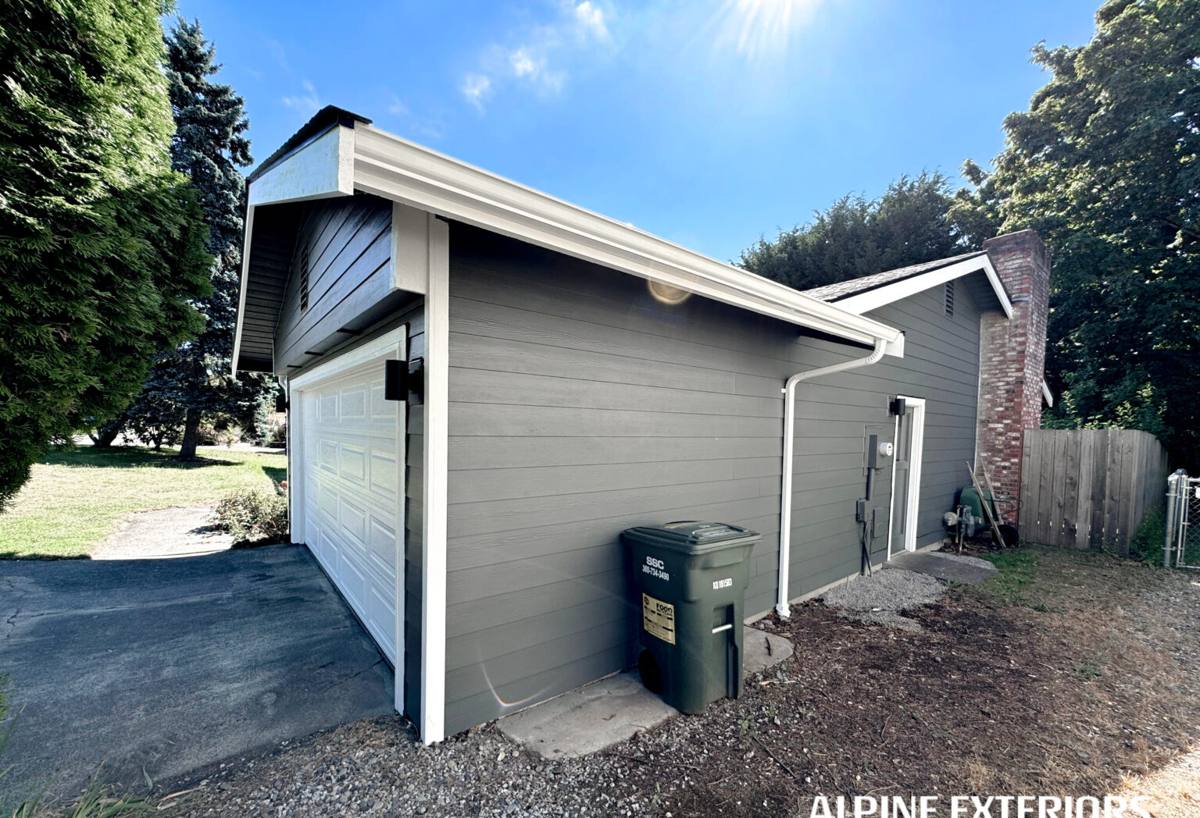
Signs a Rosario Home Needs Replacement, Not Repair
Not every siding problem calls for a full tear-off. But there's a point where patching stops making sense, and knowing where that line sits saves homeowners from spending repair money that doesn't actually solve anything.
- Soft or spongy spots when you press on the siding, especially near grade, under windows, or below rooflines — a sign moisture has gotten past the surface
- Paint or finish that won't hold anymore even after repainting, or that's chalking and peeling within a year or two of a fresh coat
- Visible cupping, warping, or delamination across multiple boards or panels rather than one isolated spot
- Persistent moss or dark staining that keeps coming back on the same wall no matter how often it's cleaned
- Gaps at seams, corners, or trim that have opened up and let daylight or drafts through
- Interior signs — staining on interior walls, musty smell in an exterior-facing room — that suggest water has been getting behind the siding for a while
One or two of these on an isolated section can sometimes be repaired. Several of them together, or any sign that moisture has reached the sheathing underneath, usually means the wall assembly has been compromised in more places than are visible, and a full replacement is the only way to actually fix it rather than chase symptoms.
What a Correct Siding Replacement Actually Involves
A siding replacement is not just pulling off old boards and nailing up new ones. On a site like Rosario, where the wall assembly is going to face real weather pressure, the parts nobody sees matter as much as the finished look.
Tear-Off and Inspection
Removing the old siding is also the only chance to inspect the sheathing and framing underneath. Any soft, rotted, or water-damaged sheathing gets identified and replaced before anything new goes up — covering over damaged sheathing with new siding just seals a problem inside the wall.
Weather-Resistive Barrier
A correctly installed water-resistive barrier (house wrap) goes over the sheathing, lapped shingle-style so water is always directed outward and down, never trapped behind the siding. This layer is what actually keeps incidental moisture from reaching the framing — the siding itself is the first line of defense, not the only one.
Flashing at Every Penetration
Windows, doors, hose bibs, vents, and any other wall penetration need flashing that integrates properly with the weather-resistive barrier. Given how much this side of the island deals with wind-driven rain, flashing details that get rushed or skipped are one of the most common places we see premature failure on jobs we didn't originally install.
Fastening and Fastener Selection
Fasteners need to be corrosion-resistant and driven to the manufacturer's specification — not too proud, not overdriven. In a salt-air environment, the wrong fastener can start streaking or failing years before the siding itself would have.
Joints, Corners, and Trim
Butt joints, corner boards, and trim are where water intrusion most often starts. Correct installation keeps proper clearances, seals joints appropriately for the material, and avoids caulk as the only line of defense against driving rain.
Why We Install James Hardie Fiber Cement for This Work
This company installs James Hardie fiber cement siding exclusively — we don't install vinyl, LP SmartSide, cedar, or other fiber cement brands. On a site with Rosario's exposure, that standard isn't a marketing preference, it's a practical one.
James Hardie's HZ product lines are engineered for specific climate zones, and the HZ5 line used in this region is built for wetter, more variable Pacific Northwest weather. The material itself is non-combustible cement, sand, and cellulose fiber, so it doesn't swell, rot, or delaminate the way organic materials can when they take on repeated moisture. The factory-applied ColorPlus finish is baked on under controlled conditions and holds color and adhesion far longer under UV and salt exposure than a field-applied paint or stain does, which matters directly on a wall that's taking marine air and sun. Hardie backs the product with a strong transferable limited warranty, which carries real weight for anyone who might sell the home down the road.
None of that replaces good installation — fiber cement installed with skipped flashing or the wrong fasteners will still fail early. But it gives a Rosario home a material that's already built for the kind of exposure this location gets, rather than one that depends on a maintenance schedule the owner has to keep up with indefinitely.
Cost Factors for a Rosario Siding Replacement
Every job is different, and we don't quote pricing without seeing the home, but the factors that move a Rosario job's cost up or down are fairly consistent.
| Factor | How it affects the job |
|---|---|
| Extent of sheathing damage found at tear-off | Hidden rot or water damage adds repair scope that can't be fully known until old siding comes off |
| Wall complexity (dormers, trim, window count) | More corners, penetrations, and cuts mean more labor and flashing detail |
| Siding profile and finish selection | Lap width, textures, and trim packages vary in material cost |
| Access and site logistics | Steep sites, limited staging area, or ferry-dependent material delivery affect scheduling and cost |
| Exposure level of the specific elevation | South- and west-facing walls facing the strait may warrant extra flashing detail given wind-driven rain |
How Our Process Works
We keep the process straightforward, because on an island, unclear scheduling causes more frustration than almost anything else.
- On-site estimate. We walk the exterior, look at trouble spots, and give an honest read on whether the home needs a repair or a full replacement.
- Scope and material selection. We go over Hardie profile, color, and trim options, and give a clear scope of what's included.
- Scheduling and material staging. Because materials often come over by ferry, we plan delivery and staging ahead of the crew's start date rather than ordering on the fly.
- Tear-off and sheathing inspection. Old siding comes off, damaged sheathing is identified and addressed before anything new goes up.
- Weather barrier, flashing, and installation. House wrap, flashing, and Hardie siding go up to manufacturer specification, with attention to the joints and penetrations most exposed to this site's weather.
- Final walkthrough. We go over the finished job with the homeowner before calling it done.
What to Expect From a Siding Crew Working Rosario
Because so much of a siding job's performance here depends on details that aren't visible once the wall is closed up, it's worth knowing what a competent crew should be doing without being asked.
- Inspecting and documenting sheathing condition before covering it back up
- Lapping the weather-resistive barrier correctly, shingle-style, top to bottom
- Flashing every window, door, and penetration rather than relying on caulk alone
- Using fasteners rated for the material and the salt-air environment
- Following the manufacturer's installation instructions for clearance from grade, decks, and roof lines
- Giving a clear, written scope before work starts — not a vague verbal estimate
Why Local Experience on Orcas Island Matters
A crew that hasn't worked this side of the island before is guessing at things a local crew already knows: how exposed a given elevation actually gets in a winter storm, where moss tends to establish first on a shaded wall, how ferry schedules affect material delivery and timing, and which flashing details are worth the extra time on a site like this versus a more sheltered one. That experience doesn't show up on a quote, but it shows up in how the job holds up five and ten years out. For a Rosario home taking direct exposure off the strait, that local knowledge is part of what you're actually paying for when you hire a crew that already works this island.
If you're weighing a siding replacement for a Rosario home, we're happy to take a look and give you a straight answer — whether that's a full replacement, a targeted repair, or just a maintenance plan to buy you more time. Reach out for a free, no-pressure estimate using the form below.