 Orcas Island Siding
 Why Window Replacement Looks Different in Rosario
Rosario sits close to the water on Orcas Island, and that changes what "good windows" means here. A window system that performs fine in a dry inland climate can struggle on a marine-exposed lot in San Juan County, where salt-laden air, wind-driven rain, and heavy shade from evergreens are just part of daily weather. We don't sell a generic window package and hope it holds up. We look at where your house sits relative to the water and tree cover, how the prevailing wind and rain typically hit it, and what that means for frame material, glazing, and flashing detail before we ever talk product.
Most of the window replacement work we do in this area falls into two categories: homes showing real age-related failure (fogged glass, soft frames, drafts you can feel with your hand), and homeowners upgrading proactively because they know what the marine environment does to building materials over time. Either way, the fix has to account for the specific conditions of a Rosario lot, not just the age of the window.
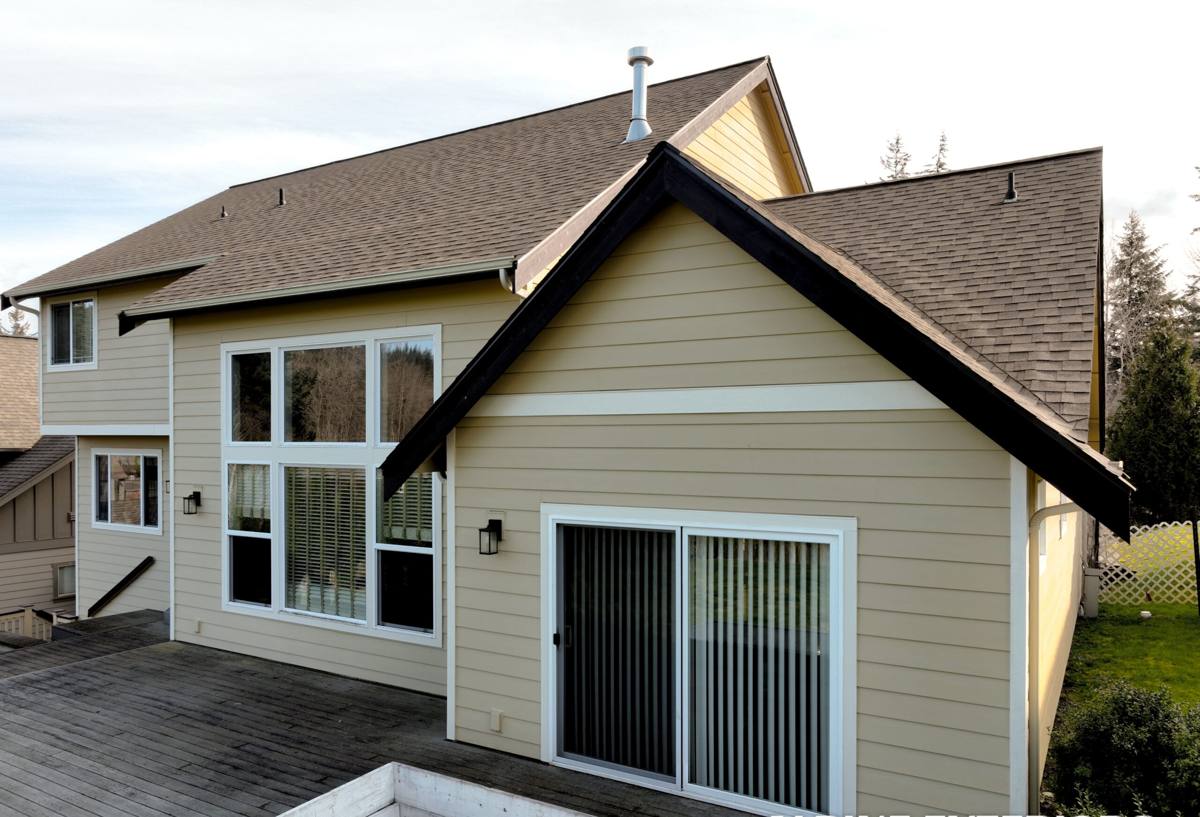
What Salt Air, Rain, and Moss Do to Windows Here
Three things drive window wear on Orcas Island faster than in most inland Washington towns, and Rosario gets a concentrated dose of all three.
Salt Air and Corrosion
Airborne salt from the Sound settles on exterior surfaces and accelerates corrosion of metal hardware, fasteners, and unprotected aluminum components. Locks, hinges, and balance mechanisms that would last decades elsewhere can start sticking or seizing years early. Once hardware fails, windows get forced or left unlatched, which lets in more moisture and speeds up everything else.
Driving Rain
Storms coming off the water don't just fall straight down — wind pushes rain sideways into wall assemblies and window openings. Flashing and sealant details that are only "good enough" for calm weather tend to leak here first at the corners and bottom sill, where wind-driven water collects. Once water gets behind a window frame, the damage is usually happening inside the wall long before it shows up as a stain on the interior trim.
Moss and Shade
Tree cover across much of Orcas Island keeps siding, trim, and window sills damp longer after every rain. That extended dampness is exactly what moss and mildew need to establish, and once organic growth gets a foothold on wood trim or sills, it holds moisture against the surface and speeds up rot. Older wood-framed windows on shaded lots are especially vulnerable to this cycle.
Signs Your Rosario Home's Windows Need Replacing
Not every issue means a full replacement — some are simple repairs. But these are the signals that usually point to windows past the point of patching:
- Fogging or a visible haze between panes (the seal has failed and the gas fill is gone)
- Soft, spongy, or discolored wood at the sill or lower frame corners
- Visible moss, algae, or persistent black staining on sills and trim
- Windows that are hard to open, won't stay open, or won't latch fully
- Noticeable draft or cold spot near the frame even when the window is closed
- Paint or finish that's peeling or bubbling specifically around the window opening
- Interior condensation on the glass or frame during cold, wet weather
- Visible daylight or gaps around the frame from outside
If you're seeing two or more of these on the same window, it's worth having someone look at the wall assembly behind it, not just the sash. Water damage often extends further than what's visible from the room.
Choosing the Right Window Materials for This Climate
Every frame material has real trade-offs in a marine environment. None of this is about one product being "bad" — it's about matching material to conditions and being honest about upkeep.
| Material | Salt Air / Moisture Performance | Maintenance Needs | General Cost Tier |
|---|---|---|---|
| Vinyl | Won't corrode or rot; performs well in coastal exposure | Low — occasional cleaning | Lower to mid |
| Fiberglass | Excellent stability and moisture resistance; holds up well long-term | Low | Mid to higher |
| Wood-clad | Good if detailed and maintained; exposed wood interior needs protection from interior condensation | Moderate to high | Higher |
| Aluminum (uncoated or poorly finished) | Prone to corrosion and pitting in salt air over time | Moderate — finish needs monitoring | Varies |
Our standard for Rosario homes leans toward vinyl or fiberglass frames for most applications because they hold up to salt exposure without the ongoing upkeep that wood or bare aluminum demand. Wood-clad windows can still be the right call for a specific look or a historic renovation — we just make sure the interior finish and any exposed wood are properly protected and that the homeowner understands the maintenance commitment going in.
Glass, Glazing, and Frame Details That Matter Here
Beyond frame material, a few details make a real difference in a wet, wind-exposed spot like Rosario:
- Double- vs. triple-pane glazing: Double-pane with a quality low-E coating handles most of Orcas Island's climate well. Triple-pane adds meaningful insulation value on north- or water-facing exposures that take the brunt of wind and cold, at extra upfront cost.
- Weep hole design: Properly sized and unobstructed weep holes let any water that does get into the frame track drain back out instead of pooling.
- Corrosion-resistant hardware: Stainless or coated hardware on locks, hinges, and balances lasts significantly longer in salt air than standard-grade fasteners.
- Sill pan flashing: A proper sill pan under the window opening is one of the single biggest factors in whether wind-driven rain stays out of the wall assembly.
What a Correct Installation Involves
The window product is maybe half the job. The other half is the install itself, and that's where most long-term failures actually start. A correct replacement includes:
- Removing the old window and inspecting the rough opening for hidden rot, water staining, or framing damage before anything new goes in
- Repairing or replacing any compromised framing, sheathing, or sill material found during that inspection
- Installing proper flashing — including a sill pan — integrated correctly with the home's existing water-resistive barrier
- Setting the window level, square, and plumb, with correct shimming and fastening per manufacturer spec
- Sealing and insulating the gap between the frame and rough opening without over-compressing the insulation
- Finishing exterior trim and sealant in a way that sheds water rather than trapping it
Skipping the flashing and rough-opening inspection steps is the most common shortcut in this trade, and it's exactly the shortcut that causes hidden rot behind a brand-new window two or three years later. On a shaded, rain-exposed Rosario lot, that mistake compounds fast.
Our Process, Start to Finish
We keep the process straightforward and try to minimize disruption to your home:
- On-site assessment: We walk the exterior and interior of each window being considered, checking framing, sills, and current performance before recommending anything.
- Honest scope and options: We explain what's actually needed — full-frame replacement versus a pocket/insert replacement — and why, including cost trade-offs.
- Written estimate: Clear pricing with no surprise add-ons buried in the fine print.
- Scheduled install: We work efficiently to limit how long any opening is exposed to weather, which matters on a wet, wind-exposed lot.
- Cleanup and walkthrough: We review the finished work with you and make sure every window operates and seals the way it should before we consider the job done.
Energy Efficiency and Comfort Gains
Old, failed seals and worn weatherstripping don't just let water in — they let conditioned air out. Homeowners who replace aging windows commonly notice fewer drafts, less temperature swing near windows, and reduced condensation on the glass during cold, damp stretches. On a home that's shaded and exposed to Sound weather much of the year, that translates to a more comfortable house and less strain on your heating system during the wetter months.
Why a Crew That Already Works Rosario Matters
General contractors who mostly work drier, inland jobs sometimes underestimate what coastal exposure demands — lighter flashing details, hardware that's not rated for salt air, or installation timing that doesn't account for how much rain a Rosario lot actually gets in a given season. A crew that regularly works Orcas Island and San Juan County already knows which details can't be skipped here, what materials hold up on the water side of the island, and how to sequence an install around actual weather windows instead of a generic schedule. That local experience shows up in fewer callbacks and windows that are still performing well a decade in.
Caring for New Windows in a Marine Climate
A quality install still benefits from basic upkeep. Rinse salt residue and debris off frames and glass periodically, especially after storms. Keep weep holes clear of dirt and vegetation. Check exterior sealant annually for cracking, and trim back any tree growth that's keeping a window shaded and damp for extended periods. None of this is heavy maintenance — it's a few minutes a season that meaningfully extends the life of the install.
If you're seeing drafts, fogged glass, moss buildup, or you just want a straight answer on whether your current windows are worth repairing or replacing, we're happy to take a look. Use the form below to request a free, no-pressure estimate for your Rosario home.