 Orcas Island Siding
 Decks on San Juan Island Take a Different Kind of Beating
A deck on San Juan Island isn't dealing with the same conditions as one fifty miles inland. Between the salt-laden air coming off the water, long stretches of driving rain through fall and winter, and a moss season that seems to start earlier every year, the structure under your feet is under constant low-grade attack. None of it looks dramatic day to day. It just adds up — fasteners corrode a little faster, wood fibers stay damp a little longer, and moss gets a foothold in shaded corners that never fully dry out. By the time a deck feels "off" — soft in a spot, a railing post with some give, boards that stay dark and slick well after the rain stops — the damage is usually further along underneath than it looks on the surface.
This page is specifically about replacing a deck on San Juan Island, not general deck-building advice. The island's combination of marine exposure, moisture, and shade patterns from mature trees changes what "correct" actually means for framing, fasteners, and decking material choice. We'll walk through what we look for, what a proper replacement involves, and why it matters that the crew doing the work already understands San Juan County conditions.
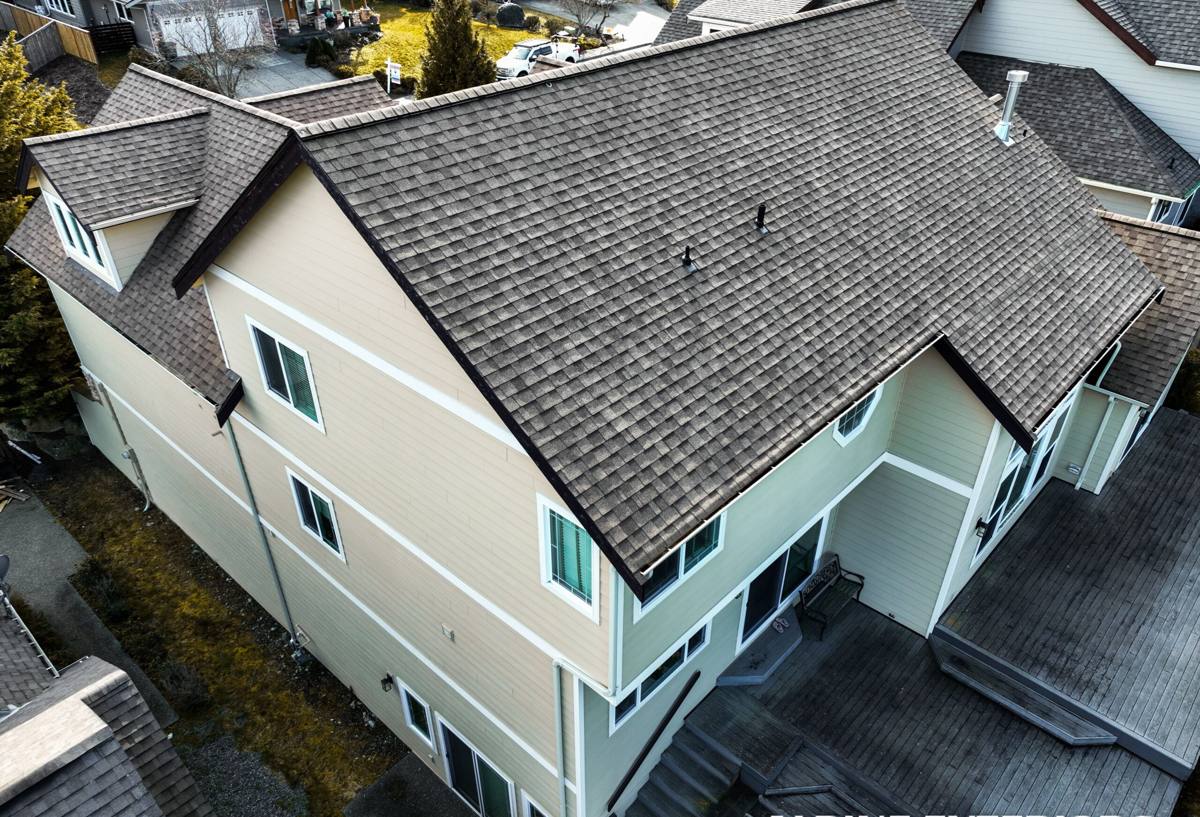
Signs a Deck Needs Replacement, Not Another Repair
Repair makes sense when the problem is isolated — a few damaged boards, a loose railing baluster, a footing that's settled slightly. Replacement becomes the honest answer when the damage is systemic, meaning it's not one bad board but a pattern that points to the whole structure aging out at once. Common signs include:
- Soft or spongy decking in more than one area, not just around a single board
- Rust streaking or crumbling around fastener heads across multiple joists
- A ledger board (where the deck attaches to the house) that shows staining, gaps, or soft wood — this is the single most safety-critical connection on any deck
- Railing posts that flex or wiggle when pushed, which often means the post-to-frame connection has failed, not just the railing itself
- Persistent moss or algae growth on the deck surface or framing that keeps coming back no matter how often it's cleaned
- A deck built more than 20-25 years ago to older code, especially around railing height and guard spacing
If you're seeing two or more of these at once, you're usually past the point where patching individual boards buys you much time. The framing and fastening system age together, and once one part starts failing from moisture exposure, the rest isn't far behind.
What a Correct Deck Replacement Actually Involves
It Starts Underneath, Not With the Decking Material
Homeowners often think of a deck replacement as "new boards." The boards are the least important structural decision. What actually determines whether the new deck lasts is what's underneath: the ledger flashing, the joists, the fasteners, and the footings. On San Juan Island, where moisture sits in the air longer than it does inland, we pay particular attention to:
- Ledger flashing — proper metal flashing (not just caulk) between the ledger board and the house siding, so water is directed away from the wall assembly instead of trapped against it
- Joist protection — joist tape or an equivalent moisture barrier on top of framing lumber, which meaningfully slows the rot that starts at fastener penetrations
- Fastener grade — stainless steel or high-corrosion-resistant coated fasteners throughout, given the salt air off the water. Standard galvanized hardware corrodes noticeably faster in this environment
- Footing condition — checking that footings haven't heaved, settled, or cracked, since a new deck surface on a compromised footing just hides the problem again
Then the Decking Surface and Railing
Once the structure underneath is sound, the decking material and railing system go on. We'll cover material choice in detail below, but the installation details matter as much as the product: correct board spacing for drainage and seasonal movement, hidden fasteners installed so they don't trap water, and railing posts through-bolted to solid framing rather than just screwed to the rim joist.
Decking Material Options for a Marine Climate
There's no single "best" decking material — there's a best fit for your budget, your maintenance appetite, and how much sun or shade the deck gets. On San Juan Island specifically, shaded decks under tree cover need extra consideration for moss and mildew resistance regardless of material.
| Material | How It Handles Salt Air & Moisture | Maintenance Burden | Relative Cost Tier |
|---|---|---|---|
| Pressure-treated wood | Requires sealing/staining on a regular cycle to resist moisture; end grain and fastener holes are vulnerable points | Highest — annual cleaning, periodic re-sealing | Budget |
| Cedar | Naturally rot-resistant and handles the Pacific Northwest well, but still needs finish maintenance to hold color and resist moss | Moderate to high | Mid |
| Capped composite | A protective cap resists moisture absorption and staining better than uncapped composite; performs well in coastal exposure | Low — periodic washing | Mid to premium |
| PVC / cellular decking | Doesn't absorb moisture at all, which matters most in persistently damp, shaded spots | Lowest | Premium |
Our honest take: on a shaded, moisture-prone lot, we steer clients away from uncapped composite and standard pressure-treated as a long-term surface, not because those products are bad, but because their moisture behavior and maintenance demands are a poor match for a climate that already gives your deck a hard time. Capped composite or PVC costs more up front and pays that back in fewer weekends spent cleaning and resealing, and better resistance to the moss that shaded island decks fight constantly.
Our Deck Replacement Process
1. On-Site Assessment
We start by getting under the deck, not just walking on top of it. That means checking the ledger connection, probing joists and posts for soft wood, and looking at footing condition. This is where we tell you honestly whether you need a replacement or whether targeted repair still makes sense.
2. Scope and Material Selection
We walk through decking and railing material options against your budget, sun/shade exposure, and how much upkeep you actually want to do. No pressure toward the most expensive option — just a straight comparison of trade-offs like the ones above.
3. Permitting
Deck replacements in San Juan County commonly require a permit, particularly when structural framing, footings, or railing height changes are involved. We handle that coordination as part of the project rather than leaving it for you to sort out.
4. Tear-Out and Structural Rebuild
Old decking, railing, and any compromised framing come out. We rebuild or reinforce the ledger connection, joists, and footings to current code before anything new goes back on.
5. Decking, Railing, and Finish Work
New decking is installed with proper spacing and fastening, followed by railing, stairs, and any trim or skirting. We do a final walk-through with you before calling the job done.
Railings, Guardrails, and Code — Don't Skip This
Railing failures are one of the more preventable causes of deck injuries, and older decks on the island frequently predate current guardrail requirements. When we replace a deck, we bring the railing system up to current code as a matter of course — this typically includes minimum guard height, maximum baluster spacing to prevent a small child from passing through, and secure post connections that can withstand real lateral force, not just decorative screws into a rim joist. If your current deck's railing feels solid when you lean on it but you're not sure it meets code, that's worth flagging during your assessment rather than assuming it's fine.
Why a Crew That Already Works San Juan Island Matters
San Juan Island is a different logistical environment than a mainland job site, and it changes how a deck project needs to be planned. Materials, equipment, and crew all move by ferry, which means scheduling has to account for sailing times rather than just drive times. A contractor who doesn't already work the islands regularly is often figuring this out on your project's dime — extra trips, delayed material deliveries, or underestimating how long staging takes.
Beyond logistics, there's a practical familiarity that comes from working San Juan County conditions repeatedly: knowing which decking materials actually hold up to the salt air here versus how they perform in a catalog photo, recognizing moss-prone shade patterns before they become a maintenance headache, and understanding the county's permitting expectations for waterfront and near-waterfront properties. That's the difference between a deck built to a generic spec sheet and one built for how this island actually weathers.
After Replacement: Keeping It in Good Shape
A well-built deck still needs basic seasonal attention, especially here. A short annual routine goes a long way:
- Sweep debris and standing organic matter off the surface regularly, especially in fall when leaves and needles accumulate
- Clean moss and algae off the surface and railing before it gets a deep foothold — early removal is far easier than scrubbing established growth
- Check that gaps between boards stay clear so water can drain instead of pooling
- Inspect railing posts and stair connections once a year for any looseness
- For wood or cedar decking, keep sealing/staining on the schedule the product calls for — skipping a cycle in this climate shows up faster than it would inland
None of this is complicated, but skipping it is the fastest way to shorten the life of a deck that was otherwise built right.
Get a Straight Answer on Your Deck
If your San Juan Island deck is showing soft spots, a shaky railing, or just years of moss and weathering, we're happy to take a look and tell you plainly whether repair or replacement makes sense — no pressure either way. Reach out for a free estimate using the form below.