 Orcas Island Siding
 Why Olga Homes Lose Siding Faster Than Homes Inland
Olga sits on the east side of Orcas Island, close enough to the water that salt air is simply part of daily life. That's a different set of stresses than a siding contractor faces working in Bellingham or Mount Vernon, and it's why siding that performs fine on the mainland can fail early here. Between the salt, the rain, and the shade from the island's dense conifer cover, most Olga homes are fighting on three fronts at once.
Salt Air
Airborne salt from the surrounding waters of the Salish Sea settles on exterior surfaces and accelerates corrosion of fasteners, trim, and any siding material that isn't formulated to resist it. Over years, that means rusting nail heads bleeding through paint, corroded flashing, and finishes that chalk and fade faster than their rated lifespan.
Driving Rain
San Juan County gets plenty of wet weather driven sideways by wind off the water, and that wind-driven rain finds every gap in a siding system that wasn't installed with proper flashing, laps, and drainage. Water that gets behind the siding and can't escape is the single biggest cause of rot and hidden structural damage on island homes.
Moss and Lichen
Many Olga lots sit under fir and cedar canopy, which means shade, dampness, and a long moss season that runs most of the year. Moss and lichen hold moisture against the siding surface, stain porous materials, and give algae something to grip. A siding material that can't shed that kind of biological growth will look tired within a few seasons, no matter how well it was painted.
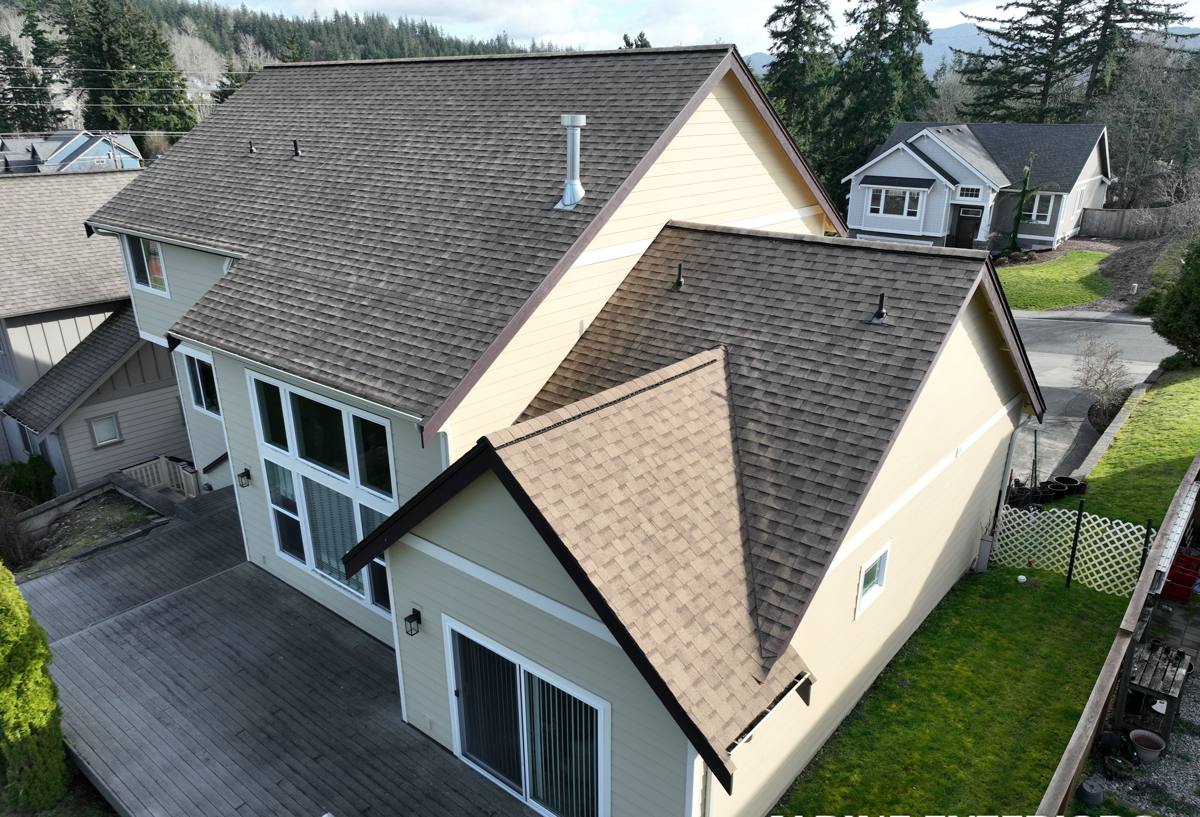
Signs Your Olga Home's Siding Needs to Be Replaced, Not Patched
Not every problem calls for a full tear-off. But when several of these show up together, patching usually just delays a bigger repair bill:
- Soft or spongy spots when you press on the siding, especially near the bottom courses and around windows
- Paint that keeps failing within a couple of years no matter how well it's prepped and applied
- Persistent moss or black streaking that comes right back after cleaning
- Visible gaps, warping, or cupping in lap siding boards
- Rust stains bleeding from nail heads or trim fasteners
- Rot or delamination discovered at window and door trim
- Rising interior humidity, musty smells, or peeling interior paint on exterior walls
- Siding that's original to a home built more than 20-25 years ago, particularly if it's an OSB-based product
What a Correct Siding Replacement Actually Involves
A siding replacement is a system, not just a facelift. Skipping any layer of that system is how homes end up with hidden rot five years after a job that looked fine on installation day. On an island property exposed to driving rain, getting the details right matters even more than it would on a sheltered inland lot.
A correct job includes:
- Full removal of the old siding and inspection of the sheathing underneath for rot, soft spots, or existing moisture damage
- Repair or replacement of any damaged sheathing and framing before anything new goes up
- Installation of a code-compliant water-resistive barrier, lapped correctly from the bottom up
- Proper flashing at every window, door, deck ledger, and roof-to-wall intersection
- Correct fastening pattern and spacing per the manufacturer's installation specs, not a generalized "close enough" approach
- Proper clearance between the siding's bottom edge and grade, decks, and roof lines to keep water from wicking upward
- Factory-finished or field-caulked joints done to spec, not just cosmetically filled
- A final walk-through covering trim, caulking lines, and touch-up paint where needed
Any one of these steps done wrong shortens the life of everything above it. That's true no matter which siding brand ends up on the wall — but it's especially unforgiving with wood-based products, which is part of why we've standardized on one material.
Why We Install Only James Hardie Fiber Cement
We don't install LP SmartSide, vinyl, Cemplank, Allura, primed spruce, or cedar. That's not a marketing position — it's a standard we hold because of what we've seen these materials do in coastal, high-moisture, moss-heavy conditions like Olga's. Engineered wood products depend on their factory coating and edge-sealing staying intact; once moisture gets into a cut edge or a failed seal, the substrate can swell and deteriorate. Vinyl is inexpensive and low-maintenance but it expands and contracts with temperature swings, can crack in impacts, and doesn't offer the same fire performance. Cedar is beautiful but demands ongoing refinishing to hold up against damp, shaded, salt-exposed exposures, and it's a combustible material.
James Hardie fiber cement is cement, sand, and cellulose fiber — it doesn't feed moss the way wood fiber does, it won't rot, and it's non-combustible. It's also engineered in climate-specific formulations, which matters directly for a property like yours.
The Right Hardie Product for an Olga Property
James Hardie makes its siding in different engineered formulations for different climate zones, and the Pacific Northwest — including all of San Juan County — falls into Hardie's HZ5 zone, engineered for regions that see sustained damp conditions and freeze-thaw cycling. Using the correct HZ formulation, rather than a generic national product, is part of what separates a job built to last from one that just looks good on installation day.
HardiePlank Lap Siding
The most common choice for island homes — a traditional horizontal lap profile available in several widths and textures, from smooth to a more traditional cedar-grain look.
HardieShingle and HardiePanel
For homes that want a shingled or board-and-batten look, either to match a more traditional island aesthetic or to create accent areas on gables and entries, without the maintenance burden of real wood shakes.
All of these come available in Hardie's ColorPlus factory finish — a baked-on finish that resists fading, chipping, and staining far better than field-applied paint, which matters when moss, salt, and rain are working against the finish every day of the year.
What Drives the Cost of a Siding Replacement in Olga
Every home is different, and we won't quote a number without seeing the property, but the factors below are what actually move the price up or down. We're glad to walk through these specifically for your home during a free estimate.
| Cost Factor | Why It Matters |
|---|---|
| Tear-off vs. existing wall condition | Rotten sheathing or hidden moisture damage found during tear-off adds repair work before new siding can go up |
| Home size and wall complexity | More corners, dormers, and roof intersections mean more flashing, cutting, and labor time |
| Siding profile and texture chosen | Lap widths, shingle patterns, and trim details vary in material and labor cost |
| Access and site logistics | Steep lots, limited driveway access, or ferry-dependent material delivery can affect scheduling and staging |
| Trim and accent work | Window casings, corner boards, and gable accents add finish carpentry time |
| Color and finish selection | Factory ColorPlus finishes versus field-painted options affect both cost and long-term maintenance |
Our Process, Start to Finish
We keep the process straightforward because a home that's been opened up to the weather during a re-side needs a crew that isn't figuring things out as they go.
- Free on-site estimate — we walk the exterior with you, look at trouble spots, and talk through product and color options
- Written scope and timeline — a clear breakdown of what's included, so there's no ambiguity about what "siding replacement" means for your home
- Material staging — Hardie product ordered and staged ahead of the crew's arrival to keep the job moving once we start
- Tear-off and inspection — old siding removed, sheathing inspected, and any hidden damage flagged and discussed with you before we close the wall back up
- Weather barrier and flashing — installed to spec at every penetration and transition
- Hardie installation — fastened and finished per manufacturer specification
- Final walk-through — we review the completed work with you and handle any punch-list items on the spot
Why Hiring a Crew That Already Works Olga and Orcas Island Matters
Siding work on the island isn't the same logistics as a mainland job. Materials have to be ordered and staged around ferry schedules, weather windows for tear-off need to be planned more conservatively since a home can't sit exposed the way it could where a crew can mobilize same-day, and San Juan County's permitting and building requirements are specific to the jurisdiction. A contractor who already runs jobs on Orcas Island has already solved these logistics — they're not learning the ferry schedule or county process on your project's timeline. That translates into fewer surprises, tighter scheduling, and a home that isn't left open to driving rain any longer than necessary.
Caring for Your New Siding Through Olga's Moss Season
Correctly installed Hardie siding with a factory ColorPlus finish needs very little upkeep, but a little seasonal attention goes a long way in a shaded, damp environment like Olga's:
- Rinse the siding with a garden hose once or twice a year to knock off pollen, salt residue, and early moss growth
- Keep gutters clear so overflow doesn't run down the siding face and feed moss growth in specific streaks
- Trim back vegetation and tree limbs that keep sections of the wall shaded and damp
- Re-caulk joints and trim seams if you ever notice cracking or gaps, to keep the water-resistive barrier doing its job
If you're seeing signs of trouble on your current siding, or you're simply ready to stop maintaining a material that isn't built for this environment, we'd be glad to take a look. Reach out for a free, no-pressure estimate — we'll walk the exterior with you, answer your questions honestly, and give you a clear picture of what your home actually needs.