 Orcas Island Siding
 Decks on West Beach Take a Different Kind of Beating
West Beach sits right up against the water, and that changes what a deck goes through year to year compared to a deck a few miles inland. Salt-laden wind, driving winter rain off the Strait, and long stretches of shade and dampness during moss season all work on wood, fasteners, and finishes faster here than in a typical mainland yard. A deck that would need attention every five or six years somewhere drier can start showing real problems in half that time on this stretch of Orcas Island.
That doesn't mean West Beach decks are doomed to constant repair. It means they need to be built and repaired with that exposure in mind from the start — the right fasteners, the right ventilation under the boards, and a maintenance rhythm that matches the climate instead of ignoring it. Most of the repair calls we get out here aren't from bad luck. They're from a deck that was built to a general standard instead of a shoreline standard.
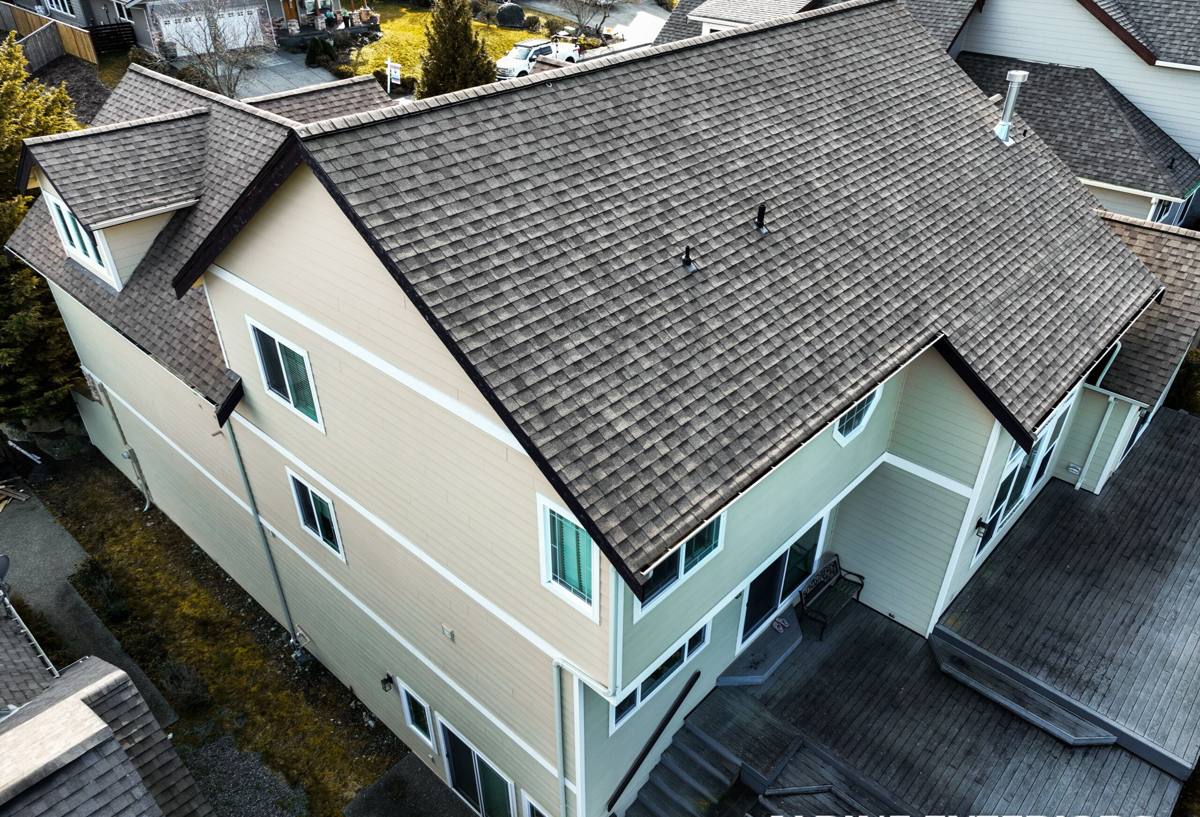
What Salt Air, Rain, and Moss Actually Do to a Deck
Salt Air and Metal Fasteners
Salt in the air accelerates corrosion on anything metal — nails, screws, joist hangers, bolts. Once a fastener starts rusting, it loses grip strength and can stain the wood around it. On a shoreline deck, corroded hardware is one of the most common reasons boards work loose or a railing starts to feel wobbly, well before the wood itself is actually failing.
Driving Rain and Water Intrusion
Wind-driven rain off the water doesn't just fall straight down — it gets pushed sideways into ledger boards, stair stringers, and the gap where a deck meets the house. That's where rot usually starts: not on the open, sun-and-air-exposed top of the decking, but in the hidden connection points where water collects and doesn't dry out between storms.
Moss, Shade, and Slow Drying
San Juan County's long wet season, combined with tree cover and north-facing exposure common on this side of the island, means some decks stay damp for days after a storm. Moss and algae take hold in those conditions, and once established they hold moisture directly against the wood surface, which speeds up decay and also makes the deck genuinely slippery underfoot.
Signs Your West Beach Deck Needs Repair
Most deck problems give some warning before they become safety issues. Worth checking for, especially after a wet winter:
- Boards that feel spongy, springy, or noticeably different underfoot compared to the rest of the deck
- Rust streaks bleeding out from screw or nail heads
- A railing or post that flexes or wobbles when you lean on it
- Gaps opening up between boards, or boards cupping or crowning
- Green or black staining that keeps coming back even after cleaning
- Soft or dark wood where the deck framing meets the house (the ledger board area)
- Stair stringers that feel less solid than they used to, especially near ground contact
- Persistent moss growth in the same spot every year, even after scrubbing
Any one of these on its own might be minor. Several at once, or anything involving the ledger board or stair framing, is worth a proper look before it turns into a structural repair instead of a cosmetic one.
What a Correct Repair Actually Involves
Deck repair covers a wide range of work, and the right approach depends on whether the problem is cosmetic, structural, or a mix of both.
Cosmetic and Surface-Level Repairs
This includes replacing individual weathered or cracked boards, resetting popped fasteners, re-securing loose railings, and refinishing or resealing a deck surface that's lost its protective coating. These jobs are usually straightforward, but they still need to be done with the right materials — swapping in a mismatched fastener or an untreated board just creates the next problem.
Structural Repairs
This is where experience matters most. Structural repair means addressing rot or damage in the framing itself — joists, beams, posts, ledger board attachment, or footings. A deck can look fine on the surface while the framing underneath is compromised, which is why we check under the decking, not just what's visible from the top, whenever there's any sign of moisture damage.
Ledger Board and Attachment Points
The ledger board — where the deck bolts to the house — is the single most important connection on the whole structure, and it's also the most common place for hidden rot to develop on a rain-exposed deck. A correct repair here means pulling back the decking near the house, inspecting the flashing and the wood behind it, and replacing anything compromised rather than just resealing over a problem.
Repair or Replace — How to Think About It
Not every deck problem calls for a full rebuild, and not every deck is worth patching indefinitely. The table below covers the factors we actually weigh when we're out at a West Beach property.
| Factor | Repair Usually Makes Sense | Replacement Usually Makes More Sense |
|---|---|---|
| Framing condition | Joists and beams are solid, damage is isolated | Rot has spread through multiple structural members |
| Age of the deck | Under 10-15 years, built to a reasonable standard | Original construction is old, undersized, or code-outdated |
| Ledger board | Attachment point is sound | Ledger or house rim joist shows significant decay |
| Footings and posts | Stable, no movement or heaving | Settling, shifting, or undersized footings |
| Extent of damage | Limited to a few boards or one railing section | Damage is spread across the whole deck |
| Budget goals | Want to extend life a number of years affordably | Want a long-term reset and possibly a design change |
Most of the time, a deck that's structurally sound underneath but showing wear on the surface is a good repair candidate. A deck with widespread rot in the framing, especially around the ledger or footings, usually costs more to keep patching than it does to rebuild correctly once.
Our Process When We Come Out to West Beach
- On-site inspection. We walk the whole deck, check underneath where accessible, and test the framing at the ledger board, stairs, and any area you've flagged as a concern.
- Honest assessment. We tell you what's cosmetic, what's structural, and what can reasonably wait versus what shouldn't.
- Written estimate. Scope, materials, and price laid out before any work starts — no surprise add-ons partway through.
- Repair work. Damaged material comes out, framing gets addressed first if it's involved, then decking, railings, and stairs.
- Fastener and flashing check. Any hardware in the repair area gets upgraded to material rated for this environment, and flashing at the house connection is corrected if it's inadequate.
- Final walkthrough. We go over the finished repair with you, including what to watch for and how to maintain it going forward.
Materials We Use and Why
Material choice matters more on a shoreline deck than almost anywhere else on the island. For framing repairs, we use pressure-treated lumber rated for ground contact where applicable, since standard-grade treated wood doesn't hold up as well against sustained moisture exposure. For fasteners and hardware in repair work, we favor stainless steel or heavy hot-dip galvanized products over standard coated screws — the upfront cost difference is small compared to what it costs to redo a repair in three years because the fasteners failed first.
For decking surface material, both wood and composite have a place depending on the homeowner's priorities. Wood decking is more affordable up front and can be refinished, but it needs more consistent upkeep in a salt-air, high-moisture setting. Composite decking costs more initially and doesn't need staining, but it still requires a sound, properly fastened frame underneath, and not every composite product performs the same in constant damp shade — we'll walk through the honest trade-offs for your specific spot on the property rather than pushing one option across the board.
Maintenance That Actually Extends the Life of a Repair
A repair holds up much longer with a little seasonal attention, especially in this climate:
- Sweep off standing debris and needles regularly — trapped organic material holds moisture against the boards
- Scrub moss and algae off promptly rather than letting it establish, particularly in shaded corners
- Check fasteners and railing connections once a year for early rust or looseness
- Keep gutters and downspouts near the deck clear so runoff isn't draining directly onto it
- Reseal or restain wood decking on the schedule the product actually calls for, not just when it looks bad
- Have the ledger board area glanced at periodically, since it's the hardest spot to self-inspect
Why Hiring a Crew That Already Works West Beach Matters
San Juan County's island setting adds real logistics to any repair job — materials, crew, and equipment all have to make the ferry crossing or be sourced and staged in advance, and scheduling has to account for that instead of pretending it's a same-day mainland job. A crew that already works this part of Orcas Island has that logistics side figured out, along with a working sense of how quickly moss reestablishes on a shaded West Beach deck, how far wind-driven rain typically reaches under an eave, and which fastener and flashing choices actually hold up here versus which ones look fine on paper.
That local familiarity shows up in smaller ways too — knowing to check specific connection points first because that's where problems tend to start on this shoreline, and not treating every repair as an identical checklist regardless of exposure. It's the difference between a repair that's technically done and one that's actually built to hold through the next several wet seasons.
If you've got a deck on West Beach that's showing any of the signs above, or you just want an honest read on its condition, we're happy to take a look. Request a free, no-pressure estimate using the form below and we'll get back to you with a straightforward assessment.