 Orcas Island Siding
 West Beach's Shoreline Exposure Is Hard on Decks
West Beach sits on the exposed western side of Orcas Island, facing open water and the weather that moves across it. That means more direct wind, more wind-driven rain, and more salt-laden air reaching decks than you'd get on a sheltered inland lot. Salt air accelerates corrosion on fasteners and hardware, driving rain gets pushed sideways under railings and into ledger connections that were never designed for it, and the long, damp San Juan County shoulder seasons keep everything wet longer than a calendar would suggest. A deck built without that exposure in mind will show it early — usually at the fasteners, the ledger board, and the framing closest to the ground.
None of this means a deck on this side of the island can't last. It means the material choices, the hardware, and the details around water management have to match the site, not just meet a generic building spec.
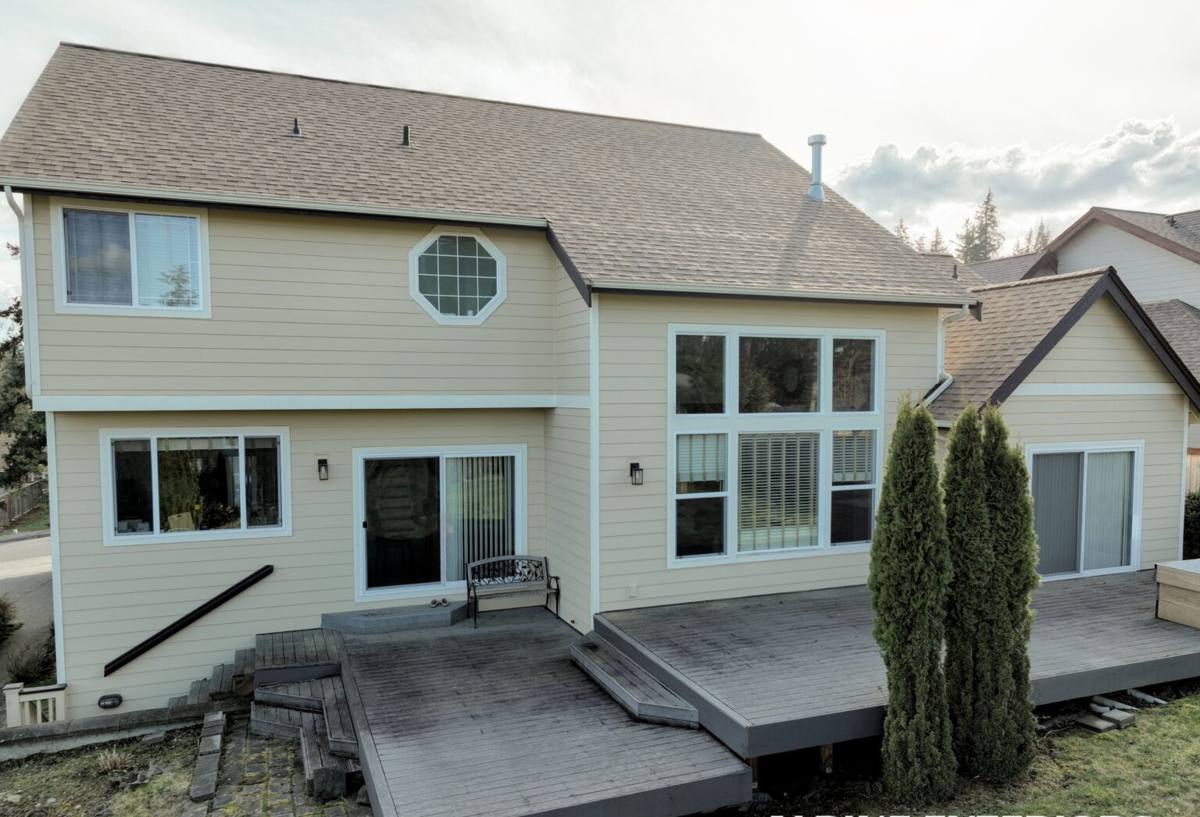
The Long Moss Season Changes What "Maintenance" Means
On Orcas Island, moss isn't a once-a-year nuisance — it's a season that runs long, fed by the same damp, mild conditions that make the island beautiful. On a deck, moss doesn't just look bad on the surface. It holds moisture against boards and framing, keeps wood wet well after a storm has passed, and works its way into the gaps between boards where it's nearly impossible to fully clear without pulling things apart. A deck that isn't detailed for drainage and airflow underneath will grow moss in the framing long before it shows on the walking surface, which is exactly why so many deck problems on this island turn out to be worse underneath than they look from above.
What This Means for a Replacement, Not Just a Repair
If a deck is already showing rot, soft spots, or fastener corrosion, patching individual boards rarely fixes the underlying issue — the framing and the water management details are usually the real problem. A full replacement is the chance to correct those details once, rather than chasing the same symptoms every couple of years.
Signs a Deck Has Reached the End of Its Life
Some deck problems are cosmetic and repairable. Others mean the structure itself is compromised. Knowing the difference matters before you spend money on either path.
Structural warning signs (replacement territory)
- Soft, spongy, or springy decking boards, especially near the house or at board ends
- Rust streaks or heavily corroded screws, bolts, or joist hangers
- Any separation or movement where the deck ledger meets the house
- Posts that feel loose, or footings that have visibly shifted, sunk, or heaved
- Rot at the base of posts or where framing sits close to grade
- Visible daylight or gaps where flashing should be sealing a joint
Cosmetic issues (often repairable)
- Weathered, grayed wood surface with no soft spots underneath
- Surface mildew or algae that rinses off and doesn't return quickly
- Loose railing caps or trim pieces with sound framing behind them
If you're not sure which category you're in, that's a reasonable thing to have looked at before deciding between repair and replacement — pushing on boards and checking the ledger and post bases usually tells the story quickly.
Choosing a Decking Material for a Salt-Air, West-Facing Site
There's no single "best" decking material — there's a best fit for how exposed the site is and how much upkeep you want to do. On a west-facing shoreline lot, moisture resistance and fastener corrosion resistance matter more than they would on a protected, inland deck.
| Material | Moisture & Salt Air Behavior | Maintenance | Typical Lifespan |
|---|---|---|---|
| Pressure-treated wood | Resists rot when properly sealed and re-treated; end grain and ground contact are the weak points | Annual cleaning, periodic sealing/staining | 10-15 years with upkeep, less if neglected |
| Cedar or other naturally resistant wood | Good natural rot resistance but softer surface; still needs sealing near salt air | Regular sealing to hold color and resist moisture | 15-20 years with consistent care |
| Composite decking | Doesn't rot; some early composite products absorbed moisture at cut ends without proper capping | Occasional washing; no sealing or staining | 20-25+ years depending on product quality |
| Capped composite / PVC | Best resistance to moisture intrusion and staining; fully sealed surface handles salt spray well | Lowest maintenance of the group | 25+ years, backed by manufacturer warranty |
We'll talk through these trade-offs based on your budget and how much maintenance you actually want to do — not just push whatever has the highest margin. Wood costs less up front but asks more of you every year; composite and capped composite cost more up front and ask very little.
What a Correct Deck Replacement Actually Involves
A deck that holds up in this kind of exposure comes down to details most homeowners never see once the boards are down. Getting them right the first time is the difference between a deck that lasts and one that's back on the repair list in five years.
Ledger and house connection
The ledger board — where the deck attaches to the house — is the single most common failure point on any coastal deck. It needs proper flashing that sheds water away from the house framing, not just caulk, and the fasteners holding it need to be rated for the load and the exposure.
Fasteners and hardware
Standard galvanized fasteners corrode faster in salt air. On an exposed site like West Beach, hot-dip galvanized or stainless steel hardware for structural connections is worth the extra cost — it's cheap insurance against the fastener failures that cause most of the "why is my deck wobbly" calls.
Framing, footings, and airflow
Footings need to be sized and set to local frost and soil conditions, posts need proper base connections that keep end grain off standing water, and the framing needs enough clearance and airflow underneath to actually dry out between storms. This is the detail that most directly prevents the moss-and-rot cycle described earlier.
Drainage and slope
The decking surface should have a slight slope away from the house, and board spacing should be consistent enough to let water through rather than pool on top of it.
How Our Deck Replacement Process Works
- On-site assessment. We look at the existing structure, check the ledger, footings, and framing condition, and talk through what's driving the need for replacement.
- Material and design discussion. Based on the site's sun and wind exposure, we walk through decking and hardware options and what each will realistically ask of you over time.
- Permitting. Depending on the scope, size, and height of the deck, San Juan County may require a permit. We'll tell you upfront if yours does and handle that step as part of the job.
- Tear-out and haul-away. The old deck comes out, including any framing that's compromised, not just the surface boards.
- Structural rebuild. New ledger flashing, footings, framing, and corrosion-resistant hardware go in to current standards.
- Decking and railing installation. Your chosen material goes down with proper spacing and fastening for drainage and long-term movement.
- Final walk-through. We go over the finished deck with you and explain what upkeep, if any, your chosen material needs.
What Affects the Cost of a Deck Replacement
Every deck is different, and we won't quote a number without seeing the site, but these are the factors that move the price up or down the most.
| Factor | Why It Matters |
|---|---|
| Size and footprint | More square footage means more material, framing, and labor |
| Decking material | Pressure-treated wood costs less upfront than composite or capped composite |
| Height and stairs | Elevated decks and stair systems require more structural work and railings |
| Ledger vs. freestanding | Freestanding decks need their own full support system rather than tying into the house |
| Site access | Difficult access for equipment and material delivery adds labor time |
| Extent of structural rot | Compromised footings or framing found during tear-out add scope |
| Permit requirements | Larger or elevated decks may require permitting and inspection steps |
As a general rule, expect a straightforward pressure-treated replacement to run less than a similarly sized deck built in capped composite with upgraded railings — but the honest answer for your specific deck comes from seeing it in person.
Keeping a New Deck Ahead of the Weather
Whatever material you choose, a little regular attention goes a long way on an exposed, salt-air site. A few habits worth building in:
- Rinse off salt spray and debris periodically, especially after storms
- Keep leaves, needles, and moss out of the gaps between boards so water can actually drain
- Check the framing underneath once a year, not just the walking surface — that's where moss and rot start first
- If you chose wood, stay on top of the resealing schedule rather than waiting until it looks gray and dry
- Inspect visible fasteners and railing connections annually for corrosion or looseness
- Trim back vegetation that's shading the deck and keeping it damp longer than it needs to be
Why a Crew That Already Works West Beach Matters
A deck built to a generic spec sheet can still fail early on a site like this if it wasn't built with the local exposure in mind. Working regularly on this side of Orcas Island means we already know which details matter most here — ledger flashing that actually sheds wind-driven rain, hardware that won't rust out in a few seasons, and framing that's detailed to dry out during the long moss season instead of holding moisture against it. That's not a guess made from a spec book; it's what we see when we're out replacing decks and doing siding work in this exact area, in this exact climate.
If you're weighing a deck repair against a full replacement, or you just want an honest look at what shape yours is in, we're happy to come take a look. Reach out for a free, no-pressure estimate using the form below.