 Orcas Island Siding
 Roofing on West Beach: A Different Set of Rules
West Beach sits exposed on the west side of Orcas Island, which means homes here take the brunt of what San Juan County's weather can throw at a roof: salt-laden wind coming straight off the water, driving rain that doesn't fall straight down so much as sideways, and a moss season that seems to run most of the year. A roof that would hold up fine in a more sheltered inland spot can fail early out here if it wasn't chosen and installed with those conditions in mind.
We install new roofs for homes across Orcas Island, but West Beach properties get a specific set of considerations from us before a single shingle goes down: wind exposure at the roof edges, how much moss-prone shade the site gets from surrounding trees, how salt air will treat exposed metal, and how the roof will drain when rain is being pushed at it by wind rather than falling straight.
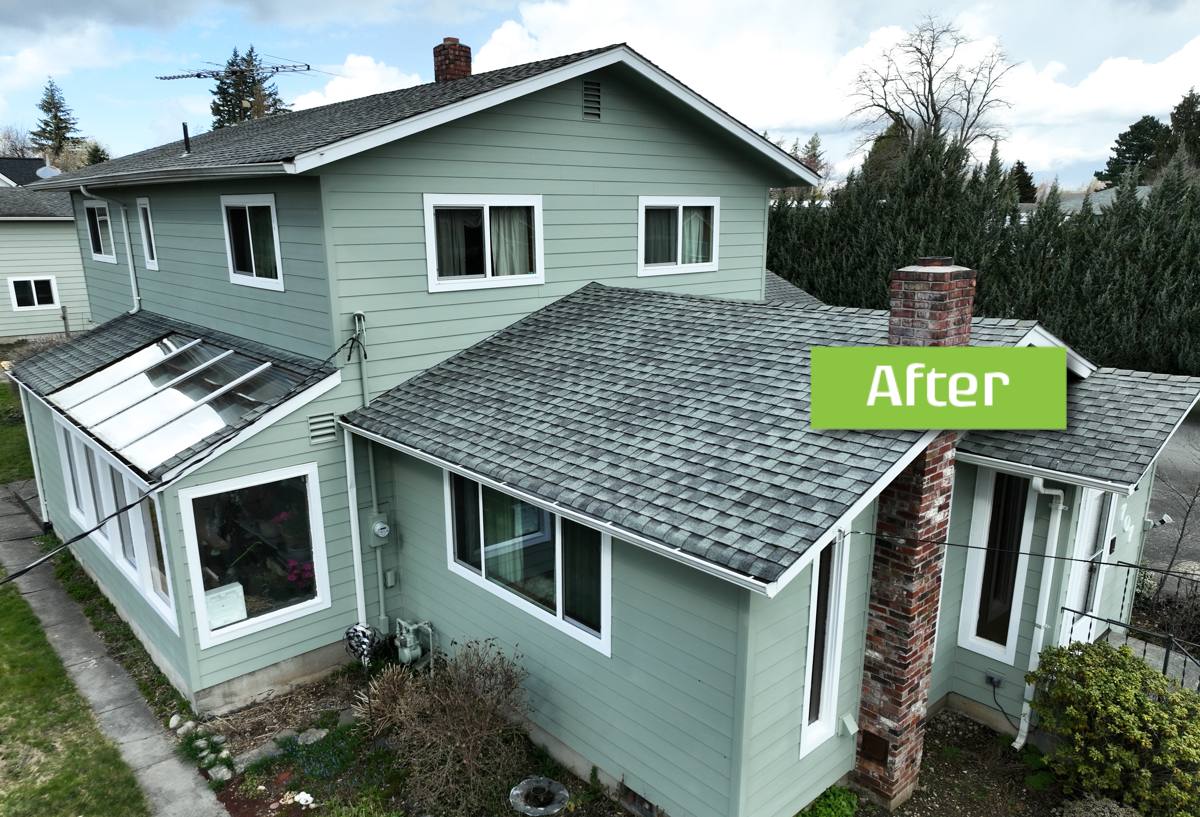
What West Beach's Climate Actually Does to a Roof
Salt Air
Being close to open water means airborne salt settles on roofing materials, flashing, and fasteners over time. Salt accelerates corrosion in unprotected or lower-grade metal — fasteners, valley flashing, drip edge — long before the shingles or panels themselves would otherwise need replacing. It's one of the most common reasons we see roofs on the exposed west side of the island develop leaks around flashing points years before the field of the roof shows any wear.
Driving Rain
West-facing exposure means rain frequently arrives at an angle instead of straight down, which puts more water pressure on vertical surfaces, roof-to-wall transitions, and any horizontal seam or lap that wasn't sealed with wind-driven rain in mind. A roof detailed for a calmer site can let water find its way sideways into laps that would otherwise be fine.
Moss
Moss thrives in the Pacific Northwest's damp, shaded conditions, and Orcas Island's tree cover gives it plenty of places to take hold. On roofs, moss holds moisture against the surface, lifts shingle edges as it grows, and can work its way under flashing over time. A roof designed with moss resistance in mind — material choice, slope, and reduced shade where practical — needs far less maintenance than one that wasn't.
What a Correct New Roof Installation Includes
A new roof is more than laying material over the old one. For a West Beach home, the work that matters most is often what you don't see once it's finished:
- Full tear-off and deck inspection — we remove the old roofing down to the deck so we can actually see the wood, not guess at its condition underneath.
- Deck repair or replacement where rot, delamination, or soft spots are found — no roofing over a bad deck.
- Ice-and-water or self-adhering membrane at eaves, valleys, and any low-slope transitions, which matters more here given how much moisture the roof sees.
- Corrosion-resistant flashing and fasteners at every penetration, valley, and wall transition — the salt-air factor makes this a non-negotiable, not an upgrade.
- Proper underlayment rated for the exposure, not just the minimum code requirement.
- Ventilation check — intake and exhaust balanced so moisture doesn't get trapped in the attic, which shortens the life of a new roof from the inside out.
- Detailing at roof-to-wall and roof-to-siding transitions so wind-driven rain can't work its way behind the roofing.
Choosing the Right Material for a West Beach Roof
There's no single "best" roofing material for every home — it depends on the home's design, budget, and how much maintenance the owner wants to take on. What we will say plainly: on an exposed, salt-air, moss-prone site, some choices need more attention than others to perform well long-term.
| Material | How it handles this climate | Trade-offs to know |
|---|---|---|
| Architectural asphalt shingle | Good performance when paired with proper underlayment and flashing; moderate moss resistance, better with zinc/copper strips or algae-resistant granules | Needs periodic moss removal; lifespan shortened by unaddressed moss buildup |
| Standing seam metal | Sheds water and wind-driven rain very well; naturally moss-resistant on the panel field | Higher upfront cost; fasteners and flashing must be corrosion-rated or salt air will attack them first |
| Composite/synthetic shingle | Resists moisture absorption and moss better than untreated wood products | Installation sensitivity — needs a crew familiar with the manufacturer's fastening and lap specs |
| Cedar shake (untreated) | Traditional island look, but holds moisture in this climate more than other options | Higher maintenance burden for moss and rot in constant damp/shade conditions; we're upfront about this before you commit |
We're not going to tell you a product is "bad" — we'll tell you honestly what it takes to keep it performing on a site like West Beach, and let you weigh that against the look and budget you want.
Our Process for a West Beach Re-Roof
1. On-Site Assessment
We walk the roof and the site — not just measure square footage. Wind exposure, tree shade, existing moss or algae, drainage paths, and the condition of the current flashing all factor into our recommendation.
2. Written Scope and Estimate
You get a clear breakdown of what's being torn off, what's being replaced, the material and underlayment being used, and the flashing/fastener spec — no vague line items.
3. Tear-Off and Deck Repair
Old material comes off, the deck gets inspected in daylight, and any repairs are handled before new material goes down — with photos or a direct walkthrough if you want to see what we found.
4. Installation to Spec
Underlayment, flashing, fasteners, and material installed to the manufacturer's specifications and detailed for this site's wind and rain exposure — not the minimum that would pass elsewhere.
5. Final Walkthrough
We walk the finished roof with you, cover maintenance basics specific to your material and site (especially moss management), and make sure you know what warranty coverage applies to what.
Cost Factors for a New Roof on West Beach
Every roof is priced on its own specifics, but the factors that move the number most on a West Beach job are usually:
- Roof size, pitch, and complexity (valleys, dormers, multiple planes add labor and flashing)
- Material chosen (asphalt shingle, metal, and composite all sit at different price points)
- Deck condition once the old roofing comes off — hidden rot adds cost, but skipping repair costs far more later
- Access — tree cover, steep sites, and limited staging area on some island lots affect labor time
- Ferry and mobilization logistics for material delivery, which is a real factor for island jobs and gets accounted for upfront, not added as a surprise
We'd rather give you a broad, honest range up front and firm numbers after the on-site assessment than a low estimate that grows once we're on the roof.
Maintenance That Actually Extends a West Beach Roof's Life
- Clear moss buildup on a regular schedule — don't wait until it's thick enough to lift shingle edges
- Keep gutters and valleys clear so wind-driven rain has somewhere to go
- Trim back overhanging branches where practical to reduce shade and debris load
- Have flashing and fastener points checked periodically, especially anything metal exposed to salt air
- Address small leaks immediately — on this site, a small leak rarely stays small for long
Why a Crew That Already Works West Beach Matters
Roofing crews that haven't worked the west side of Orcas Island before sometimes underestimate how much wind-driven rain and salt exposure change the detailing that actually holds up. We've installed and repaired roofs across San Juan County long enough to know which flashing grades hold up out here, how much moss pressure to expect on a shaded lot, and where a "standard" install needs to be upgraded for this specific exposure. That's not a marketing line — it's the difference between a roof that needs attention again in five years and one that doesn't.
We also understand the practical realities of working on an island: material logistics, limited staging, and the value of getting a job scoped correctly the first time rather than discovering surprises mid-project.
Get a Free, No-Pressure Estimate
If you're considering a new roof for a West Beach home, we're happy to come take a look, walk you through what we see, and give you a straight answer on what it will take — no pressure, no hard sell. Use the form below to request a free estimate.