 Orcas Island Siding
 Fiber Cement Siding Built Around What West Sound's Water Does to a House
West Sound sits along a protected bay on the western side of Orcas Island, and that location shapes almost everything about how a house's exterior ages here. Some homes sit close to the water on flatter waterfront lots, others are set back into fir and madrona-covered hillsides looking down over the bay, and the mix of sun exposure, wind exposure, and tree cover changes from one property to the next even within a small community. What doesn't change is the underlying climate load: salt-laden marine air moving across the water, rain that comes in sideways during winter storms rather than falling straight down, and a moss season that can run most of the year on shaded, north-facing walls.
This page is about one thing specifically: fiber cement siding for West Sound homes, what this bay's climate demands from it, and what a correct installation actually involves. We install James Hardie fiber cement exclusively — not vinyl, not engineered wood, not primed spruce or cedar — and this is the honest reasoning behind that standard, along with how we approach a project once we're on-site.
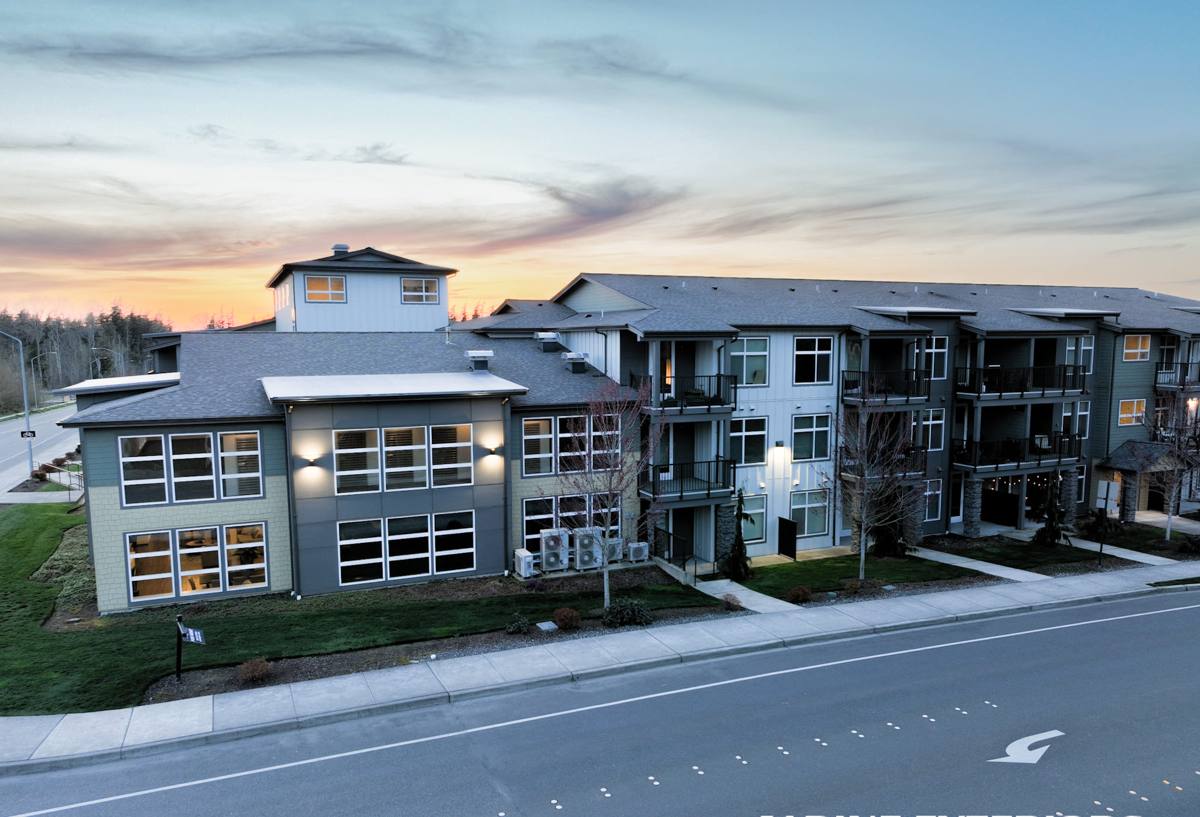
What West Sound's Climate Actually Does to Siding
Salt Air Off the Water
Living on a bay means salt is in the air constantly, not just during storms. Over years, that steady salt exposure corrodes fasteners, degrades flashing, and breaks down cheaper finishes faster than an inland property would ever see. It's a slow process, which is exactly why it gets missed — by the time rust streaks or a failing sealant show up on the surface, the damage has usually been building for a while underneath.
Driving Rain and Wind
Winter storms moving through the San Juan Islands don't drop rain straight down onto a roof and call it done. Wind drives that rain sideways into walls, forcing it toward butt joints, trim edges, and window and door openings — exactly the spots where a siding system either sheds water correctly or lets it find a way behind the cladding. That sideways load is the detail that separates a wall assembly that holds up for decades from one that starts leaking within a few wet seasons, regardless of what the siding material itself is rated to handle.
A Long Moss Season
West Sound's tree cover varies lot to lot, but shaded, moisture-retentive walls are common wherever fir and madrona canopy blocks direct sun for long stretches of the day. Mild temperatures combined with near-constant moisture add up to a moss and mildew growing season that can run close to year-round on those shaded elevations. Any siding surface that's even slightly porous, or that holds water against the substrate instead of shedding it, becomes ground moss can take hold on and spread across over time.
Why Fiber Cement Fits This Bay Better Than the Alternatives
We get asked fairly often why we don't offer a menu of siding options. The honest answer is that we looked at what actually holds up against sustained salt exposure, wind-driven rain, and a long moss season, and one material category — fiber cement — consistently outperforms the alternatives without asking a homeowner to carry a heavier maintenance burden in exchange for a lower sticker price.
| Material | How it holds up on a West Sound property |
|---|---|
| Vinyl siding | Panel seams can open a path for wind-driven rain behind the cladding, and sustained UV and temperature swings can warp or crack panels over time |
| Engineered wood siding | Wood-strand core is more moisture-sensitive at cut edges and fastener points than fiber cement, especially with sustained bay humidity |
| Primed spruce or cedar | Needs a recurring paint or stain schedule to avoid rot, and that maintenance schedule is harder to stay ahead of on island time than most homeowners expect going in |
| James Hardie fiber cement | Non-organic core doesn't feed moss or absorb moisture the way wood-based products do, and the factory finish holds up under sustained salt and UV exposure |
None of this means the alternatives are junk products — plenty of homes elsewhere do fine with them. It means that for this specific bay, with this specific combination of salt air, driving rain, and shade, we'd rather stand fully behind one system than offer a cheaper option that quietly shifts maintenance risk onto the homeowner a few winters down the line.
What James Hardie Brings to a West Sound Home
James Hardie fiber cement is a mix of Portland cement, sand, and cellulose fiber, cured into a dense, dimensionally stable board. It doesn't swell, cup, or warp the way wood-based siding can after repeated wetting cycles through a wet Pacific Northwest winter, and it has no organic core for salt air or moss to work into over time.
Two specifics matter most for a bayside property like this:
- HZ5 engineering: James Hardie manufactures climate-specific formulations, and the version specified for this region is built for sustained moisture exposure and freeze-thaw cycling rather than a hot, dry climate. That's a real difference in the product, not a marketing label.
- ColorPlus factory finish: The color coat is baked on in a controlled factory process rather than brushed on after installation, holding color and adhesion far longer under constant salt exposure and long gray stretches than field-applied paint typically manages.
James Hardie also makes more than one siding profile, and which one fits best depends on the house and the look a homeowner wants:
| Product line | Typical fit for a West Sound home |
|---|---|
| HardiePlank lap siding | The standard horizontal lap look most common on this island, in a range of textures and exposure widths |
| HardieShingle | A shingle profile for homes going for a more traditional coastal or cottage look, often paired with lap siding as an accent |
| HardiePanel | Vertical panel siding for a more modern look or for accent walls and gable ends |
| HardieTrim | Trim boards used around windows, doors, and corners to finish out whichever field product is chosen |
What a Correct Fiber Cement Installation Involves
The material only performs as well as the installation behind it. A correct fiber cement project on a West Sound home goes through the same sequence every time, regardless of the size of the job:
- Inspection and estimate: A walkthrough of the current siding condition, sun and wind exposure on each elevation, and any visible signs of trapped moisture, before we put a number on the project.
- Tear-off and substrate check: Once old siding is off, we check the sheathing underneath for rot or soft spots. Covering damaged sheathing with new siding just hides a problem that keeps getting worse behind the wall.
- Weather barrier and flashing: Most siding failures trace back to water getting behind the cladding rather than through it, so the house wrap, window flashing, and every wall penetration get careful attention here — it's the step that's easiest to rush and hardest to inspect once the new siding is up.
- Installation to manufacturer spec: Correct fastener spacing, proper clearance above grade, decks, and roof lines, and correct field-cutting and sealing practices, all following James Hardie's published specifications as the baseline rather than an upgrade.
- Final walkthrough: We go over the finished job with the homeowner, cover what maintenance to expect, and confirm the work matches what was estimated.
James Hardie's warranty depends on installation following those specifications, so this sequence isn't extra care on our part — it's the baseline for the warranty to mean anything.
What Affects the Cost of a Fiber Cement Project in West Sound
| Factor | Why it matters |
|---|---|
| Square footage and number of stories | Sets the baseline material and labor scope for the project |
| Trim and detail work around windows and rooflines | More cuts and joints mean more labor time and more places flashing has to be done right |
| Sheathing condition once old siding is removed | Rot or soft spots found during tear-off need to be addressed before new siding goes up |
| Product line and color selected | Lap siding, shingle, and panel profiles carry different material and install costs |
| Site access and scheduling logistics | Material and crew scheduling around ferry availability affects timeline more than cost, but both are worth planning for upfront |
We walk through every one of these factors specifically during the estimate, rather than handing over a flat per-square-foot number that ignores the particulars of the property.
Signs a West Sound Home's Siding Needs a Look
- Moss or dark staining that returns quickly after cleaning, especially on shaded or north-facing walls
- Soft or spongy siding, particularly low on the wall or around window and door trim
- Peeling paint or visible warping on older wood-based or engineered wood siding
- Rust staining running down from fasteners or trim hardware
- Cracked, buckled, or missing sections after a windstorm off the water
- Musty odors or staining on interior walls that back up to exterior siding
- Siding older than 20-25 years with no documented replacement history
None of these automatically mean a full replacement is necessary, but each is worth a professional look before another wet season adds to the damage rather than after.
Why a Crew That Already Works West Sound Matters
A small bay community like this doesn't get the volume of contractor traffic a mainland suburb does, and that shows in the details. Working properties around West Sound and the rest of Orcas Island regularly, rather than quoting a single job and moving on, means knowing which wall orientations on a given lot stay wet longest, where extra flashing attention actually pays off, and which install-day shortcuts turn into a callback two winters later. It also means that when a warranty question or a maintenance question comes up years down the road, it's a call to a crew still working in the area, not a company that quoted the job once and left the region.
Island logistics are also a real planning factor, not an afterthought. Material deliveries and crew scheduling here run around ferry availability, and a crew that already accounts for that in its scheduling avoids the kind of delays that catch homeowners off guard when they hire someone unfamiliar with how work actually gets done on Orcas Island.
A Few Questions Worth Asking Before Hiring
- What siding product do they install, and why — not just what it costs per square foot
- Do they check sheathing condition before closing the wall back up
- How is flashing handled at windows and roof-to-wall transitions
- Do they carry proper Washington licensing and insurance
- How do they plan around ferry access for materials and follow-up visits
If your West Sound home needs new siding, or you'd like an honest look at what's on there now, we're glad to come take a look and walk you through what we see. Reach out using the form below for a free, no-pressure estimate.