 Orcas Island Siding
 Why Cascade Lake Roofs Wear Differently Than Roofs Inland
Cascade Lake sits in a pocket of Orcas Island where two things collide: damp, still air off the water and heavy tree cover on much of the shoreline. That combination is tougher on an asphalt shingle roof than most homeowners expect. The lake holds moisture in the air longer than open water exposed to steady wind, so shingles here stay wet longer after a storm than they would on a more exposed part of the island. Add in San Juan County's long wet season and the shade from surrounding fir and cedar, and you get a roof environment that's slower to dry, more prone to moss, and more sensitive to poor ventilation than a typical mainland install.
None of this means asphalt shingles are the wrong choice for a Cascade Lake home — they're still one of the most practical, cost-effective roofing systems available, and a correctly installed shingle roof handles this climate well for decades. But "correctly installed" is doing a lot of work in that sentence. A roof that would perform fine in a dry, sunny neighborhood can fail early here if it's missing the details this specific microclimate demands.
The Three Things That Actually Wear Out a Roof Here
Salt Air
Cascade Lake isn't saltwater, but Orcas Island as a whole sits inside a marine environment, and airborne salt still reaches inland lake properties on wind off Puget Sound and the surrounding straits. Salt accelerates corrosion on exposed metal — flashing, nail heads, vent caps, gutter fasteners — well before it does visible damage to the shingles themselves. A roof can look fine from the ground while its flashing and fasteners are quietly corroding underneath.
Driving Rain
San Juan County storms don't just fall straight down; wind-driven rain gets pushed sideways under shingle tabs, around chimneys, and into any gap in flashing or underlayment. A roof built for calm, vertical rainfall will leak here. Every seam, valley, and penetration needs to be detailed for water moving sideways and uphill under wind pressure, not just water running downhill.
Moss and Shade
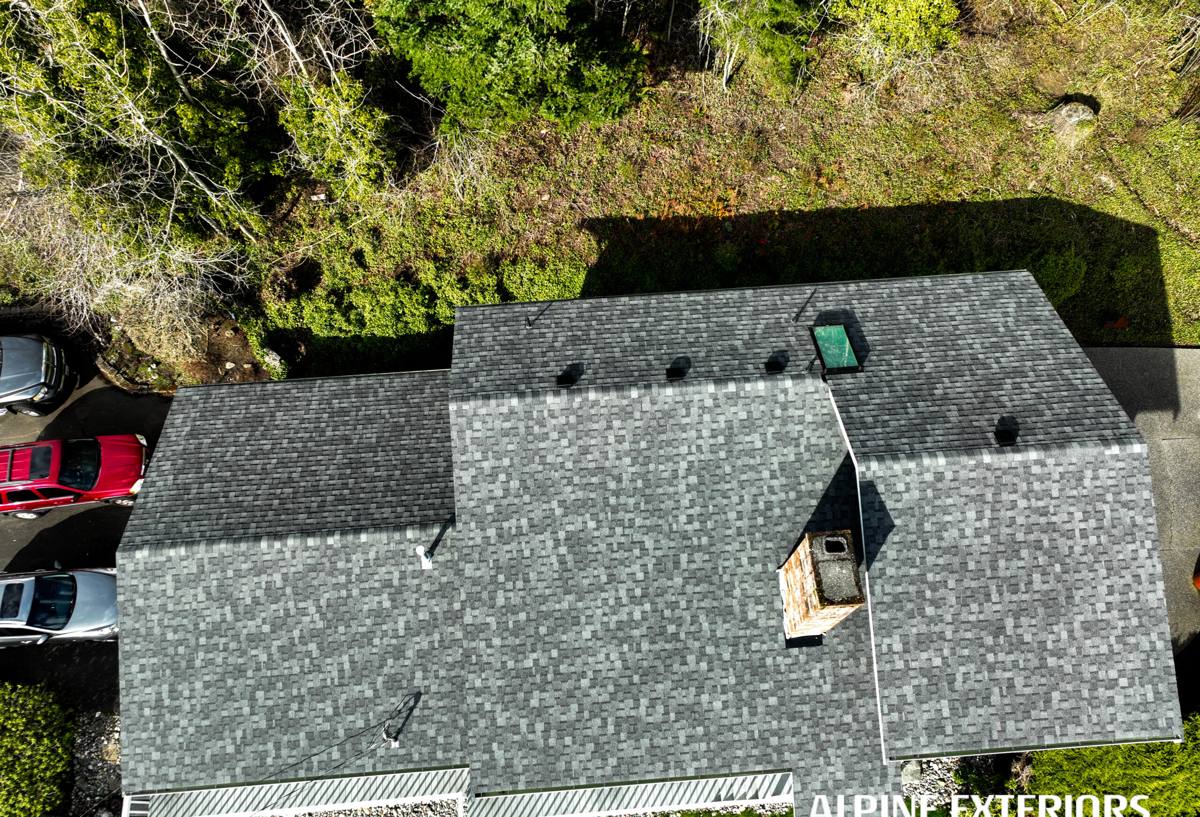
Tree cover around much of Cascade Lake keeps roof surfaces shaded and damp for long stretches, especially on north-facing slopes. Moss and algae take hold in exactly those conditions, and once established they hold moisture against the shingle surface, work under tabs, and shorten the life of the roofing system if left unmanaged.
What a Correct Installation Looks Like Here
A shingle roof built for this specific environment isn't a different product line — it's the same asphalt shingle system installed with the right underlayment, ventilation, and flashing choices for the conditions. The details that matter most for a Cascade Lake home:
Underlayment and Ice/Water Protection
A synthetic underlayment with strong water resistance, not just the minimum felt paper, gives the roof deck a real second line of defense if wind-driven rain gets past the shingles. Self-adhered membrane at eaves, valleys, and around penetrations adds protection exactly where driving rain and moss-related water retention cause the most trouble.
Ventilation and Moisture Control
Balanced intake and exhaust ventilation keeps the underside of the roof deck dry and lets the shingles shed heat and moisture properly. In a shaded, damp environment like Cascade Lake, poor ventilation compounds the moss problem from underneath as well as on top — trapped moisture in the attic space encourages the same conditions that grow moss on the surface.
Flashing That's Built for Wind-Driven Rain
Step flashing at walls and chimneys, properly lapped valley metal, and corrosion-resistant fasteners matter more here than in a drier climate. We treat flashing as a system, not an afterthought, because it's almost always where a Cascade Lake roof leak actually starts.
Choosing a Shingle for a Lakeside, Tree-Shaded Property
Not every asphalt shingle handles shade and moisture the same way. For Cascade Lake homes, especially those with tree cover on part of the roof, we steer homeowners toward algae-resistant shingles — these use copper or zinc-infused granules that discourage the algae and moss growth that's common in damp, shaded conditions. It's a meaningful upgrade for this specific setting, not a marketing add-on.
| Shingle Type | Typical Lifespan | Best Fit for Cascade Lake |
|---|---|---|
| Standard 3-tab | 15-20 years | Lower upfront cost; needs more frequent moss monitoring on shaded roof faces |
| Architectural (laminate) | 25-30 years | Better wind resistance and thicker profile; our standard recommendation here |
| Algae-resistant architectural | 25-30 years | Best choice for tree-shaded or north-facing sections around the lake |
| Impact-rated/premium | 30+ years | Worth considering for exposed, high-wind sites near open water |
Color matters too, though less than material choice. Darker shingles can make minor moss staining more visible over time on shaded slopes, while lighter and mid-tone colors tend to show it less. It's a small factor, but worth discussing if part of your roof sits under tree cover.
Our Process for a Cascade Lake Roofing Project
- On-site inspection: We walk the roof, check the deck for soft spots or rot (common where moss has been left unaddressed), and assess ventilation and existing flashing.
- Honest scope and estimate: You get a clear breakdown of what's needed — full tear-off versus repair, deck replacement if required, and the shingle and underlayment options that fit your home and budget.
- Tear-off and deck prep: Old roofing comes off completely so we can inspect the deck directly rather than roofing over hidden problems.
- Underlayment and flashing installed to spec: This is where the driving-rain and salt-air details get handled — ice/water membrane at vulnerable areas, corrosion-resistant fasteners, properly lapped flashing.
- Shingle installation: Installed to manufacturer nailing patterns and wind ratings, with attention to valleys, ridges, and any tree-shaded sections that need algae-resistant product.
- Ventilation check and final walkthrough: We confirm intake and exhaust venting are balanced, clean up the site fully, and walk the finished roof with you.
Moss and Debris: What Ongoing Care Actually Requires
Even a well-installed roof around Cascade Lake needs periodic attention because of the tree cover and moisture. This isn't unique to us — it's the nature of roofing in a shaded, damp environment. A short seasonal routine keeps a good roof performing for its full lifespan:
- Clear needles, leaves, and branch debris from valleys and behind chimneys where they trap moisture
- Keep gutters and downspouts free-flowing so water isn't backing up under the eaves
- Trim back overhanging branches where practical to reduce shade and debris load on the roof
- Watch for early moss growth on north-facing or heavily shaded slopes and address it before it spreads
- Have flashing and fasteners checked periodically, since salt-air corrosion isn't always visible from the ground
- Schedule a professional inspection after any major windstorm to catch lifted or damaged shingles early
Signs a Cascade Lake Roof Needs Attention
Because moss and moisture problems here tend to develop gradually rather than show up as a sudden leak, it's worth knowing what to watch for:
- Visible moss or dark streaking, especially on shaded or north-facing roof sections
- Granules collecting in gutters, a sign shingles are wearing faster than they should
- Curling, cupping, or lifted shingle edges, often where wind-driven rain has been working underneath
- Rust staining around flashing, vents, or fasteners
- Soft spots or sagging when walked, which usually points to deck moisture damage
- Daylight visible through the roof deck from inside the attic
Catching these early is almost always cheaper than waiting for an active leak, since moss and trapped moisture do their damage slowly and out of sight.
Why It Matters That We Already Work This Area
Roofing crews who mostly work drier, more exposed parts of Washington sometimes underestimate how much a shaded lake property like this needs different ventilation and flashing choices than a roof out in the open. Working regularly on Orcas Island and around San Juan County means we're not guessing at how salt air, driving rain, and moss season interact on a property like yours — we're building the roof to hold up to conditions we see repeatedly, not conditions from a general specification sheet. That local familiarity also means straightforward scheduling and a crew that isn't factoring in a ferry-dependent trip as an unusual complication.
Get a Straightforward Estimate
If your Cascade Lake roof is showing moss, granule loss, or you're just planning ahead for a replacement, we're glad to take a look and walk you through what your roof actually needs — no pressure, no inflated scope. Use the form below to request a free estimate.