 Orcas Island Siding
 Board & Batten Siding Built for Cascade Lake's Conditions
Homes around Cascade Lake sit in one of the more demanding microclimates on Orcas Island. The lake basin, tucked into the forest of Moran State Park, holds moisture longer than open shoreline properties do, and the tree canopy that makes the setting so appealing also keeps siding shaded and damp for long stretches of the year. Add in the driving rain that rolls through San Juan County in the fall and winter, plus the marine-influenced air that moves across the whole island even away from the water's edge, and you have conditions that will find every weak point in a siding job within a few years. Board and batten is a natural fit for this setting — it has the cabin-and-lodge look that suits lake and forest properties, with clean vertical lines and strong shadow relief. But the look only holds up if the material and the installation are both right for what this specific location throws at a house.
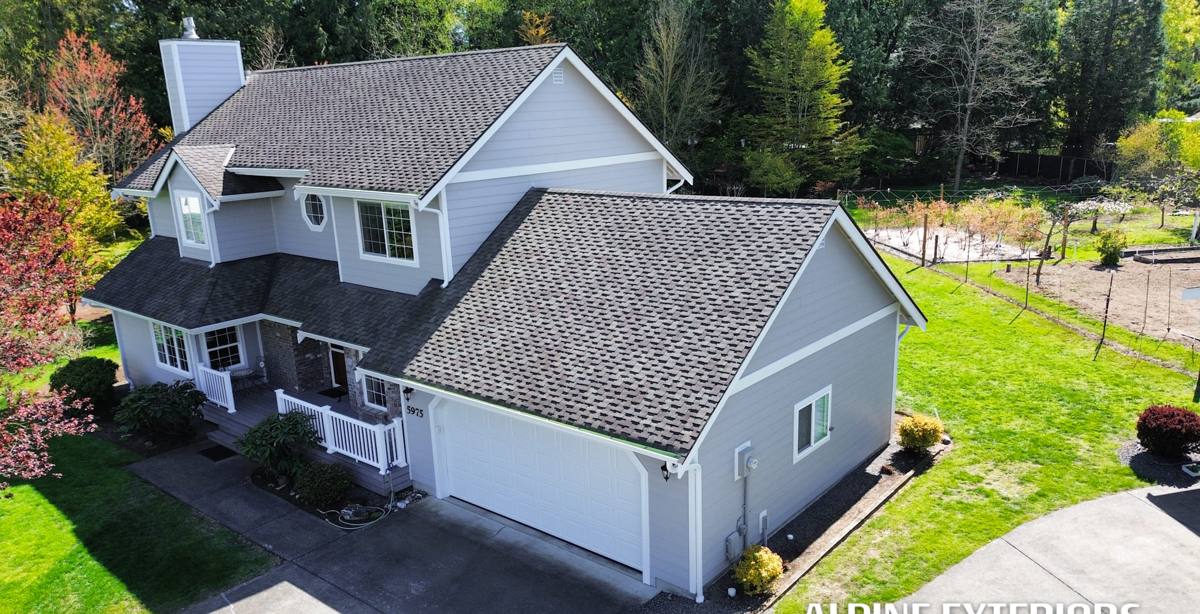
Why Cascade Lake's Microclimate Is Hard on Siding
Moisture that doesn't fully dry out
Open, sun-exposed lots dry between rain events. Lots near Cascade Lake, shaded by fir and cedar canopy, often don't. Siding on the north and east-facing walls of these homes can stay damp for days after a storm, which is exactly the condition that lets water work its way behind panels, into fastener holes, and along poorly sealed joints.
Moss season is a long season
Moss needs shade and moisture to establish, and Cascade Lake properties supply both for much of the year. Once moss gets a foothold on a batten edge or a butt joint, it holds water against the surface constantly, which accelerates rot in wood-based products and breaks down paint film on anything that isn't factory-cured. A siding system that resists moss growth and sheds water cleanly at every joint matters more here than almost anywhere else on the island.
Marine air still reaches the lake basin
Cascade Lake is inland, but Orcas Island is small enough that salt-laden air off the surrounding water moves across the whole landform, including the forested interior. Over years, that airborne salt contributes to the same corrosion and finish breakdown seen closer to shore, just at a slower pace. Fasteners, flashing, and trim details all need to be chosen with that in mind, not just for waterfront homes.
What Correct Board & Batten Installation Actually Involves
Board and batten looks simple — vertical panels with a batten strip covering each seam — but the installation details are where a job either holds up for decades or starts failing in five years. On a house near Cascade Lake, we treat every one of the following as non-negotiable, not optional upgrades:
- A continuous weather-resistive barrier behind the panels, lapped correctly at every seam so water is directed out, not trapped in
- A drainage gap between the barrier and the siding so any moisture that does get behind the panel can actually drain and dry instead of sitting against sheathing
- Proper batten spacing and fastening so panels can expand and contract with temperature and moisture swings without cracking the finish
- Correct flashing at every window, door, and roofline intersection — the majority of siding failures we see start at these transitions, not in the field of the wall
- Fasteners rated for coastal and high-moisture exposure, so corrosion doesn't create rust streaking or loosened boards years down the road
- Factory-primed or factory-finished panel edges wherever field cuts occur, so raw material is never left exposed to the weather
Skip any one of these and the siding may look fine on install day and still fail early. This is where a lot of board and batten problems on wooded, damp lots actually originate — not from the product itself, but from shortcuts taken during installation that don't show up until a wall has been wet for a few winters.
James Hardie Board & Batten: The Only System We Install
We install James Hardie fiber cement board and batten exclusively — not vinyl, not LP SmartSide, not primed spruce or cedar. Fiber cement is non-combustible, dimensionally stable, and doesn't feed moss and algae growth the way wood-based products can once organic buildup gets a foothold. Hardie's ColorPlus factory finish is baked on and warranted against fading, and it holds up to the shaded, damp conditions around Cascade Lake far better than a field-applied paint job, which is exactly the kind of finish that struggles in low-sun, high-moisture pockets. Hardie's HZ5 product line is engineered for the wetter, harsher climate zones on the West Coast, which is a better match for a lake-basin lot than a generic, one-size-fits-all siding line. We've explained our reasoning on other pages on this site for homeowners who want the fuller comparison against vinyl, LP, and cedar — the short version is that we standardized on Hardie because it's the product we're willing to warranty and stand behind on the properties we work, including the ones tucked into the trees around Cascade Lake.
Board & Batten Material Options Compared
| Material | Moisture & Moss Resistance | Finish Durability | Typical Maintenance |
|---|---|---|---|
| James Hardie fiber cement | High — non-combustible, doesn't feed organic growth | Factory ColorPlus finish, long warranty | Periodic wash, minimal touch-up |
| Cedar or primed spruce board & batten | Moderate — natural material, absorbs moisture over time | Field-applied paint or stain, fades faster in shade | Regular repainting/staining, moss treatment |
| Vinyl board & batten | Sheds surface water but seams and edges can trap moisture | Color molded in but can chalk; not repaintable easily | Low, but limited repair options if damaged |
| LP SmartSide (engineered wood) | Treated wood strand product, sensitive to sustained moisture exposure | Factory-finished, but edge sealing is critical | Moderate — edge and joint inspection important |
This isn't a claim that other materials can't work anywhere. It's why we, as a company, chose to specialize in one system rather than install several products with different long-term risk profiles — particularly on shaded, moisture-heavy lots like the ones around Cascade Lake.
Our Installation Process at Cascade Lake
- On-site assessment: we look at sun exposure, tree cover, existing moisture damage, and how the current siding has performed on your specific lot before recommending anything
- Tear-off and substrate check: old siding comes off and we inspect sheathing for rot or hidden moisture damage before anything new goes up — this step gets skipped by crews trying to move fast, and it's the step that matters most
- Weather barrier and drainage plane: installed and detailed at every penetration before a single panel is hung
- Panel and batten installation: Hardie panels and battens installed to manufacturer spec, with attention to fastening pattern and joint treatment
- Flashing and trim detailing: windows, doors, and rooflines finished last so every transition sheds water correctly
- Final walkthrough: we go over the finished work with you before calling the job done
Why a Crew That Already Works Cascade Lake Matters
Island work has logistics that mainland jobs don't. Material has to be ordered and staged in advance of the ferry schedule, and a crew that's used to that reality plans around it instead of letting it stall a project mid-job. San Juan County has its own permitting process, and a crew that's pulled permits here before doesn't waste your time relearning it on your house. Beyond logistics, a crew that has worked other homes around Cascade Lake has already seen how the tree cover, shade patterns, and moisture load on this side of the island behave differently from a waterfront lot in town or an open pasture property elsewhere on Orcas. That's the kind of context that shapes real decisions — where extra flashing attention matters most, which walls need the most careful moisture detailing — and it's not something a crew coming over for a single job can match.
Maintaining Board & Batten Siding Near Cascade Lake
Even the right material and a correct install still benefit from basic upkeep, especially in a moss-prone, shaded setting. A short annual routine keeps a Hardie board and batten system performing the way it's designed to:
- Rinse siding with a garden hose once or twice a year to clear pollen, dust, and organic buildup before it takes hold
- Trim back branches and vegetation that keep specific wall sections shaded and damp longer than the rest of the house
- Check gutters and downspouts each fall so overflow isn't running down siding during heavy rain
- Look at caulking around windows, doors, and trim yearly and have any cracked or separated joints resealed promptly
- Address any moss you do see early with a gentle wash rather than letting it spread and hold moisture against the surface
What Board & Batten Siding Costs at Cascade Lake
Every home is different, but the same factors tend to move the price up or down on lake-area properties specifically:
| Factor | How It Affects the Job |
|---|---|
| Existing siding and substrate condition | Hidden moisture or rot found during tear-off adds repair work before new siding goes on |
| Tree cover and site access | Limited access or heavy vegetation near the house can slow staging and installation |
| Wall complexity | More windows, dormers, and roof transitions mean more flashing detail work |
| Material staging and delivery | Ferry-dependent delivery timing factors into project scheduling |
| Trim and finish level | Corner treatments and trim profile choices affect both material and labor |
We don't quote a number without seeing the house — a broad estimate for a project this variable wouldn't be honest to give up front.
If you're weighing board and batten siding for a home near Cascade Lake, we're happy to walk the property, look at what your current siding is telling us, and put together a straightforward, no-pressure estimate. Use the form below to get started.