 Orcas Island Siding
 Roof Repair Built for Crow Valley's Growing Conditions
Crow Valley sits inland from Orcas Island's shoreline, which changes the math on roof wear compared to a house facing open water. You get less direct salt spray, but you often get more shade, more still air, and more tree cover — a combination that keeps roofs damp longer after every rain. On San Juan County's islands, that trade-off matters. A roof in a wooded valley setting doesn't fail the way a shoreline roof fails. It fails slower, quieter, and often out of sight, which is exactly why so many Crow Valley repair calls we get involve damage that's been building for a year or more before anyone noticed a stain on the ceiling.
We work roofs across Orcas Island, and valley properties get their own approach from us. The repair techniques are the same craft, but where we look first, what we test for, and what we recommend for prevention afterward are shaped by a wooded, shaded, moisture-holding environment rather than a wind-and-salt one.
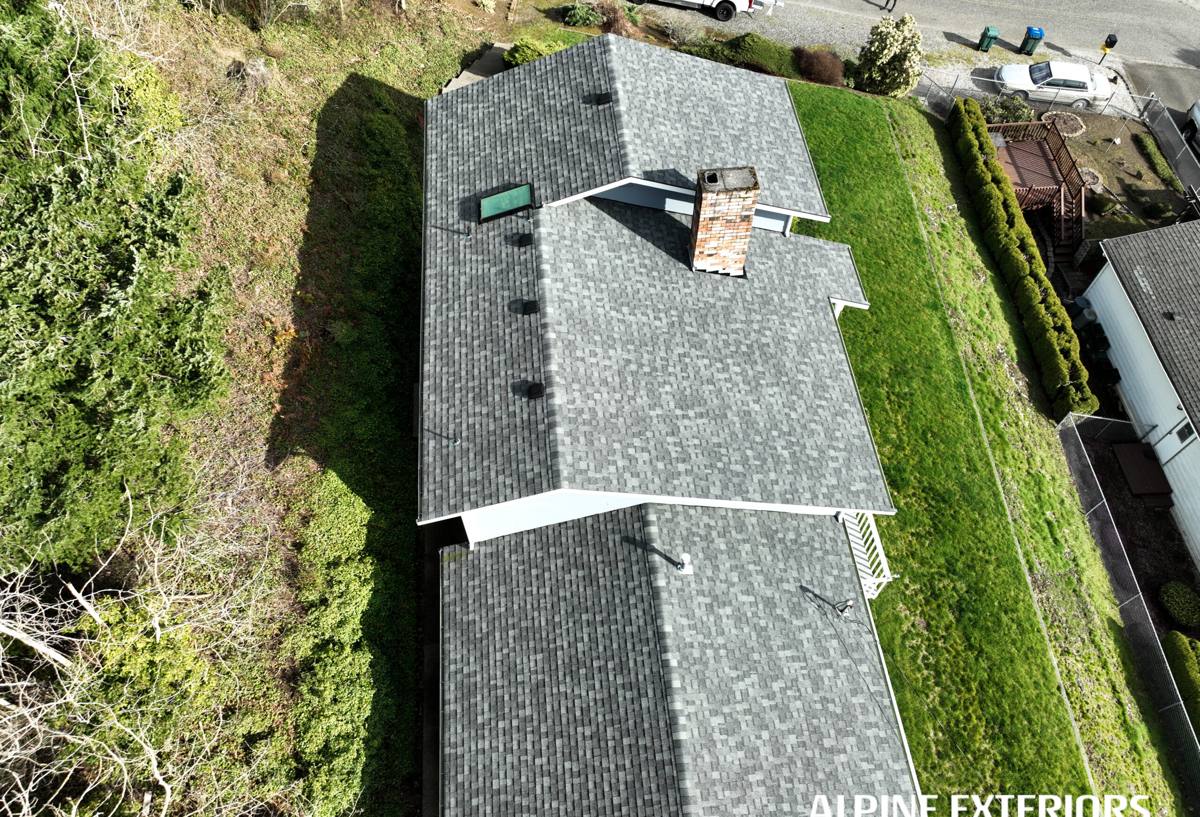
What Moss, Shade, and Moisture Actually Do to a Roof
Moss isn't just a cosmetic problem, and it doesn't cause damage the way most homeowners picture. It's slow and mechanical:
- Moisture retention: moss holds water against the roof surface long after the rest of the roof has dried, keeping shingles or shakes wet for days at a time.
- Granule and surface loss: moss roots work into shingle texture and lift granules, and on wood roofing it holds moisture directly against the grain.
- Blocked drainage: moss and the needle litter it traps clog valleys and gutters, so water backs up instead of shedding off the edge.
- Freeze-thaw stress: saturated moss that freezes on a cold night expands, which can lift shingle edges and open small gaps wider.
None of that shows up overnight. A roof under heavy shade in a valley setting can go two or three seasons with active moss growth before it produces a visible leak — by which point the underlayment or decking underneath may already be compromised. Salt air, by contrast, tends to attack metal fasteners, flashing, and exposed hardware more directly. Many Crow Valley roofs deal with both issues to some degree, just not in equal measure, which is why a generic inspection checklist misses things a valley-specific one catches.
Why Driving Rain Adds a Second Layer of Risk
Orcas Island's storms tend to come in sideways more often than straight down, and wind-driven rain finds every gap that vertical rain never would. It gets pushed up under shingle tabs, sideways past poorly lapped flashing, and into nail penetrations that aren't sealed properly. Combine that with a roof surface that's already softened or lifted by moss, and small gaps become active leak points during exactly the storms when you can least afford one.
Signs a Crow Valley Roof Needs Repair Now
Because valley roof damage develops slowly, homeowners often wait longer than they should before calling. Watch for these:
- Dark green or black streaking, or visible moss patches, especially on north-facing or shaded slopes
- Granules collecting in gutters or at downspout outlets
- Soft or spongy spots when the roof surface is checked in person (never walk a roof yourself to test this)
- Water stains on interior ceilings, especially near valleys, chimneys, or skylights
- Daylight visible through the attic roof deck
- Curling, cupping, or lifted shingle edges
- Rust streaks below metal flashing or fasteners
- A musty smell in the attic, which usually means trapped moisture, not just a leak
Any one of these is worth a look. Several at once usually means the damage has been active for a while.
What a Correct Repair Actually Involves
A roof repair that holds up in this climate is not a matter of caulking the visible gap and calling it done. Done right, it involves:
1. Finding the Real Source, Not Just the Symptom
Water travels before it shows up as a stain. A leak that appears over a bedroom might originate several feet away at a valley, vent boot, or chimney flashing. We trace the path from the interior sign back to the actual entry point before we start any repair — patching where the stain shows up without finding the source is the single most common reason repairs fail to hold.
2. Checking What's Underneath
If moss or standing moisture has been present for a while, we check the decking and underlayment, not just the surface layer. Soft or delaminating decking has to be addressed or any repair on top of it is temporary.
3. Matching Materials and Technique to What's There
Repairs need to integrate with the existing roofing system — correct shingle or shake pattern, correct flashing laps, compatible fasteners. A mismatched patch can shed water worse than the damage it replaced.
4. Addressing the Cause, Not Just the Hole
If moss caused the failure, a shingle swap without moss treatment and airflow improvement just buys a year or two before the same spot fails again.
Repair vs. Replacement: How We Help You Decide
Not every problem roof needs a full replacement, and not every leak is fixable with a patch. We walk you through the honest version of this decision using a few key factors:
| Factor | Leans Toward Repair | Leans Toward Replacement |
|---|---|---|
| Extent of damage | Isolated to one section or penetration | Spread across multiple slopes |
| Decking condition | Solid, dry to the touch | Soft, delaminating, or stained through |
| Roofing material age | Well within expected service life | Near or past expected lifespan |
| Moss/moisture history | Recently addressed or first occurrence | Long-term, repeated saturation |
| Flashing and penetrations | Functional, minor wear | Corroded, undersized, or failing broadly |
We'll always tell you if a repair is the honest answer, even if replacement would be the bigger job for us. A roof that's structurally sound and losing a fight with moss in one shaded corner usually just needs that section addressed and the underlying moisture issue solved.
Our Roof Repair Process
- On-site assessment. We inspect the roof surface, flashing, valleys, penetrations, and — where accessible — the attic side, looking for both the visible damage and its underlying cause.
- Plain-language explanation. We show you what we found and explain what's actually causing it, not just what's failing.
- Written scope and estimate. You get a clear description of the repair, the materials involved, and the cost before any work starts.
- The repair itself. Removal of damaged material, inspection and repair of decking if needed, correct flashing and underlayment integration, and matched roofing material installed to shed water the way the surrounding roof does.
- Moss and moisture follow-up. Where moss was a factor, we address it directly rather than leaving it to regrow over the new work.
- Final walkthrough. We show you what was done and what to watch for going forward.
Materials and Methods That Hold Up Here
We use roofing materials and repair methods suited to a wet, shaded, coastal-island climate rather than defaulting to whatever's fastest. That generally means corrosion-resistant flashing and fasteners, underlayment rated for extended wet exposure rather than minimum-code material, and shingle or shake products with a documented track record in the Pacific Northwest rather than untested or budget-tier options. We're upfront when a cheaper material would mean more frequent repairs down the line — that's a maintenance-burden and long-term-cost conversation we'd rather have honestly than let you find out the hard way.
Where a roof has chronic shade and moss pressure, we'll also talk through practical steps that reduce future moss growth — things like improving attic ventilation, trimming back overhanging branches where it's your tree to trim, and keeping valleys and gutters clear. A repair holds longer when the conditions that caused the damage are also addressed.
Why a Crew That Already Works Crow Valley Matters
A roofer who's worked shaded, wooded properties around Orcas Island knows what a valley roof looks like at every stage of moss damage — not just when it's obvious. That means we can often catch a problem while it's still a repair instead of after it's become a full re-roof. It also means we already understand the access realities of tree-covered, sloped valley lots, and we come prepared instead of improvising on-site.
Being local to San Juan County also matters logistically. Materials, scheduling, and follow-up all move faster when your contractor isn't coordinating a ferry trip for every site visit or callback.
Maintenance Checklist to Protect the Repair
Once a repair is done, a small amount of upkeep goes a long way toward making it last, especially in a shaded valley setting:
- Clear moss and debris from valleys and gutters at least twice a year
- Have the roof checked after any major windstorm, not just on a fixed schedule
- Watch for new streaking or moss regrowth in the same areas as before
- Keep gutters and downspouts flowing freely so water doesn't back up under the roof edge
- Trim back vegetation that keeps a section of roof shaded and slow to dry, where it's within your property
- Check the attic for musty smells or new staining once or twice a year
- Address small issues promptly — a loose shingle or a gap in flashing is a cheap fix now and an expensive one later
If you're seeing moss, staining, or a leak on a Crow Valley roof, we're happy to take a look and give you a straight assessment — no pressure, no upsell, just what we find and what we'd recommend. Reach out using the form below to schedule a free estimate.