 Orcas Island Siding
 Siding Repair in Crow Valley: A Different Set of Conditions
Crow Valley sits back from the immediate shoreline, in the kind of interior, tree-sheltered terrain that's common across Orcas Island — a mix of open pasture, tree lines, and homes tucked under fir and cedar canopy. That setting changes how siding ages compared to a house sitting right on the water. Homes here get less direct salt spray than waterfront properties, but they trade that for something just as hard on siding: shade, slower airflow, and longer dry-out times after rain. On San Juan County's islands, that combination is exactly what shortens the life of the wrong siding material and accelerates repair needs on the right one if it isn't installed and maintained correctly.
This page covers siding repair specifically for Crow Valley conditions — what tends to go wrong, what a correct repair actually involves, and how our process works when we get a call from this part of the island.
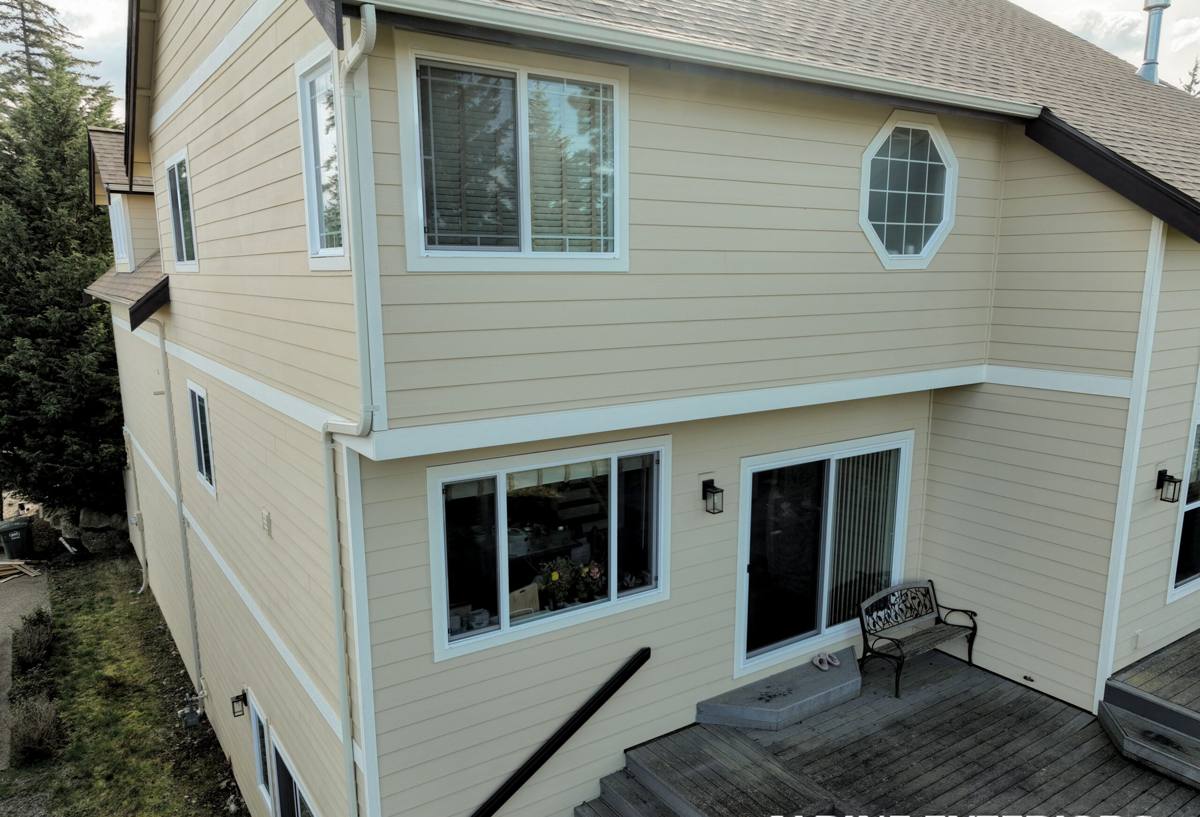
How the Local Climate Works Against Siding Here
Orcas Island doesn't get hammered by any one extreme condition. It gets a steady combination of several moderate ones, applied year-round, which is often harder on a building envelope than an occasional severe event.
Salt-Laden Air, Even Inland
Wind off the Salish Sea carries salt further inland than most homeowners expect, especially during winter storm patterns. Valley terrain can funnel and hold that air rather than letting it pass through, so siding, fasteners, and trim in a valley setting can see more sustained exposure to salt-influenced moisture than a quick glance at a map would suggest.
Driving Rain and Slow Drainage
San Juan County gets a long wet season, and rain here often comes in at an angle driven by wind rather than falling straight down. That means water finds its way into laps, joints, and trim intersections that would stay dry in calmer weather. Tree cover in valley settings also means roof and gutter runoff patterns can dump more water onto specific wall sections than the rain itself would.
A Long Moss and Algae Season
Shade, moisture, and mild temperatures are exactly what moss and algae need, and Crow Valley's tree cover gives them a longer growing window than open, sun-exposed sites elsewhere on the island. Moss on siding isn't just cosmetic — it holds moisture against the surface, and on materials that aren't built to handle that, it becomes the entry point for real damage underneath.
The Repair Issues We See Most in This Area
Moss and Algae Staining at Shaded Elevations
North-facing and tree-shaded walls hold onto green and black staining longer here than almost anywhere else on the island. On its own, this is a cleaning issue. Left unaddressed for a season or more, it starts to soften caulking and can mask early moisture damage happening underneath.
Moisture Intrusion at Trim, Butt Joints, and Penetrations
The most common repair call we get isn't storm damage — it's slow water intrusion at seams, unpainted cut edges, window and door trim, and places where siding meets a deck, porch roof, or utility penetration. In a valley setting with less direct sun to dry things out, these spots stay damp longer after every rain, which speeds up any underlying problem.
Impact and Wildlife Damage
Fallen branches are more common in a tree-lined valley than on open shoreline lots, and Orcas Island's wildlife — deer, woodpeckers, and the occasional larger animal — can leave dents, gouges, and pecked holes that need proper patching, not just paint.
Sun-Bleached and Weathered Finish on Exposed Faces
Even in a shaded valley, west- and south-facing walls get enough direct exposure over the years to fade or chalk if the original finish wasn't durable. Mismatched patch repairs on a faded wall are one of the most common complaints we hear from homeowners who had cheaper repairs done previously.
Caulk and Sealant Failure
Caulking has a service life, and in this climate it's shorter than most manufacturers' literature suggests. Once it cracks or pulls away, it stops shedding water and starts trapping it instead — turning a five-minute maintenance item into a repair project if it's ignored long enough.
Signs Your Siding Needs Repair, Not Just Cleaning
- Soft, spongy, or bubbled areas when pressed gently by hand
- Visible gaps, cracks, or separation at seams and corner trim
- Paint or finish that's peeling, blistering, or bubbling rather than just fading
- Staining that returns quickly after washing, especially near ground level or under eaves
- Warping, buckling, or siding that no longer sits flat against the wall
- Visible daylight or drafts at trim lines from inside the house
- Musty smell or interior wall staining near an exterior wall
- Holes, dents, or missing pieces from impact or wildlife
Any one of these on its own might be minor. Several together, especially clustered in one area, usually mean there's moisture doing damage behind the surface — which is a different repair than a simple patch.
What a Correct Siding Repair Actually Involves
A repair that only addresses what's visible from the ground is a repair that comes back. Done right, siding repair in a climate like this starts before anyone touches the wall.
- Diagnose the source, not just the symptom. Staining or a soft spot is a signal, not the problem itself. We trace it back to the actual entry point — a failed seal, a flashing gap, poor drainage — before deciding on a fix.
- Check what's behind the siding. Any area with suspected moisture intrusion gets opened up enough to check the water-resistive barrier and sheathing underneath. Patching over damaged sheathing just hides a bigger problem.
- Match material and profile. Repairs should match the existing siding's exposure, profile, and finish as closely as possible — mismatched boards are one of the most common complaints with rushed repair jobs.
- Correct the underlying cause. If poor flashing, bad caulking, or a drainage issue caused the damage, that gets fixed as part of the repair — not just the siding itself.
- Re-seal and finish properly. Correct caulking at the right joints, and a finish that matches or is compatible with the existing coating, so the repair doesn't stand out or fail early.
Patch Repair vs. Section Replacement
Not every repair calls for the same scope of work. The table below covers how we think through the decision.
| Factor | Patch Repair | Section Replacement |
|---|---|---|
| Best for | Isolated impact damage, a single failed joint, minor localized staining | Repeated moisture damage, multiple failure points on one elevation, widespread deterioration |
| Typical scope | One or a few boards or panels | A full wall section, corner, or elevation |
| Cosmetic match | Good, if material and finish are closely matched | Best — new section can be finished as a continuous run |
| Underlying cause addressed | Sometimes limited by scope | Usually fully addressed, since more of the wall is opened up |
| Typical cost range | Roughly a few hundred to around a thousand dollars | Generally in the low-to-mid thousands, depending on size and access |
These are broad ranges, not quotes — actual scope depends on what we find once the wall is opened up, which is exactly why we inspect before pricing.
Why We Repair — and Recommend — James Hardie Fiber Cement
We install James Hardie fiber cement siding exclusively, and it shapes how we approach repair work too. Fiber cement doesn't absorb moisture and swell the way wood-based products can, and it isn't vulnerable to the rot and softening that make some repairs on other materials a losing battle in a wet, shaded climate like Crow Valley's. Hardie's ColorPlus factory finish also means repair sections can be color-matched with far more consistency than field-painted materials, which matters when you're patching one wall instead of repainting the whole house.
When we're called out to repair non-Hardie siding — engineered wood, vinyl, or older fiber cement products — we'll always give an honest assessment of whether a repair makes sense or whether the material itself is working against the homeowner. In a lot of cases in this climate, repeated repairs on moisture-sensitive materials end up costing more over time than replacing the affected section, or eventually the whole elevation, with a product built for this kind of exposure.
Our Process for Crow Valley Repair Calls
Every repair call starts with a real inspection, not a phone estimate. We walk the affected area, check moisture levels where relevant, and look at drainage, grading, and roof runoff patterns around the damaged section — because in a valley setting, the cause is often somewhere other than the exact spot where the damage shows up. From there, we give a straight answer: what caused it, what it'll take to fix it correctly, and whether a patch or a larger section repair is the right call. We don't upsell repairs into replacements that aren't needed, and we don't recommend a patch when we can see it won't hold.
Why It Matters to Hire a Crew That Already Works This Area
Crow Valley's terrain, tree cover, and moisture patterns aren't the same as a shoreline lot a few miles away, and they're not the same as siding conditions on the mainland either. A crew that hasn't worked this specific mix of shade, drainage, and long wet seasons can misdiagnose the cause of damage or recommend a fix that's right for a drier climate but won't hold up here. We work across Orcas Island regularly, including this part of the island, so we're not guessing at how local conditions behave — we've seen how they play out on real homes, repair after repair.
Access matters too. Ferry scheduling and island logistics affect materials and timing on every San Juan County project, and a crew based and working locally can plan around that instead of it becoming a delay you absorb.
Get an Honest Look at Your Siding
If you're seeing staining, soft spots, gaps, or damage on your Crow Valley home, we're happy to come take a look, tell you honestly what we find, and lay out your options — no pressure, no upsell. Use the form below to request a free estimate.