 Orcas Island Siding
 Doe Bay Roofs Take a Different Kind of Beating
Homes around Doe Bay sit in one of the more exposed pockets of Orcas Island — close to the water, wrapped in trees, and open to whatever the Pacific storm track throws at the San Juan Islands each fall and winter. That combination is hard on a roof in ways that don't show up on a typical mainland job. Salt-laden air moves in off the water and works on exposed metal — nails, flashing, vent caps — long before most homeowners notice anything wrong. Driving rain, often sideways in a real blow, finds any gap in flashing or underlayment and pushes water where it was never meant to go. And the heavy tree cover that makes Doe Bay so appealing also means shaded, damp roof sections that grow moss for most of the year, which holds moisture against the roofing material and accelerates wear.
None of this means a Doe Bay roof is doomed — it means it needs to be built, repaired, and maintained with those specific stresses in mind. A patch job that would hold up fine in a drier, more sheltered part of the county can fail here in a single wet winter if it isn't done with island conditions in mind.
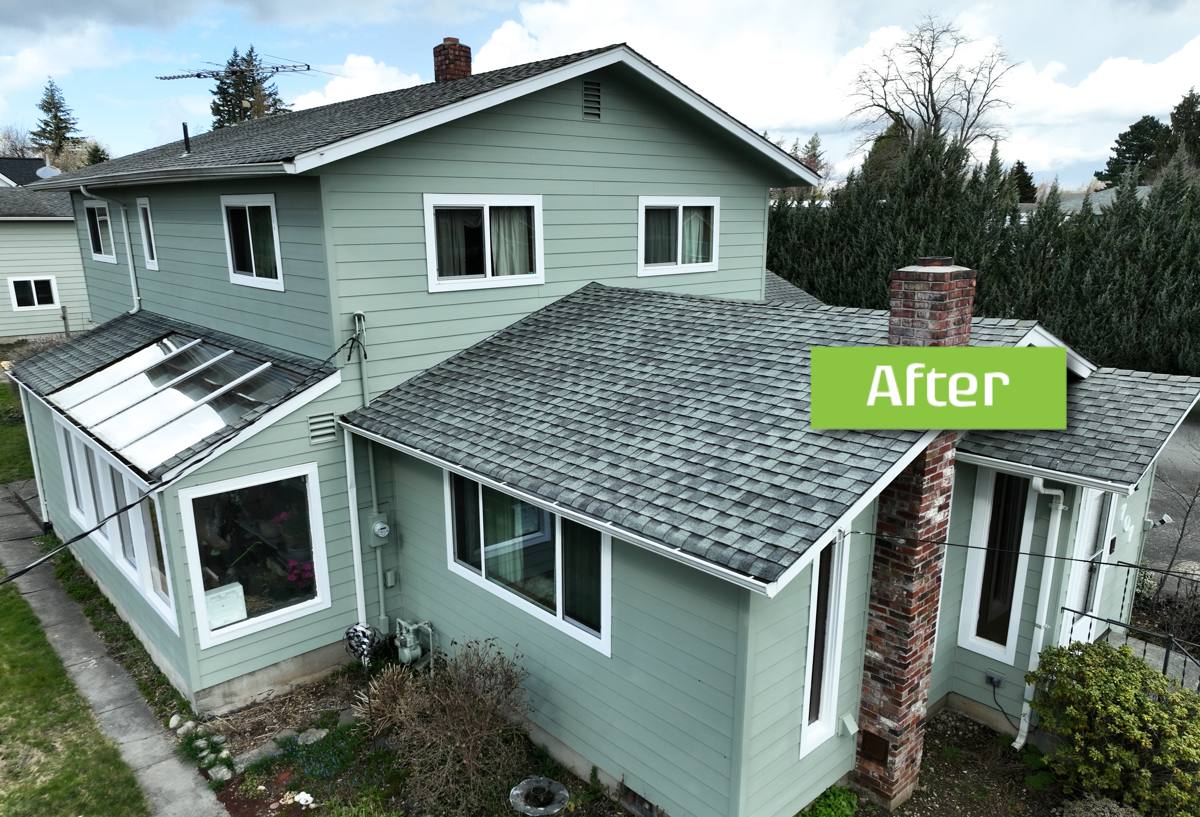
What Actually Counts as Storm Damage
Not every roof problem after a windstorm is "storm damage" in the way an insurance adjuster or an honest contractor means it. Being clear about the difference helps you know what you're dealing with before anyone climbs a ladder.
Wind Damage
Lifted, creased, or missing shingles; bent or torn metal panels; ridge caps pulled loose; and flashing that's been peeled back at an edge or valley. Wind damage tends to be localized — one exposed slope or corner takes the brunt of it while the rest of the roof is fine.
Water Intrusion
This is the damage you often can't see from the ground. Wind-driven rain can force water under shingles or through a compromised seam, and it may take days or weeks to show up as a stain on a ceiling or a musty smell in an attic. By the time it's visible inside, the roofing material and possibly the decking underneath have already been wet longer than they should be.
Impact Damage
Fallen branches and debris are common on a wooded lot like most of Doe Bay. Impact damage can range from a single cracked shingle to a punctured section that needs decking replaced, not just surface material.
How We Assess a Storm-Damaged Doe Bay Roof
We don't guess at what's needed from the driveway. A proper assessment after a storm involves:
- A full walk of the roof surface, not just the section that looks obviously damaged — wind damage often has a less visible secondary spot nearby.
- A close check of flashing at every penetration: chimneys, vents, skylights, and roof-to-wall transitions, since these fail before the field of the roof usually does.
- An attic and interior check for moisture staining, damp insulation, or soft decking, which tells us whether water has already gotten past the surface.
- Photo documentation of everything we find, dated and organized in a way that holds up if you need to file an insurance claim.
- A written explanation of what's damaged, what's simply worn, and what we'd recommend — in plain language, not a sales pitch.
Repair or Replace? How We Make That Call
A storm doesn't automatically mean a new roof, and a full replacement isn't automatically the safer choice either. The right call depends on the roof's age, how much of it is actually damaged, and what shape the rest of it is in.
| Situation | Typical Recommendation | Why |
|---|---|---|
| Isolated wind or impact damage on a roof under 10-12 years old | Targeted repair | Surrounding material still has useful life; a matched repair holds up fine |
| Storm damage on a roof already near the end of its expected lifespan | Replacement | A repair on old material is a short-term fix that will need redoing soon |
| Damage concentrated on one slope with strong wind exposure | Section repair or slope replacement | No need to redo the whole roof if the rest is sound and well-attached |
| Water intrusion with soft or delaminating decking | Repair including decking replacement | New shingles over compromised decking won't last regardless of surface quality |
| Widespread moss damage plus storm damage together | Replacement usually makes more sense | Moss-related wear is often more extensive underneath than it looks from above |
The Repairs We Do Most Often on Doe Bay Roofs
Asphalt Shingle Roofs
The most common repair is replacing wind-lifted or torn shingles and resealing tabs that have broken their adhesive bond. We match existing shingle color and profile as closely as the product line allows, and we always check the nailing pattern on surrounding shingles — under-driven or over-driven nails are usually why a section failed in the first place, and we correct that as part of the repair, not just swap the damaged piece.
Metal Roofs
Metal roofing holds up well against wind but is more sensitive to fastener and flashing issues near salt air. We re-torque or replace failed fasteners, reseal panel seams and penetrations, and inspect for early corrosion at cut edges and exposed screws — the spots where salt exposure shows up first.
Cedar Shake Roofs
Cedar is common on older island homes and needs a different eye. Storm and moss damage on cedar often means split or cupped shakes and compromised valleys. We replace individual shakes rather than treating the whole roof as a loss, as long as the underlayment and decking underneath are still sound.
Moss, Salt Air, and Long-Term Roof Health
A storm repair that ignores the conditions that caused the underlying wear doesn't do a Doe Bay homeowner any favors. Moss holds moisture against roofing material year-round in shaded areas, and over a long moss season that moisture works into seams, fastener holes, and shingle edges — exactly the spots that then fail first in a windstorm. Salt air does something similar to metal components, slowly corroding fasteners and flashing until they no longer hold a tight seal. As part of any repair, we look at whether moss growth or fastener corrosion contributed to the damage, and we'll tell you honestly if there's a maintenance step — clearing overhanging branches, adjusting flashing material, more frequent moss treatment — that would reduce the chance of the same failure next storm season.
Working Around Ferry Schedules and San Juan County Permitting
Getting materials and crews to Orcas Island isn't as simple as a mainland job — everything moves on a ferry schedule, and a specialty shingle color or metal panel run can take longer to source than it would in a city. We plan repair timelines around that reality up front instead of promising a turnaround we can't hit. For repairs that involve structural work or a full roof section replacement, San Juan County permitting may apply, and we handle that process as part of the job rather than leaving a homeowner to sort it out.
What a Storm Damage Roof Repair Costs
Every roof and every storm is different, so we won't quote a number without seeing the damage. But the factors that move the price are consistent, and it's worth understanding them before you get an estimate.
| Cost Factor | Effect on Price |
|---|---|
| Extent of damage (isolated vs. spread across multiple slopes) | Larger factor than any other single item |
| Roofing material (asphalt, metal, cedar shake) | Material and labor costs vary significantly by type |
| Decking condition underneath | Rot or water damage adds material and labor beyond surface repair |
| Roof pitch and access | Steep or hard-to-reach sections take longer and require more safety setup |
| Material availability and ferry lead time | Can affect timeline more than final cost, but rush sourcing can add expense |
| Insurance involvement | Documentation and claim coordination is included, not an added fee |
Small, isolated storm repairs are often a modest expense measured in a few hundred to a couple thousand dollars. Larger repairs involving decking replacement or a full slope can run several thousand. A full replacement is a different scope entirely, and we'll always tell you plainly which category your roof falls into once we've actually looked at it.
Why It Matters to Hire a Crew That Already Works Doe Bay
A contractor who only sees a Doe Bay roof once is working from a general playbook. A crew that regularly works this part of Orcas Island already knows which flashing details tend to fail near the water, which slopes take the worst of the prevailing wind, and how much moss buildup is normal versus a sign of a deeper moisture problem. That local knowledge shortens the assessment, sharpens the repair, and avoids the common mistake of treating a salt-air or moss-related failure as a simple wind repair and having it fail again the next season. It also means fewer surprises around scheduling — we already plan our material orders and crew time around ferry logistics instead of learning that constraint mid-job.
After the Storm: A Quick Checklist
If you've just been through a windstorm and aren't sure whether your roof needs attention, here's what to check from the ground and from inside your home before calling anyone:
- Look for shingles, shake pieces, or metal panel fragments on the ground or in gutters
- Check gutters and downspouts for granule buildup, which can indicate accelerated shingle wear
- Scan the roofline from a safe distance for obviously lifted, missing, or misaligned sections
- Check ceilings and attic spaces for new stains, damp insulation, or a musty smell
- Note any large branches or debris that came down near or on the roof
- Avoid climbing onto the roof yourself, especially on a wet or steep surface — this is where most storm-related injuries happen
- Take photos of visible damage from the ground for your own records if you plan to file an insurance claim
If any of this sounds familiar, the next step is a straightforward, no-pressure look at the roof rather than guesswork. We offer free estimates for Doe Bay homeowners dealing with storm damage — use the form below to tell us what happened and we'll get back to you with next steps.