 Orcas Island Siding
 Siding That Has to Work in a Marine Climate, Not Just Look Good
Friday Harbor sits in one of the more demanding climates in San Juan County for exterior building materials. Homes here deal with salt-laden air off the water, driving rain that comes in sideways during winter storms, and a long, damp moss season that can stretch from fall through spring. Siding that would hold up fine in a drier inland climate often starts showing problems within a few years out here — fading, swelling, soft spots, or a steady green film that never fully goes away. Getting siding right in Friday Harbor isn't about picking a material that looks nice on a sample board. It's about picking one engineered for exactly these conditions, installed by people who understand why the details matter.
This page focuses on one thing: fiber cement siding for Friday Harbor homes specifically. Not a general overview of siding options, and not a national product pitch — what this climate does to siding, what a correct installation actually involves here, and why we install James Hardie fiber cement and nothing else.
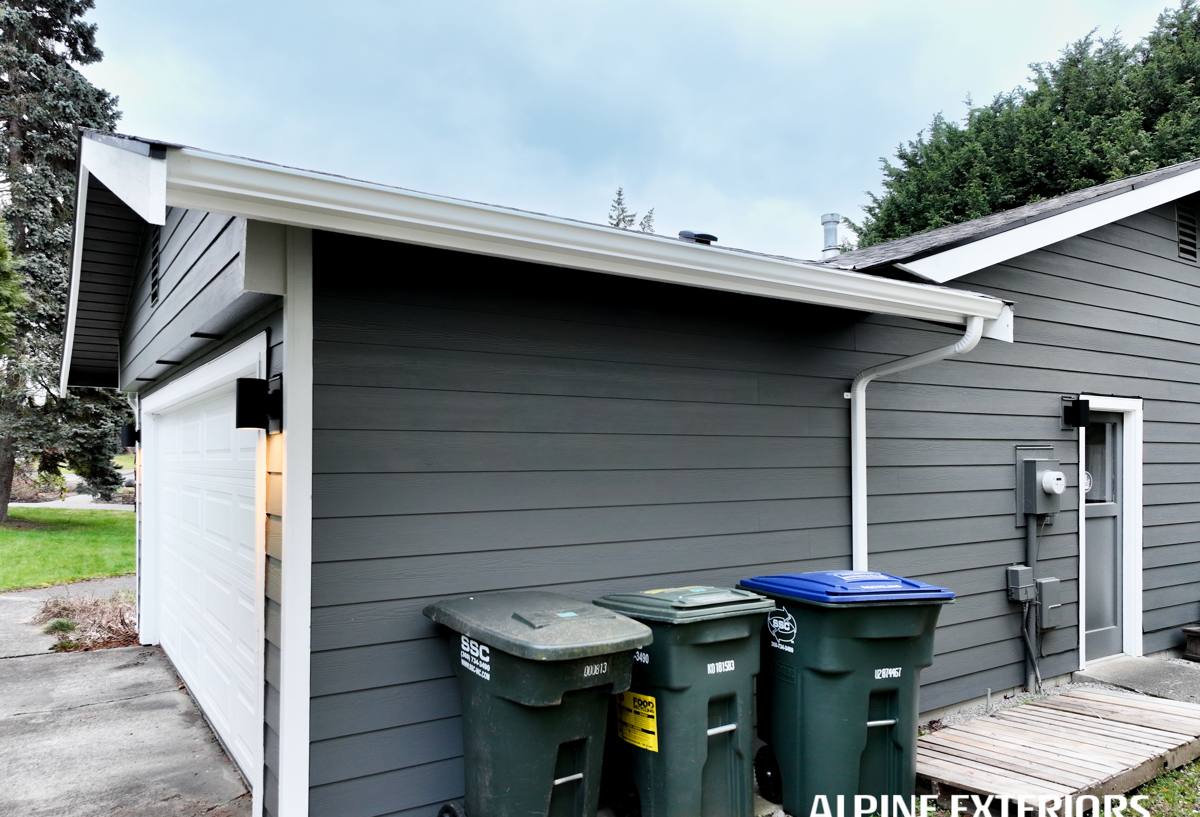
What Salt Air, Rain, and Moss Actually Do to a House
Salt Air
Airborne salt is corrosive and hygroscopic — it draws moisture out of the air and holds it against whatever surface it lands on. On siding, that means faster breakdown of paint films, accelerated corrosion of exposed fasteners and trim hardware, and a surface that stays damp longer after every rain or fog event. Materials that rely on a field-applied paint job for protection lose that protection faster near the water than they would twenty or thirty miles inland.
Driving Rain
San Juan County storms don't always come straight down. Wind-driven rain gets pushed sideways and upward into laps, seams, and butt joints — the exact places where a siding system either sheds water or lets it in. A material or installation that's only built to handle vertical rainfall will eventually let moisture behind the cladding, and once water gets behind siding on a house with limited summer drying time, it doesn't leave quickly.
Moss and Organic Growth
Shade, moisture, and mild temperatures are exactly what moss and algae need to establish themselves, and Friday Harbor has all three for a good part of the year. Organic growth on siding isn't just cosmetic — it holds moisture against the surface, which speeds up whatever deterioration is already happening underneath. Siding that resists moisture absorption in the first place gives moss less to hold onto and less damage to accelerate.
Why We Only Install James Hardie Fiber Cement
We made a standing decision as a company to install James Hardie fiber cement siding exclusively — not LP SmartSide, not vinyl, not other fiber cement brands like Cemplank or Allura, and not primed wood species like spruce or cedar. That's not a marketing position; it's a maintenance and durability call based on what actually holds up in this climate over time.
Non-Combustible, Cement-Based Composition
Fiber cement is made primarily from cement, sand, and cellulose fiber, which makes it non-combustible and dimensionally stable in ways wood-based and polymer-based sidings aren't. It doesn't swell the way engineered wood products can when they take on moisture at cut edges or panel seams, which is a real advantage in a climate where damp weather is the norm rather than the exception.
HZ5 Climate-Engineered Formulation
James Hardie manufactures its siding in different formulations for different climate zones under its HZ5® and HZ10® systems, tuning moisture resistance to what a region actually experiences. The Pacific Northwest falls under the HZ5 zone, engineered for the freeze-thaw cycles and sustained damp conditions typical of this coastline — this isn't a generic product sold the same way everywhere.
ColorPlus Factory Finish
Most Hardie siding we install carries the ColorPlus Technology factory finish — color baked on in a controlled environment through multiple coats, rather than paint rolled or sprayed on-site after installation. A factory finish holds up to UV and salt exposure longer than field-applied paint and comes with its own finish warranty, which matters directly in a marine environment where paint film breakdown is one of the first visible signs of trouble.
Warranty Backing
Hardie's product warranty is transferable to a new owner within its terms, which matters on the islands where turnover and vacation-home ownership are common. A warranty tied to a name-brand manufacturer with a long track record is worth more than one attached to a smaller or newer fiber cement competitor with less installed history to point to.
What a Correct Installation Actually Involves
Fiber cement siding is only as good as the installation behind it. A rushed or generic install can undercut even the best material, especially in a climate this unforgiving of shortcuts. A correct job on a Friday Harbor home includes:
- A drainable water-resistive barrier installed correctly behind the siding, lapped shingle-style so water is directed out and down, never trapped
- Proper flashing at every window, door, and roof-to-wall transition — the points where most siding failures actually start
- Correct fastener type, spacing, and penetration depth per Hardie's published installation specifications, not generic nailing patterns
- Minimum clearance maintained between siding and grade, decks, roof lines, and other hard surfaces to avoid wicking moisture
- Factory-cut or properly sealed field-cut edges, since an unsealed cut edge is where moisture intrusion most often begins
- Caulking used only where it belongs — sealing gaps in a way that traps water behind the siding does more harm than good
Skipping any one of these doesn't usually cause an immediate, visible problem. It shows up two, five, or ten years later as a soft spot, a stain, or a section that has to be opened up and redone — usually costing more than doing it right the first time would have.
Our Process for Friday Harbor Projects
- On-site assessment. We look at existing siding condition, moisture entry points, trim and flashing detail, and any areas showing rot, staining, or organic growth before quoting anything.
- Scope and product selection. We walk through Hardie board profiles, colors, and trim options relevant to the home's exposure — a west-facing wall catching prevailing wind-driven rain may warrant different detailing than a sheltered side.
- Tear-off and substrate check. Removing old siding lets us confirm sheathing condition and address any hidden moisture damage before it gets covered back up.
- Water-resistive barrier and flashing. This layer goes in correctly before a single piece of siding is hung — it's the part of the job nobody sees once it's finished, and the part that matters most.
- Installation to manufacturer spec. Fastening, spacing, and clearances follow Hardie's published requirements, which also keeps the manufacturer warranty intact.
- Final walkthrough. We review caulking, trim, and paint lines with the homeowner before calling the job complete.
Local Factors That Affect a Friday Harbor Siding Job
Working in San Juan County comes with logistics that don't apply to a mainland job. Materials, equipment, and crew often move by ferry, which means scheduling has to account for sailing times rather than just drive time. Homes on exposed waterfront or high-wind sites may need additional attention to flashing and fastening detail compared to a more sheltered inland lot on the same island. And because many Friday Harbor properties are seasonal or vacation homes, we're used to coordinating around owners who aren't on-site full time, communicating clearly and keeping the project moving without requiring someone to be standing over it.
Cost Factors on a Friday Harbor Fiber Cement Project
| Factor | Why It Matters Here |
|---|---|
| Exposure level | Waterfront or wind-exposed walls need more careful flashing and fastening detail than sheltered elevations, which affects labor time |
| Existing siding removal | Tear-off scope and any hidden rot repair under old siding vary widely and aren't fully known until removal begins |
| Board profile and trim complexity | Lap siding, panel systems, and detailed trim packages each carry different material and labor costs |
| Factory finish vs. field paint | ColorPlus prefinished siding costs more up front but removes an entire on-site painting phase and its own weather-dependent scheduling |
| Ferry and material logistics | Delivery scheduling around sailings can affect project timeline more than it affects the raw dollar cost |
| Access and staging | Steep, wooded, or waterfront lots common on the islands can require more setup time than a flat mainland lot |
Living With Fiber Cement Siding in This Climate
One of the practical advantages of fiber cement here is how little ongoing attention it needs compared to wood siding, provided it was installed correctly to begin with. That said, a marine climate still calls for basic upkeep:
- Rinse siding periodically to remove salt film and organic buildup, especially on north- and west-facing walls that stay shaded and damp longer
- Keep gutters clear so overflow isn't running down the siding face repeatedly
- Trim back vegetation and tree cover that keeps sections of the house shaded and slow to dry
- Watch caulked joints and touch up as needed — caulk is the one component that wears out well before the siding itself does
- Have flashing and trim checked periodically, since these are the first places a small problem shows up before it becomes a bigger one
None of this is heavy maintenance. It's the kind of routine attention that keeps a correctly installed Hardie system performing for decades in a climate that isn't gentle on building materials.
Why Hiring a Crew That Already Works the San Juan Islands Matters
Siding work on Friday Harbor and the surrounding islands isn't the same job as a mainland project with the same measurements. A crew that regularly works San Juan County already knows how to schedule around ferries, how to detail siding for wind and water exposure specific to island sites, and what this climate does to a house over years rather than months. That local track record shows up in fewer surprises during the job and a better outcome once the siding's been through a few winters.
If you're weighing siding options for a Friday Harbor home, we're happy to take a look and talk through what your specific site actually needs. Request a free, no-pressure estimate using the form below — there's no obligation, just a straight assessment of your home's siding.