 Orcas Island Siding
 Building New on Lopez Island? Your Windows Need to Handle the Island First
When you're framing a new home on Lopez Island, window selection and installation aren't just a checklist item before drywall goes up — they're one of the few building decisions that will directly determine how much maintenance you're doing ten and twenty years from now. San Juan County sits right in the path of salt-laden marine air, wind-driven rain off the Sound, and a long, damp moss season that keeps north and west-facing surfaces wet for months at a time. Windows installed correctly at the framing stage shed that moisture and keep salt air from working into fasteners and finishes. Windows installed carelessly — even good windows — become the reason for stained siding, soft framing, and callbacks a few years down the road.
New construction gives you an advantage a remodel doesn't: the wall is open, the sheathing is exposed, and there's still a chance to build the water management right the first time. That window closes once siding and trim go on.
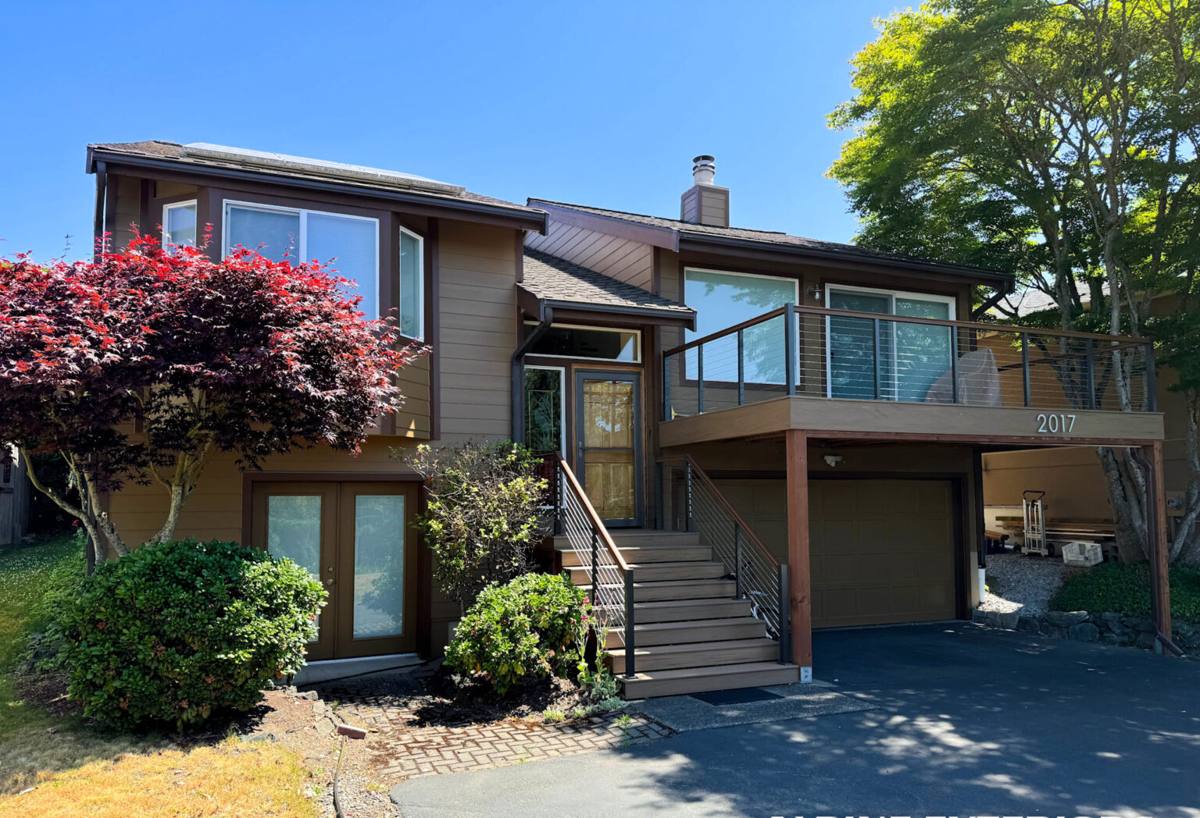
New-Construction Windows vs. Replacement Windows — Why the Method Matters
A lot of homeowners assume "new-construction window" just means a brand-new window box. It actually refers to the installation method. New-construction windows have a nailing fin (or flange) around the perimeter that gets integrated directly into the wall's water-resistive barrier during framing — before siding goes on. That's different from a replacement or "block frame" install, which fits inside an existing opening after the exterior finish is already in place.
On a fresh build, the nailing-fin method is almost always the right call. It lets us build a continuous drainage plane from the sheathing, through the flashing, and into the window itself, so any water that gets behind the siding has a clear path down and out — instead of pooling against the rough opening. Skipping steps here, or having a window installed by someone who's used to remodel work and treats a new build like a retrofit, is one of the most common ways a brand-new house ends up with a hidden moisture problem.
What Goes Wrong When It's Rushed
Most window failures we get called out to inspect on newer homes aren't product defects — they're installation shortcuts. Missing sill pans, house wrap taped over the fin instead of under it, fasteners driven at the wrong angle, or caulk used as a substitute for proper flashing instead of as a secondary seal. On a marine site like Lopez Island, those shortcuts show up faster because there's more moisture pressure on the wall to begin with.
What a Correct New-Construction Window Install Actually Involves
There's a sequence to this, and the order matters as much as the materials. Every step builds a layer of the drainage plane, and skipping or reversing one undoes the ones before it.
Sill Pan and Flashing First
Before a window ever goes in, the rough opening needs a sloped sill pan so any water that finds its way in has somewhere to go besides the framing below it. Flashing tape gets applied in a specific shingle-lap order — sill first, then jambs, then head — so water is always directed onto the layer below it, never up and under.
Integrating with the Weather-Resistive Barrier
The window's nailing fin has to be woven into the house wrap or building paper correctly: wrap taped over the top flange, tucked behind the sides. On a home exposed to driving rain off the water, this is the detail that decides whether wind-blown moisture stays outside the wall assembly or gets pushed behind it.
Fastening and Sealing
Fasteners go where the manufacturer specifies, not wherever is convenient, because that affects the window's structural and weather performance rating. Sealant is used at the right joints as backup protection — never as the primary defense against water intrusion.
- Sloped sill pan installed before the window, not caulked in as an afterthought
- Flashing tape applied in proper shingle-lap order (sill, jambs, head)
- House wrap integrated over the head flange and behind the jamb flanges
- Fasteners placed per manufacturer spec, not just "close enough"
- Interior and exterior sealant used as backup, not as the only water barrier
- Window checked for square, level, and plumb before final fastening
Choosing Materials for a Salt Air, High-Moisture Climate
Frame material matters more here than it would in a drier, inland climate. Salt air accelerates corrosion on hardware and fasteners, and constant damp conditions during moss season put extra stress on anything prone to swelling or rot. We'll walk through the trade-offs honestly rather than push one option — the right choice depends on your budget, your home's exposure, and how much maintenance you want to take on.
| Frame Material | Marine/Salt Air Behavior | Maintenance | General Cost Position |
|---|---|---|---|
| Vinyl | Doesn't corrode or rot; performs well in salt air | Low — occasional cleaning | Most affordable |
| Fiberglass | Very stable in moisture and temperature swings; strong long-term option for exposed sites | Low | Mid to upper |
| Wood-Clad | Exterior clad protects the wood, but any breach in the cladding lets moisture reach the wood underneath | Higher — watch seams and finish over time | Higher |
| Aluminum | Strong but conducts cold and can corrode near salt air without a quality finish | Moderate | Varies |
For most new builds on Lopez Island, we lean toward vinyl or fiberglass on exposed elevations because they hold up with the least fuss. Wood-clad windows can still be the right call for a specific look or interior finish preference — we just make sure clients understand the added upkeep that comes with them in this climate.
Meeting Washington State Energy Code on a New Build
New construction in San Juan County has to meet Washington State Energy Code requirements for window performance — U-factor and solar heat gain among them. Your local building department will confirm the specific numbers that apply to your project based on your home's overall energy path, but the short version is: the window spec sheet needs to match what's on your plans, and it needs to be verified before the inspector shows up, not after. We coordinate window specs with your plans and permit documents up front so there's no scramble at inspection time.
How We Handle New-Construction Window Projects on Lopez Island
Working on an island changes the logistics of a project even when the install work itself is straightforward. Materials, crews, and equipment all move by ferry, and weather windows for a driving-rain climate can be tighter than on the mainland. We plan around that instead of letting it become a surprise mid-project.
Our General Process
- Site visit and measurement once framing is ready, coordinated with your builder or general contractor's schedule
- Window spec review against your plans and county permit requirements
- Ordering with realistic lead times that account for island delivery, not mainland assumptions
- Install following the full flashing and drainage sequence — sill pan, tape, wrap integration, fastening
- Walkthrough with you or your builder before siding and trim close everything in
Why Hiring a Crew That Already Works Lopez Island Matters
A crew that only occasionally makes it out to the islands is working against a learning curve on your project — figuring out ferry timing, weather windows, and material logistics while your framing sits open. A crew that already works Lopez Island regularly has that part solved before they ever show up, which means less schedule risk for your build and fewer surprises for your general contractor.
Familiarity with San Juan County's building department and permitting expectations also matters. Knowing what documentation an inspector will want to see for window specs and energy compliance means fewer stop-and-start delays waiting on paperwork.
Living With New Windows Through Moss Season and Salt Air
Once your windows are in, a little seasonal attention keeps them performing the way they were designed to. Rinsing salt residue off frames and glass a few times a year, keeping weep holes clear of debris and moss buildup, and checking exterior sealant joints annually are simple habits that go a long way in this climate. A correctly installed window shouldn't need much beyond that — which is exactly the point of getting the installation right the first time.
If you're planning a new build on Lopez Island and want windows installed the right way from framing through final trim, we're happy to take a look at your plans and talk through options. Reach out for a free, no-pressure estimate using the form below.