 Orcas Island Siding
 Windows Take a Beating on Lopez Island
Lopez Island homes sit in one of the more demanding window environments in Washington. You've got salt-laden air coming off the water, long stretches of driving rain in the fall and winter, and a moss and mildew season that seems to start earlier and last longer every year. None of that is unique to any one property on the island — it's just what San Juan County weather does to a house, year after year, whether the home sits right on the shoreline or well back in the trees.
Windows are usually the first place that damage shows up. Wood sashes swell and stick. Aluminum frames pit and corrode. Seals fail early and fog up the glass. Caulk lines that looked fine five years ago crack and let water track behind the trim. By the time a homeowner notices a soft spot on the interior sill, there's a good chance moisture has already been working on the framing behind it for a while.
This page is about doing window replacement right for Lopez Island specifically — not a generic rundown of window shopping, but what actually matters for homes dealing with this climate and this island's logistics.
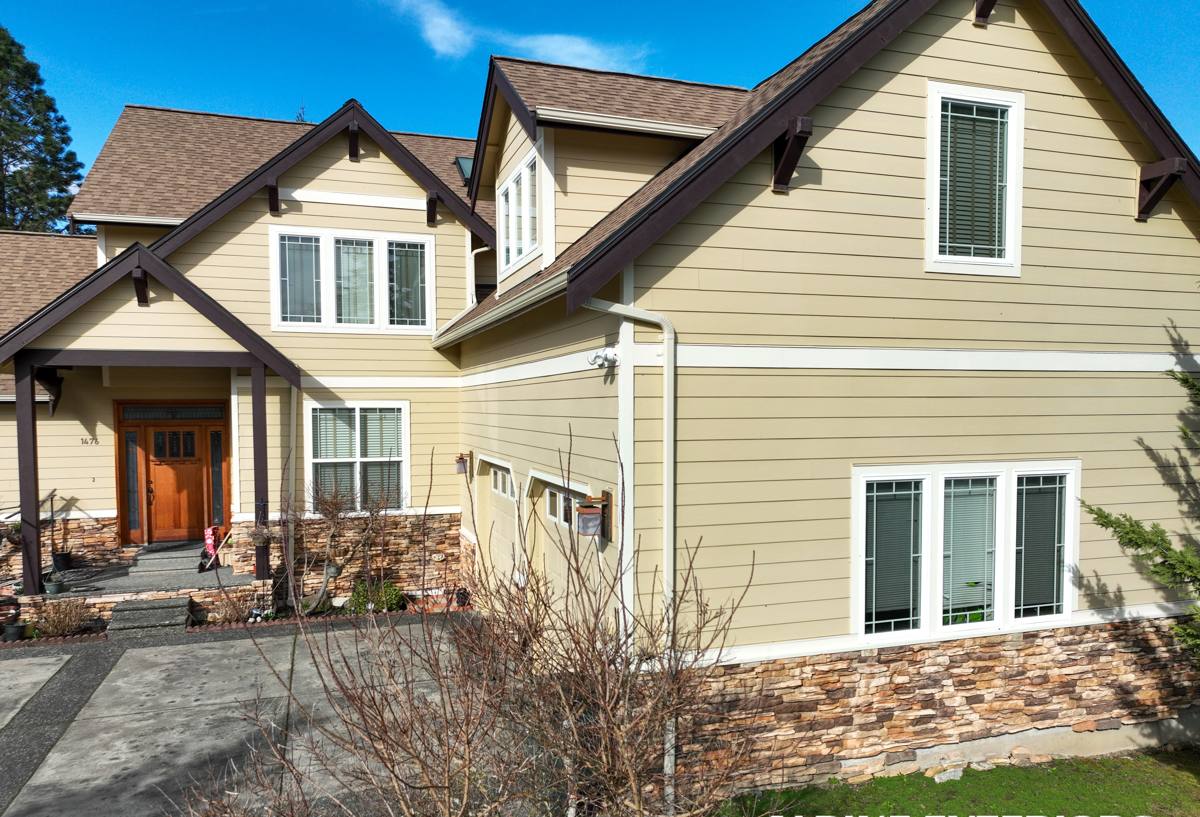
Signs a Lopez Island Home Needs Window Replacement
Not every old or drafty window needs full replacement — sometimes it's a repair job. But there are signs that point clearly toward replacement rather than patching, especially in a marine climate where moisture problems tend to be further along than they look from the outside.
- Fogging or a visible film between panes of double-glazed glass — the seal has failed and the gas fill is gone
- Wood trim or sills that feel soft, spongy, or show dark staining when pressed
- Windows that won't stay open, won't latch fully, or have visibly warped in the frame
- A persistent draft you can feel with your hand near the frame on a windy day
- Visible daylight or gaps around the frame from outside
- Paint that keeps failing in the same spot no matter how often it's repainted
- Noticeable condensation on the inside of the glass during cold, wet stretches
If you're seeing two or more of these on the same window, replacement is almost always the more cost-effective call than another repair cycle — repeated patch jobs on a failing frame tend to cost more over five years than one correct replacement.
What a Correct Window Replacement Actually Involves
The window unit itself only matters if the installation around it is done right. In a climate that gets driving rain off the water, the flashing and sealing details are what determine whether a window lasts fifteen years or fails again in five.
Removal and Opening Inspection
Every old window comes out down to the rough opening, and that opening gets inspected before anything new goes in. This is the point where hidden rot, soft framing, or old failed flashing gets found — and it needs to get found now, not after the new window is sealed in place on top of it.
Flashing and Water Management
A window opening has to shed water the way a roof does — top layer over bottom layer, so water moving down the wall never runs behind a seam. That means proper sill pan flashing, correctly lapped house wrap, and flashing tape at the head and jambs. This is the single most important part of the job and the part that's easiest to rush. It's also the part you can't see once the trim goes back on, which is exactly why it has to be done correctly the first time.
Air Sealing and Insulation
The gap between the window frame and the rough opening gets sealed with a proper low-expansion foam or backer rod and sealant — not just stuffed with fiberglass, which does nothing to stop air movement and can hold moisture against the frame.
Exterior Sealant and Trim
The exterior caulk joint is a maintenance item, not a permanent fix — it's the visible finish layer, not the water barrier. That distinction matters because a homeowner should never be relying on caulk alone to keep water out of a wall.
Choosing Window Materials for a Salt-Air Climate
Material choice matters more on Lopez Island than it would somewhere dry and inland. Salt air accelerates corrosion on some materials and speeds up UV and moisture breakdown on others. There's no single "best" window for every house — it depends on exposure, budget, and how the home is used — but here's how the common options actually hold up in this environment.
| Material | Salt Air / Moisture Behavior | Maintenance | Typical Fit |
|---|---|---|---|
| Vinyl | Doesn't corrode or rot; performs well near the water | Low — occasional cleaning | Most homes, best value |
| Fiberglass | Very stable in moisture and temperature swings; strong long-term performer | Low | Higher-exposure or waterfront homes |
| Wood | Classic look but needs a sound paint/finish system to resist moisture and mildew | High — regular repainting and inspection | Historic or character homes where appearance matters most |
| Wood-Clad | Exterior cladding shields the wood from weather; wood interior stays protected | Moderate | Homes wanting a wood interior look with less exterior upkeep |
| Aluminum | Prone to pitting and corrosion in salt air over time | Moderate to high | Generally not our first recommendation for island exposures |
We're not against any of these products as a category — we're against installing a material in a spot where the climate is going to fight it. On a home with direct water exposure, we'll usually steer a homeowner away from bare aluminum and unclad wood on the exterior face, simply because those are more maintenance and more risk in this specific environment, not because the product itself is bad.
Glass Package Matters Too
For this climate, we generally recommend dual-pane glass with a low-E coating and argon fill as the baseline, with a warm-edge spacer system to reduce condensation risk at the edge of the glass — that edge condensation is often the first place seal failures show up in a wet climate. Triple-pane is worth discussing for north-facing or particularly exposed rooms where comfort and condensation control matter most.
Our Process for a Lopez Island Job
Working on Lopez Island — or any of the outer San Juan County islands — means the job has to be planned around the ferry, not around a typical mainland schedule. That changes how we approach every project here.
- On-site assessment. We look at every window being discussed, check the openings for hidden moisture or rot, and talk through material and glass options that fit the home and its exposure.
- Written estimate. A clear scope and price range before anything is ordered — no surprises once material is on order.
- Material ordering and lead time planning. Windows are ordered to the exact opening sizes, and lead times get communicated up front, including how ferry scheduling affects delivery.
- Trip consolidation. Because every crossing costs time, we plan crew days, tools, and materials to arrive together and get the full scope done in as few trips as possible — this keeps your home from sitting half-open longer than it needs to.
- Installation. Removal, opening inspection, flashing, window setting, insulation, and exterior sealant and trim, done to the standard described above on every unit.
- Walkthrough. We check operation, look, and seal on every window with you before calling the job finished.
Why an Island-Familiar Crew Matters Here
A contractor who mainly works the mainland and treats Lopez Island as an occasional side trip is working at a real disadvantage, and that disadvantage usually shows up in the homeowner's schedule and budget. Ferry timing isn't flexible, weather windows on the water can close a crossing on short notice, and a crew that hasn't planned around that will either run late or run up costs re-scheduling trips.
There's also a building-stock factor. Homes on Lopez Island and the surrounding islands run the gamut from older farmhouses with original wood windows to newer construction built to modern energy codes, and a lot of them have been through at least one prior renovation with mixed results. A crew that regularly works these islands has seen the common failure patterns — where water tends to get in on a shoreline-facing wall, how moss and mildew behave on north-facing trim, which older opening types need extra framing attention — and plans for it instead of discovering it mid-job.
Practically, working with a crew already set up for island logistics means fewer delays, fewer surprise trip charges, and a realistic timeline set from the start instead of one that assumes mainland conditions.
Living With New Windows in This Climate
New windows installed correctly will hold up well here, but "install and forget" isn't realistic in a marine climate. A little seasonal attention keeps them performing and keeps small issues from becoming big ones.
- Rinse salt residue off exterior frames and glass periodically, especially on homes with direct water exposure
- Check exterior caulk lines once a year — caulk is a wear item and will eventually need touch-up, even on a correctly installed window
- Keep gutters and downspouts clear so water isn't sheeting down the wall above a window during heavy rain
- Wipe down interior sills during the wet season to catch condensation before it sits and stains wood
- Trim back vegetation or moss buildup near window trim — trapped moisture against wood is what accelerates rot
- Operate every window at least a few times a year, even ones you rarely open, so hardware doesn't seize
What Window Replacement Costs on Lopez Island
Costs vary by opening size, material, glass package, and how many windows are done in one trip — and island jobs have a logistics factor mainland jobs don't. Here are the broad factors that move the number, without pretending to give you an exact price sight unseen.
| Cost Factor | Why It Matters |
|---|---|
| Material choice | Vinyl is generally the most budget-friendly; fiberglass and wood-clad cost more but suit higher-exposure spots |
| Number of windows in one visit | Consolidating a full-house project into one trip spreads ferry and travel costs across more units |
| Opening condition | Rot or framing repair found during removal adds time and material beyond the window itself |
| Glass package | Triple-pane and specialty coatings cost more than a standard dual-pane low-E unit |
| Trim and exterior finish work | Matching existing trim profiles or repainting disturbed siding adds labor |
| Access and site conditions | Second-story, tight, or hard-to-reach openings take more time to stage and complete safely |
As a general rule, doing several windows in one project is more cost-effective per window than replacing them one or two at a time over several years — both because of shared trip and setup costs, and because it's one consistent installation standard across the whole house instead of several different jobs over time.
Get a Free Estimate
If your Lopez Island home has windows showing their age — fogged glass, sticking sashes, drafts, or soft trim — it's worth having a local crew take a look before another wet season adds to the damage. Fill out the form below for a free, no-pressure estimate, and we'll walk the openings with you and lay out honest options for your home and budget.