 Orcas Island Siding
 Why Mountain Lake Siding Takes a Different Kind of Beating
Homes in the Mountain Lake area of Orcas Island sit in a different microclimate than the open waterfront properties closer to Eastsound or the island's other shoreline communities. The heavier tree cover and higher, wooded setting mean more shade, slower drying after a storm, and a moss season that runs longer here than it does on more exposed, wind-swept lots. Add in the salt-laden air that moves through San Juan County off the surrounding water, along with the driving, wind-pushed rain that shows up every fall and winter, and you get a combination that is genuinely hard on exterior materials.
We see the pattern often: siding that cups or delaminates at the bottom courses, moss and algae creeping up from grade, caulk joints that failed years before the material behind them did, and paint that's peeling even though the substrate underneath still looks sound. None of that is unavoidable. It's almost always a sign that the material, the installation detail, or both weren't matched to what a shaded, moisture-heavy setting like this actually demands.
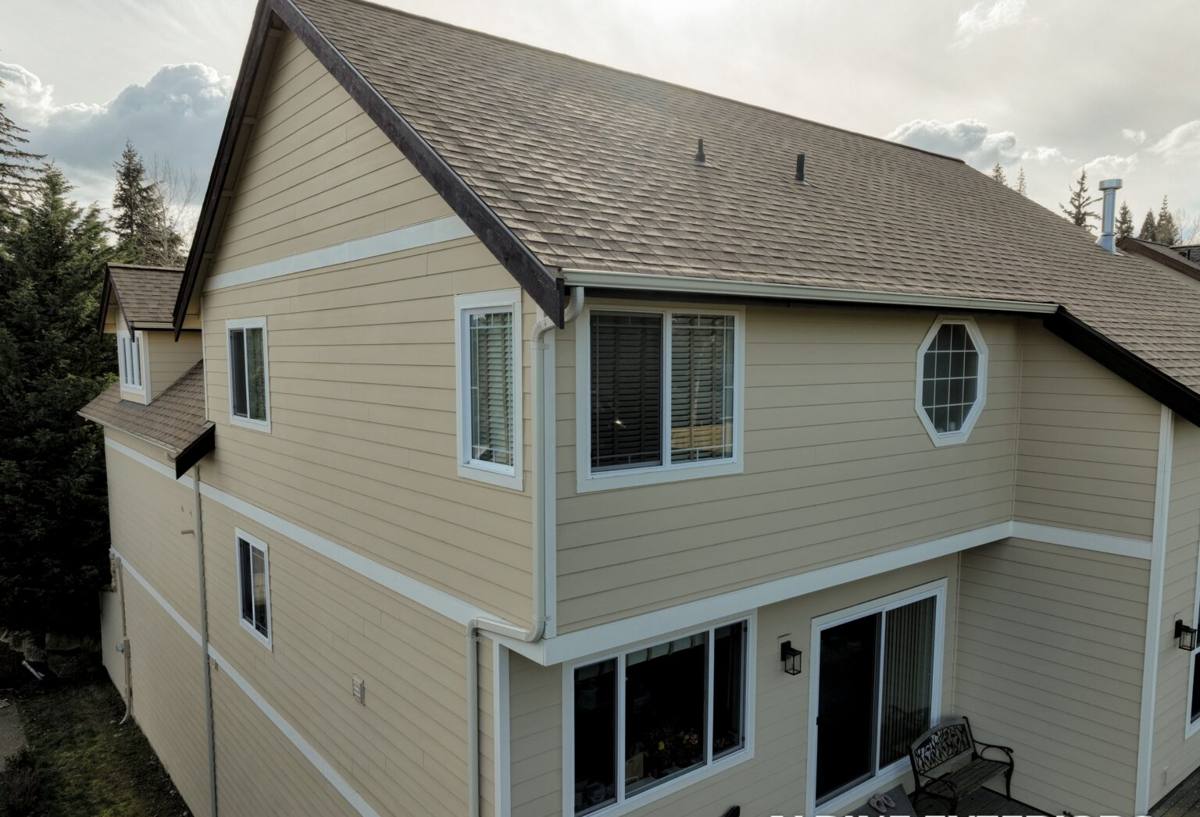
What Siding Has to Get Right in This Setting
Moisture Needs Somewhere to Go
In a low-sun, high-shade environment, the siding assembly spends more time wet than it would on an open, breezy lot. That means the water-resistive barrier, the drainage plane behind the siding, and the flashing details at windows, doors, and trim all matter more here than they would on a drier property. A siding job that looks fine on day one but traps moisture behind it will show problems within a few seasons, not decades.
Moss and Algae Resistance Isn't Optional
Shaded, damp siding grows moss. That's true of almost any exterior material eventually, but some products resist it — and stay cleanable — far better than others. A factory-applied finish that's engineered to shed moisture and resist mildew growth buys real time before a homeowner has to think about pressure washing, re-caulking, or repainting.
Salt Air Attacks Fasteners and Finishes
Salt in the air accelerates corrosion on fasteners and trim, and it breaks down lower-quality paint and coatings faster than inland conditions would. The fastener schedule, the trim material, and the finish system all need to be chosen with that in mind, not just the siding panel itself.
Why We Install Only James Hardie Fiber Cement
We don't install vinyl, LP SmartSide, Cemplank, Allura, primed spruce, or raw cedar — not because those products don't have a place in the market, but because after years of doing exterior work in this climate, we standardized on one system we can stand behind for every job. James Hardie fiber cement is non-combustible, holds up to the wet-dry cycling this area sees, and comes with a factory-applied ColorPlus finish that's built to resist fading and moisture damage better than field-applied paint. That consistency matters when a house is going to sit in salt air and shade for the next several decades.
Here's an honest look at how the main options compare for a setting like Mountain Lake:
| Material | Moisture behavior | Moss/salt-air resistance | Long-term maintenance |
|---|---|---|---|
| Vinyl | Sheds water but can trap moisture behind it if installed loosely; warps under heat | Moss grows on its surface like anything else; doesn't hold a repaint well if it fades | Low upfront, but limited repair or refinish options once damaged |
| Cedar (untreated or primed) | Absorbs and releases moisture; needs a drainage gap and diligent finish maintenance | Naturally prone to moss and mildew in shade without regular treatment | Highest ongoing maintenance — refinishing on a repeating cycle |
| LP SmartSide / OSB-based | Engineered wood core is moisture-sensitive if the finish or flashing fails | Performs reasonably when detailed well, but failure points are less forgiving | Moderate; failures tend to be harder to spot early |
| James Hardie fiber cement | Dimensionally stable, doesn't rot or swell from moisture the way wood-based products can | Factory finish engineered for moisture and fade resistance in coastal climates | Lowest long-term maintenance when installed to spec |
Every product on that list can be installed correctly or incorrectly. Our decision to install only Hardie comes down to wanting one system, one warranty structure, and one set of installation standards we can guarantee across every home we touch — including the ones tucked into shaded, moisture-heavy pockets like Mountain Lake.
Which Hardie Products Fit a Shaded, Damp Property
James Hardie engineers its siding by climate zone, and homes in this part of Washington fall into the HZ5 category built for wetter, more humid conditions. For a Mountain Lake property, that typically means:
- HardiePlank lap siding for the primary wall surfaces, in a HZ5 formulation suited to the Pacific Northwest's moisture cycle
- HardieTrim boards at corners, window and door surrounds, and fascia, to keep a consistent, factory-finished look at every transition
- HardiePanel vertical siding where a home's design calls for board-and-batten or accent sections
- ColorPlus factory finish across all of it, so the color and coating are baked on under controlled conditions rather than relying on field-applied paint holding up in salt air and shade
The specific plank exposure, trim profile, and color come down to the individual home's design and the homeowner's preference — but the underlying product line stays the same because it's the one built for this exact moisture and salt exposure.
What a Correct Installation Actually Involves
Site Assessment and Tear-Off
Before anything comes off the wall, we look at what's underneath the existing siding — sheathing condition, any signs of past water intrusion, and how the home is currently flashed at windows, doors, and roof-to-wall transitions. On a shaded, damp lot, this step catches problems that a quick surface look would miss.
Water-Resistive Barrier and Drainage
We install a proper water-resistive barrier with a drainage gap behind the siding, so any moisture that does get past the outer layer has a way out instead of sitting against the sheathing. This is one of the details that separates a siding job that lasts from one that fails from behind, invisibly, for years.
Flashing, Fastening, and Clearances
Every window, door, and penetration gets flashed to shed water downward and outward, not into the wall. Fasteners follow Hardie's specified schedule for the HZ5 product line, and we keep the manufacturer's required clearance between the bottom of the siding and grade, decking, or roof lines — a detail that's frequently skipped and one of the most common causes of early rot and moss buildup we see on older installs.
Caulking and Finish Detail
Because the ColorPlus finish is factory-applied, our fieldwork focuses on sealing joints correctly with a compatible caulk, painting only cut edges as specified by Hardie, and making sure trim transitions are tight. Sloppy caulk work is one of the fastest ways a well-built system starts to look — and perform — like a cheap one.
Signs Your Current Siding Is Already Losing the Battle
If you're deciding whether it's time to look at re-siding a Mountain Lake home, these are the warning signs worth taking seriously:
- Moss or dark streaking that returns within months of being cleaned off
- Panels or boards that feel soft, spongy, or visibly cupped
- Paint that's peeling or bubbling rather than just fading
- Caulk joints that are cracked, shrunken, or missing at trim and window edges
- Visible gaps or rot at the bottom courses near grade or decking
- Rising heating bills or drafts that suggest the wall assembly behind the siding isn't sealed anymore
Any one of these on its own might just need a repair. Several at once usually means the underlying assembly, not just the surface, is compromised.
Living With Fiber Cement in a Moss-Prone Environment
Even the best siding system benefits from a little upkeep in a setting like this. A yearly rinse with a garden hose (not a high-pressure washer aimed directly at seams) keeps moss and organic buildup from taking hold. Keeping gutters clear and trimming back vegetation that shades and dampens the wall line will do more for long-term siding health than almost anything else a homeowner can control. Because the finish is factory-applied and baked on, it holds color and resists staining far longer than a field-painted surface would — but it's still worth a visual check each year for caulk lines and clearance at grade, especially after a hard winter.
Why Hiring a Crew That Already Works Mountain Lake Matters
Working on Orcas Island isn't the same as working on the mainland. Material deliveries and crew scheduling have to account for ferry timing, weather windows for exterior work are tighter, and the permitting and inspection process runs through San Juan County rather than a mainland municipality. A crew that already does this work here knows how to plan a project so it isn't derailed by a missed ferry or a stretch of bad weather, and knows what the local inspection process actually expects. That local familiarity translates directly into fewer surprises and a tighter, better-sequenced job for the homeowner.
What Affects the Cost of a Mountain Lake Siding Project
Every home is different, but these are the factors that typically move the price on a project like this:
| Factor | Why it matters |
|---|---|
| Tear-off and substrate condition | Hidden rot or water damage found during tear-off adds repair scope before new siding can go on |
| Home size and wall complexity | More corners, gables, and trim transitions mean more labor and material cuts |
| Access and site logistics | Steep or wooded lots common around Mountain Lake can affect staging, scaffolding, and material handling |
| Ferry and delivery scheduling | Material timing has to account for ferry runs, which affects project sequencing more than on the mainland |
| Trim and accent detail | Board-and-batten accents, custom trim widths, or multiple colors add labor beyond a straightforward lap-siding job |
We don't quote a number without seeing the specific home — anything else would just be a guess. What we can say honestly is that Hardie's material and labor costs sit above vinyl and often above cedar upfront, and below it over the life of the siding once you account for maintenance and repainting cycles most other materials require.
If your Mountain Lake home is due for new siding, or you're not sure whether what's on the walls now still has a few good years left, we're happy to take a look. There's no cost and no pressure — just an honest assessment from a crew that already knows this part of Orcas Island, and a straightforward quote if you decide to move forward. The form below is the easiest way to get started.