 Orcas Island Siding
 Why North Beach Roofs Wear the Way They Do
Homes along North Beach sit close enough to the water that salt-laden air is a constant, low-grade stressor on every exposed material. Combine that with the driving, wind-blown rain that comes through this part of Orcas Island in the fall and winter, plus a moss season that can stretch for the better part of the year in shaded spots, and you get roofs that age differently than a roof in a drier inland climate. It's rarely one dramatic failure. It's fasteners corroding a little faster, granule loss showing up a little sooner, and moss finding a foothold in valleys and north-facing slopes that never quite dry out between storms.
That combination doesn't mean North Beach roofs fail early across the board. It means the margin for a mediocre installation is smaller here than it is elsewhere in San Juan County. A roof that's slightly under-ventilated, slightly under-flashed, or finished with the wrong fastener hardware will show its weaknesses on this coastline years before it would somewhere drier and calmer.
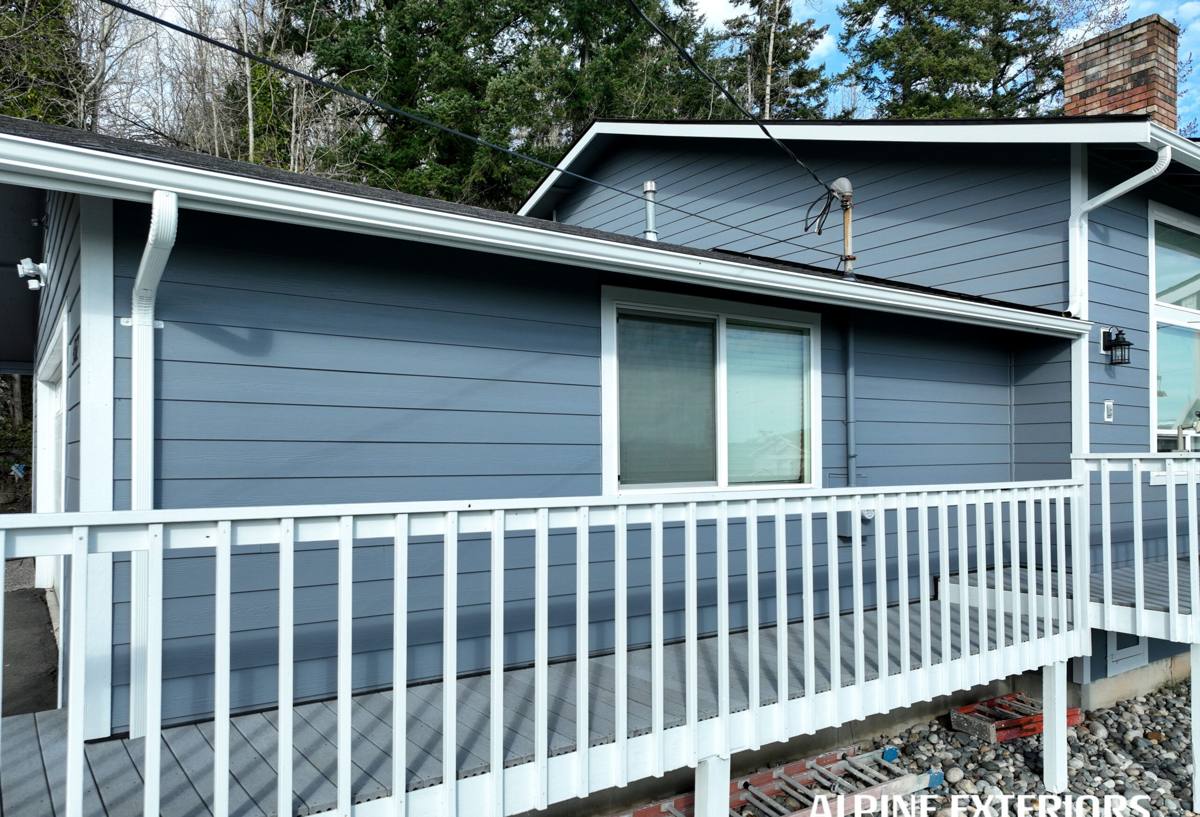
Signs a North Beach Roof Has Reached Replacement, Not Repair
Not every roofing issue on a North Beach home means a full tear-off. But there's a point where patching stops making financial sense and a full replacement becomes the honest recommendation. Some of the clearer signals we look for:
- Granule loss heavy enough that you can see bare, shiny patches on multiple shingles, not just a few isolated spots
- Moss or algae that keeps returning within a season or two after cleaning, especially on shaded or north-facing slopes
- Soft or spongy decking felt underfoot during an inspection, which usually means moisture has already gotten past the shingles
- Rusted, lifting, or missing flashing around chimneys, skylights, and roof-to-wall transitions
- Shingles that are curling, cracking, or losing their seal in more than one section of the roof
- Interior staining on ceilings or in the attic that tracks back to a roof source rather than plumbing or condensation
- A roof already past 20-25 years of age in an asphalt shingle system, which is close to the realistic end of service life in this exposure
If a roof is showing two or more of these at once, repair budgets start to compete with replacement costs anyway, and a full replacement usually ends up being the better long-term value.
Choosing a Roofing System for This Exposure
There's no single "right" material for every North Beach home — it depends on the roof's pitch, how exposed it is to wind and salt spray, and what the homeowner wants to maintain long-term. Here's how the common options compare for this specific coastal, moss-prone setting.
| Material | Moisture & Moss Behavior | Maintenance Burden | Typical Lifespan Here |
|---|---|---|---|
| Architectural asphalt shingle | Good when paired with proper ventilation; algae-resistant granules help but don't eliminate moss risk in shaded areas | Low to moderate; periodic moss treatment recommended | 20-30 years |
| Standing seam metal | Sheds moisture fast, very little surface for moss to grip; strong wind and salt-air performance | Low; occasional fastener and sealant checks | 40-50+ years |
| Cedar shake | Attractive but holds moisture longer in shaded, damp conditions; needs active moss and mildew management | High; regular cleaning and treatment required | 20-25 years with diligent upkeep |
| Synthetic composite shingle | Resists moisture absorption well; performs consistently in salt air | Low | 30-50 years depending on product line |
We're upfront with North Beach homeowners about cedar shake specifically: it can look great, but in a climate with this much sustained moisture and shade, it asks for a maintenance commitment that a lot of owners underestimate at the time of installation. If someone wants that look and understands the upkeep, we'll install it correctly. If low maintenance is the priority, metal or a quality synthetic composite is usually the more honest recommendation for this exposure.
Asphalt Shingle Grade Matters More Here
Within asphalt shingles, the difference between a builder-grade product and a heavier architectural laminate shingle shows up faster in a coastal, high-moisture environment. Thicker shingles with algae-resistant granules and a stronger wind rating hold up better against the combination of driving rain and salt exposure that North Beach gets more of than inland parts of the island.
What a Correct Roof Replacement Actually Involves
A roof replacement is more than stripping old shingles and laying new ones. On a coastal roof like this, the details underneath the surface are what determine whether the new roof lasts its full expected life or starts showing problems in year eight.
Tear-Off and Deck Inspection
Full tear-off lets us see the actual condition of the roof deck, not guess at it. Any soft, delaminated, or water-damaged sheathing gets replaced before anything new goes down. Skipping this step to save time is one of the most common ways a "new roof" fails early.
Underlayment and Ice-and-Water Protection
Given how much wind-driven rain this coastline sees, we pay particular attention to underlayment quality and to installing self-adhering waterproof membrane at eaves, valleys, and around every penetration — chimneys, vents, skylights. This is the layer that protects the deck if wind pushes rain up under the shingles, which happens more often here than in calmer inland areas.
Flashing
Flashing failures are one of the top causes of leaks on older North Beach roofs. Correct replacement means new flashing at every transition — not just caulking over what's already there. Salt air accelerates corrosion on lower-grade metal flashing, so material choice matters as much as installation technique.
Ventilation
Proper intake and exhaust ventilation keeps the attic space dry and temperature-balanced, which directly affects how long shingles last and how much moss and moisture build up on the underside of the roof deck. A lot of moss and premature aging issues we see on North Beach roofs trace back to a roof that was re-shingled without correcting inadequate ventilation underneath.
Fasteners and Hardware
In a salt-air environment, fastener quality is not a place to cut corners. We use corrosion-resistant nails and hardware rated for coastal exposure rather than standard-grade fasteners that can start rusting within a few years this close to the water.
Our Process, Start to Finish
Every North Beach roof replacement follows the same sequence, adjusted for the specific roof:
- On-site inspection and honest assessment of whether repair or full replacement is the right call
- Written estimate covering material options, scope of work, and a realistic timeline
- Scheduling around the weather window, since Orcas Island's wet season narrows the days available for dry tear-off and install
- Full tear-off and deck inspection, with any needed sheathing repair priced and approved before proceeding
- Installation of underlayment, ice-and-water membrane, flashing, and the chosen roofing material
- Ventilation check and correction if the existing system is inadequate
- Final walkthrough with the homeowner and full site cleanup, including magnetic sweep for stray fasteners
We don't start a tear-off without a confident weather window to get the roof dried in the same day. On a coastal roof, an overnight exposure to unexpected rain is exactly the kind of risk a careful crew plans around rather than gambles with.
Timing the Work Around Island Weather
San Juan County's wet season limits the practical window for a tear-off-to-completion roof replacement. Late spring through early fall generally offers the most reliable stretch of dry days, though we do work outside that window when a forecast supports it. Homeowners planning ahead for a North Beach roof replacement get the most flexibility by starting the estimate and material selection process before the roof is in urgent condition, rather than scheduling reactively after a leak shows up mid-winter.
Why Hiring a Crew That Already Works North Beach Matters
North Beach comes with practical realities that don't apply everywhere on Orcas Island — narrower access in some spots, ferry-dependent material and dumpster logistics, and a microclimate that's noticeably damper and more wind-exposed than more sheltered parts of the island. A crew that already works this area on a regular basis has that logistics work figured out ahead of time: material delivery timed to ferry schedules, dumpster and staging plans that fit the site, and a working knowledge of how San Juan County's permitting process applies to roofing work here.
More importantly, a crew with real North Beach experience has already seen how different materials and installation details hold up in this specific exposure — not a generic coastal environment, but this one. That's the kind of judgment that shows up in the flashing detail around a chimney, the fastener spec, or the recommendation on whether a given roof really needs a ridge vent upgrade. It's not something a contractor coming from a drier, calmer part of the region gets right by default.
Get a Straight Answer on Your Roof
If your North Beach roof is showing its age — moss that keeps coming back, granule loss, or a leak that's already started — the most useful next step is a straightforward, on-site look, not a guess from a photo. We'll tell you honestly whether repair still makes sense or whether replacement is the better long-term move, and what that would actually involve for your specific roof. Reach out below for a free, no-pressure estimate.