 Orcas Island Siding
 Obstruction Pass sits on the exposed southeastern edge of Orcas Island, where the water is close, the wind has a clear run at the house, and the trees hold moisture in the air long after a storm has passed. Homes here take a different kind of beating than a house tucked into a sheltered inland lot elsewhere on the island. If your siding is chalking, cupping, staining green, or letting water find its way behind the trim, it's not bad luck — it's the address. Replacing it correctly, with a material actually built for this exposure, is one of the few home improvements out here that pays for itself in avoided repair calls.
Why Obstruction Pass Is Hard on Siding
San Juan County's marine climate is mild compared to most of the country, but "mild" doesn't mean easy on a house. Three things compound here specifically:
- Salt air: Airborne salt from Rosario Strait and the surrounding waters settles on exterior surfaces daily. It accelerates the breakdown of coatings, corrodes exposed fasteners, and works into any seam or crack in siding that isn't sealed properly.
- Driving rain: Storms coming off the water don't fall straight down — wind pushes rain sideways into wall assemblies, seams, and lap joints. Siding that isn't installed with the right overlaps, flashing, and gaps will eventually let that water in, no matter how good the paint looks.
- A long moss season: Shade from the surrounding evergreens, combined with near-constant fall-through-spring moisture, keeps north-facing and shaded walls damp for months at a time. That's exactly the environment moss and algae need to take hold, and once established on organic or moisture-sensitive siding, it holds water against the wall and speeds up rot underneath.
None of these factors are dramatic on their own. Together, over years, they're why siding that looks fine on a spec sheet in a showroom often underperforms on an actual Obstruction Pass lot.
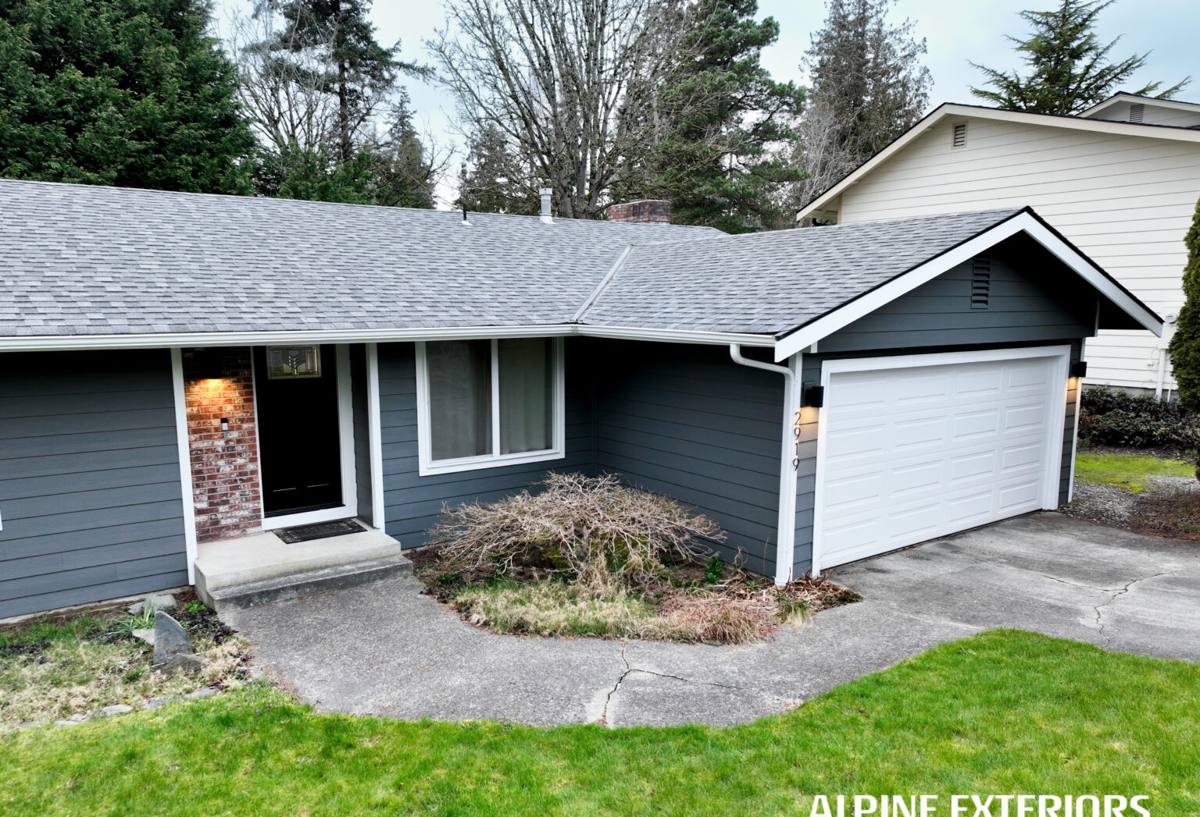
What Correct Siding Replacement Actually Involves
Replacing siding is not just stripping off the old material and nailing up new panels. Done right, it's a system — and skipping steps is where most future callbacks come from.
Tear-Off and Inspection
Once the old siding is off, the sheathing underneath gets inspected for soft spots, water staining, or rot — especially around windows, doors, and any place where trim meets wall. This is the one point in the whole project where hidden damage is visible and fixable before it's covered back up. On homes near the water, we routinely find moisture damage around old, poorly flashed penetrations that never showed on the surface.
Weather-Resistive Barrier and Flashing
A correctly lapped weather-resistive barrier, properly integrated window and door flashing, and rainscreen or drainage space where called for are what actually keep wind-driven rain out of the wall assembly. The siding itself is the second line of defense, not the only one. This step matters more on an exposure like Obstruction Pass than almost anywhere else on the island.
Installation to Manufacturer Spec
Fastener spacing, joint treatment, clearance from grade and roof lines, and caulking at penetrations all have to follow the manufacturer's published instructions to keep the product warranty valid — and, more importantly, to actually perform as designed. This is where installation quality matters as much as the material itself.
Why We Only Install James Hardie Fiber Cement
We don't install vinyl, LP SmartSide, cedar, primed spruce, or other fiber cement brands like Cemplank or Allura. That's a deliberate standard, not a sales pitch, and here's the reasoning as it applies specifically to a salt-air, high-moisture site like this one:
- Non-combustible core: Fiber cement doesn't feed a fire the way wood-based products can, which matters on a wooded island with limited fire department response distances.
- Moisture-stable composition: Hardie's fiber cement doesn't swell, delaminate, or absorb water the way engineered wood products can when a caulk joint fails or a flashing detail gets missed — which happens on every real job site eventually, no matter how careful the crew.
- Factory-applied ColorPlus finish: The color is baked on in a controlled factory environment rather than field-applied, which gives it far better adhesion and UV resistance against salt-laden air than a job-site paint job.
- HZ5 climate-engineered product line: Hardie manufactures region-specific formulations, and the HZ5 line is engineered for the Pacific Northwest's combination of moisture and freeze-thaw cycling rather than a generic national spec.
- Transferable, long-term warranty: A strong non-prorated warranty period backed by a large manufacturer with decades in the fiber cement category, and it transfers to the next owner if you sell — which matters for resale confidence on a waterfront or near-waterfront property.
Vinyl is affordable and low-maintenance in dry climates, but it expands and contracts more with temperature swings and can become brittle over time, with seams that are more likely to let wind-driven rain behind the panel. LP SmartSide and cedar both perform well when perfectly maintained, but they're wood-based, meaning any coating failure or unsealed cut edge is an entry point for the moisture this area has in abundance. Other fiber cement brands may be reasonable products, but we've standardized on Hardie because of its manufacturing consistency, regional engineering, and the strength of its warranty program — and standardizing on one system means our crews install it correctly every time instead of relearning specs across five different products.
Moss, Algae, and Shaded Walls
On heavily shaded lots — common where tree cover comes close to the house — north and east-facing walls stay damp longest and are where moss and algae growth shows up first. Fiber cement doesn't feed organic growth the way wood-based siding can, but no exterior surface is immune to moss taking hold when it's constantly wet and shaded. A few things reduce the problem regardless of material:
- Keeping tree limbs and brush trimmed back from walls so surfaces can dry between rain events
- Making sure gutters and downspouts are actually directing water away from siding, not dumping it against a wall
- Rinsing shaded walls periodically rather than letting growth establish and spread
- Correct rainscreen/drainage detailing behind the siding so moisture that does get in can actually escape
Cost Factors for This Project
Every quote is specific to the house, but the factors that move the number up or down are consistent. We give straightforward, honest estimates — no invented pricing, just what actually drives cost on a project like this.
| Factor | Why It Matters |
|---|---|
| Extent of tear-off and old material | Multiple layers, hidden rot, or asbestos-era siding add labor and disposal time |
| Sheathing and framing condition | Water damage found during tear-off requires repair before new siding goes on |
| Home shape and trim detail | Dormers, bays, and heavy trim take more cuts, more flashing, and more labor per square foot |
| Site access | Steep, wooded, or water-adjacent lots on the island can affect staging, scaffolding, and material delivery |
| Siding profile and finish selection | Lap width, shingle-style panels, and specific ColorPlus finishes vary in material cost |
| Trim and accessory scope | Whether trim boards, soffit, and fascia are replaced alongside the field siding |
Why Local Experience on Obstruction Pass Matters
A crew that only occasionally works this part of San Juan County has to relearn the exposure every time — how far the wind-driven rain reaches up a wall, which sides of a house need extra flashing attention, how ferry and barge scheduling affects material delivery timing. A crew that already works Obstruction Pass and the surrounding Orcas Island communities regularly knows those answers going in. That translates into fewer surprises, tighter scheduling around material shipments to the island, and installation decisions that account for this specific exposure rather than a generic mainland spec.
What to Check Before Hiring Anyone for This Job
- Washington state contractor license and current liability insurance, verifiable before work starts
- Manufacturer training or certification on the specific siding system being installed
- A written scope that specifies weather-resistive barrier, flashing details, and fastener spec — not just "install siding"
- Willingness to inspect and photograph sheathing condition before covering it back up
- A clear plan for material delivery and staging logistics to the island
- References or examples of work specifically on Orcas Island or comparable San Juan County exposures
Our Process
We start with an on-site walkthrough of the house, looking specifically at exposure direction, existing moisture damage, shading and moss patterns, and trim condition. From there we put together a written scope covering tear-off, any sheathing repair, weather barrier and flashing details, and the specific Hardie products and finish we're recommending for that elevation. Material is scheduled to arrive on-island with the job's start date, and the crew handles tear-off, repair, and installation in sequence rather than leaving the sheathing exposed to the weather any longer than necessary. When the job is done, you get a house sided in a system engineered for exactly the conditions Obstruction Pass sees — not a generic product hoping it holds up.
If your siding is showing its age or you're planning ahead for a replacement, we're glad to come take a look. The estimate is free, there's no pressure, and you'll get a straight answer about what your home actually needs — use the form below to get started.