 Orcas Island Siding
 Storm Damage Roof Repair for Olga Homes
Olga sits on the exposed east side of Orcas Island, close enough to open water that a hard blow off the Sound or a winter system funneling down from the Strait can put real load on a roof in a matter of hours. When wind, rain, or a falling limb damages a roof out here, the fix isn't the same as it would be on the mainland. Materials, moisture behavior, and access all work differently on a San Juan County island, and a repair that doesn't account for that tends to fail again at the next storm rather than holding for years.
This page covers what storm damage roof repair actually involves for homes in and around Olga, what our process looks like, and why local experience on Orcas Island matters more here than it would almost anywhere else in Washington.
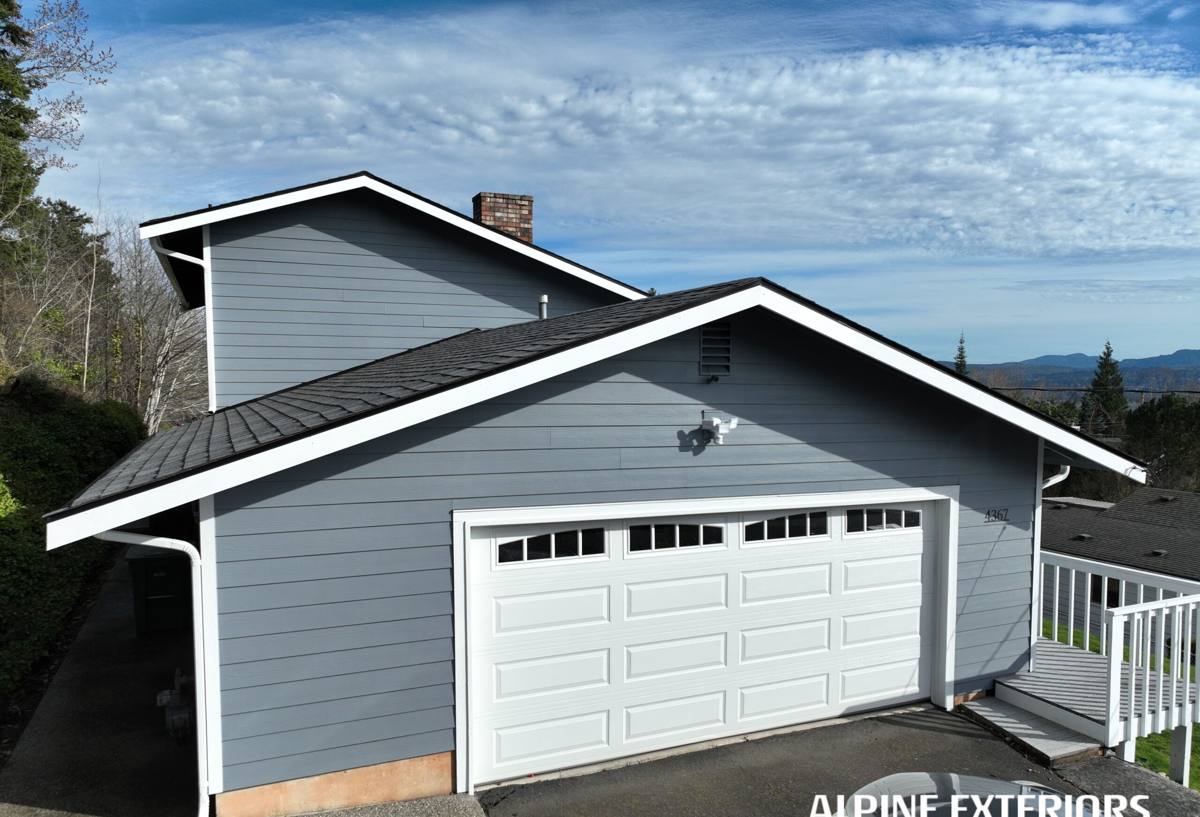
What Olga's Climate Does to a Roof
Three things drive most of the storm-related roof calls we get in this part of the island, and they compound each other.
Salt Air
Being close to the water means metal components — nails, flashing, gutter fasteners, vent caps — corrode faster here than they would inland. Corroded fasteners lose their grip on shingles and flashing, which is exactly what lets a gust of wind get underneath a roof edge and start peeling it back.
Driving Rain
Storms coming off the water on Orcas Island's east side often bring rain sideways, not straight down. Sideways rain finds every gap a normal downpour would never reach — under lifted shingle tabs, around loose flashing, through nail holes that have backed out even slightly. A leak that shows up only during a windy storm and never during a calm rain is almost always a wind-driven intrusion point, not a simple worn-out roof.
Moss Season
Orcas Island's damp, shaded microclimates mean moss and moisture-loving growth get a long season to work on a roof — often eight months or more of the year in shaded, north-facing sections. Moss holds water against the roofing material, lifts shingle edges as it grows, and adds weight. A roof that's already stressed by moss is far more vulnerable when a storm hits, because the moss has already broken the seal that keeps wind and water out.
Common Storm Damage We See in Olga
- Wind-lifted or missing shingles, usually starting at a corner, ridge, or eave edge where wind pressure is highest
- Blown or bent flashing around chimneys, skylights, and roof-to-wall transitions
- Punctures and dents from falling branches or debris, common given the tree cover around many Olga properties
- Granule loss on asphalt shingles from wind-driven rain and hail, which accelerates aging even when the shingle isn't visibly torn
- Gutter and downspout damage that redirects water into fascia and soffits instead of away from the house
- Moss-weakened sections that fail first when wind or rain load hits them
What a Correct Storm Repair Actually Involves
A lot of storm repair work we get called to fix isn't the storm's fault at all — it's a rushed or incomplete first repair. Doing it right the first time means a few things happen in order, every time:
1. A Full-Roof Assessment, Not Just the Visible Spot
Storm damage is rarely confined to the one spot that's leaking. We check the whole roof plane, the flashing details, the attic or crawlspace above the affected area if accessible, and any moss or wear that made the damage worse than it should have been.
2. Immediate Weatherproofing
If a roof is actively letting water in, the first priority is stopping that — a properly secured tarp or emergency patch — before anything else. This matters more on an island where a follow-up visit might not be same-day.
3. Matching Materials, Not Just Patching
Shingle color, profile, and even granule composition change over the years. Where possible we match existing material closely enough that a repair doesn't stand out as a patch, and where an exact match isn't available, we're upfront about that trade-off before starting.
4. Flashing and Fastener Work, Not Just Shingles
Given how hard salt air is on fasteners here, a storm repair that only replaces shingles and reuses corroded nails or bent flashing is a repair that fails again at the next storm. We replace fasteners and flashing in the repair zone as standard practice, not an upsell.
5. A Check for Underlying Moss or Rot
If moss caused or contributed to the failure, we address it — removing growth, checking the decking underneath for soft spots, and flagging any broader moss-prevention steps worth considering, like zinc strips or a cleaning schedule.
Our Process
| Step | What Happens |
|---|---|
| 1. Contact & scheduling | We gather basic details over the phone and schedule a visit, prioritizing active leaks |
| 2. On-site inspection | Full roof assessment, photos, and a plain-language explanation of what's damaged and why |
| 3. Emergency tarp-down (if needed) | Secured, storm-rated tarping to stop water intrusion the same visit |
| 4. Written estimate | Clear scope, materials, and cost — repair vs. replace laid out honestly |
| 5. Repair work | Matched materials, corroded fastener replacement, flashing correction |
| 6. Final check | Walkthrough of the completed repair and any maintenance notes specific to your roof |
Repair or Replace? An Honest Look
Storm damage sometimes reveals that a roof was already near the end of its useful life — the storm just exposed it sooner. We'll always tell you plainly which situation you're in rather than defaulting to the bigger job.
| Factor | Leans Toward Repair | Leans Toward Replacement |
|---|---|---|
| Roof age | Under roughly 12-15 years | Nearing or past typical material lifespan |
| Damage extent | Localized to one section or slope | Spread across multiple slopes or the whole roof |
| Decking condition | Solid, no soft spots found | Soft, rotted, or moisture-stained decking present |
| Moss history | Minor, surface-level growth | Long-term moss with granule loss across large areas |
| Prior repairs | Roof otherwise well-maintained | Multiple past patch jobs stacking up |
When a roof is genuinely repairable, we repair it — there's no reason to sell a full replacement on a roof with years of service left. When the damage or underlying condition means a repair would just be a short-term patch, we say so and explain why.
Why a Crew That Already Works Olga Matters
Roofing on Orcas Island isn't the same logistics problem as roofing on the mainland, and storm repair makes that gap obvious fast.
- Ferry scheduling affects how quickly materials, equipment, and crews can get to the island and back — a mainland contractor unfamiliar with the schedule can turn a one-day fix into a multi-day wait
- Material sourcing for a close color or profile match takes local knowledge of what's actually available without a long lead time
- Microclimate knowledge — knowing which sides of a roof in Olga take the worst wind-driven rain, and which are prone to heavy moss, shapes where we look first and what we recommend for long-term prevention
- San Juan County permitting and code familiarity keeps larger repair or replacement work from stalling on paperwork a mainland crew wouldn't think to check
A crew that's already working this part of Orcas Island regularly isn't relearning the island's weather and access constraints on your job.
After the Storm: A Homeowner's Checklist
- Do a visual check from the ground for missing shingles, dented vents, or displaced flashing — skip the ladder in wet or windy conditions
- Check ceilings and attic spaces for new water stains, especially after wind-driven rain
- Clear debris from gutters and downspouts once it's safe to do so
- Photograph any visible damage for your records before repairs begin
- Get a tarp over any active leak as soon as possible rather than waiting for a full repair visit
- Avoid walking on a wet or storm-damaged roof yourself — loose materials and weakened decking are a real fall risk
Documentation for Insurance
If you plan to file an insurance claim, our written estimate and photo documentation from the inspection can support that process. We're happy to describe what we found in plain terms, but we're not insurance adjusters, so we'd encourage you to confirm coverage details directly with your carrier.
If a recent storm has left your Olga home with roof damage — or you just want a second opinion on a spot that's been bothering you — we're glad to take a look. Use the form below for a free, no-pressure estimate; there's no obligation, and we'll always tell you honestly what your roof does and doesn't need.