 Orcas Island Siding
 Asphalt Shingle Roofing Built for Rosario's Weather
Rosario sits on the water side of Orcas Island, which means every roof here deals with a combination most inland San Juan County homes don't: salt-laden air off the water, wind-driven rain that finds its way under poorly lapped shingles, and heavy tree cover that keeps roofs shaded and damp for long stretches of the year. Asphalt shingle roofing is still one of the most practical, cost-effective choices for homes in this area, but only when it's specified and installed with this specific climate in mind. A shingle roof that would hold up fine in a dry inland town can fail early here if the underlayment, flashing, and ventilation aren't done right.
This page covers what an asphalt shingle roof needs to hold up in Rosario, what our installation and repair process looks like, and why working with a crew that already knows Orcas Island conditions matters more here than in most places.
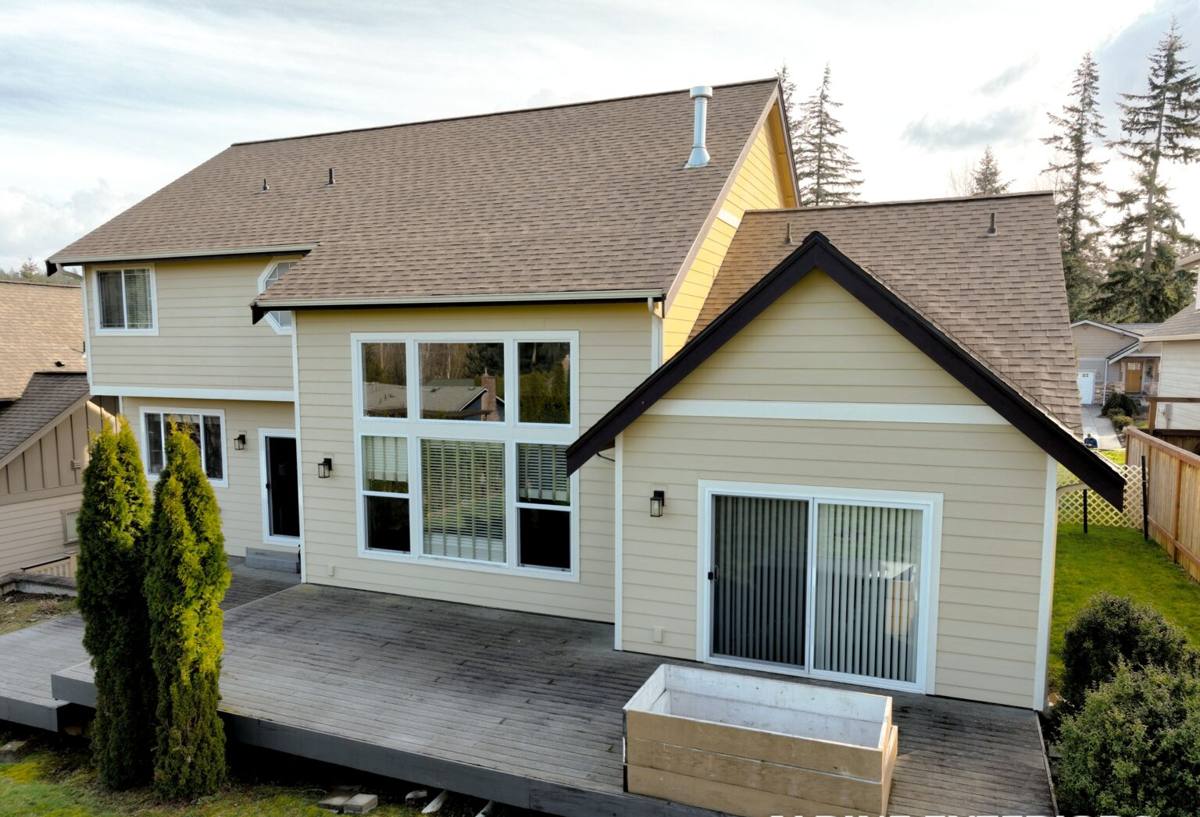
Why Rosario's Climate Is Hard on Roofs
Salt Air
Homes closer to the water take on airborne salt that settles on roofing materials and metal components. Over years, salt exposure accelerates corrosion on exposed fasteners, flashing, and any lower-grade metal drip edge or valley material. It doesn't ruin asphalt shingles the way it can damage unprotected metal, but it does mean metal components need to be chosen and installed with corrosion resistance in mind, not just cost.
Driving Rain
Storms coming off the water often bring rain sideways, not straight down. That matters because a shingle roof is designed to shed water moving downhill — driving rain pushes water sideways and upward under shingle edges, valleys, and around penetrations like vents and chimneys. A roof with correct shingle overlap, sealed nail lines, and properly lapped underlayment handles this without issue. A roof installed to a minimum standard often doesn't, and the failures show up first at valleys, eaves, and anywhere two roof planes meet.
A Long Moss Season
Between the tree cover common around Rosario and the extended damp season typical of the San Juan Islands, moss and algae growth is close to a year-round concern rather than a seasonal one. Moss holds moisture against the shingle surface, works its way under shingle tabs as it grows, and can lift edges enough for wind and rain to get underneath. Left unaddressed, it shortens the life of an otherwise sound roof.
What a Correct Asphalt Shingle Roof Needs Here
A roof built for Rosario conditions isn't a different product — it's the same asphalt shingle system installed with extra attention to the details that matter in a wet, coastal, wooded environment.
- Ice-and-water shield or a comparable self-adhering membrane at eaves, valleys, and around all penetrations, not just where code minimums require it
- Corrosion-resistant metal flashing and drip edge rather than the lowest-cost option, given the salt air near the water
- Balanced attic ventilation (intake at the eaves, exhaust at the ridge) so moisture from inside the home doesn't condense against the roof deck during long damp stretches
- Proper nailing pattern and shingle overlap rated for higher wind exposure, since waterfront and near-waterfront lots see stronger gusts than sheltered inland yards
- Algae-resistant (AR) shingle granules to slow the growth that drives premature staining and moss establishment
None of this is exotic. It's standard trade practice done thoroughly instead of rushed — which is exactly where roofs in this climate tend to fail first.
Signs a Rosario Roof Needs a Closer Look
Because moss and constant dampness can mask early problems, it helps to know what to check for before a small issue becomes a leak.
- Moss or dark streaking concentrated on the shaded, north-facing slope of the roof
- Shingle tabs that look lifted, curled, or cupped rather than lying flat
- Granules collecting in gutters or at the base of downspouts
- Soft spots or discoloration on ceilings, especially near chimneys, skylights, or where two roof planes meet
- Visible daylight or gaps at flashing around vents, chimneys, or dormers
- Rusted or corroded fasteners, flashing, or metal valleys
Any one of these on its own isn't necessarily an emergency, but they're worth a professional look rather than waiting for a leak to show up inside the house.
Choosing the Right Shingle for This Setting
Asphalt shingles come in a range of tiers, and the right choice depends on budget, how exposed the roof is to sun and salt air, and how long you want between re-roofs. We'll walk through the trade-offs honestly rather than steering everyone to the most expensive option.
| Shingle Tier | Typical Lifespan | Best Fit For |
|---|---|---|
| 3-tab (economy) | 15–20 years | Budget-driven projects, outbuildings, or homes being resold soon |
| Architectural / dimensional | 25–30 years | Most Rosario homes — better wind rating and moisture resistance for the cost |
| Premium / designer | 30+ years | Waterfront or highly visible homes where appearance and longevity both matter |
For most homes in this area, we recommend architectural shingles with an algae-resistant rating and a wind rating suited to open or partially open exposure. The upfront cost difference from economy shingles is usually modest compared to the added years of service and the reduced moss and algae staining.
Our Installation Process
- On-site inspection of the existing roof, deck, and ventilation before any pricing is finalized — including a look at the attic where accessible
- Written estimate that specifies shingle brand and line, underlayment type, flashing material, and ventilation plan, so there's no guessing about what's included
- Tear-off and deck inspection, replacing any soft or water-damaged plywood or sheathing found underneath, not papering over it
- Underlayment and flashing installation, with self-adhering membrane at vulnerable areas as described above
- Shingle installation following manufacturer nailing and exposure specs, which is also what keeps the manufacturer's warranty valid
- Final walkthrough covering what was done, what to expect, and basic maintenance going forward
We keep the job site protected and cleaned up daily, including magnetic sweeps for stray nails, which matters on properties with kids, pets, or gravel driveways.
Repair vs. Replacement: How We Help You Decide
Not every roof problem in Rosario means a full replacement. A lot depends on the roof's age, how widespread the damage is, and whether the deck underneath is still sound.
| Factor | Leans Toward Repair | Leans Toward Replacement |
|---|---|---|
| Roof age | Under 10–12 years | Approaching or past the shingle's rated life |
| Extent of damage | Isolated to one area (a valley, a vent, a section) | Widespread curling, granule loss, or moss across most slopes |
| Deck condition | Solid, no soft spots | Soft, spongy, or visibly water-stained decking |
| History | First issue on an otherwise healthy roof | Recurring leaks or repeated past patch jobs |
We'll give you a straight answer on which category your roof falls into, including when a repair is genuinely the right call rather than upselling a replacement you don't need yet.
Moss and Debris: Ongoing Care After Installation
Given the tree cover and dampness common around Rosario, a new roof still needs some routine attention to reach its full lifespan.
- Keep gutters and valleys clear of needles and leaf litter, which hold moisture against the shingles
- Have moss physically removed rather than pressure-washed, which can strip granules and shorten shingle life
- Trim back overhanging branches where practical to reduce shade and debris buildup
- Schedule a roof check every year or two, especially after major windstorms common to the islands in fall and winter
A well-installed roof with a little regular upkeep will consistently outlast one that's left alone and only checked when there's already a leak.
Why Hire a Crew That Already Works Rosario
Roofing on Orcas Island comes with logistics that mainland crews often don't plan for well — ferry schedules, material delivery timing, and weather windows that can close quickly in this part of San Juan County. A crew that already works in and around Rosario knows how to sequence a tear-off so the roof isn't left exposed if a rain system moves in faster than forecast, and knows which details — flashing, ventilation, underlayment — actually matter for homes this close to the water. That local familiarity translates into fewer surprises, more accurate scheduling, and a roof built for the conditions it will actually face, not a generic installation dropped into a coastal climate.
Get a Straight Answer on Your Roof
If your Rosario home's roof is showing moss, curling shingles, or you're just due for an honest inspection, we're glad to take a look. Fill out the form below for a free, no-pressure estimate — we'll tell you plainly whether you're looking at a repair, a partial re-roof, or a full replacement, and why.