 Orcas Island Siding
 New Roof Installation in Rosario, Built for What Orcas Island Weather Actually Does
Rosario sits on the east side of Orcas Island, facing out toward Rosario Strait, which means homes here take weather straight off the water. That exposure is beautiful most of the year and hard on a roof every year. Salt-laden air, wind-driven rain that comes in sideways off the strait, and a moss season that runs long into a wet Pacific Northwest spring all add up to roofing wear that a mainland crew doesn't always plan for. A new roof installation in Rosario needs to be built for this specific combination, not just installed to a generic manufacturer spec sheet.
This page covers what a correct new roof installation looks like for a Rosario home in San Juan County: what the climate does to roofing materials here, what separates a job that lasts from one that doesn't, and how our process works from first look to final cleanup.
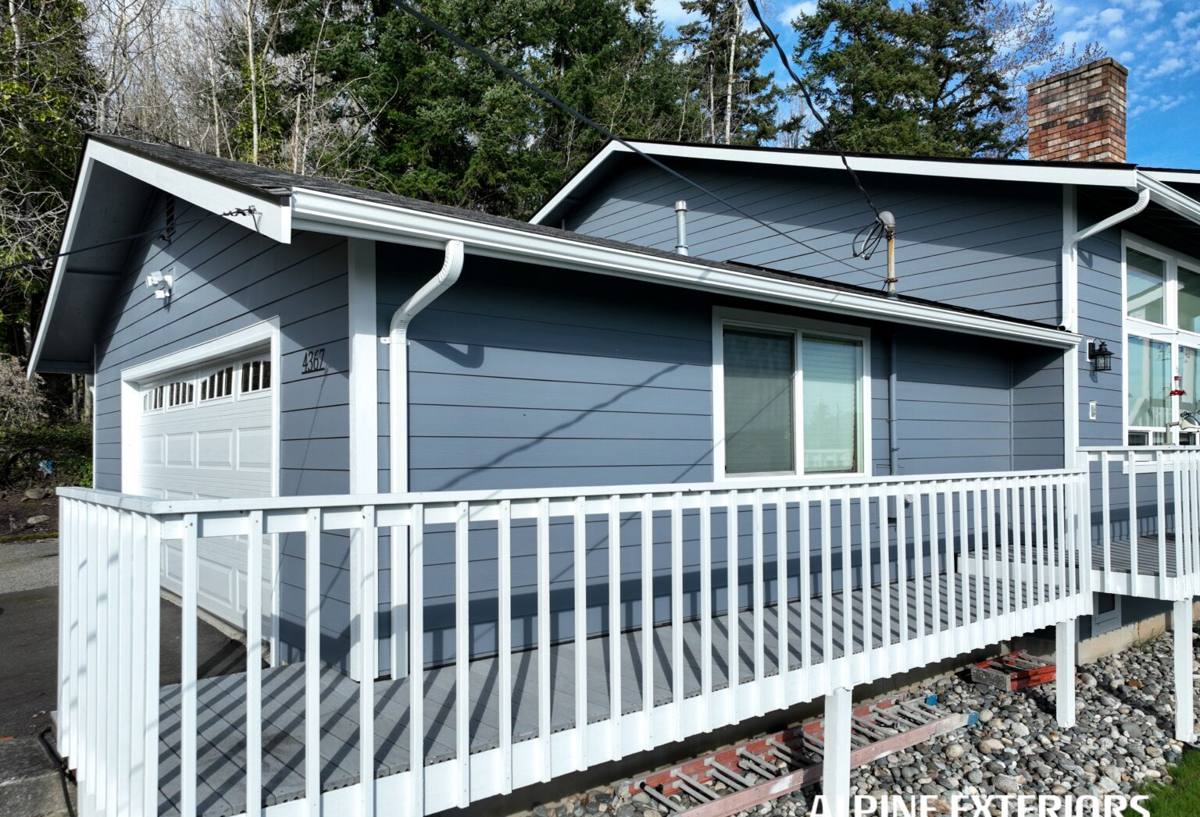
What Salt Air, Rain, and Moss Do to a Rosario Roof
Salt Air and Metal Fatigue
Homes close to the water along Rosario Strait deal with airborne salt that settles on every exposed surface, including the roof. Over time, salt accelerates corrosion on fasteners, flashing, and any metal roofing components that aren't rated for a marine environment. Standard galvanized nails and flashing can start showing rust streaks years before they would inland, which is why material selection and fastener choice matter more here than they would in a drier, inland part of the county.
Wind-Driven Rain and Flashing
Rain that falls straight down is easy for almost any roof to shed. Rain that's pushed sideways by wind off the strait is a different problem — it finds every gap in flashing, every under-driven nail, and every place where underlayment wasn't lapped correctly. Most of the leaks we get called out for on Orcas Island aren't failures of the shingle or metal panel itself; they're failures at a transition point — a valley, a chimney, a skylight curb, a wall-to-roof intersection — where wind-driven rain got past details that would have held up fine in calmer weather.
The Long Moss Season
San Juan County's wet season stretches long, and shaded, north-facing roof sections on tree-covered Rosario lots barely dry out between storms. That's exactly the environment moss needs. Moss holds moisture against the roofing surface, lifts shingle edges as it grows, and — left unaddressed for years — can shorten the life of an otherwise sound roof. A new roof installation is the right time to build in moss resistance rather than treating it as an afterthought once it's already established.
Repair or Replace? Signs Your Rosario Home Needs a New Roof
Not every roof problem means a full replacement, but there's a point where continuing to patch costs more over time than doing the job right once. Signs it's time to talk about full replacement instead of another repair:
- Shingles that are cupping, cracking, or missing granules across large sections rather than one isolated spot
- Daylight visible through the roof deck from inside the attic
- Soft or spongy spots when walking the roof, which usually means the deck underneath has taken on moisture
- Moss and lichen coverage heavy enough that it's lifting shingles rather than just staining them
- Repeated leaks in different locations after previous patch repairs
- A roof that's at or past its material's expected service life, especially if it was installed with builder-grade materials not suited to marine exposure
- Visible rust on flashing, fasteners, or metal roofing panels
If you're only seeing one or two of these and the roof is otherwise mid-life, a targeted repair may still make sense. We'll tell you honestly which category your roof falls into rather than defaulting to a replacement recommendation.
Roofing Material Options for Orcas Island Homes
There's no single "correct" roofing material for every Rosario home — it depends on the house's exposure, roof pitch, budget, and how much long-term maintenance the owner wants to take on. Here's how the common options compare for this specific climate:
| Material | Typical Lifespan Here | Moss Resistance | Salt Air Considerations |
|---|---|---|---|
| Architectural asphalt shingle | 25–30 years | Good with zinc/copper strips or algae-resistant granules | Standard; use corrosion-resistant fasteners near the water |
| Standing seam metal | 40–50+ years | Excellent — sheds moss with roof pitch and slick surface | Requires marine-grade coatings and fasteners; premium cost |
| Cedar shake | 20–25 years with upkeep | Poor without frequent treatment | Higher ongoing maintenance in salt-air, high-moisture settings |
| Synthetic/composite shake | 30–40 years | Good; resists moisture absorption better than real wood | Handles salt exposure well; no re-treating required |
Cedar shake has a real appeal for the look, and we're not going to tell you it's a bad product. But on a shaded, salt-exposed Rosario lot, it's an honest trade-off: it needs regular cleaning and treatment to resist moss and moisture, and skipping that maintenance shortens its life fast in this climate. If a homeowner wants the cedar look without that maintenance burden, we'll point them toward a synthetic shake product instead — that's a professional recommendation based on how the material performs here, not a knock on cedar itself.
What a Correct New Roof Installation Involves
Tear-Off and Deck Inspection
A proper replacement starts with a full tear-off, not a layover. Once the old material is off, the deck gets inspected board by board. Any plywood or sheathing that's soft, delaminated, or water-stained gets replaced before anything new goes down — installing new roofing over a compromised deck just guarantees a shorter lifespan for the new roof.
Moisture Barrier and Underlayment
Given how much wind-driven rain Rosario gets, underlayment choice matters. We use synthetic underlayment rated for this climate, with self-adhering ice-and-water membrane at vulnerable spots — eaves, valleys, around chimneys and skylights, and low-slope transitions — even though Orcas Island doesn't see the ice damming that inland or higher-elevation homes deal with. That membrane also does double duty against wind-driven rain intrusion at those same weak points.
Ventilation
Attic ventilation gets checked and corrected as part of the job, not left as-is. Poor ventilation traps moisture in the attic, which contributes to deck rot from underneath and can shorten shingle life from below at the same time moss is working on it from above. Balanced intake and exhaust ventilation is a standard part of a correctly installed roof system here, not an upsell.
Flashing and Fasteners for Salt Air
Every flashing detail — valleys, step flashing against walls, chimney and skylight curbs, drip edge — gets installed with corrosion-resistant materials suited to salt air exposure, and fastened with stainless or coated fasteners rather than standard galvanized. This is one of the areas where cutting corners doesn't show up as a problem for a year or two, and then shows up as a leak that's harder to diagnose than it would have been to prevent.
Our Process for a Rosario Roof Replacement
Working on Orcas Island means planning around the realities of island logistics, not just the roofing itself. Here's how a typical replacement goes:
- On-site inspection and honest repair-versus-replace assessment, including a look at the deck condition where accessible
- Written estimate covering material options, scope, and timeline, with no pressure to decide on the spot
- Material ordering and delivery scheduled with island transport and weather windows in mind — materials get staged before the crew starts so the job isn't waiting mid-tear-off for a delayed ferry run
- Full tear-off and deck inspection, with any needed sheathing repairs handled before new material goes down
- Underlayment, flashing, ventilation corrections, and the new roofing system installed to manufacturer specification plus the marine-exposure details this location calls for
- Full site cleanup, including magnetic sweep for stray fasteners and proper haul-off of old material — getting debris off an island site the right way takes more coordination than it does on the mainland
- Final walkthrough so you can see the finished work and ask questions before we consider the job done
Why Hiring a Crew That Already Works in Rosario Matters
A roofing crew that hasn't worked on Orcas Island before is guessing at things a local crew already knows: which roof orientations take the worst of the wind off Rosario Strait, how long moss actually takes to become a problem on a shaded lot here versus a sunnier inland one, and how to schedule material deliveries and crew logistics around ferry schedules instead of finding out about the constraint mid-project. There's also the practical side of San Juan County permitting — knowing what's required for a like-for-like roof replacement versus a project that changes the roofline or adds structural work, and getting that squared away before the crew shows up rather than after.
None of that is exotic knowledge, but it's the difference between a project that runs smoothly and one that hits avoidable delays. A crew that's done this work in Rosario before has already made the adjustments a mainland-standard installation would need for this climate.
What Affects the Cost of a New Roof on Orcas Island
Every roof is different, and we're not going to quote a number without seeing the property, but these are the main factors that move the price up or down:
| Cost Factor | Why It Matters |
|---|---|
| Roof size and number of facets | More valleys, dormers, and roof planes mean more flashing detail and labor time |
| Material choice | Asphalt, synthetic shake, and standing seam metal carry different material and installation costs |
| Deck condition | Sheathing replacement adds cost but is not optional where the deck has taken on moisture damage |
| Roof pitch and access | Steep or hard-to-access roofs take longer and require more safety setup |
| Tear-off layers | Removing multiple existing layers of roofing takes more labor than a single-layer tear-off |
| Delivery and site logistics | Island delivery scheduling and site access can affect project timeline and cost |
The most expensive roof, long term, is usually the one that gets replaced twice because the cheaper option wasn't suited to this climate the first time. We'll walk through the real trade-offs for your specific home so the decision is based on your roof, not a generic price list.
Keeping a New Roof Performing Through Orcas Island's Wet Season
A well-installed roof still benefits from basic upkeep, especially given the moss season here. Simple habits that extend the life of a new roof:
- Keep gutters clear of needles and debris so water isn't backing up under the roof edge
- Trim back overhanging branches to reduce shade and debris buildup on north-facing sections
- Have moss growth addressed early with proper treatment methods rather than pressure washing, which can strip granules and damage shingles
- Schedule a periodic visual inspection after major storms, particularly checking flashing points around chimneys and skylights
- Address any small leak signs promptly — a small flashing fix is far cheaper than repairing water damage to the deck or interior
If you're weighing a repair against a full replacement, or you're ready to move forward with a new roof for your Rosario home, we're happy to take a look and give you a straightforward, no-pressure estimate. There's a form below — reach out and we'll get a time scheduled.