 Orcas Island Siding
 Windows Built for Life on San Juan Island
San Juan Island sits fully exposed to the Salish Sea, and every window on the exterior of a home there is doing more work than a window on the mainland. Salt-laden air corrodes hardware and dulls finishes over time. Driving rain off the water finds any weak point in a window's seal or flashing. And the long, damp moss season that settles over San Juan County keeps wood trim, sills, and frames wet for weeks at a stretch, which is exactly the condition rot and mildew need to take hold. None of this means windows on the island are doomed to fail early — it means the material choices, the seals, and the installation details matter more here than they would in a drier inland climate.
When we talk about "custom windows" on San Juan Island, we're talking about windows chosen and installed specifically to hold up under that combination of salt, wind-driven rain, and persistent moisture — not a generic replacement job pulled from a catalog without regard for where the house sits.
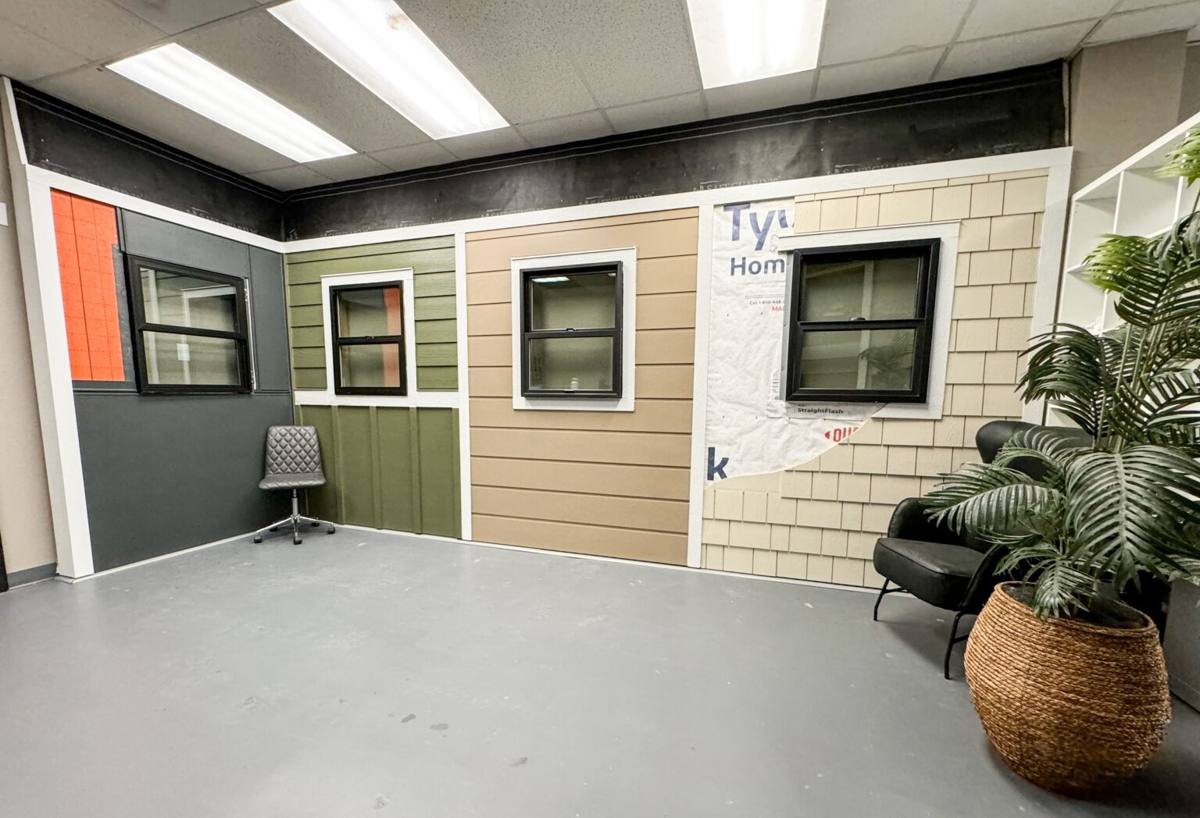
What "Custom" Actually Means for These Homes
Custom doesn't just mean expensive or oversized. It means the window is made or configured to fit a specific opening, architectural style, or performance need that a stock size can't address.
Non-Standard Openings
Many homes on San Juan Island were built or added onto over several decades, sometimes by different builders with different framing habits. Rooflines, dormers, and additions often leave openings that don't match modern standard sizes. A custom window is built to fit that exact opening correctly, rather than forcing a stock unit into a space it wasn't designed for — which is one of the most common causes of poor seals and early water intrusion.
Matching Existing Architecture
Older and character-driven homes on the island often have specific grille patterns, proportions, or trim details that a standard replacement window won't match. Custom sizing and configuration let us keep the look of the house consistent instead of leaving mismatched windows that stand out for the wrong reasons.
Performance-Driven Custom Choices
On a wall that takes the brunt of prevailing weather, "custom" can also mean upgrading the glass package, frame material, or hardware beyond what came with the house originally — even if the opening size doesn't change. That's a legitimate reason to go custom on its own.
Frame Materials That Hold Up to Salt Air
Frame material is the single biggest factor in how a window performs over years of island exposure. Every option below can work on San Juan Island — the right choice depends on the specific wall, exposure, and budget.
| Frame Material | Salt Air / Moisture Behavior | Maintenance |
|---|---|---|
| Vinyl | Won't rust or rot; performs well in most exposures | Low — occasional cleaning |
| Fiberglass | Very stable dimensionally, resists corrosion well, holds paint if desired | Low |
| Aluminum-clad wood | Wood interior for warmth and character, protected exterior cladding against weather | Moderate — clad exterior is low-maintenance, wood interior still needs normal care |
| Solid wood | Classic look, but most vulnerable to sustained moisture and salt exposure without diligent upkeep | High — regular sealing and repainting needed, especially on exposed walls |
We're honest with homeowners about the trade-off with solid wood: it looks great and suits certain historic homes, but on a wall that takes direct wind and rain off the water, it demands more upkeep than most people want to keep up with. Clad-wood and fiberglass options give a similar warmth or profile with far less long-term maintenance burden — which is why we lean toward those on exposed elevations unless a homeowner specifically wants and is prepared to maintain solid wood.
Glass and Weatherstripping for Driving Rain
Multi-Point Locking and Compression Seals
A window can have great glass and still leak if the sash doesn't compress evenly against the weatherstripping. On exposures that take direct, wind-driven rain, we prioritize hardware that pulls the sash tight at multiple points rather than relying on a single latch — this matters more on San Juan Island than it would on a sheltered inland wall.
Low-E Coatings and Condensation Control
Double- and triple-pane glass with a low-E coating helps with both energy performance and condensation control. Persistent humidity from the marine air means interior condensation on cold glass can become a real nuisance — and over time a moisture source of its own — if the glass package isn't matched to the climate. We size the glass package to the exposure of each wall rather than using one spec for the whole house.
Sill Design and Drainage
A properly designed sill sheds water outward instead of letting it pool at the base of the frame. On a wall exposed to driving rain, sill drainage detail is not a minor spec — it's often the difference between a window that stays dry inside its frame and one that slowly saturates the surrounding wood over several wet seasons.
Signs Your Current Windows Are Losing the Battle
Island exposure tends to reveal window problems earlier than a sheltered mainland location would. Watch for these signs, especially on walls facing open water or prevailing weather:
- Fogging or moisture between panes of double-glazed glass — the seal has failed
- Soft or discolored wood at the sill, corners, or trim
- Difficulty opening, closing, or locking a window that used to operate smoothly
- Visible daylight or a noticeable draft around the frame
- Paint or finish peeling faster on window trim than on the rest of the siding
- Corroded or stiff hardware — hinges, cranks, or locks that have started to seize or pit
- Moss or persistent green growth building up on horizontal trim or sills
Any one of these on its own isn't necessarily an emergency, but a window showing two or three of these signs is usually past the point where caulk and touch-up paint will solve the problem.
Our Installation Process, Start to Finish
- On-site assessment. We look at each opening individually — framing condition, current flashing, exposure to weather, and any signs of existing moisture damage — before recommending a window spec.
- Measuring and ordering. Custom windows are built to the exact opening, so accurate measurement upfront avoids delays or ill-fitting units later.
- Removal and inspection of the opening. Once the old window is out, we check the framing and sheathing underneath. This is often the first time hidden rot or old flashing failures become visible, and it's far cheaper to address at this stage than after a new window is sealed in over a hidden problem.
- Flashing and water management. We install flashing that directs any water that gets past the window itself back out of the wall, rather than relying on the window and caulk alone to keep the wall dry.
- Setting and shimming the window. The unit is set level, plumb, and square, then shimmed and fastened according to the manufacturer's specifications so it operates correctly and the seal performs as designed.
- Sealing and finish work. Exterior sealant, interior trim, and any touch-up work are completed, and we walk through operation of every window before calling the job done.
Why Flashing Is Where Most Failures Actually Start
In our experience, when a "window" leaks, the window unit itself is rarely the real cause — it's almost always a flashing or sealant detail that was rushed or skipped during installation. This is the step that matters most on a wall exposed to driving rain, and it's the step that's easiest to shortcut if a crew is moving fast. We don't shortcut it.
Cost Factors to Expect
Every custom window job is priced around the specific openings and materials involved, so we don't publish flat per-window pricing. These are the main factors that move a quote up or down:
| Factor | Why It Affects Cost |
|---|---|
| Frame material | Vinyl is typically the most economical; fiberglass and clad-wood cost more upfront but reduce long-term maintenance |
| Opening size and shape | Standard-shaped openings are simpler to source and install than arched, angled, or oversized custom shapes |
| Glass package | Upgraded low-E coatings, triple pane, or specialty glass add cost but improve comfort and condensation resistance |
| Condition of the existing opening | Hidden rot or old flashing failures found during removal add repair work before the new window can go in |
| Number of openings and access | Multiple windows in one visit, and easy scaffold-free access, both reduce cost per opening |
We walk through these factors with every homeowner during the estimate so there are no surprises once work starts.
Why a Crew That Already Works San Juan Island Matters
Working on San Juan Island isn't the same as working on the mainland. Materials, crews, and equipment often need to be planned around ferry schedules, and a contractor unfamiliar with island logistics can turn a straightforward job into a scheduling headache — extra trips, delayed materials, or work crews that show up without everything they need. We already work regularly throughout San Juan County, including San Juan Island and Friday Harbor, so material orders, crew scheduling, and site logistics are planned around island access from the start rather than figured out on the fly.
Just as important, a crew that works this region regularly has seen how the local climate actually treats different products and installation approaches over time — not just how they're rated on paper. That real-world experience with salt exposure, driving rain, and the long moss season shapes every material and installation recommendation we make, rather than defaulting to whatever spec works fine in a drier, more sheltered part of the state.
If your windows on San Juan Island are showing their age, or you're planning a custom installation for a new opening or a full window upgrade, we're happy to take a look and walk you through honest options. Reach out for a free, no-pressure estimate using the form below.